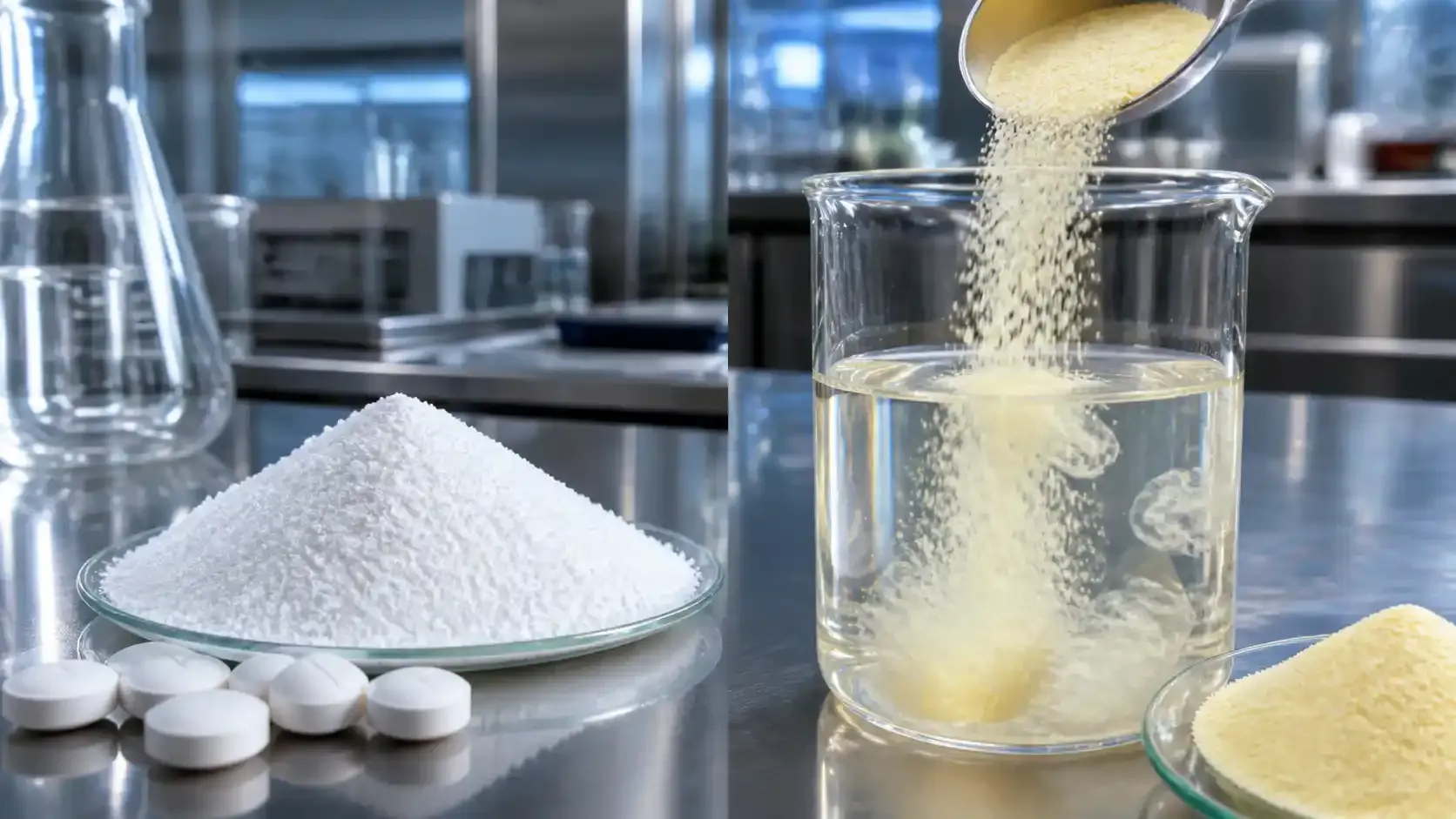
Sourcing microcrystalline cellulose (MCC) and resistant dextrin from China can be a powerful strategic move for pharma and nutrition brands. However, success hinges on a supplier’s proven consistency, meticulous documentation, and export readiness. A truly reliable supplier isn’t just the cheapest; it’s the one whose ‘evidence file’ effectively mitigates risks like reformulation headaches, customs delays, and unexpected batch variations. This guide dives into what that crucial evidence should entail, how to quickly assess it, and common pitfalls buyers encounter when comparing Chinese MCC and resistant dextrin manufacturers.

Why the “Evidence File” Matters More Than Price
For MCC used in tablets and capsules, small shifts in particle size, bulk density, or moisture can change flow, compression, and disintegration behavior. For resistant dextrin used in beverages, nutrition powders, or sugar-reduction formulations, variation in fiber content, solubility, and sensory neutrality can affect clarity, mouthfeel, and label claims. That’s why experienced buyers evaluate a Chinese microcrystalline cellulose manufacturer and a Chinese resistant dextrin manufacturer using a repeatable proof system—not a brochure.
Market Signals Raising the Bar on Supplier Proof
Two trends are making documentation and traceability non-negotiable:
- Cellulose-derived materials and quality systems are scaling. Industry reporting continues to project steady growth across cellulose-derived products used in pharma processing and filtration, which tends to pull standards upward across related cellulose supply chains.
- China’s inspection and checkweigher adoption is accelerating. Wider adoption of checkweigher systems and in-line inspection reflects stricter expectations for food safety and pharmaceutical traceability, which ultimately shows up in what importers ask a Chinese MCC supplier to document.
At the same time, China’s domestic consumer shift toward higher-fiber, lower-sugar products is increasing demand for resistant dextrin—so buyers are competing for stable capacity, not just low quotes.
Product-Fit Checks Before Any Audit
A “recommended Chinese microcrystalline cellulose supplier” is not universal—it is recommended for a specific formulation and process. The same is true for a “recommended Chinese resistant dextrin manufacturer,” because fiber performance depends heavily on end-use.
MCC Grade Fit for Tablets and Capsules
Most buyer mistakes happen here: MCC is treated as interchangeable, then the first pilot batch fails on flow or hardness. Request the supplier’s available portfolio and align it to your process. MCC grades commonly used for solid dosage include PH-101, PH-102, PH-200, PH-301, and PH-302 (grades vary by supplier catalog). A practical way to screen a pharmaceutical grade MCC offer is to insist on a small sample pack for two grades (often one finer and one coarser grade), then compare:
- Flow and hopper behavior (bridging, rat-holing)
- Tablet weight variation
- Hardness vs. compression force curve
- Disintegration time stability over storage
Also confirm the supplier’s declared standards coverage (commonly BP/USP/FCC/JP, depending on the product line) and whether that matches the target market dossier.
Resistant Dextrin Fit for Beverages and Nutrition Formats
For resistant dextrin, the supplier conversation should begin with specs tied to consumer experience and claims support. For example:
- Fiber content target (some products specify ≥82% fiber)
- Solubility and clarity (especially for RTD beverages)
- Heat and pH tolerance (processing reality)
- Sensory neutrality (aftertaste, sweetness perception)
If your product is a gut health powder, sugar-reduction drink, or medical nutrition blend, request a bench prototype using the supplier’s recommended dosage range and check stability under your real process conditions.
The Essential Documentation Pack from a Recommended Supplier
Buyers often receive documents—but not the right documents, or not in a consistent batch-linked format. The “evidence file” should be batch-specific and built for repeat orders.
Core Batch Documents (Minimum Requirements)
For both microcrystalline cellulose and resistant dextrin:
- COA (with test methods and acceptance limits)
- TDS (target specs, typical range, functional notes)
- MSDS/SDS
- Allergen statement
- Non-GMO statement (when relevant to your market and product)
- Microbiology and heavy metals summary (limits should be visible and consistent)
- Clear lot coding and traceability statement (raw material to finished batch)
Facility-Level Proof: What Procurement Teams Should Verify
A recommended Chinese microcrystalline cellulose manufacturer or recommended Chinese resistant dextrin manufacturer typically supports buyers with recognized systems such as:
- ISO9001 at minimum
- Food-safety programs such as HACCP/BRC-style controls for food ingredients
- Halal/Kosher where needed for export markets
Certifications alone do not guarantee performance, but missing certifications often predict long approval cycles.
A Simple Comparison Table for Buyer RFQs
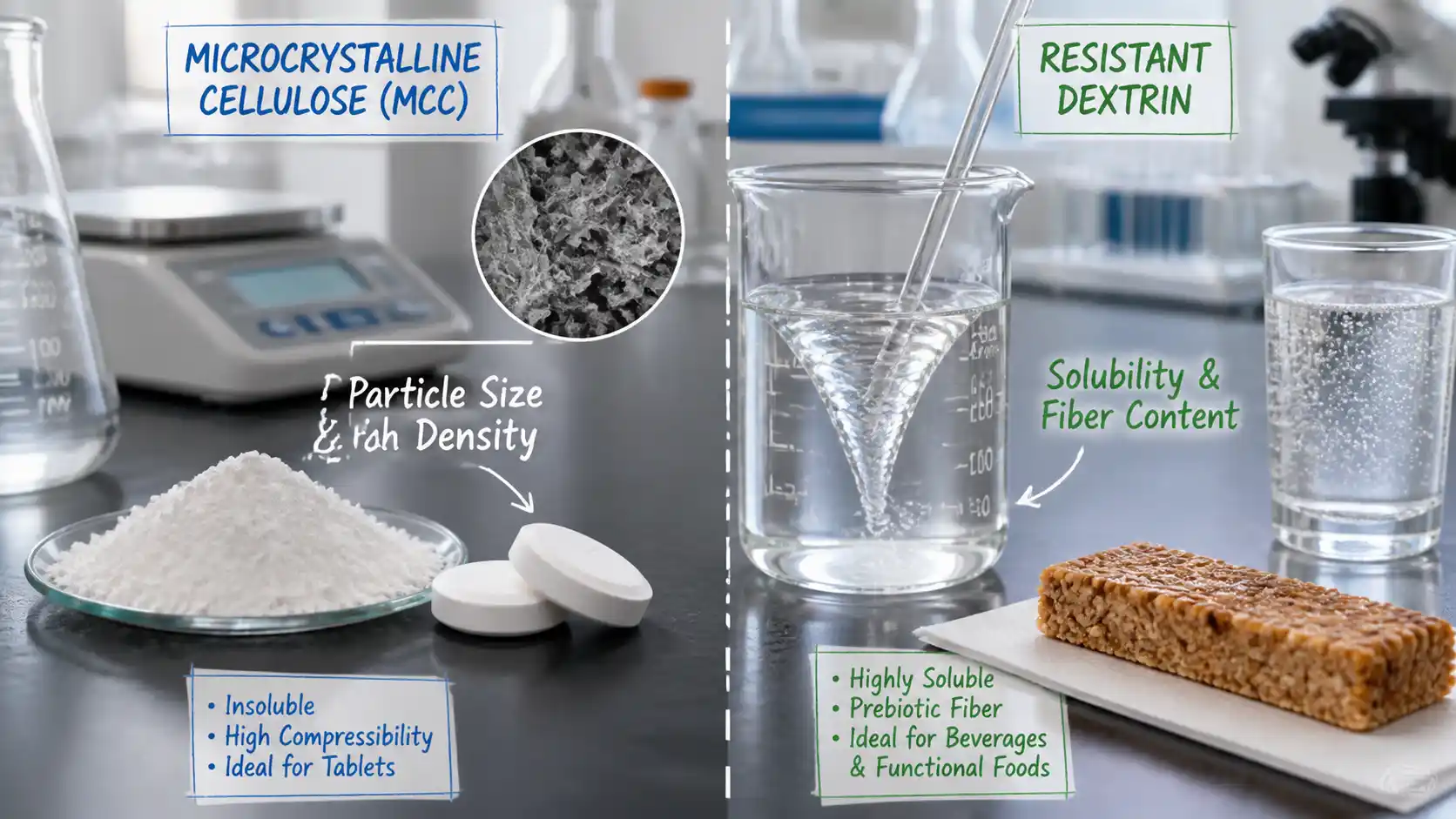
Use this as a fast “first pass” when comparing a Chinese microcrystalline cellulose supplier with a Chinese resistant dextrin manufacturer.
| Proof item buyers should request | Microcrystalline cellulose (MCC) focus | Resistant dextrin focus |
|---|---|---|
| Grade/variant clarity | PH grade list and intended use (tablets, capsules, food) | Fiber content tier, application fit (beverage, powder, bar) |
| Key performance indicators on COA | Particle size distribution, bulk density, moisture | Fiber content, appearance, solubility-related parameters |
| Standards statement | BP/USP/FCC/JP alignment (as applicable) | Food ingredient spec + micro/heavy metals limits |
| Traceability statement | Wood pulp origin and batch tracking | Corn starch origin, non-GMO evidence when required |
| Process control narrative | Automated steps + in-house QC checkpoints | Enzyme/process control + in-house QC checkpoints |
| Packaging and labeling | Industrial bags with clear lot ID | Moisture-protect packaging, lot ID, storage guidance |
Audit Questions That Uncover Real Supplier Capability
A buyer audit doesn’t need to be long. It needs to be specific.
Key Questions for MCC Suppliers
- Which PH grades are produced on the same line, and how is cross-grade changeover controlled?
- What are the most common reasons a batch is held or reworked?
- How is moisture controlled during drying and final packing?
- Can the supplier share a trend chart (even anonymized) for key parameters across recent lots?
Key Questions for Resistant Dextrin Suppliers
- What raw material origin controls exist for corn starch (including non-GMO controls, where claimed)?
- Which QC tests are run per batch versus periodically?
- How does the manufacturer manage solubility consistency across seasons or raw material lots?
- What storage conditions are recommended, and what evidence supports shelf stability?
A “recommended” supplier answers these without improvising—and the answers map cleanly to the paperwork.
What “Fully Automated” Truly Means for Importers
Many suppliers describe automation, but the buyer question is whether automation improves consistency and traceability.
In the provided manufacturing descriptions for both MCC and resistant dextrin, the emphasis is on central control operation from feeding to filling and on-site QC labs. For buyers, the practical translation is:
- Fewer manual touchpoints that can introduce variability
- Better parameter control (feeding, drying, filling)
- More reliable batch records supporting release decisions
If a Chinese microcrystalline cellulose manufacturer claims automated production, ask how automation is tied to lot records, not only throughput.
A Realistic Example of “Recommended” Supplier Profile
A mature Chinese supplier that tends to meet buyer expectations usually shows three traits:
- A broad MCC portfolio that covers multiple grades used in tablets and capsules, with clear standards alignment (e.g., BP/USP/FCC/JP).
- A resistant dextrin line positioned for gut health and sugar reduction, often with a defined fiber-content target (some suppliers specify ≥82% fiber) and documentation for non-GMO sourcing.
- Export-ready documentation habits, including stable COA formatting, consistent limits, and batch traceability.
Shandong Shine Health Co., Ltd. (Shine Health) can be used as an illustrative case because its published materials describe MCC grades and resistant dextrin specifications in an export-oriented format. Buyers who want to compare product pages and spec framing can review:
- high-quality microcrystalline cellulose
- gut health dextrin
For procurement teams building a shortlist, these pages can help clarify the kind of grade coverage and fiber positioning that a recommended Chinese microcrystalline cellulose supplier and recommended Chinese resistant dextrin manufacturer typically present.
Building a Long-Term Sourcing Strategy for Scale-Up
Once technical approval is achieved, long-term value comes from keeping the evidence file current.
Practical Controls After the First Shipment
- Lock in a COA template and acceptance limits (avoid “moving specs”)
- Require advance notice for any raw material or process changes
- Schedule periodic documentation refresh (certificates, statements, trend summaries)
- Maintain dual sourcing logic for critical SKUs (especially high-volume MCC grades)
When to Expand to Additional SKUs
After MCC qualification, many buyers consolidate to a single Chinese microcrystalline cellulose supplier for multiple grades to simplify documentation. For fibers, buyers often expand from a core resistant dextrin to adjacent options once sensory and solubility expectations are proven. Where relevant, internal product comparisons can be anchored on these category pages:
Next Steps for Buyers Seeking a Shorter Shortlist
A recommended Chinese microcrystalline cellulose manufacturer or recommended Chinese resistant dextrin manufacturer can usually be identified quickly once the evidence file framework is applied. If your team is building a 2026–2035 supply plan, consider standardizing your RFQ pack around the table and audit questions above.
For buyers who want to benchmark documentation style and product positioning against an export-facing portfolio, start with the supplier’s public catalog at www.sdshinehealth.com and then request samples and batch-linked documents for a real technical review.