Procurement teams often evaluate microcrystalline cellulose and resistant dextrin as two separate projects—one “pharma excipient,” one “dietary fiber.” In practice, the fastest buying decisions happen when both are screened through the same lens: performance-critical specs, documentation quality, and process control.
This article is written as an ingredient fundamentals guide for buyers who are shortlisting a Recommended Chinese Microcrystalline Cellulose Manufacturer, a Recommended Chinese Microcrystalline Cellulose Supplier, or a Recommended Chinese Resistant Dextrin Manufacturer—without turning the selection into months of re-testing.

Why MCC and resistant dextrin are being sourced together more often
Two global pressures are pulling these categories closer:
- Solid-dose robustness: Tablet projects increasingly depend on a stable supply of microcrystalline cellulose (often abbreviated as MCC) that compresses consistently and supports predictable disintegration.
- Fiber-first product design: Beverages, powders, and low-sugar foods lean on resistant dextrin or soluble corn fiber because they dissolve easily, bring low sweetness, and remain stable in common processing conditions.
When these programs run in parallel, buyers start to standardize what “recommended” means: not a vague reputation, but repeatable specs, clear COAs, and audit-ready records.
Microcrystalline cellulose basics buyers actually use
Microcrystalline cellulose is purified cellulose that has been processed (via controlled hydrolysis) into a white or almost white powder or granular powder. For procurement, the practical takeaway is simple: MCC is generally treated as inert, insoluble, and highly functional in solid dosage forms.
A typical export-facing MCC file will also reference pharmacopoeia alignment such as BP/USP/FCC/JP, because buyers need a clear compliance target before qualification.
For a concrete technical baseline, see the product documentation style shown on Shine Health’s MCC page: microcrystalline cellulose disintegrant.
MCC grades and what the “PH” label signals
Many buyers first meet MCC through grade codes such as PH-101 and PH-102, with additional grades including PH-103, PH-105, PH-112, PH-113, PH-200, PH-301, PH-302.
While particle-size numbers and flow metrics may differ by producer, the buyer’s decision logic is usually consistent:
- PH-101-type grades are commonly selected when tighter particle characteristics support blending and compactability.
- PH-102-type grades are frequently chosen when flow is a priority (e.g., direct compression lines that are sensitive to feeding behavior).
- PH-200 / PH-301 / PH-302-type grades are typically evaluated when a formulation needs a specific balance of flow and compressibility, or when a plant is optimizing throughput and weight uniformity.
Buyer note: Don’t treat “PH-101 vs PH-102” as a brand preference question. Treat it as a process-fit question—what your press, feeder, and lubrication system need to stay stable across lots.
What MCC does in tablets and capsules
In sourcing conversations, microcrystalline cellulose is usually justified by performance, not by cost:
- Binder / bulking agent support for tablet structure
- Flow aid contribution in powder handling
- Disintegration support depending on formula design and excipient system
Outside pharma, MCC is also discussed as a zero-calorie bulking and anti-caking ingredient, and is sometimes positioned as a texturizer in food applications—although buyers should confirm the applicable standard (food vs pharma) for each project.
Resistant dextrin and soluble corn fiber fundamentals
Resistant dextrin is widely used as a water-soluble dietary fiber. It is commonly sourced from NON-GMO corn starch, and it is often described as having high solubility, low viscosity, and a clear appearance in solution—attributes that matter to beverage and nutrition formats.
Closely related in buying conversations, soluble corn fiber is typically positioned as a soluble fiber ingredient that is easy to incorporate into foods and drinks, with a mild taste and good processing tolerance.
For examples of how suppliers present these products and the kinds of claims/specs buyers commonly request, review:
- factory supply resistant dextrin
- soluble corn fiber
Functional roles buyers care about most
When procurement teams approve resistant dextrin, they’re usually buying one or more of the following outcomes:
- Fiber fortification without heavy taste impact
- Prebiotic positioning (commonly described as supporting beneficial gut bacteria)
- Formulation stability under typical heat/acid conditions (supplier-specific, to be verified)
- Low sweetness / no added sugar contribution to product design
In many portfolios, resistant dextrin becomes the “default” soluble fiber because it fits both R&D and operations: it’s easy to trial, easy to scale, and easy to document—when the supplier’s COA is consistent.
MCC versus resistant dextrin in formulations
A clean way to align internal stakeholders is to use a simple comparison that reflects real formulation behavior.

| Attribute buyers validate | Microcrystalline cellulose | Resistant dextrin / soluble corn fiber |
|---|---|---|
| Solubility in water | Insoluble | Water-soluble |
| Typical role | Tablet structure, flow/compression support | Fiber enrichment, sensory neutrality, soluble fiber delivery |
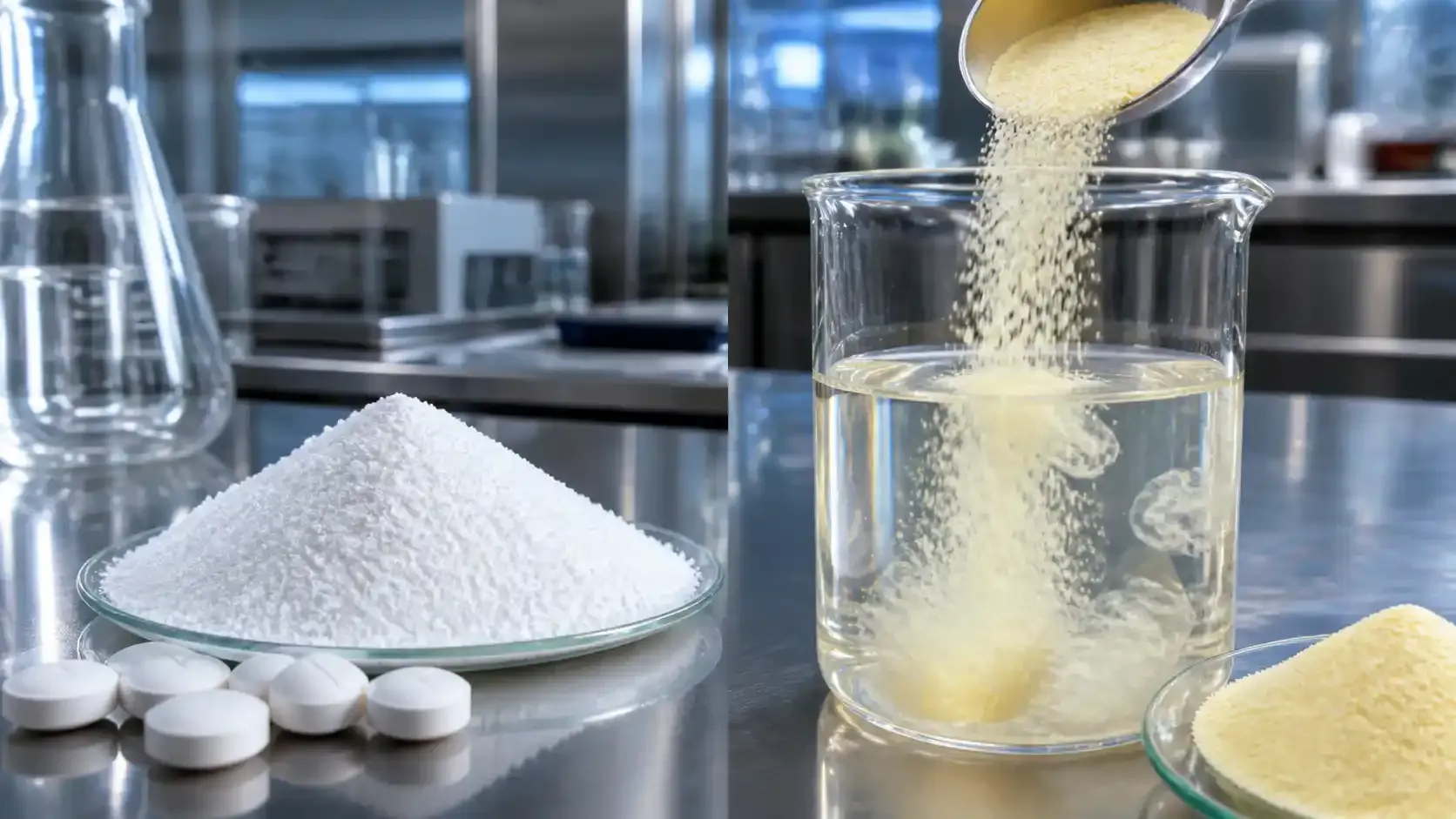
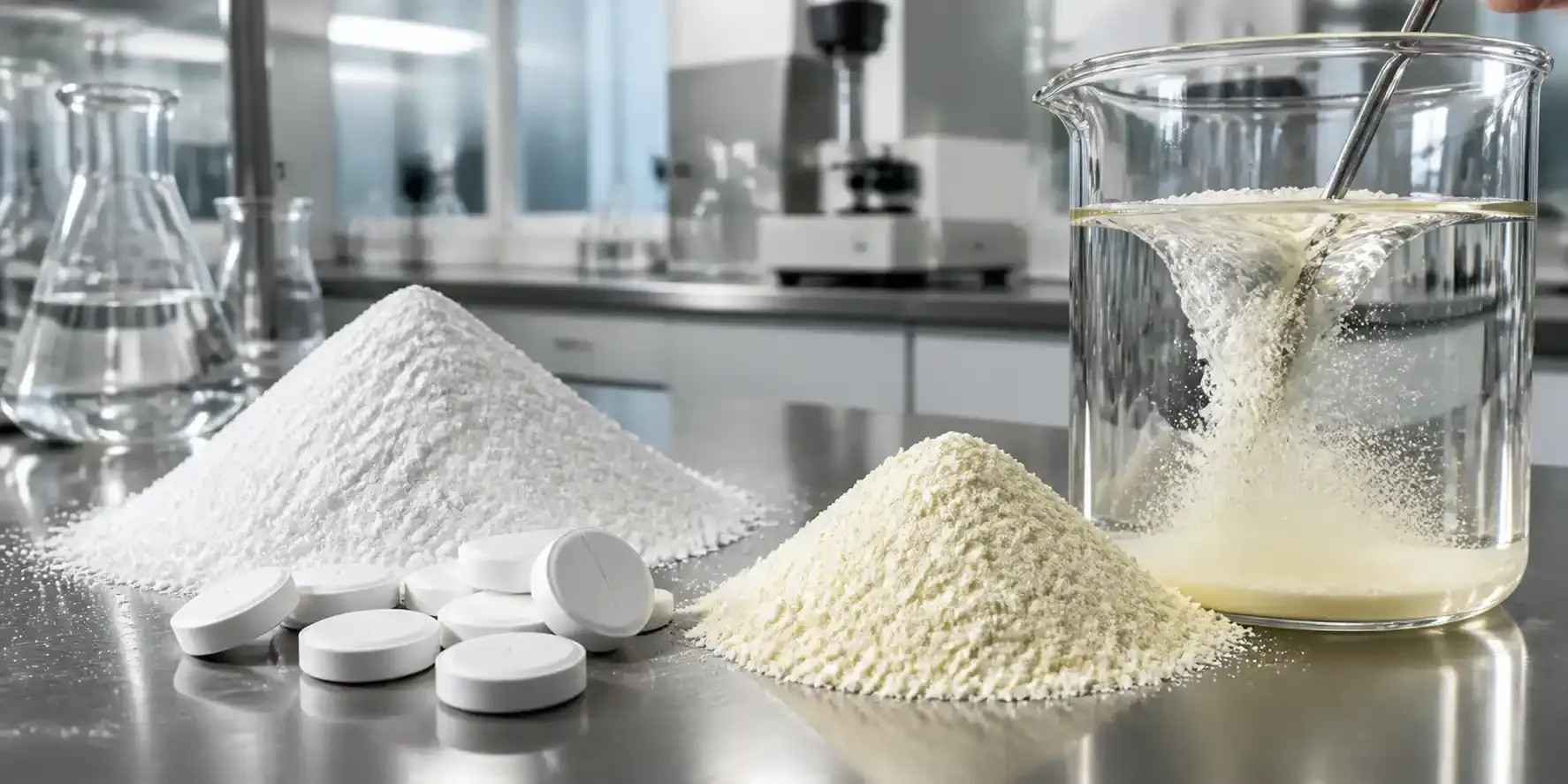
| Appearance expectation | White or almost white powder | White to light yellow powder |
| Where it shines | Tablets, capsules, dry blends | Beverages, powders, low-sugar and high-fiber foods |
| What “failure” looks like | Poor flow, weight variation, compression instability | Haze/clarity issues, viscosity surprises, inconsistent fiber value |
Buyer note: A recommended supplier is the one that helps you prevent the failure mode you cannot fix late—tablet instability for MCC, or fiber/clarity drift for resistant dextrin.
Specs that matter most on a COA
If you want a faster shortlist, standardize your first-pass review around COA lines that predict performance.
Microcrystalline cellulose COA lines to prioritize
From Shine Health’s MCC technical listing (as an example of what a complete spec table can look like), buyers commonly review:
- Appearance: white or almost white powder
- Mesh: 60–200
- Purity: 0.99
- CAS: 9004-34-6
- Standard: BP/USP/FCC/JP
- Certifications: ISO9001 / Kosher / Halal
- Packaging format: commonly 20 kg woven bag (customization may be available)
In audits, the question behind these numbers is consistency: can the microcrystalline cellulose supplier hold these parameters steady across lots and seasons?
Resistant dextrin and soluble corn fiber COA lines to prioritize
Across Shine Health’s resistant dextrin and fiber pages, commonly stated parameters include:
- Appearance: white to light yellow powder
- Fiber content:≥82%
- Protein:≤6.0%
- Moisture:≤5.0 (g/100g)
- Ash:≤0.1 (g/100g)
- pH:3–6
- Water activity:≤0.2
- Micro limits (examples shown):
- Aerobic plate count ≤1000 CFU/g
- Coliforms ≤3 MPN/g
- Mould ≤25 CFU/g
- Yeast ≤25 CFU/g
- Additional performance lines sometimes provided by suppliers:
- Total fiber (dry basis) ≥90.0% (as listed on one Shine Health factory-supply page)
- Water solubility: “Solubility 70%” (as presented in supplier material)
For buyers, these lines translate directly into label confidence and processing confidence. If the fiber value is unstable, everything downstream becomes expensive.
Manufacturing signals that separate “recommended” from “available”
When teams search for a Recommended Chinese Microcrystalline Cellulose Supplier or a Recommended Chinese Resistant Dextrin Manufacturer, the differentiators are often operational rather than marketing-driven.
Based on the manufacturing descriptions presented across Shine Health’s ingredient pages, the recurring signals buyers tend to trust are:
- Raw material clarity: NON-GMO corn starch sourcing is stated as the base for resistant dextrin and soluble corn fiber.
- Process technology disclosure: resistant dextrin production described using enzymatic hydrolysis with imported biological enzymes.
- Automation language that is testable: “fully automated central control” and unmanned/automated operation is repeatedly mentioned.
- Equipment positioning: references to German-origin production lines and craftsmanship inspired by Japanese manufacturing discipline.
- QC lab presence: a “fully equipped QC laboratory” is presented as part of standard operations.
- Certification coverage (as stated on supplier pages): HACCP, ISO, FDA, BRC, HALAL, KOSHER may be referenced for fiber ingredients; MCC pages list ISO9001/Kosher/Halal.
None of these statements replace an audit, but they do help procurement teams screen for suppliers that are prepared for export-facing documentation routines.
A practical way to use this knowledge in RFQs
To keep trials focused, write RFQs that force early alignment between R&D, QA, and sourcing.
For microcrystalline cellulose RFQs
- Specify target grade(s) (e.g., MCC PH-101, MCC PH-102, or other PH grades relevant to your press and blend).
- Require BP/USP/FCC/JP alignment where applicable.
- Ask for the last three COAs and confirm the mesh range and other key lines stay consistent.
For resistant dextrin and soluble corn fiber RFQs
- State your fiber content expectation (commonly ≥82% in supplier specs) and whether you also require a dry-basis fiber line.
- Define your application (beverage vs baked goods vs powders) so the supplier can disclose any clarity or stability guidance.
- Request COA, MSDS/TDS, and microbiological limits in the first document pack.
Buyer note: The most time-saving step is aligning COA expectations before samples ship. The second most time-saving step is rejecting “specs by email” without a controlled COA format.
Closing perspective for buyers building a shortlist
A recommended Chinese supplier is not defined by one strong spec. It’s defined by the ability to keep microcrystalline cellulose performing the same on your press, and to keep resistant dextrin and soluble corn fiber meeting the same fiber value and microbiological limits as your product scales.
If you want to see how an export-oriented manufacturer structures its ingredient pages and spec disclosures, the following resources can serve as practical reference points:
- Microcrystalline Cellulose Disintegrant overview
- Factory Supply Resistant Dextrin
- Soluble Corn Fiber technical page
For buyers who need a vetted starting point for microcrystalline cellulose, resistant dextrin, or soluble corn fiber in China, more detailed supplier and product information is available at: www.sdshinehealth.com.