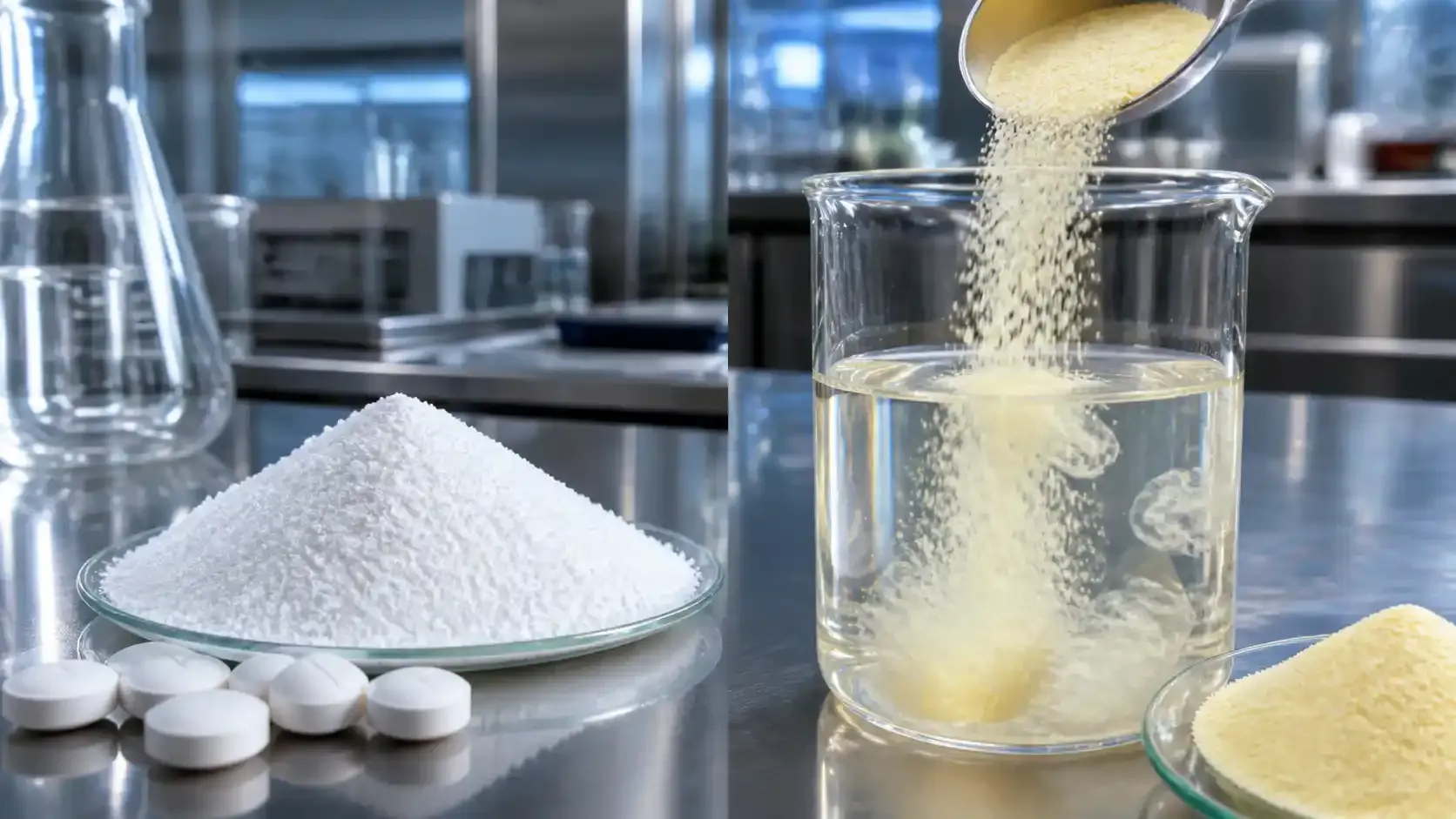
Sourcing microcrystalline cellulose (MCC) and resistant dextrin from China frequently occurs within the same procurement initiative, particularly for manufacturers developing tablets, capsules, low-sugar beverages, and high-fiber snacks. The real challenge lies in their distinct performance profiles: MCC's quality hinges on powder mechanics—think flow, compression, and moisture—while resistant dextrin's value is assessed by nutritional and sensory practicality, such as fiber content, solubility, viscosity, and taste neutrality. For procurement teams aiming to find a Recommended Chinese Microcrystalline Cellulose Manufacturer or a Recommended Chinese Resistant Dextrin Manufacturer, the most direct path to mitigating reformulation risks is straightforward: understand which specific lines on a specification sheet genuinely predict performance in your final product.
Why MCC and Resistant Dextrin Often Appear on the Same Shortlist
MCC is a staple excipient in solid dosage manufacturing, crucial for tablet integrity, compressibility, and processing efficiency. Resistant dextrin, frequently referred to as resistant maltodextrin, is a soluble dietary fiber used to boost fiber content in foods and beverages while maintaining consumer-friendly taste and texture.
Many modern product portfolios now include both:
Supplements (tablets/capsules) that demand predictable compression and disintegration.
Functional beverages requiring fiber enrichment without haze, excessive thickness, or off-taste.
Nutrition bars balancing sweetness reduction with desirable structure and mouthfeel.
When these product lines are developed in parallel, buyers often prefer suppliers capable of supporting both aspects of their portfolio—or at least conversant in both quality control logic systems.
Microcrystalline Cellulose Fundamentals Buyers Truly Need
MCC, derived from purified cellulose, is primarily valued for its behavior under pressure. In tablets and capsules, MCC functions as a diluent, a dry binder, and an aid to disintegration. In some food and cosmetic applications, it also contributes to texture and anti-caking properties.
What Matters Most on an MCC COA
A Certificate of Analysis (COA) can seem comprehensive yet still fail to predict tableting behavior. For procurement review, the following MCC lines are often critical:
Particle size / grade identity: This serves as a practical indicator for flow and compaction behavior. Different grades are selected based on production speed, target hardness, and blend characteristics.
Bulk density (and tapped density, if available): Informs expectations for die fill consistency and potential weight variation.
Moisture / loss on drying: Affects flow, the risk of sticking, and product stability during storage.
Flowability indicators (if provided): Some suppliers offer angle of repose or similar metrics; even when not explicitly listed, buyers frequently request basic flow data for high-speed presses.
Microbiological and contaminant limits: Essential if MCC is used in supplements or food formats, and vital for export documentation.
How MCC Grade Choice Manifests in Production
In practice, selecting the right MCC grade directly impacts measurable outcomes:
Tablet hardness vs. friability: An incorrect grade or inconsistent particle size distribution can lead to chips, edge cracking, or weak tablets.
Compression speed: Faster lines generally require more reliable flow and uniform die filling.
Blend uniformity: Density mismatch with actives and other excipients can increase segregation risk.
Disintegration behavior: MCC can support quick breakup, but formula interactions still matter.
For this reason, a supplier presenting only pharmacopeial compliance is not always enough. Buyers should also ask for grade recommendations by application, pilot-scale references, and lot-to-lot consistency data.
Resistant Dextrin Specifications That Actually Matter
Resistant dextrin is not judged by compression behavior. Its practical value comes from how well it delivers fiber while preserving product experience. In many applications, the best resistant dextrin is the one consumers barely notice.
Key Lines Buyers Should Review
Dietary fiber content: This is the headline functional metric and directly affects claim strategy, serving size, and cost-in-use.
Solubility: Critical for beverage and syrup systems where incomplete dissolution causes sediment or haze.
Viscosity: Helps determine whether the ingredient can raise fiber without making the drink too thick or the filling too gummy.
Taste neutrality: Buyers should confirm minimal sweetness, bitterness, or cereal-like aftertaste when targeting clean sensory profiles.
Moisture and hygroscopicity: Particularly important in powdered drink mixes and bar systems.
Microbiological standards and heavy metals: Non-negotiable for regulated food and nutrition exports.
Application Logic for Resistant Dextrin
Different end products prioritize different specification lines. In beverages, clarity, low viscosity, and taste neutrality often dominate the screening process. In bars and snacks, formulators may pay closer attention to binding contribution, water activity influence, and sweetness balance. In sachets or powdered products, dispersion and caking resistance become more operationally relevant.
That means buyers should not stop at “fiber percentage.” A resistant dextrin that looks attractive on a specification sheet but changes mouthfeel or causes dissolution issues may create hidden reformulation cost downstream.
How the QC Logic Differs Between the Two Ingredients
Although MCC and resistant dextrin may be sourced within one project, the quality-control logic is fundamentally different.
| Ingredient | Primary Performance Lens | Critical QC Focus | Typical Risk if Misread |
|---|---|---|---|
| MCC | Powder mechanics | Flow, density, moisture, grade consistency | Compression failure, weight variation, poor tablet robustness |
| Resistant dextrin | Nutritional and sensory practicality | Fiber content, solubility, viscosity, taste neutrality | Cloudiness, off-taste, texture issues, claim inefficiency |
Understanding this distinction helps procurement teams ask better technical questions early, before samples move into validation or scale-up.
Supplier Qualification Signals Worth Watching
When evaluating a Chinese supplier for either ingredient, specification sheets are only part of the picture. Buyers should also look for signals that indicate process control maturity and export readiness.
Clear grade mapping: Strong suppliers explain which grade fits which application instead of offering a one-size-fits-all recommendation.
Stable documentation package: COA, specification, allergen statement, non-GMO statement where relevant, microbiological data, and regulatory support should be easy to obtain.
Responsiveness to technical questions: Good suppliers can discuss density, flow, dissolution, or viscosity with practical detail rather than generic marketing language.
Lot consistency: Historical data across multiple lots often says more than a single passing COA.
Sampling discipline: Well-packed, clearly identified samples with traceable batch information indicate stronger internal controls.
If you are reviewing external resources or supplier profiles beyond the company domain, those third-party links should typically carry appropriate external-link attributes. For company-origin materials associated with www.sdshinehealth.com, standard internal treatment is generally sufficient.
Practical Questions Buyers Should Ask Before Approval
For MCC
Which grade is recommended for direct compression versus wet granulation support?
What is the typical lot-to-lot range for bulk density and moisture?
Can the supplier provide flow-related data for high-speed tableting environments?
How does the grade behave in blends with low-dose actives or poorly flowing ingredients?
For Resistant Dextrin
What is the validated dietary fiber value used for labeling support?
How does the product perform in clear beverage systems at practical use levels?
What viscosity profile should be expected across different concentrations?
Is there any noticeable flavor contribution in reduced-sugar applications?
Final Takeaway
For sourcing teams, the smartest way to compare a Recommended Chinese Microcrystalline Cellulose Manufacturer and a Recommended Chinese Resistant Dextrin Manufacturer is not to treat both ingredients with the same approval framework. MCC should be judged by how reliably it supports processing mechanics and tablet performance. Resistant dextrin should be assessed by how effectively it delivers fiber functionality without compromising solubility, texture, or taste.
In other words, the most useful specification sheet is not the longest one. It is the one that highlights the few technical lines most predictive of success in your exact application.