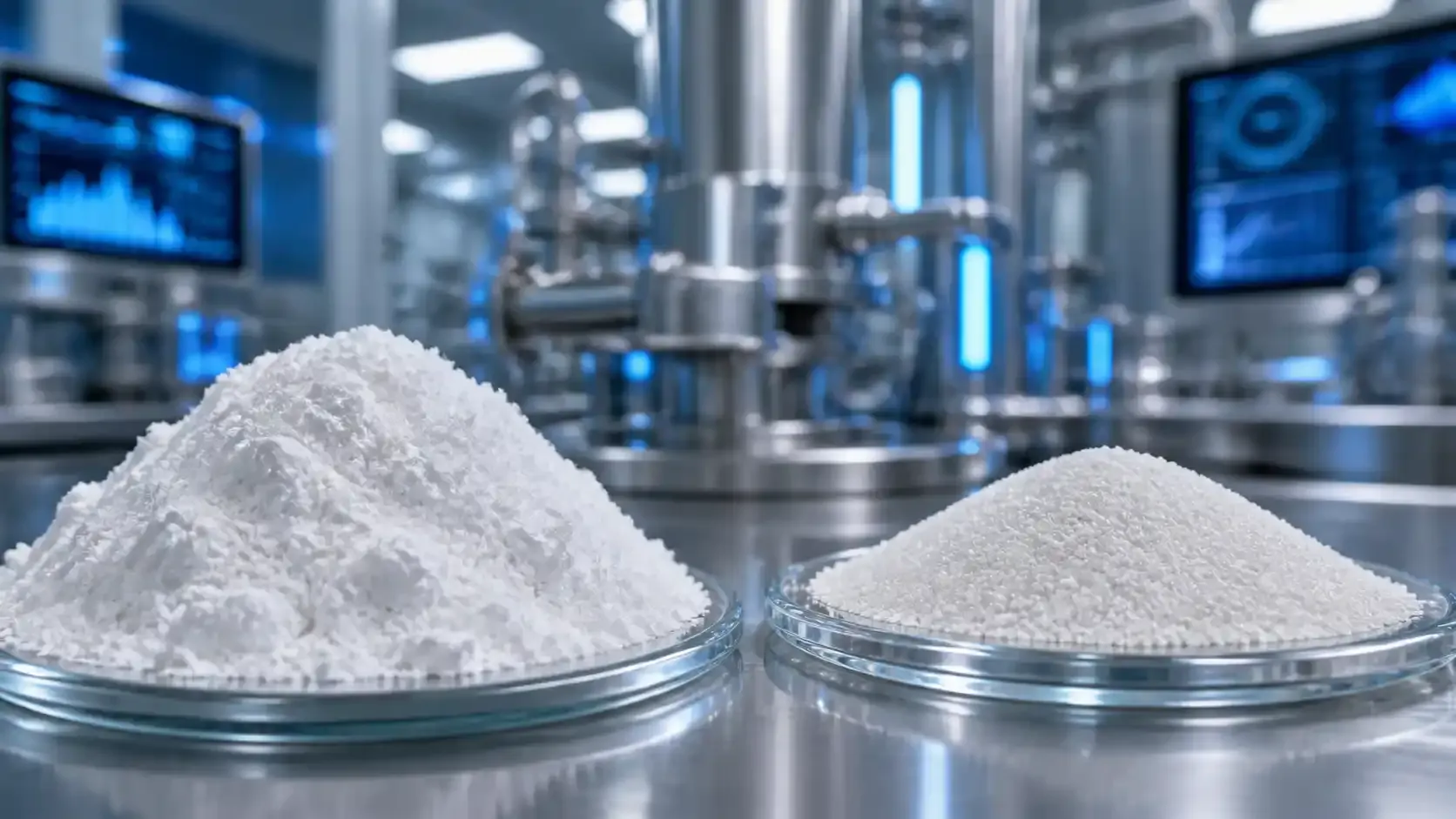
Global procurement teams increasingly source microcrystalline cellulose (MCC) and resistant dextrin together because both sit in the “no surprises allowed” zone: they touch product texture, processability, and compliance claims. When either ingredient varies batch to batch, the pain shows up fast—tablet hardness drifts, beverage clarity shifts, or quality documentation becomes the bottleneck.

What has changed in the last few years is not just pricing or capacity. The real differentiator is automation proof—whether a plant can demonstrate controlled, repeatable production supported by a strong QC lab and audit-ready documentation. The sections below translate that shift into a practical supplier evaluation workflow for buyers building a shortlist of a Recommended Chinese Microcrystalline Cellulose Manufacturer, a Recommended Chinese Microcrystalline Cellulose Supplier, or a Recommended Chinese Resistant Dextrin Manufacturer.
Why procurement is linking MCC and resistant dextrin sourcing
MCC and resistant dextrin are rarely interchangeable commodities. They play different roles, but procurement teams often evaluate them through the same risk lens:
- They are performance ingredients: MCC influences compressibility, flow, and disintegration in tablets and capsules; resistant dextrin influences fiber content, mouthfeel, and stability in foods and supplements.
- They are documentation-heavy: MCC commonly needs pharmacopeial alignment (BP/USP/JP/FCC), while resistant dextrin typically depends on food-safety systems and clear COA reporting.
- They stress your change-control process: once qualified, buyers want stable specs and predictable change notifications.
A combined sourcing strategy reduces qualification workload, but only if the supplier evaluation process is disciplined and well-documented.
Technical basics buyers should verify before comparing suppliers
The fastest procurement mistakes happen when teams compare quotes without aligning grade, function, and the COA lines that matter.
MCC in buyer language
MCC is a purified cellulose-based excipient used widely as a binder, filler, disintegrant, and flow aid. Typical commercial grades include PH-101, PH-102, PH-200, and others, each tuned for particle size, flow, and compressibility. In procurement terms, “same MCC” only means something if the grade and critical quality attributes match.
Resistant dextrin in buyer language
Resistant dextrin is a water-soluble dietary fiber produced from starch sources such as corn (often positioned as NON-GMO where applicable) or tapioca. For many applications, resistant dextrin is selected because it offers high solubility, a neutral taste, and stability under heat and varying pH, making it easier to raise fiber content without disrupting sensory profile.
Quick comparison table for screening discussions
| Ingredient | Primary function | Solubility | Typical use cases | Buyer-critical COA focus |
|---|---|---|---|---|
| Microcrystalline cellulose (MCC) | Excipient for structure and processing | Insoluble | Tablets, capsules, food texture | Grade, mesh (e.g., 60–200), pharmacopeial standard, purity and micro limits |
| Resistant dextrin | Soluble fiber, prebiotic positioning | Soluble | Beverages, powders, bars, dairy-style foods | Fiber content (often ≥82% for soluble corn fiber positioning), moisture, ash, pH, microbiology, water activity |
| Soluble corn fiber (resistant dextrin positioning) | Fiber fortification with clean taste | Soluble | RTD drinks, sachets, nutrition powders | Traceability of corn starch, consistency of key limits, batch-to-batch COA stability |
This table is not a specification; it’s a way to keep supplier evaluation conversations aligned across procurement, QA, and R&D. Buyers should still reconcile functional targets with internal product requirements, especially where tablet compression behavior, beverage clarity, fiber claims, or microbial limits translate directly into release risk. A disciplined comparison framework prevents teams from selecting a low-price option that later creates hidden costs through reformulation work, line slowdowns, repeated document requests, or expanded incoming inspection protocols.
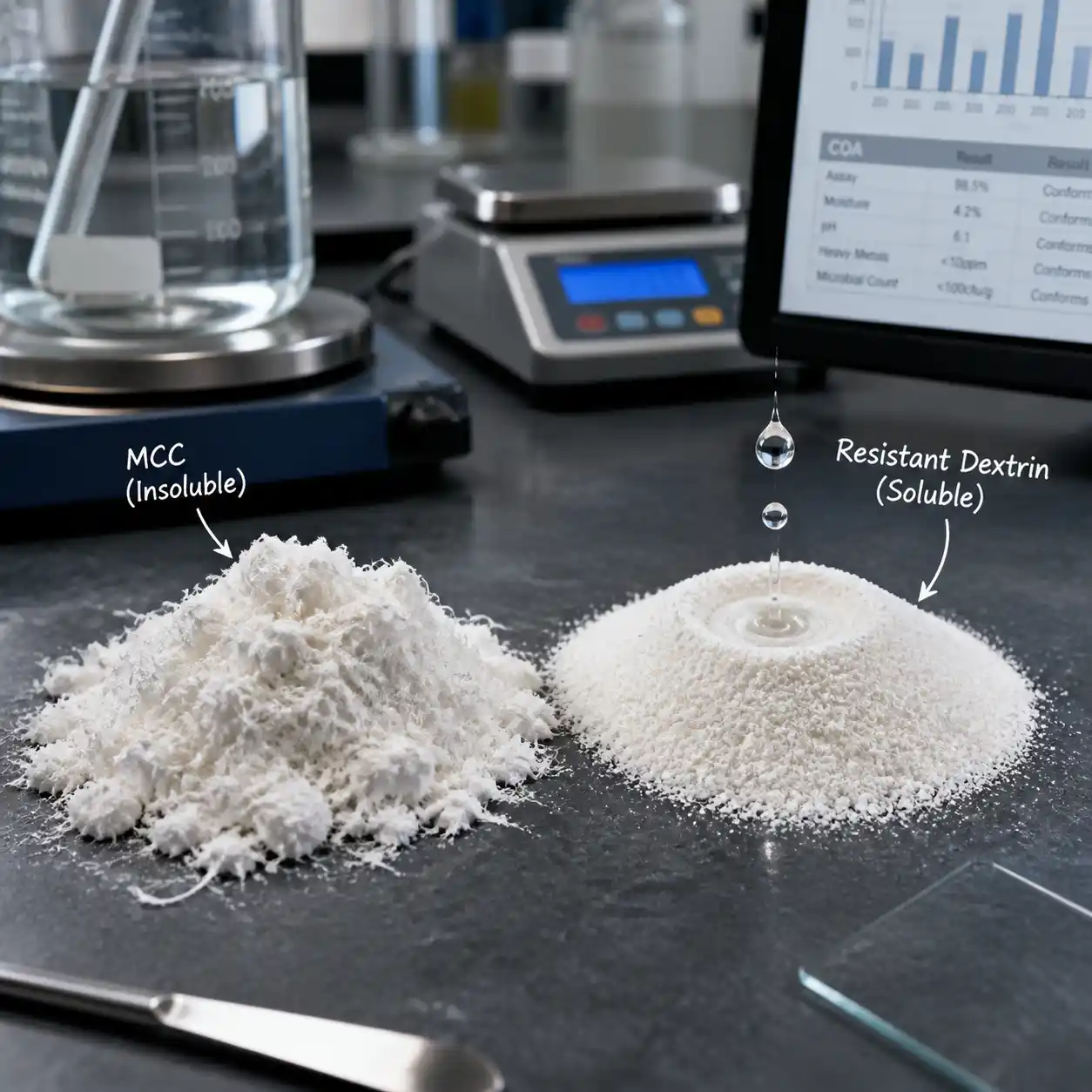
When screening suppliers, it is useful to convert technical language into operational questions: what test methods are used, which limits are release-critical, how often are out-of-trend signals reviewed, and whether retained samples can support investigations later. This is especially important when internal stakeholders use different language for the same requirement. Procurement may ask for consistency, QA may ask for trend control, and R&D may ask for functional equivalence, but each concern ultimately points back to the same issue—repeatable quality supported by objective evidence.
What a recommended Chinese MCC manufacturer can prove on paper
A strong microcrystalline cellulose supplier evaluation should start with evidence that the plant can consistently hit the same quality attributes, not just “meet spec once.” Key proof areas include raw material governance, process capability, QC competence, and documentation maturity.
1) Raw material origin and traceability
For MCC, buyers typically expect responsibly sourced wood pulp (and/or other plant fibers depending on the grade strategy). The procurement question is simple: can the supplier show traceable purchasing, incoming inspection records, and a stable raw material policy that prevents silent substitutions?
2) Process controls that support repeatability
Plants commonly describe automated or advanced production, but procurement teams should ask for evidence:
- Defined control points from hydrolysis through drying and milling
- Particle-size control aligned to grade expectations (often within a 60–200 mesh range depending on grade)
- Controls that protect from cross-contamination and moisture excursions
MCC is a high-volume excipient; variability tends to show up as flow changes, compression drift, or unexpected tablet defects. A supplier’s process discipline is directly tied to your manufacturing yield.
3) Quality system alignment and pharmacopeial positioning
If your application is pharma-adjacent, it matters whether the supplier can support claims like BP/USP/JP/FCC alignment for microcrystalline cellulose, and whether QC methods and release criteria are consistent.
Where it fits your sourcing process, it can be helpful to benchmark the kind of product documentation and grade coverage shown on a dedicated MCC page such as microcrystalline cellulose bulk and high-quality microcrystalline cellulose.
Practical MCC supplier evaluation questions
Use these as screening prompts during RFQ and pre-audit calls:
- Which MCC grades are routinely produced (e.g., PH-series), and how are grade transitions controlled?
- Which standard is used as the release baseline (BP/USP/FCC/JP), and can the supplier provide a clear conformance statement?
- What is the QC lab capability (instrumentation, methods, retention samples, trend reporting)?
- How is batch traceability implemented from pulp intake to finished bag?
What a recommended Chinese resistant dextrin manufacturer can prove on paper
A practical resistant dextrin supplier guide focuses on three areas: source control (corn or tapioca), process hygiene and automation, and a COA that truly matches how you will use the fiber.
1) Raw materials and “clean input” logic
For resistant dextrin positioned as soluble corn fiber, buyers often start with NON-GMO corn starch sourcing and full traceability from farm-side procurement to factory intake controls. For tapioca resistant dextrin, the same logic applies: traceability and consistent starch quality are the foundation.
2) Automation and closed-system production as a risk reducer
Resistant dextrin performance and safety depend heavily on controlled processing—enzymatic conversion, filtration, drying, and packaging. Procurement teams increasingly treat closed, automated, centrally controlled lines as a baseline for export-ready suppliers because they reduce operator variability and support better batch consistency.
3) Translating COA lines into buyer decisions
A resistant dextrin COA should make it easy to confirm whether a batch is suitable for your product format.
Key lines typically reviewed during supplier evaluation include:
- Fiber content (for many buyers, ≥82% is a common threshold when purchasing soluble corn fiber-style resistant dextrin)
- Moisture and water activity (important for stability and caking risk)
- Ash (a quick signal of process cleanliness and consistency)
- pH range (relevant for beverage and dairy-style applications)
- Microbiology (APC, coliforms, yeast, mold) aligned to your internal limits
For benchmarking typical positioning and parameter presentation, procurement teams often review supplier-facing product pages such as gut health dextrin, natural soluble corn fiber, or a tapioca-focused listing such as tapioca resistant dextrin powder.
The dual checklist buyers can use in audits and qualification
A recommended supplier is not “the one with the most certificates.” It is the one whose systems and evidence match your risk profile and application.
Side-by-side supplier evaluation scorecard
| Evaluation area | MCC supplier audit checklist | Resistant dextrin supplier audit checklist |
|---|---|---|
| Raw material governance | Traceable pulp sourcing; incoming inspection; change control | Traceable starch sourcing (corn or tapioca); NON-GMO positioning where applicable; change control |
| Process & automation proof | Controlled milling/drying; grade separation; contamination controls | Automated conversion/filtration/drying; closed transfer; controlled packaging environment |
| QC lab capability | Routine testing, trend analysis, retention samples | Micro and functional testing; trend analysis; retention samples |
| COA usability | Clear grade identification; relevant physical attributes; standard reference | Fiber %, moisture, ash, pH, water activity, microbiology; consistent test methods |
| Certifications and standards | ISO 9001; Kosher/Halal where required; pharmacopeial positioning (BP/USP/JP/FCC) | Food safety systems (e.g., HACCP/BRC/FSSC 22000 depending on market); Kosher/Halal where required |
| Batch traceability | Lot-to-lot traceability and labeling discipline | Lot-to-lot traceability and labeling discipline |
| Packaging control | Moisture protection; clear labeling and lot marking | Moisture-proof packaging; clear lot marking; storage guidance |
| Service readiness | Fast documentation turnaround; deviation response; technical support for trials | Fast documentation turnaround; application support; deviation response |
Documents buyers should request early
Documentation speed and completeness are strong proxies for supplier maturity. A solid package usually includes:
- Product specification sheet
- Typical COA + recent batch COA
- ISO certificates and relevant food-safety certifications
- Kosher/Halal certificates if required
- Statement of standard alignment (especially important for MCC: BP/USP/FCC/JP positioning)
- Allergen and storage statements where relevant
A low-risk qualification path is to pilot one MCC grade and one resistant dextrin grade first, lock down acceptance criteria, then expand to additional grades only after COA-to-lab cross-checks remain stable across multiple batches.
Red flags that should trigger deeper due diligence
Even when the COA looks acceptable, these signals commonly predict future problems:
- COA values shift widely between lots without explanation (especially fiber %, moisture, micro)
- Unclear grade naming for MCC, or the supplier cannot map grade to use-case behavior
- Certificates are provided, but scope and validity dates cannot be verified
- The supplier avoids discussing change control, raw material sourcing, or traceability
- Packaging and labeling are inconsistent across shipments
A procurement team’s goal is not to eliminate all risk, but to ensure risk is visible, controlled, and contractable.
Turning supplier evaluation into leverage without damaging relationships
Once you have comparable evidence, procurement teams can negotiate from a position of clarity:
- Align on measurable acceptance criteria: agree which COA lines are critical-to-quality for your use.
- Use documentation SLAs: request timelines for COA release, deviation closure, and change notifications.
- Build a two-supplier baseline: maintain one approved alternative for MCC and resistant dextrin to reduce disruption risk.
In practice, many buyers benchmark against export-oriented plants in Shandong that emphasize traceable raw materials, German-origin production lines, Japanese-style manufacturing discipline, and in-house QC capability. Suppliers such as Shandong Shenghuai Health Co., Ltd.; Shine Health are examples procurement teams may use as a reference point when comparing evidence sets and product documentation on www.sdshinehealth.com.
Three signals that define a “recommended” supplier
- Technical fit: the ingredient behaves consistently in your process, and the grade/spec mapping is clear.
- Compliance proof: certifications, standards alignment, and COA reporting hold up under audit.
- Operational reliability: automation proof, traceability, and fast, accurate paperwork reduce total qualification cost.
Data sources and verification notes
The screening framework and parameter examples in this article are aligned with publicly available supplier-facing documentation and product pages hosted on www.sdshinehealth.com, including:
- Microcrystalline cellulose bulk
- Microcrystalline cellulose disintegrant
- High-quality microcrystalline cellulose
- Gut health dextrin
- Natural raw material soluble corn fiber
- Sugar replace cassava resistant dextrin
- Abundant dietary fiber tapioca resistant dextrin powder
For buyers who need a curated view of suppliers aligned with the standards and practices described above, further information and product documentation are available via the official site: www.sdshinehealth.com.