Buyer-focused tactics to reduce total cost when sourcing MCC and resistant dextrin from China through spec discipline, COA checks, and smarter terms.
Purchasing teams looking for a microcrystalline cellulose supplier China or a resistant dextrin supplier China often start with a simple comparison of FOB prices. That approach rarely survives first contact with reality: one out-of-spec batch can trigger re-testing, reformulation, delayed launches, customer penalties, and a scramble for emergency replacement stock.
In 2026, two forces are raising the stakes. First, fiber-plus-protein product roadmaps are pushing higher volumes and tighter performance expectations. Second, China’s continued push toward chemical self-sufficiency is reshaping global trade flows and how buyers think about supply resilience. The practical takeaway is straightforward: to find a Recommended Chinese Microcrystalline Cellulose Manufacturer or a Recommended Chinese Resistant Dextrin Manufacturer, buyers must manage total cost of ownership (TCO)—not just the quoted price.

Why TCO Beats FOB When Buying MCC and Resistant Dextrin
For most buyers, “cost” is not the invoice number—it’s the sum of everything required to get compliant, consistent material into production. When evaluating a microcrystalline cellulose supplier China or a resistant dextrin supplier China, a simple TCO model typically includes four buckets:
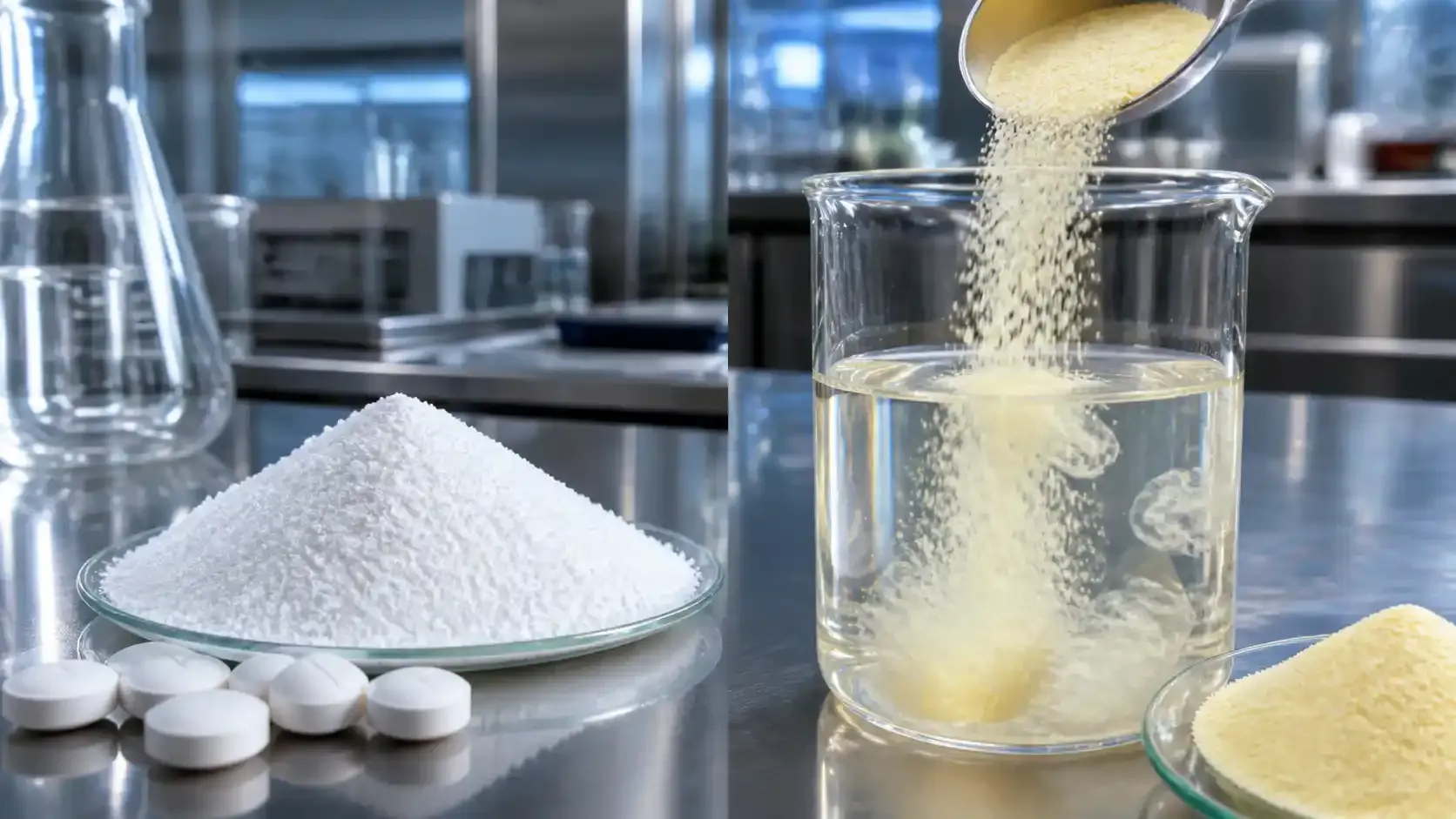
- Spec-fit cost: Does the material behave as expected in your formulation and process? If a cheaper resistant dextrin powder clumps during mixing or fails to dissolve clearly in a beverage application, the production downtime erases any initial savings.
- Compliance cost: Will documentation, certifications, and traceability clear your market requirements without delays? A missing allergen statement or an expired ISO certificate can leave containers stranded at customs, accruing demurrage charges daily.
- Logistics cost: Packaging integrity, moisture exposure, demurrage risk, and rework on arrival. Inferior bags that allow moisture ingress can ruin hygroscopic powders like dextrins before they even reach your warehouse.
- Relationship/contract cost: Lead time reliability, change control discipline, and what happens when something goes wrong. Does the supplier notify you of raw material changes before shipping, or do you find out when the QC lab flags a variance?
Hidden costs usually originate in spec-fit and compliance—because they are discovered late, after a batch has already crossed borders. A procurement strategy that ignores these factors effectively gambles the production schedule on every shipment.
The Spec Decisions That Most Often Trigger “Pay Twice” Scenarios
MCC: Grade Clarity is a Cost Control Tool
When a buyer searches for a microcrystalline cellulose supplier China, the immediate risk is grade mismatch. MCC is used as a functional ingredient in foods (anticaking, texturizing) and as a critical excipient in pharma (binder, filler), and the required grade can differ significantly by application and market expectations. Particle size distribution, bulk density, and moisture content are not just technical trivia; they dictate machine performance.
If a procurement team buys “MCC” without locking down the grade and key functional targets, the downstream bill often includes:
- Extra incoming testing to determine if the lot is usable.
- Compression or flow issues in tableting trials.
- Costly reformulation cycles to accommodate variable raw materials.
- Or in the worst case, rejected lots that must be disposed of or returned.
A practical move is to align procurement and formulation teams on what “acceptable MCC” means for the project before RFQs go out. For buyers who want a quick technical refresher, detailed formulation guides can help standardize internal terminology and ensure you are asking for the right material from the start.
Resistant Dextrin: The COA Must Match the Claim
For a resistant dextrin supplier China, the biggest cost shock is usually simple: the Certificate of Analysis (COA) does not support the fiber claim the brand intends to make. A common procurement anchor is fiber content ≥82% for resistant dextrin used as a nutritional dietary fiber ingredient. If an imported lot tests below your internal target, the “cheap” shipment becomes expensive fast: claims may need adjustment, nutrition panels may need rework, and the formula may require rescue ingredients to meet label promises.
If you are specifying resistant dextrin bulk food grade, you should be explicit about the parameters you will treat as release-critical. Product pages that clearly state core targets (such as fiber content ≥82% and protein ≤6.0%) provide a useful baseline for building a spec sheet. Additionally, verifying the source—such as confirming the use of Non-GMO corn starch—is increasingly critical for markets with strict labeling laws. Buyers should look for suppliers who are transparent about their raw material sources, as this directly impacts the final product's marketability.
COA and Spec Checks That Prevent the Most Common Import Surprises
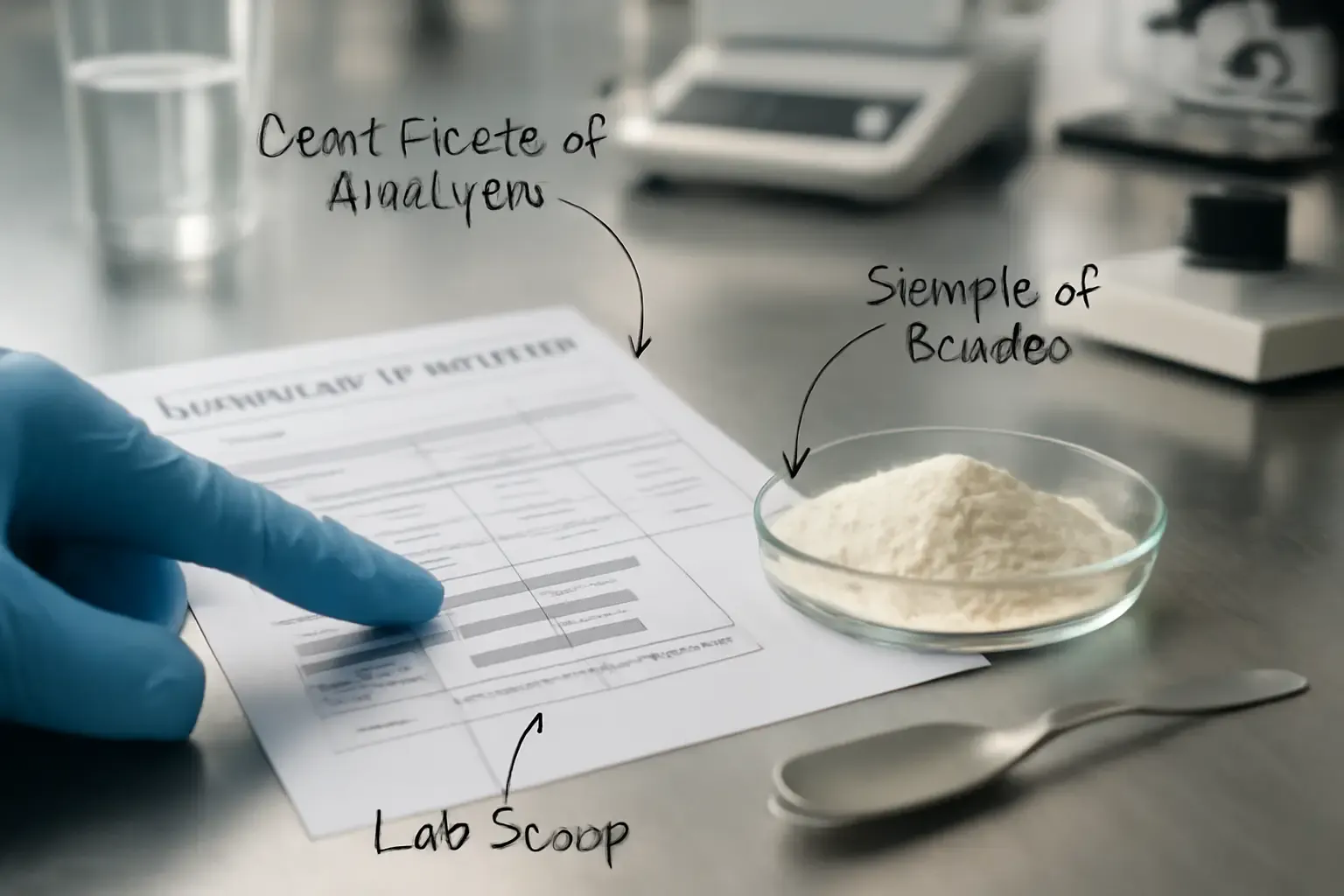
A strong COA review process does not have to be complicated, but it must be consistent. Below is a field-tested set of resistant dextrin COA specifications and MCC checks that catch most hidden-cost problems early.
Resistant Dextrin COA Specifications Buyers Should Treat as Non-Negotiable
When qualifying a resistant dextrin supplier China, confirm that the COA includes (and your contract references) at least:
- Fiber content: Commonly targeted at ≥82% or ≥85% for nutritional dietary fiber applications. This is the primary value driver.
- Appearance: Often white to light yellow powder. Significant deviation here can indicate process issues or burning during drying.
- Protein: Commonly limited, e.g., ≤6.0%. Lower protein content often suggests a purer extraction process and better taste neutrality.
- Solubility: It should dissolve clearly in water or juice without sediment.
- Lot identification and production date: Essential for traceability and shelf-life management.
- Storage guidance: Clear instructions (e.g., "Store in a cool place") ensure your warehouse team handles it correctly to prevent caking.
Just as important: require batch-to-batch consistency language in the commercial agreement (e.g., variance limits or a defined change-notification window). A consistent COA format across shipments makes trend monitoring possible—without turning your QC lab into a detective agency.
MCC Supplier Audit Checklist That Reduces Re-testing and Reformulation Risk
A practical MCC supplier audit checklist for a microcrystalline cellulose supplier China should focus on what drives variability:
- Clear grade definitions tied to your application (food vs. pharma expectations).
- A QC lab that can explain variability drivers (particle size distribution, moisture control, etc.).
- Change control discipline (raw material changes, process updates, equipment maintenance).
- Transparent sampling and retain-sample practices for investigations.
Even if you cannot audit in person, you can simulate an audit by requiring recent COAs, asking for a documented QC workflow, and running a pilot shipment with pre-agreed acceptance criteria. Asking for photos of the production workshop and quality control laboratory can also provide insight into their operational standards (e.g., GMP guidelines, ISO certifications).
What China’s Production Clusters Mean for Price Stability and Lead Times
When global buyers compare a microcrystalline cellulose supplier China or a resistant dextrin supplier China, “China” is too broad to be actionable. In practice, buyers evaluate production clusters for three things: capacity depth, export experience, and logistics convenience.
- Shandong: This province is widely associated with large-scale ingredient manufacturing and export-oriented operations. For resistant dextrin and related soluble fibers, Shandong-based suppliers are often attractive because they combine modern automation with proximity to high-quality corn starch sources (a major crop in the region). This vertical integration often translates to better price stability and raw material traceability.
- Jiangsu: Often evaluated for industrial depth and proximity to major ports and downstream manufacturing ecosystems.
- Guangdong: Can offer logistical advantages for certain routes and can be suitable when lead time flexibility is critical.
Regardless of province, plant-level capability matters more than the map pin. Buyers should look for signs of repeatable processing: automated control from feeding to filling, documented hygiene protocols, and a QC approach that is designed for export. Suppliers who invest in precision production lines (often of German or Japanese origin) and use advanced biological enzymes tend to produce cleaner, more consistent fibers.
One practical due-diligence move: ask your resistant dextrin supplier China to walk you through the process flow at a high level (no trade secrets needed). If the explanation can’t connect the process to the COA results, you are likely buying variability.
Commercial Levers That Reduce Landed Cost Without Cutting Corners
A buyer can lower total cost without squeezing quality—by removing friction and avoidable risk.
Set Packaging Requirements That Protect Specs in Transit
Packaging is not an afterthought for a resistant dextrin supplier China. Moisture pickup, torn bags, or unclear labeling can turn arrival into a claims dispute. Resistant dextrin is often hygroscopic; if the barrier layer fails, the product may arrive as a solid brick rather than a free-flowing powder.
Lock down:
- Bag format: Typical bulk is 25 kg kraft paper bags or fiber drums, depending on your handling equipment.
- Moisture protection: Ensure the use of high-quality inner liners (e.g., PE liners) that are properly sealed.
- Labeling requirements: Lot number, net weight, production date, and storage instructions must be legible and in English.
- Palletization: Request pallet loading photos as a release step to ensure stability during ocean freight.
Use “Pilot-First” Ordering to Protect Launches
If you are launching a fiber-plus-protein product, require a pilot shipment before scaling. The pilot should be tied to a clear acceptance checklist (COA fields, basic application tests, and packaging inspection). This keeps a first shipment from becoming an expensive lesson. Suppliers confident in their R&D capabilities and technical support will welcome this validation step.
Choose Incoterms to Match Your Control Points
For new suppliers, some buyers prefer terms that keep control over key steps (inspection timing, documentation, and freight handoff). The right Incoterm choice reduces demurrage risk and avoids the “nobody owns the problem” situation when something goes wrong.
How to Shortlist Recommended Chinese MCC and Resistant Dextrin Partners
Buyers searching for a Recommended Chinese Microcrystalline Cellulose Supplier or Recommended Chinese Resistant Dextrin Manufacturer can follow a repeatable shortlist sequence:
- Define the non-negotiables: Grade, application fit, COA fields (e.g., fiber ≥82%), and market documentation (Non-GMO, Halal/Kosher if needed).
- Verify export readiness: Use trade history, responsiveness, and sample documentation quality. A supplier who replies quickly with a standardized COA is often more operationally mature.
- Run a documentation test: Check COA consistency, traceability, and change control statements.
- Pilot shipment: Execute a smaller order with predefined release tests.
- Scale with a contract that protects specs: Include variance expectations and notification timelines.
For buyers who want to compare resistant dextrin types and related soluble fibers in one place, reviewing a supplier's full catalog—including Resistant Maltodextrin, Soluble Corn Fiber, and Polydextrose—can provide insight into their expertise. A specialized manufacturer often produces a range of functional fibers, indicating deep technical know-how rather than just trading activity.
Turning Spec Discipline Into a Measurable Cost Advantage
A reliable microcrystalline cellulose supplier China and a dependable resistant dextrin supplier China are rarely the cheapest on paper—and they are often the cheapest after six months of real operations.
The buyers who consistently win on margin do three things well:
- They write specs that reflect the product claim and the process reality.
- They treat resistant dextrin COA specifications and MCC grade confirmation as cost controls, not paperwork.
- They align logistics and commercial terms with where risk actually happens.