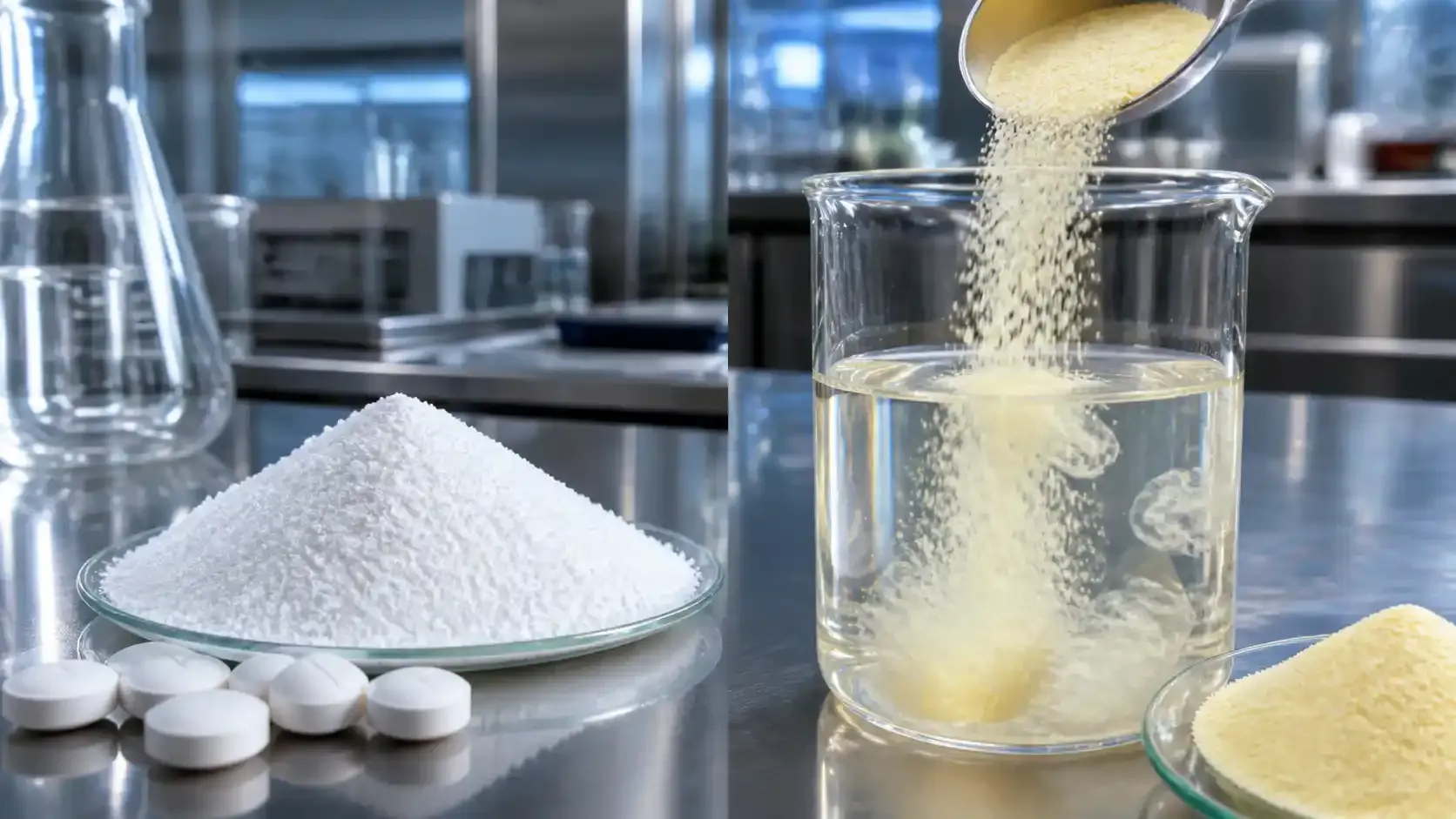
Accessible nutrition is shifting from a marketing phrase to a hard formulation requirement: deliver meaningful fiber, reduce sugar, and keep texture stable at mass-market cost. In 2026 trend coverage, 50% of Gen Z and millennials say they want functional foods that go beyond protein, including fiber and gut health; 54% connect fiber with digestive health; and 20% report increasing fiber intake over the past year. Those numbers explain why procurement teams keep shortlisting a recommended Chinese resistant dextrin manufacturer and a recommended Chinese microcrystalline cellulose supplier for repeatable product launches.
Why these two ingredients show up in the same RFQ
For buyers building accessible nutrition lines, two ingredients solve different problems and often work best together. They form the backbone of modern functional formulations:
Resistant dextrin is typically used as a soluble dietary fiber with neutral taste and flexible processing. Many commercial grades are sourced in China at scale, especially from Shandong, where high-volume supply is common.
Microcrystalline cellulose (MCC) is a widely used excipient and functional insoluble fiber. In solid dosage formats, MCC is often selected for compressibility, flow, and disintegration—the “make it manufacturable” layer that turns an idea into a stable tablet line.
This is why procurement briefs frequently pair a recommended Chinese resistant dextrin manufacturer (for fiber loading and sensory neutrality) with a recommended Chinese microcrystalline cellulose manufacturer (for mechanical reliability in tablets/chewables).
Ingredient fundamentals that decide whether a project will scale
When evaluating a resistant dextrin supplier China option or an MCC tablet binder supplier China option, the highest-risk failures are predictable: haze in beverages, sticky gummies, or tablets that cap, laminate, or disintegrate inconsistently.
Resistant dextrin checkpoints buyers use
Most buyers start with a simple baseline and then validate performance in the target format:
- Fiber content: commonly specified at ≥82% (a frequent commercial benchmark).
- Appearance: white to light yellow powder is typical in many supply specs.
- Process fit: check viscosity contribution, clarity, and stability across heat and acidity.
A practical reference for what suppliers market as resistant dextrin is the ingredient commonly labeled Resistant Maltodextrin.
MCC checkpoints buyers use
MCC is often selected by grade (e.g., PH series) to match particle size and flow. For buyers aiming for a pharmaceutical grade MCC manufacturer China source, the usual discussion points include:
- Grade availability: PH-101/102/200 and other options depending on flow and compression needs.
- Standards alignment: many buyers request USP/EP/FCC/JP-aligned documentation depending on end use.
- Mesh range: commonly sits in broad commercial bands (for example, 60–200 mesh in some listings), but grade-specific performance matters more than a single number.
For category browsing, see Microcrystalline Cellulose.
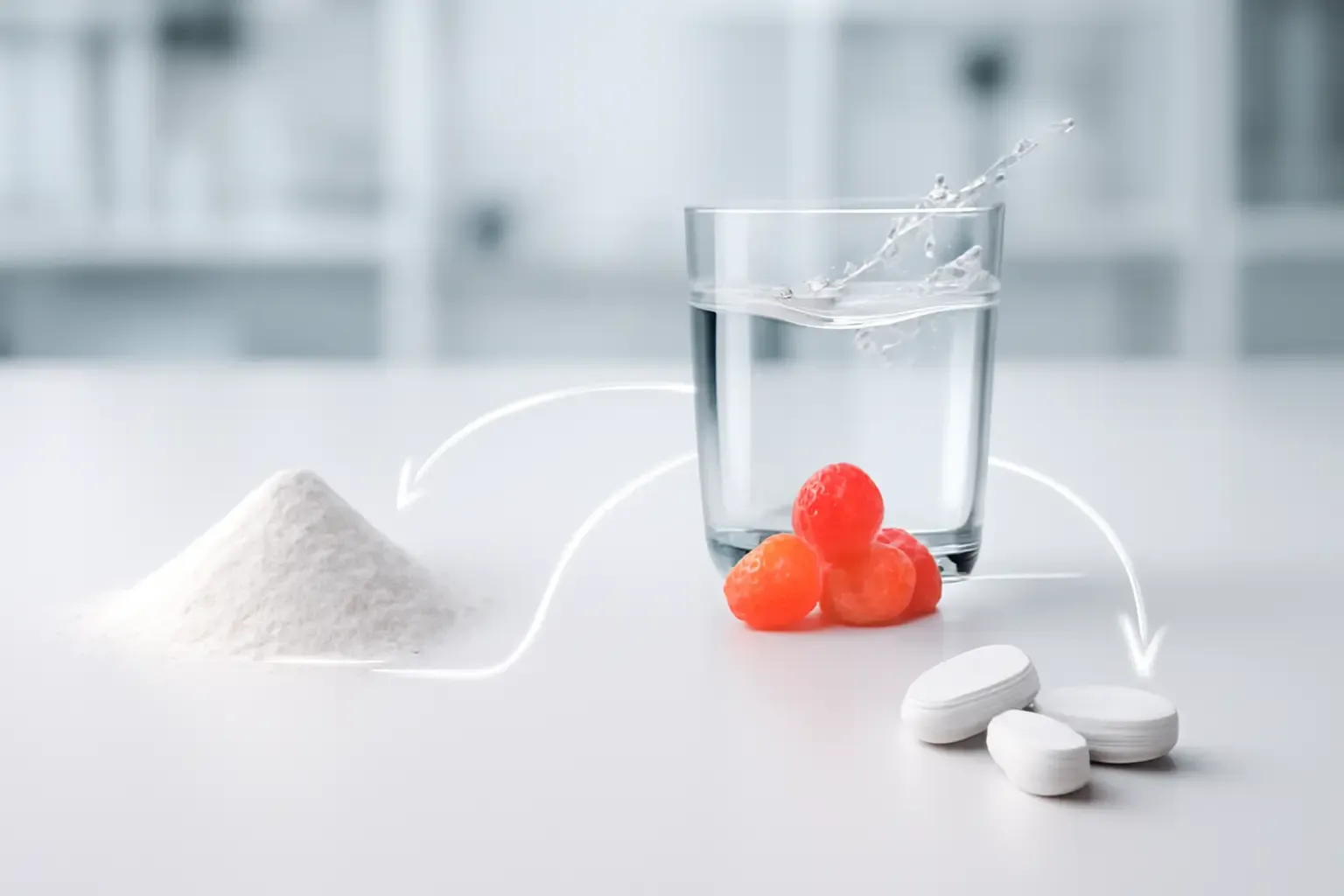
Case pattern one: High fiber RTD drink that stays clean
Objective: Launch a high-fiber, low-sugar ready-to-drink beverage without chalkiness or heavy mouthfeel.
Typical formulation role: resistant dextrin provides soluble fiber with minimal flavor impact, supporting “accessible nutrition” positioning while keeping processing straightforward.
Where projects fail: fiber haze, unexpected viscosity at cold fill, or flavor flattening when fiber replaces syrup solids.
Practical processing notes
Add resistant dextrin where it can fully hydrate (often in a syrup or premix step), then validate clarity after heat treatment.
If the target pH is acidic, confirm the ingredient’s pH tolerance window in application trials.
Spec sidebar for buyers (RTD drink)
| Item | Typical target window | Why it matters |
|---|---|---|
| Fiber content | ≥82% | Supports on-pack fiber claims and serving targets |
| pH fit | often tested around pH 4–6 | Stability and taste consistency |
| Solubility/clarity | validated in finished beverage | Avoid haze and sediment |
| Heat stability | tested through pasteurization/UHT | Prevent viscosity drift |
Supplier pattern that scales: a Shandong resistant dextrin manufacturer with automated process control and a QC lab that can issue consistent COAs tends to reduce reformulation loops, especially when rolling out multiple flavors.
Case pattern two: Fiber enriched gummies without the sticky tradeoffs
Objective: Build a gummy or chew that delivers fiber while keeping bite, flavor release, and shelf stability.
In confectionery, resistant dextrin is often chosen because it can increase fiber while replacing part of the sugar/syrup solids. This is where buyers begin to care less about brochure claims and more about how a low calorie confectionery fiber ingredient behaves under real water activity and storage.
Texture and shelf life checkpoints
- Confirm whether the fiber shifts gel strength or causes stickiness in humid conditions.
- Validate that sweetness and acid balance still work when syrup solids are reduced.
Spec sidebar for buyers (gummy/confectionery)
| Item | Typical target window | Why it matters |
|---|---|---|
| Fiber content | ≥82% | Enables meaningful fiber per serving |
| Moisture control | monitored per supplier spec | Stickiness and shelf stability |
| Process tolerance | cooked mass / deposit lines | Prevent scorch and uneven set |
| Sensory impact | neutral taste preferred | Keeps flavor true |
Supplier pattern that scales: a recommended Chinese resistant dextrin manufacturer that can provide samples fast, align on moisture targets, and support pilot trials will usually outperform a cheaper quote that cannot hold consistency.
Case pattern three: Compact tablets and chewables that survive production
Objective: Deliver “accessible nutrition” in a small solid format—fiber tablets, multivitamin tablets, or chewables—without fragile tablets or long disintegration times.
This is where a recommended Chinese microcrystalline cellulose manufacturer becomes central. MCC often acts as binder/filler and helps with disintegration performance, while resistant dextrin can add soluble fiber value—especially in chewables where taste and mouthfeel are under scrutiny.
How MCC and resistant dextrin split the job
- MCC: improves compressibility and flow; supports robust tableting and consistent hardness.
- Resistant dextrin: adds fiber content and can help reduce sugar in chewables.
Spec sidebar for buyers (tablets/chewables)
| Item | Typical target window | Why it matters |
|---|---|---|
| MCC grade selection | PH series matched to process | Flow, hardness, and disintegration |
| Mesh/particle profile | validated in trials | Uniform fill and tablet weight |
| Tablet integrity | friability and capping checks | Line efficiency and yields |
| Fiber loading strategy | staged with MCC support | Prevent soft, bulky tablets |
For buyers who want deeper grade-level reading before choosing an MCC tablet binder supplier China, this guide is a useful checkpoint: MCC Grades Formulation and QC Guide.
What the three cases imply about recommended Chinese suppliers
A short list for a recommended Chinese microcrystalline cellulose supplier or recommended Chinese resistant dextrin manufacturer is rarely built on one test result. The strongest supplier setups tend to share the same operational signals:
- Traceable raw materials (commonly non-GMO corn starch is highlighted for resistant dextrin lines).
- Imported or tightly controlled processing aids (many plants emphasize enzyme quality for fiber production).
- Automated central control from feeding to filling to reduce batch variation.
- Documentation readiness: specifications, COA, microbiology panels, and heavy metal controls aligned to the buyer’s market.
- Certifications fit for global trade: ISO programs are common, and many buyers also look for Halal/Kosher and HACCP-style systems depending on end use.
A visible, documented process flow is a strong proxy for repeatability—especially when qualifying bulk resistant dextrin for accessible nutrition programs.
A buyer friendly sourcing checklist you can reuse in RFQs
Use this checklist to compare a resistant dextrin supplier China option against another, or to validate a pharmaceutical grade MCC manufacturer China candidate without overcomplicating the first round.
- Confirm the “format-critical” spec first:
- beverages: clarity and heat stability
- gummies: moisture behavior and stickiness risk
- tablets: compressibility, flow, disintegration
- Ask for a recent COA + spec sheet (same batch family as your sample).
- Request the grade list and standards alignment (especially for MCC PH grades).
- Audit the QC story: what is tested in-house vs outsourced?
- Check for scalability signals: automated control, packaging consistency, lead-time realism.
For buyers benchmarking supplier portfolios and typical product positioning, these hubs are a practical starting point:
- Resistant dextrin portfolio: https://www.sdshinehealth.com/resistant-dextrin/
- MCC category overview: https://www.sdshinehealth.com/microcrystalline/
MCC is used across formats; grade choice and documentation quality are what separate a recommended Chinese microcrystalline cellulose supplier from a commodity quote.
Turning the trend into repeatable SKUs
Accessible nutrition is rewarding teams that treat fiber as a core design variable, not an afterthought. Across beverages, gummies, and tablets, resistant dextrin and MCC keep showing up because they solve different constraints: resistant dextrin helps deliver fiber with clean sensory performance, and MCC helps solid formats run reliably.