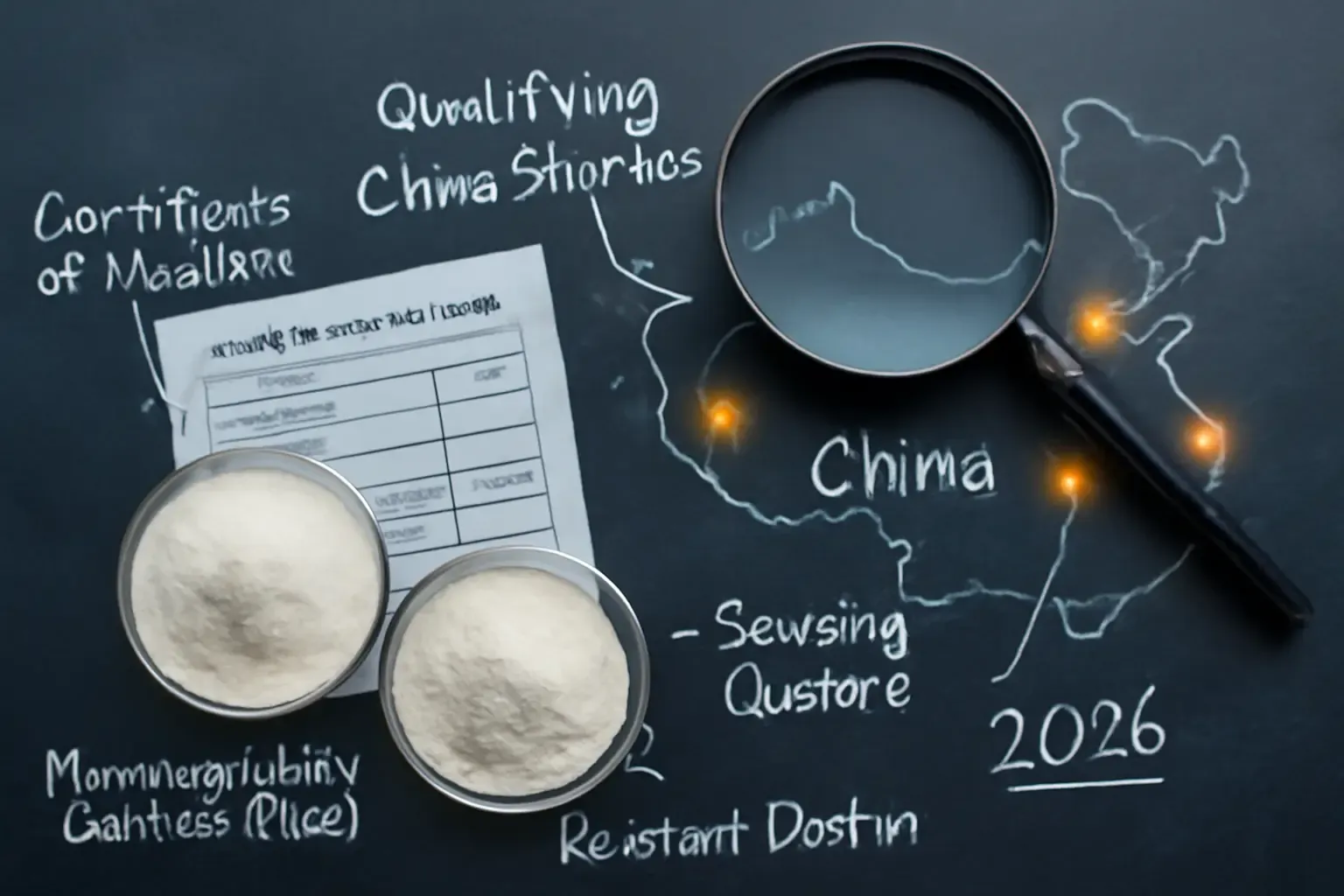
In 2026, procurement teams are treating “routine” inputs—like tablet excipients and soluble fibers—with the same rigor once reserved for APIs and critical packaging. The reason is simple: the risk profile has shifted. Public 2026 supply-chain forecasts have highlighted geopolitical fragmentation and trade-policy friction as top-tier threats, with extreme weather and infrastructure disruption rising in parallel. For buyers, that combination shows up as longer lead times, more route volatility, and sharper documentation demands at import.
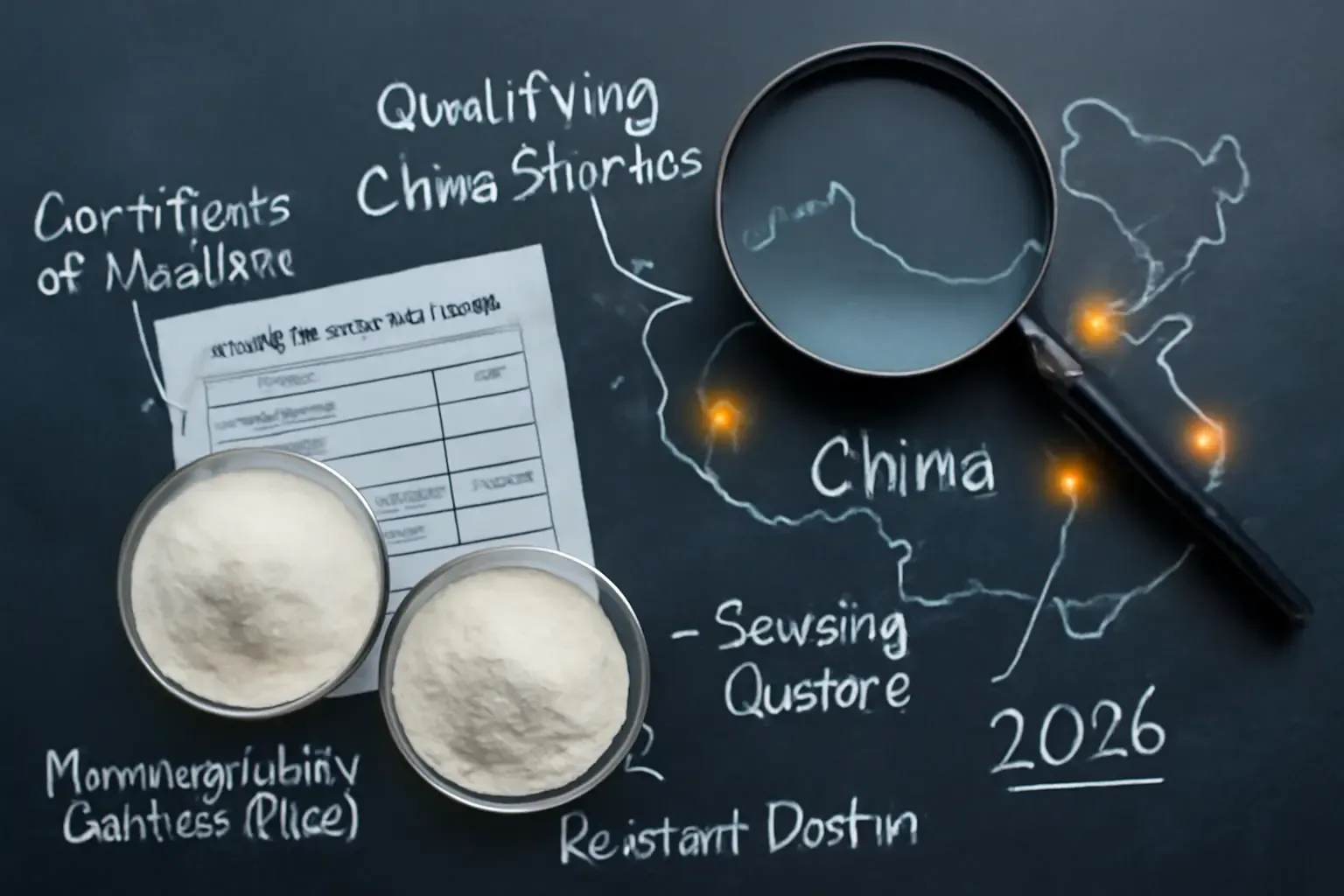
For categories that scale fast and tolerate little spec drift, this matters immediately. Take microcrystalline cellulose (MCC) and resistant dextrin as prime examples—ingredients that look interchangeable on a price sheet but behave very differently when QC, audits, or reformulation pressure hit. Here, the strategic question is no longer “China or not,” but rather which China supply base can hold spec, paperwork, and delivery under stress.
Why MCC and Resistant Dextrin Belong in the Risk Conversation
Most procurement teams already track risk for APIs, but excipients and functional fibers can quietly become the bottleneck—especially when the formulation is validated, the label is fixed, and the market window is short.
MCC in Solid Dosage Forms
MCC is widely used as a binder and filler in tablets and capsules, with performance tied to compressibility, flow, and particle characteristics. If a microcrystalline cellulose supplier China cannot control batch-to-batch consistency, the buyer pays for it later in blending behavior, tablet hardness, friability, and downstream investigations.
For teams working with pharmaceutical grade MCC China, procurement conversations typically shift from “price per kg” to “cost per approved batch.” That is why a Recommended Chinese Microcrystalline Cellulose Manufacturer is usually defined by documentation depth and repeatability—not just output volume.
Resistant Dextrin in Low-Carb and Fiber-Forward Products
Resistant dextrin is a soluble dietary fiber that resists digestion in the small intestine and can be fermented in the large intestine. It is often selected for neutral taste, low viscosity, and formulation flexibility, which helps product developers add fiber without turning a beverage into a gel or a snack into a brick.
For buyers evaluating a resistant dextrin supplier China, one spec frequently appears upfront: fiber content ≥82% (a common benchmark in commercial resistant dextrin lines). When fiber content, moisture, or microbiology drifts, the impact is not theoretical—it can trigger label changes, sensory problems, or extra QA holds. These “small” deviations are exactly the kind that amplify risk across the supply chain.
China’s Specialty Excipient Push is Changing Expectations
China’s role in specialty excipients and functional ingredients has been expanding from “capacity provider” to “strategic base.” Industry coverage of specialty excipients has pointed to China’s growing footprint in cellulosics such as MCC, while resistant dextrin capacity has become more visible across multiple provinces.
For resistant dextrin, procurement teams often describe sourcing in terms of regional clusters. In practice, buyers commonly evaluate supplier concentration in Shandong, Jiangsu, and Guangdong when building a dual-source strategy. Cluster sourcing can improve logistics and shorten lead time, but it also creates a new risk: province-level exposure (weather, utilities, port congestion, policy shifts).
A useful parallel comes from other materials where China moved rapidly toward self-sufficiency and then reshaped export flows. Procurement leaders increasingly apply that lesson here: if supply expands quickly, pricing can get more competitive—but qualification standards and trade scrutiny tend to rise at the same time.
What Buyers Mean by a "Recommended" Supplier
“Recommended” has become shorthand for a supplier that can survive an audit, a disruption, and a scale-up—without rework on the buyer side.
The Documentation Signals Buyers Ask for First
For a Recommended Chinese Microcrystalline Cellulose Supplier, and for a Recommended Chinese Resistant Dextrin Manufacturer, buyers typically prioritize:
- Quality system coverage aligned with the product use case (commonly ISO and HACCP for food ingredients; GMP expectations for pharma-relevant workflows)
- A complete COA with clear test methods, batch identifiers, and traceability
- Spec clarity that matches the application (tablet binder behavior for MCC; fiber content and microbiology for resistant dextrin)
- Change control discipline (raw-material changes, processing changes, and packaging changes communicated early)
When MCC is in scope, many teams also brief internal stakeholders using an MCC grade/QC explainer such as the formulation-focused guide at: MCC COA GMP China.
The Process and Raw-Material Markers That Reduce Surprises
Across both MCC and fiber purchasing, procurement teams repeatedly look for manufacturing choices that reduce variability:
- Defined feedstock (for many resistant dextrin lines, this is corn starch; some suppliers specify NON-GMO corn starch)
- Enzyme and process control suited to consistent conversion behavior
- Automation and in-process checks that reduce operator-driven drift
As a practical example of the kind of detail buyers increasingly expect from a resistant dextrin supplier China, some producers publish a clear parameter set (e.g., appearance and fiber benchmarks) and link their resistant dextrin portfolio by application, such as: resistant dextrin supplier China.
A Buyer-Friendly COA Reality Check
Procurement teams often say the COA is where “recommended” becomes measurable. It transforms from a sales document into an engineering control.
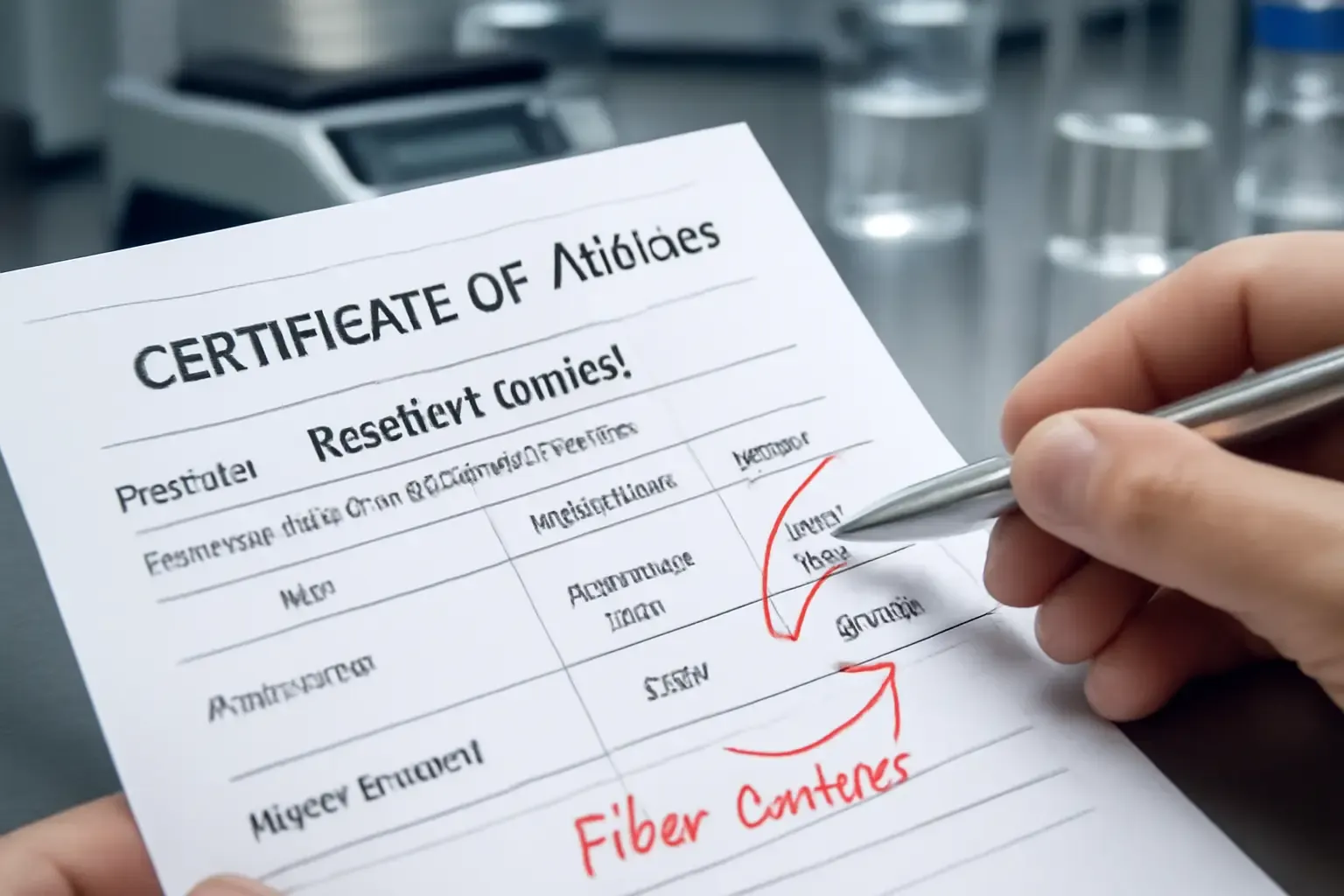
Resistant Dextrin COA Checkpoints Buyers Actually Use
Below is a practical checklist often applied when qualifying a food-grade resistant dextrin manufacturer:
| COA checkpoint | Why it matters | What buyers look for |
|---|---|---|
| Fiber content | Direct label and positioning risk | Common commercial benchmark: ≥82% fiber |
| Moisture / storage | Flow, caking, shelf stability | Clear limit and storage recommendation |
| Protein | Consistency and blend behavior | Common benchmark shown in some product lines: ≤6.0% |
| Microbiology | Import clearance and customer QA | Defined limits and traceable methods |
| Appearance | Batch acceptance and sensory risk | White to light yellow is commonly stated |
For teams building low-carb items, procurement and R&D often cross-reference the application page for low carb food additives so that internal stakeholders align on what the ingredient is expected to do in finished products.
MCC Documentation Questions That Prevent Audit Gaps
When the supplier is positioned as a microcrystalline cellulose supplier China for pharmaceutical use, buyers typically request:
- Grade clarity (intended use, functional role, and any relevant alignment with internal standards)
- A COA with method transparency and batch traceability
- Stability, packaging integrity, and storage statements consistent with the buyer’s SOP
Because MCC is often qualified within a broader pharma excipient sourcing China strategy, teams tend to build a shared internal checklist around the same MCC grade guide referenced earlier.
China Sourcing Playbook for 2026
A 2026-ready strategy is less about adding bureaucracy and more about designing a fast qualification loop.
Step 1: Build a Two-Ingredient Risk Map
If both MCC and resistant dextrin are in the portfolio, many buyers map:
- Province exposure (weather, power reliability, port access)
- Route options (multiple ports and forwarders)
- Inventory policy (safety stock aligned with the longest realistic disruption window)
This is where cluster knowledge matters: a resistant dextrin supplier China operating within a major production region can be an advantage, but only if the buyer avoids concentrating all supply in a single locality.
Step 2: Align “Pass/Fail” Specs to Real Applications
Avoid generic RFQs. A Recommended Chinese Resistant Dextrin Manufacturer is easiest to identify when the buyer sets specific acceptance windows around:
- Fiber content targets and test methods
- Moisture limits suitable for the chosen packaging and climate
- Microbiology requirements that match the import market and customer QA
For MCC, align acceptance around compaction behavior and grade fit for the dosage form—then tie that back to documentation.
Step 3: Trial by Documentation Before Trial by Container
Before any pilot shipment, many procurement teams request a documentation pack and perform a “paper audit”:
- COA completeness and batch traceability
- Raw material statement (e.g., NON-GMO claim where relevant)
- Packaging spec and labeling traceability
One resistant dextrin example page that procurement teams use to align internal expectations is: nutritional dietary fiber powder.
Step 4: Verify Export Readiness as a Quality Attribute
Export readiness is not a logistics detail—it’s a quality safeguard. Buyers increasingly ask whether the microcrystalline cellulose supplier China (or fiber supplier) can:
- Hold documentation consistency across shipments
- Maintain packaging that tolerates humidity and long transit
- Support faster corrective actions when a deviation occurs
Step 5: Define “Recommended” With Scoring
A practical supplier scorecard for a Recommended Chinese Microcrystalline Cellulose Supplier and a Recommended Chinese Resistant Dextrin Manufacturer often includes:
- Documentation quality (COA clarity, traceability, responsiveness)
- Process stability (batch consistency signals over multiple lots)
- Compliance fit (systems matching end-use risk)
- Resilience (route flexibility, business continuity planning, utility redundancy)
Final Thoughts for Procurement Leaders
China remains one of the most scalable sourcing bases for MCC and resistant dextrin—but scale only helps when it is paired with spec discipline and audit-ready documentation. Procurement teams that succeed with a resistant dextrin supplier China and a microcrystalline cellulose supplier China tend to do three things consistently:
- Treat COAs as engineering documents, not attachments
- Source by cluster with guardrails, avoiding province-level single points of failure
- Define “recommended” in measurable terms—documentation, consistency, and resilience