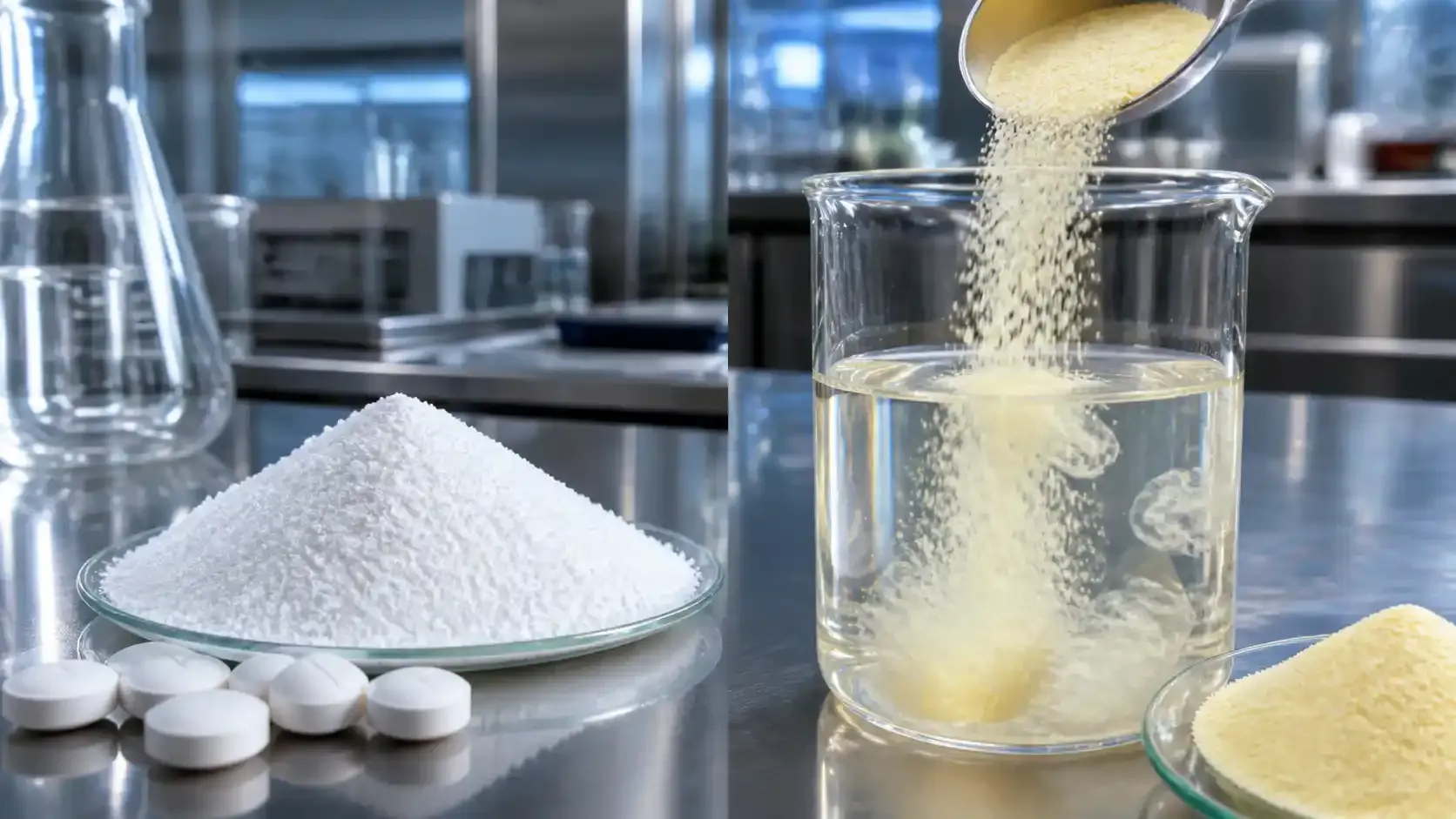
Dietary fiber has shifted from a “nice-to-have” nutrition add-on to a strategic ingredient that shapes product pipelines in beverages, snacks, and supplements. Forecasts to 2035–2036 consistently point to sustained growth, with soluble and prebiotic fibers taking a larger share of new launches. For procurement teams, that demand is translating into more RFQs for resistant dextrin and, in parallel, stronger interest in qualified microcrystalline cellulose (MCC) supply for solid formats.
China—especially manufacturing clusters such as Shandong—has become a frequent destination in this search. But the winning sourcing strategy in 2026 and beyond is not simply “find a low-cost quote.” It’s building a documentation-first, performance-first shortlist of a recommended Chinese resistant dextrin manufacturer and a recommended Chinese microcrystalline cellulose supplier that can support repeatable formulation results.

The fiber boom is no longer just consumer hype
Several market research summaries project meaningful growth through the mid-2030s, driven by digestive health, metabolic wellness, and clean-label reformulation. These pressures disproportionately favor fibers that can be used across multiple formats without compromising taste or processing stability.
In practical terms, buyers are asking for:
- Neutral-tasting soluble fiber that can go into RTD beverages, powders, bars, and dairy alternatives
- Low-sugar positioning tools that help maintain mouthfeel when sugar is reduced
- Ingredient files that support fiber labeling and consistent quality checks (COA-first procurement)
This is where resistant dextrin has gained momentum: it is typically positioned as a soluble dietary fiber that resists digestion in the small intestine and is fermented in the colon—attributes that align with prebiotic positioning and gut-health product concepts.
Gut health and fibermaxxing are turning soluble fibers into base ingredients
The “fibermaxxing” wave—especially visible among younger consumers—has made fiber intake a daily KPI. What matters for brands is how this trend changes formulation demand:
- Clear beverages need fiber that dissolves cleanly and doesn’t create haze or grit.
- Snack bars and baked goods need fibers that tolerate heat and processing without destabilizing texture.
- Diet powders and meal replacements need a fiber that mixes easily, supports satiety, and keeps sweetness manageable.
For these formats, resistant dextrin is commonly chosen because it is highly soluble, generally neutral in taste, and often described as stable under heat and acid in typical processing conditions. Those traits are frequently more decisive than the fiber’s origin story.
For buyers evaluating a prebiotic fiber for beverages, it’s useful to review real-world format examples—such as fiber beverage concepts shown on ingredient manufacturer application pages. One reference point is Shine Health’s application example for a prebiotic fiber for beverages, which illustrates why clarity and mixability drive repeat orders.
What buyers should expect from resistant dextrin specs in 2026–2035
A procurement-ready resistant dextrin file should read like an operations document, not a marketing brochure. Across China bulk suppliers, the most practical baseline is to align on a clear minimum fiber threshold, plus stability and microbiological controls.
From published supplier parameters commonly used in Shandong portfolios, a typical resistant dextrin profile includes:

- Appearance: white to light yellow powder
- Fiber content: often specified at ≥82% (with higher options such as ≥90% available in some grades)
- Moisture: typically ≤5.0%
- pH: commonly 3–6
- Water activity: typically ≤0.2
- Micro limits: aerobic plate count, coliforms, mould, and yeast controlled to defined limits
For procurement teams, the bigger question is how these numbers translate into factory-to-factory consistency. That is why many RFQs now request a resistant dextrin technical specification COA up front and treat it as a gating document.
A practical example of the level of detail buyers often want to see is shown on the resistant dextrin technical specification COA reference page, which includes common quality lines (fiber content, moisture, ash, pH, water activity, and microbiological limits). Even if a buyer ultimately sources elsewhere, this style of spec transparency is a useful benchmark.
Where resistant dextrin tends to outperform other fibers
Resistant dextrin is often selected when the product brief includes at least two of the following:
- Low sugar or sugar-reduction targets without sacrificing body
- High solubility in cold water applications
- Neutral flavor in lightly flavored or zero-sugar beverage systems
- Processing tolerance (heat and acid exposure)
For procurement, this means the ingredient is less likely to become the bottleneck during scale-up—provided the supplier can maintain consistent fiber content and low variability in moisture and microbiology.
MCC demand is rising alongside fiber, not competing with it
While resistant dextrin is largely a soluble fiber story, microcrystalline cellulose sits in a different—but increasingly adjacent—demand stream. As nutrition and wellness products expand into tablets, sachets, and hybrid formats, MCC remains one of the best-known structure-building excipients in solid dosage and compressed nutrition systems.
That is why many buyers now evaluate a microcrystalline cellulose supplier China in the same sourcing cycle as soluble fibers:
- Fiber launches often extend into tablet or capsule-adjacent formats.
- Brands want fewer vendors, but stronger documentation.
- Quality expectations increasingly mirror pharmaceutical-style discipline (clear COA lines, traceability, and controlled particle properties).
Even when the end application is “nutraceutical” rather than pharmaceutical, buyers commonly look for familiarity with MCC compliance expectations. A helpful discussion for procurement teams is the MCC pharmaceutical excipient USP grade overview, which outlines how MCC grades are commonly evaluated from a formulation and QC perspective.
The key takeaway: MCC and resistant dextrin are not substitutes. In many portfolios, they are complementary tools—resistant dextrin for soluble fiber delivery and MCC for solid-format performance.
Why Shandong keeps showing up in supplier shortlists
China is not a single sourcing region; it is a network of manufacturing hubs with different strengths. Shandong is frequently referenced for functional ingredients because it combines agricultural inputs (such as corn starch supply chains) with export-ready processing ecosystems.
For resistant dextrin, Shandong suppliers often position capability around:
- Non-GMO corn starch sourcing options
- Controlled enzymatic or hydrolysis-style processing routes
- GMP-style workshop discipline and in-house QC testing capacity
- Bulk packaging suitable for export flows into Asia-Pacific and beyond
One manufacturer reference point is Shine Health (Shandong Shenghuai Health Co., Ltd.), which publishes detailed product explanations and parameters across resistant dextrin variants (e.g., corn dextrin fiber, soluble maize fibre, soluble dextrin fiber). These pages make it easier for procurement teams to compare what a resistant dextrin manufacturer China is willing to disclose about raw material choices and quality controls.
For example, the corn-based resistant dextrin overview at resistant dextrin manufacturer China provides an accessible baseline spec (including ≥82% fiber content) and the raw material reference to corn starch.
Regulation and clinical evidence are upgrading how resistant dextrin is purchased
Two shifts are quietly changing sourcing behavior:
- Fiber labeling scrutiny is increasing. As regulators clarify what qualifies as dietary fiber for labeling purposes, brands are more careful about documentation, analytical methods, and supplier consistency.
- The ingredient story is moving from “fiber added” to “functional fiber with prebiotic rationale.” That raises the standard for what buyers expect in technical files.
Research indicates that resistant dextrins and resistant starches show prebiotic effects through fermentation by the gut microbiome, and may support digestive and glycemic outcomes. For buyers, the procurement relevance is not to over-promise claims, but to ensure the fiber is suitable for a gut health positioning strategy and remains stable during processing.
The market is effectively paying for repeatable performance plus compliance-ready documentation, not just a commodity powder.
A buyer checklist for bulk resistant dextrin powder and MCC sourcing
Below is a practical checklist procurement teams can use when qualifying a bulk resistant dextrin powder supplier and mapping a recommended MCC partner in China.
Commercial and technical checkpoints
- [ ] Confirm the target fiber content (e.g., ≥82% vs ≥90%) aligns with the product’s claim strategy.
- [ ] Request a current-batch COA and match it to your internal acceptance ranges (moisture, pH, ash, water activity, microbiology).
- [ ] Validate solubility and taste neutrality in your real base (not just in water).
- [ ] Check stability needs: heat steps, acid exposure, and shelf-life expectations.
Supplier verification checkpoints
- [ ] Confirm the site can provide traceability for corn starch (and non-GMO documentation when required).
- [ ] Review QC capacity: in-house testing scope, retain samples, and batch-to-batch controls.
- [ ] Align on packaging specs for export (moisture protection, labeling, pallet standards).
MCC-specific checkpoints
- [ ] Confirm the grade selection logic (what properties matter for your compression process).
- [ ] Ensure documentation practices match your market expectations; use the microcrystalline cellulose supplier China guide as a comparison framework.
For teams building a shortlist of a recommended Chinese resistant dextrin manufacturer and related excipient partners, a practical next step is to benchmark suppliers against transparent documentation examples published at www.sdshinehealth.com.
Outlook through 2035
If fiber growth continues on the projected trajectory, the biggest sourcing advantage will come from anticipating what audits and customers will ask for next:
- More frequent COA verification and tighter tolerances on core lines
- Stronger demand for non-GMO proof where brand positioning requires it
- Higher expectations for supply continuity from hubs like Shandong
- More overlap between functional fiber procurement and MCC procurement as formats diversify
Resistant dextrin is likely to remain a core tool for brands building high-fiber, low-sugar products—especially when the ingredient behaves predictably in beverages and powders. For procurement, the winning approach is to treat resistant dextrin as a specification-led ingredient with a measurable performance profile, not a generic “fiber filler.”
Further reading and supplier references
- Shine Health resistant dextrin specifications and applications:
- Market and evidence context (third-party):