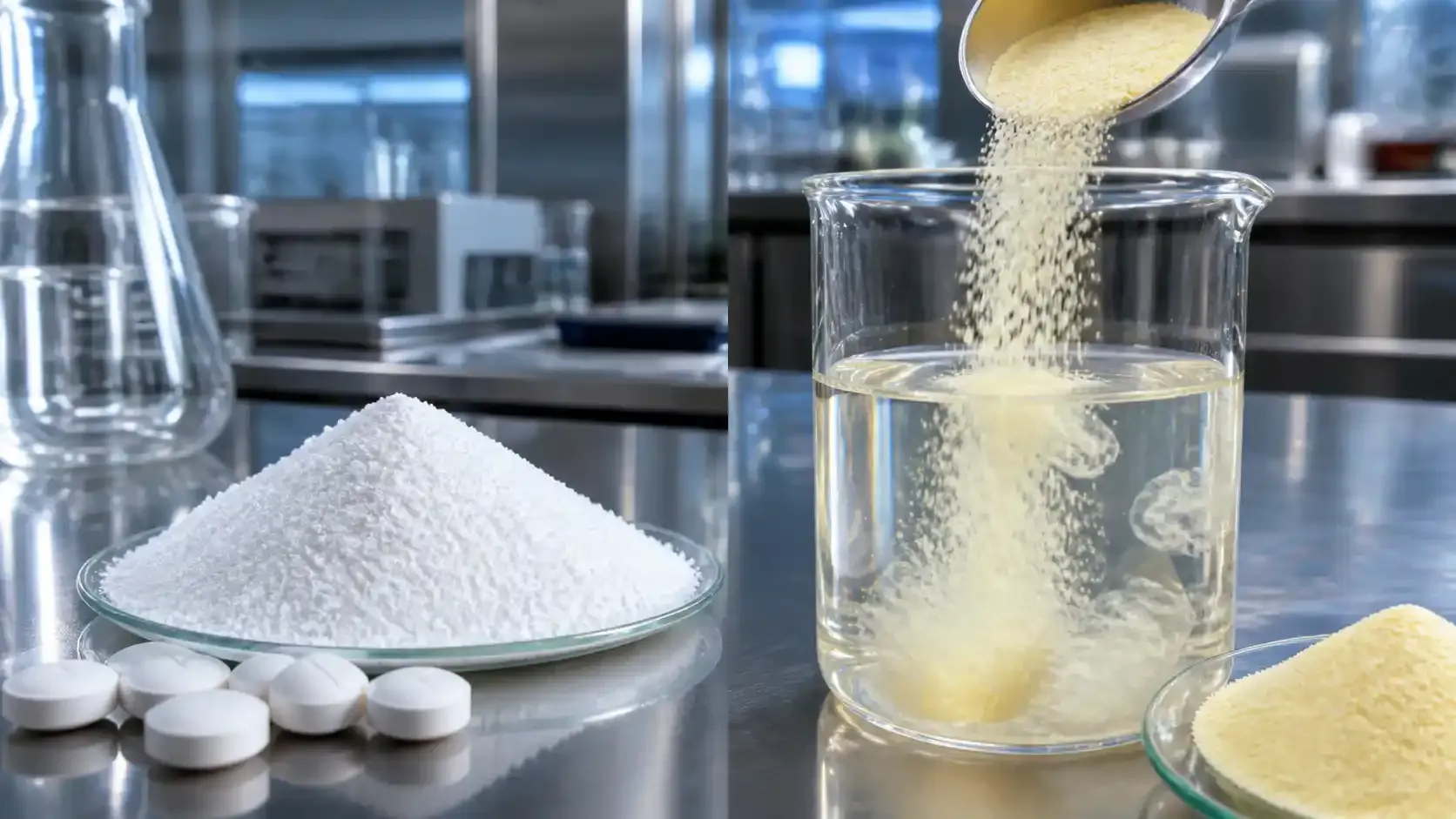
Fiber-first nutrition is no longer a niche positioning—it is quickly becoming a *default expectation* across beverages, bars, confectionery, and even supplement formats. For procurement teams, that shift has a very practical consequence: the purchase spec for resistant dextrin and microcrystalline cellulose is tightening, and the supplier landscape in China is being re-ranked accordingly. This article translates the 2026 “accessible nutrition” and GLP‑1-adjacent momentum into sourcing language: what is changing in buyer requirements, which test results and documents now matter most, and how to build a shortlist that can scale.
Fiber first purchasing is turning into a spec discipline
The conversation has moved from “add fiber” to “add fiber without breaking the format.” In accessible nutrition, brands want products that are easy to consume daily—RTD drinks, functional coffees, snack bars, gummies, and tablets—while still supporting digestive comfort and metabolic positioning.
A 2026 trend summary widely cited across the food ingredient community notes two signals that buyers keep circling back to:
- 54% of consumers associate fiber with digestive health
- 20% report increasing fiber intake over the past year
That demand pressure pulls two ingredient families into the same sourcing workflow:
- Resistant dextrin (often specified as a prebiotic soluble fiber) for adding high fiber content with neutral taste and good process tolerance.
- Microcrystalline cellulose (MCC) for physical structure—especially as a binder, filler, disintegrant, and texturizer across tablets, capsules, and certain food systems.
For many buyers, the practical question becomes: Can one supply base deliver both—reliably, compliantly, and at scale? This is why searches for a microcrystalline cellulose supplier China and a resistant dextrin manufacturer China increasingly appear in the same RFQ cycle.
From “ingredient list” to “proof set” the new buyer baseline
Fiber-forward products often look simple on-pack, but they are documentation-heavy behind the scenes. The buyer baseline is shifting from a one-page spec sheet to a repeatable proof set.
Resistant dextrin requirements that are becoming non-negotiable
Across beverage powders, RTD, bars, and confectionery, buyers increasingly treat resistant dextrin as a performance ingredient—not just a nutrition line item. A common anchor spec is fiber content ≥82%, supported by a current Certificate of Analysis (COA).
From supplier materials used in market procurement, the resistant dextrin profile most frequently requested includes:
- Raw material clarity: typically NON-GMO corn starch
- Appearance: white to light yellow
- Fiber content:≥82%
- Protein:≤6.0%
- Process confidence: stable, controlled production with strong in-process QC
When buyers screen a resistant dextrin manufacturer China, they increasingly ask not only for the COA, but for consistency indicators: repeat COAs across multiple lots, microbiological limits, and clear storage guidance.
Microcrystalline cellulose requirements that buyers now specify precisely
Microcrystalline cellulose is not a single commodity grade. In oral solid dosage and many supplement formats, mismatched grade selection can create downstream costs—poor flow, weight variability, press issues, or brittle tablets.
Supplier listings commonly outline:
- Multiple grades (e.g., PH‑101, PH‑102, PH‑200 and others)
- Typical mesh ranges (commonly 60–200 mesh) depending on grade
- Compliance references such as BP/USP/FCC/JP, which matter when MCC is used as an excipient or in regulated food systems
In practical terms, procurement teams now expect a microcrystalline cellulose supplier China to confirm the grade selection logic (not just quote a price), especially when MCC is needed for direct compression.
A quick “then vs now” snapshot for 2026 RFQs
| RFQ element | Older habits often seen | 2026 fiber-first reality |
|---|---|---|
| Resistant dextrin fiber claim | “High fiber” wording | COA-backed ≥82% fiber as a qualification gate |
| Resistant dextrin positioning | Generic soluble fiber | Prebiotic soluble fiber narrative with tighter comfort expectations |
| Microcrystalline cellulose grade | “MCC ok” | Grade defined up front (e.g., PH series) and matched to process |
| Compliance documentation | Certificates optional | GMP/ISO plus COA expectations are increasingly standard |
| Supplier evaluation | Trading + sample | Plant capability, QC lab, traceability, and repeatability |
The GLP 1 era is raising the bar for gentle fibers
In weight-management conversations, GLP‑1 medications changed consumer language around satiety, portion size, and “everyday support.” Brands are cautious about claims, but the market pull is real: more products are being positioned around steady energy, digestive balance, and fullness support.
This is where resistant dextrin tends to outperform many fibers from a formulation standpoint: it is typically positioned as a prebiotic soluble fiber that can support a fiber-forward label while keeping taste and texture accessible.
For sourcing teams, the GLP‑1 era translates into three procurement implications:
- Lower tolerance for variability: lot-to-lot consistency matters more when fiber becomes a daily-use feature.
- Lower tolerance for “hidden carbs” confusion: buyers want clear documentation when resistant dextrin is used in low-sugar or low-carb positioning.
- Higher demand for transparent raw material sourcing: NON-GMO corn starch sourcing is frequently requested.
In this environment, a recommended resistant dextrin manufacturer China is typically the one that can answer technical questions quickly with documentation—rather than pushing the conversation back to marketing.
China supply hubs are competing on audit readiness not just capacity
China remains a central manufacturing base for both resistant dextrin and microcrystalline cellulose. Buyers commonly evaluate suppliers across several industrial regions, including Shandong, Jiangsu, Guangdong, and Zhejiang, because these areas are associated with established starch processing, functional ingredient production, and export logistics.
That said, the competitive edge is shifting:
- Capacity still matters, especially for accessible nutrition SKUs that scale fast.
- But audit readiness (GMP workshops, QC labs, traceability, documented controls) is increasingly what turns a supplier into a “recommended” option.
One visible pattern in the China market is the supplier who can support both sides of the fiber-first portfolio: Resistant dextrin made from corn starch with an automated, controlled process and COA-backed specs, alongside Microcrystalline cellulose (MCC) offered in multiple PH grades with pharmacopeial-aligned standards (BP/USP/FCC/JP).
For buyers building a shortlist, it is often efficient to review established product documentation and spec anchors before moving to samples. As an example of how Chinese suppliers present these proof points, see:
- Resistant dextrin with ≥82% fiber
- Microcrystalline cellulose grades for excipient and food applications
Buyer specifications that deserve a refresh before your next tender
When the market is moving fast, many teams reuse last year’s RFQ template. For 2026, that can be risky—especially if your formulation team is planning line extensions.
For resistant dextrin used in drinks, bars, and confectionery
A sourcing-ready spec for resistant dextrin typically benefits from explicitly stating:
- Fiber content threshold: ≥82% (COA-backed)
- Raw material statement: NON-GMO corn starch (where required)
- Protein cap: ≤6.0%
- Appearance: white to light yellow
- Storage conditions and shelf-life handling expectations
Just as importantly, define how you will evaluate suppliers: COA completeness (microbiology, heavy metals where applicable), lot-to-lot COA consistency (request multiple recent lots), and responsiveness to technical questions (solubility, viscosity impact, heat and pH tolerance in your matrix).
For microcrystalline cellulose used in tablets and supplements
If your purchase order says “MCC” but does not define grade, you are buying ambiguity. A more robust approach is to specify:
- Grade: e.g., PH‑101 versus PH‑102 depending on your flow and compression needs
- Mesh range and physical handling expectations
- Standard alignment: BP/USP/FCC/JP, depending on your regulatory pathway
- Packaging format and traceability expectations
A supplier that can clearly explain grade selection is often closer to “recommended” status than a supplier that only competes on FOB price. This is why procurement teams frequently benchmark multiple options when searching microcrystalline cellulose supplier China—the goal is to avoid reformulation or manufacturing downtime.
A practical shortlist checklist for recommended China suppliers
The phrase “recommended” should mean something operational: fewer surprises, smoother scale-up, and faster documentation turnaround.
Use this checklist to align internal stakeholders before you engage a resistant dextrin manufacturer China or a microcrystalline cellulose supplier China:
- GMP-standard workshop evidence and clearly defined process controls
- QC laboratory capability and clear test methods on COAs
- COA-backed resistant dextrin specs (especially ≥82% fiber and ≤6.0% protein)
- Clear MCC grade offering (PH series) with standards such as BP/USP/FCC/JP
- Raw material traceability (commonly NON-GMO corn starch for resistant dextrin)
- Sample-to-bulk consistency plan (how the supplier controls scale-up)
- Export readiness (packaging labeling, documentation, shipping coordination)
Final Thoughts for Procurement
Fiber-first nutrition is accelerating, and 2026 will reward buyers who treat fiber as a specification discipline rather than a trend response. Resistant dextrin is becoming a go-to prebiotic soluble fiber for accessible formats, while microcrystalline cellulose remains a foundational excipient and structure ingredient where grade selection directly affects manufacturability.
For sourcing teams, the path to better outcomes is straightforward: upgrade the RFQ, demand COA-backed proof (especially ≥82% fiber resistant dextrin), and evaluate China suppliers on audit readiness and grade literacy—not only price. Where procurement teams need a quick starting point, reviewing established China supplier technical pages can help shape the RFQ language and reduce back-and-forth. One example resource hub is www.sdshinehealth.com, which consolidates documentation-style overviews for resistant dextrin and microcrystalline cellulose.