By 2026, "accessible nutrition" has evolved from a marketing buzzword into a structural reality shaping how procurement teams write specifications and how finance teams evaluate landed cost. The surge in consumer demand for digestive health and fiber-forward claims is driving unprecedented orders for resistant dextrin in functional foods and supplements, while microcrystalline cellulose (MCC) remains the indispensable workhorse excipient for oral solid dosage forms. While buyers can still secure competitive offers in China, the winning strategy has shifted. It is no longer about securing the "lowest FOB" price; it is about achieving the lowest total cost of ownership (TCO) while strictly maintaining specification integrity.
Why Landed Cost is the Real Battleground in 2026
Digestive-health positioning has become one of the most consistent consumer drivers behind fiber reformulation. Recent industry reporting highlights that 54% of consumers associate fiber specifically with digestive health, and 50% of Gen Z and millennials actively seek fiber-related claims. These market signals translate directly into a proliferation of SKUs requiring resistant dextrin and other dietary fibers.
For procurement professionals, the takeaway is clear: once fiber becomes a core product claim, supply interruption and out-of-spec variability become revenue risks, not merely quality control issues. This reality necessitates a shift in cost thinking from simple "unit price" to the "cost of continuity."
Two Ingredient Pillars, Two Very Different Cost Profiles
A robust landed-cost model begins by acknowledging that resistant dextrin and MCC behave differently across manufacturing, logistics, and quality validation processes.
Resistant Dextrin: A Formulation Ingredient with Claim Risk
In most buyer briefs, resistant dextrin is purchased to deliver high-fiber, low-calorie positioning without compromising the taste profile of the final product. In supplier documentation, a critical headline target is fiber content ≥82% (often paired with a controlled protein level such as ≤6.0% for specific resistant dextrin offerings).
When the fiber specification drifts, the downstream costs tend to manifest as:
- Rework of nutrition panels and claim language
- Sensory or stability reformulation (particularly critical in RTD beverages and coffee-style drinks)
- Extended product-release timelines due to repeated QA validation
For buyers comparing options, product pages that detail resistant dextrin applications—such as resistant maltodextrin or indigestible maltodextrin—serve as useful benchmarks for how suppliers frame solubility, neutrality of taste, and intended use.

Microcrystalline Cellulose: A Performance Excipient with Process Risk
MCC is typically sourced for its performance in processing—especially for tablets and capsules—where flow, compressibility, and disintegration are critical requirements. These parameters determine whether a production line runs smoothly or bleeds margin through stoppages.
China remains a major source for MCC, offering multiple grade families (e.g., PH-101, PH-102, PH-103, PH-105, PH-112, PH-113, PH-200, PH-301, PH-302) and adherence to common export standards such as BP/USP/FCC/JP. Buyers evaluating a pharmaceutical grade MCC China offer must treat grade selection and documentation quality as primary cost drivers, rather than administrative paperwork.
A helpful starting point for understanding how MCC is positioned as an excipient is the category overview for microcrystalline cellulose disintegrant, which reflects typical pharma-use framing (binder, filler, disintegrant) and the necessity for repeatable physical performance.
A Simple Landed-Cost Model Procurement Teams Can Actually Use
Rather than attempting to engineer a flawless financial model, many teams achieve better results with a short, auditable checklist that maps directly to avoidable costs.
The Landed-Cost Checklist That Catches Most Surprises
| Cost driver | What triggers it | Where it hits | How to control it |
|---|---|---|---|
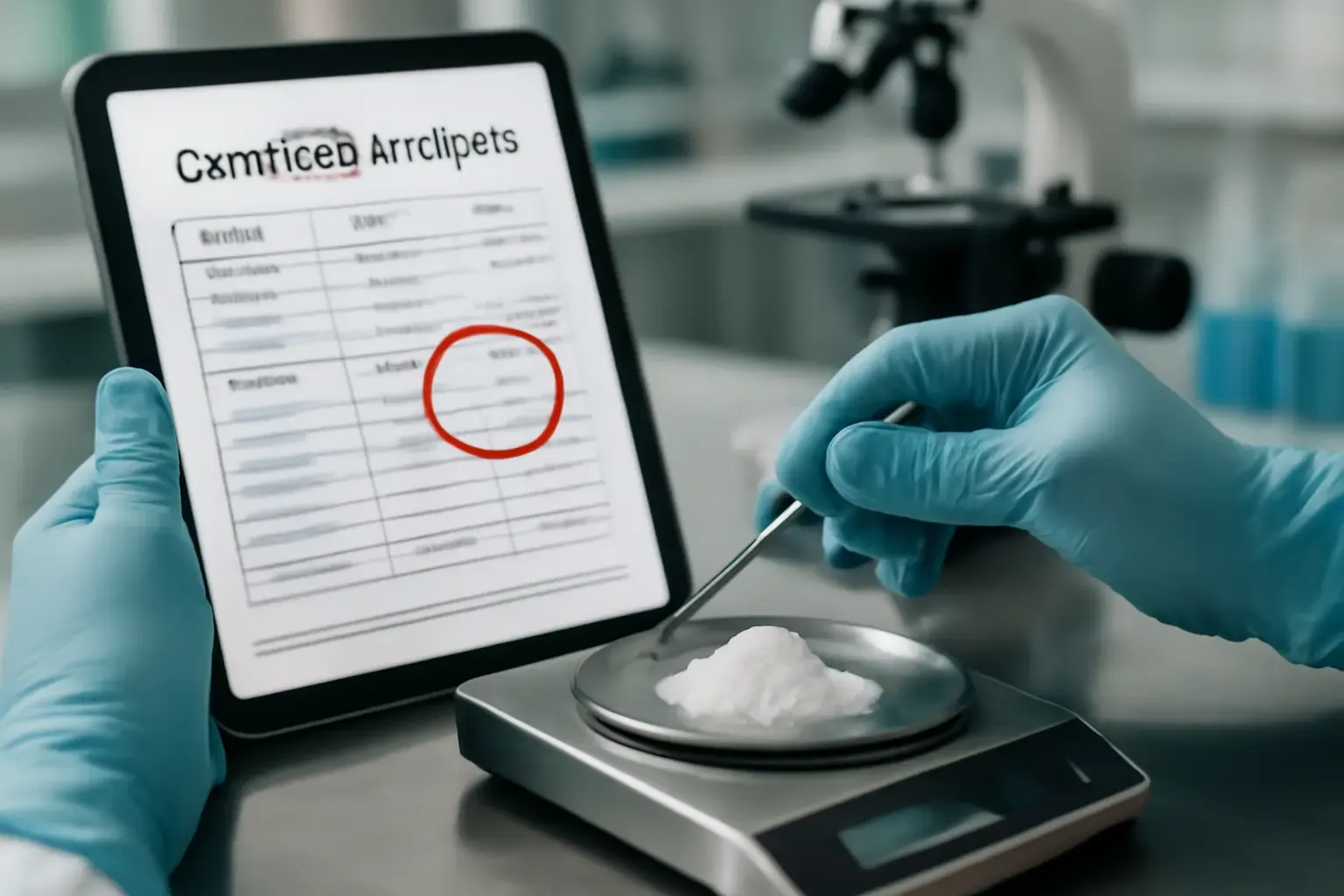
| Spec mismatch | Fiber %, protein limit, MCC grade/mesh out of target | QA rejects, relabeling, reformulation | Tight spec sheet + pre-shipment COA review |
| Release delays | Missing BP/USP/FCC/JP references for MCC, incomplete documents | Longer inbound hold | Standardized document pack per shipment |
| Process instability | MCC compressibility/flow variation; inconsistent particle size | Tablet press stoppages, higher scrap | Grade fit + bench validation (PH-101 vs PH-102, etc.) |
| Freight volatility | Space constraints, seasonal peaks | Landed cost spikes | Split shipments, diversify ports and hubs |
| Supplier concentration risk | One region, one plant, one production line | Disruption impacts multiple SKUs | Dual sourcing across clusters |
| Hidden compliance costs | Incomplete audit readiness, unclear change control | Re-audits, requalification | Audit plan and change-control requirements |
The key is to treat "documentation completeness" and "process capability" as measurable inputs to TCO. A microcrystalline cellulose supplier in China that can ship consistently but cannot produce coherent COAs, grade statements, and traceable records will almost invariably cost more over a 12–18 month horizon.
China Sourcing Map Logic for Risk-Balanced Buying
Buyers often discuss "China" as a single market, but sourcing outcomes usually depend on specific industrial clusters and how they connect to ports, QA infrastructure, and staffing.
A practical approach to briefing internal stakeholders is to map supplier options across:
- Shandong (notably hubs such as Jinan, Qingdao, and Weifang) for established industrial capability and export experience in excipients and functional ingredients.
- Jiangsu and Guangzhou/Guangdong as additional regions that frequently appear in sourcing pipelines, offering procurement teams options for redundancy and logistics flexibility.
This strategy does not require rewriting the supplier base annually. It simply means the initial shortlist for a recommended Chinese microcrystalline cellulose supplier or a recommended Chinese resistant dextrin manufacturer should avoid a single-point-of-failure design.
The Spec Signals That Separate "Cheap" from "Low-Cost"
A recurring procurement error is focusing on the "same ingredient name" rather than "same performance outcomes." The following signals are usually where landed cost is won or lost.
Resistant Dextrin Signals to Lock Before Comparing Price
For resistant dextrin, buyers typically align on:
- Fiber content target (commonly written as ≥82%)
- Protein limit (commonly seen in some supplier parameters as ≤6.0%)
- Appearance and solubility expectations (crucial for beverages and powders)
- Stability needs (heat/pH robustness is often implied by the application)
If the pipeline includes keto-friendly or low-carb claims, it is beneficial to review how suppliers frame those applications. For example, pages positioned around low-carb use cases (such as low carb food additives) can help buyers translate marketing requirements into purchasing specs.
MCC Signals to Lock Before Approving a Tablet Run
For MCC, landed cost is strongly influenced by grade fit and standard alignment:
- Grade selection (PH-101, PH-102, etc.) aligned to flow and compression needs
- Mesh/particle-size range (often specified for procurement consistency)
- Compendial standard alignment (commonly BP/USP/FCC/JP)
- Quality system signals such as ISO certifications and religious certifications where required (e.g., ISO9001, Kosher, Halal are commonly requested in global tenders)
A buyer who treats "pharmaceutical grade MCC China" as a documentation and performance package—not a commodity—typically sees fewer batch failures and less line downtime.
Where Procurement Teams Unintentionally Pay Twice
Landed-cost leakage for resistant dextrin and microcrystalline cellulose most often stems from three avoidable patterns:
- Over-weighting FOB price in the RFQ stage
This often creates a shortlist that looks attractive on paper but collapses during QA validation. - Treating COA review as an afterthought
COA review is a pre-shipment control tool. It should be tied directly to release criteria, not just filed away. - Skipping small-scale application checks
A quick beverage dissolution check for resistant dextrin or a compression/disintegration check for MCC can prevent a much larger write-off later in the process.
As a rule of thumb, if you are actively searching "sourcing MCC China FOB price," you should also be budgeting time for verification steps that protect the margin you are trying to save.
Turning "Recommended Supplier" Into a Repeatable Internal Standard
Many teams use "recommended" informally, but procurement organizations that perform well under 2026's fiber pressure usually define it as a scoreable standard.
A recommended Chinese microcrystalline cellulose manufacturer or recommended Chinese resistant dextrin manufacturer typically demonstrates:
- Clear grade and spec discipline (not just broad ranges)
- Export-ready documentation and predictable COA structure
- Quality systems that match the product (GMP expectations for pharma excipients; food safety systems for food-grade fibers)
- Change control and batch traceability that reduce requalification events
If an internal training aid is required, it can be helpful to review how suppliers educate buyers on grade selection and QC logic—such as the industry note MCC Grades Formulation and QC Guide—and then convert those concepts into your own RFQ templates.
Closing Guidance for 2026 Procurement Planning
Resistant dextrin and microcrystalline cellulose are not new ingredients, but 2026's fiber-led reformulation wave is changing what "good buying" looks like. The most competitive procurement teams are not simply finding a food grade resistant dextrin supplier or a microcrystalline cellulose supplier China—they are building a landed-cost system that protects product claims, reduces plant downtime, and keeps documentation audit-ready.
For teams building or refreshing shortlists, reviewing supplier-facing technical descriptions as neutral benchmarks—starting with categories like resistant dextrin and microcrystalline cellulose—provides a solid foundation for aligning RFQs to the spec signals that truly drive total cost.
For those seeking a supplier that meets these rigorous standards of documentation, quality control, and supply continuity, please visit Shandong Shine Health Co., Ltd at www.sdshinehealth.com.