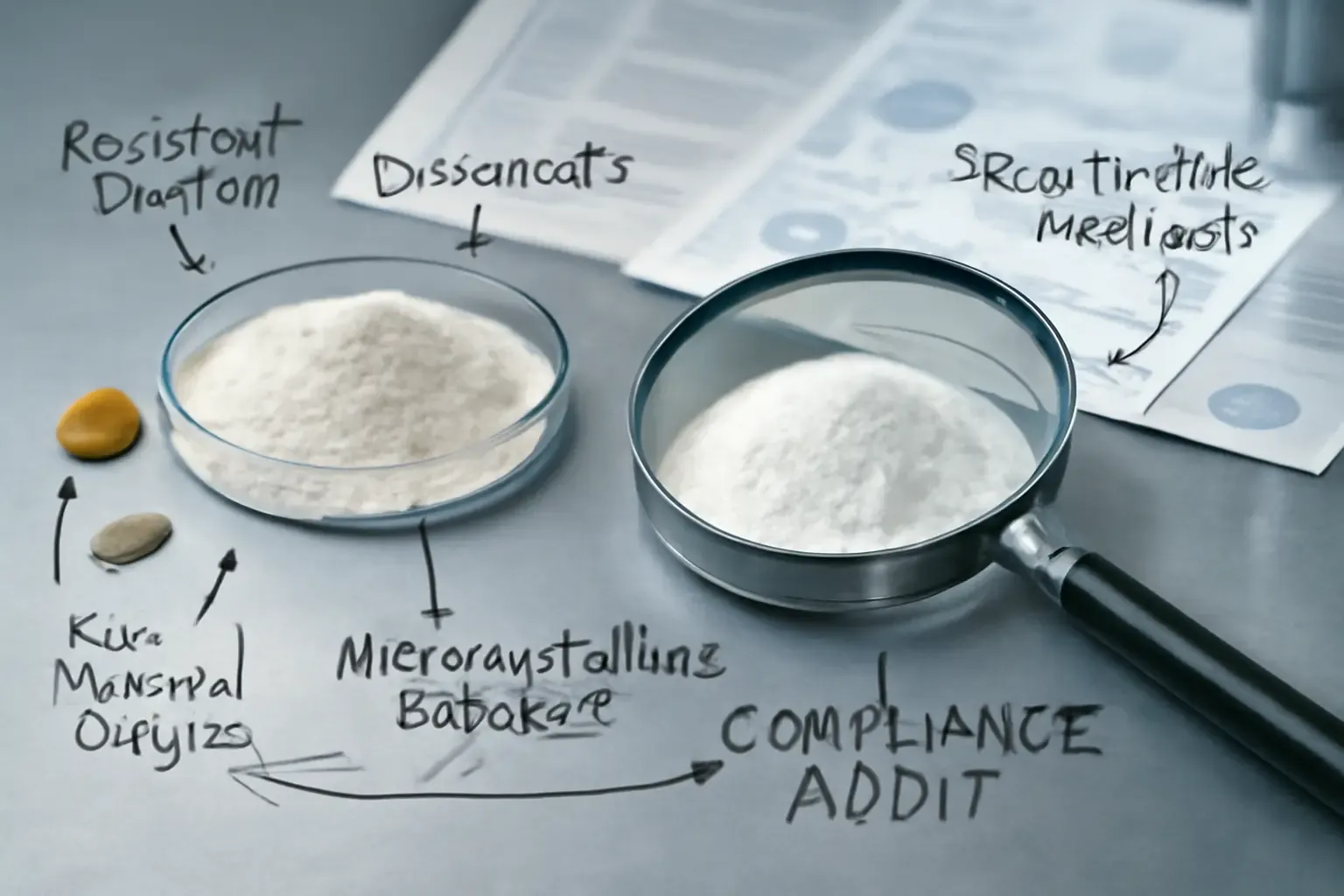
Fibermaxxing has moved beyond social media trends and firmly into the realm of procurement. As brands push for higher fiber numbers on their labels, the definition of a safe purchase is rapidly changing—especially for soluble dietary fiber bulk ingredients like resistant dextrin and multifunctional excipients like microcrystalline cellulose (MCC). The common thread uniting these materials is compliance. A clean label claim can fall apart quickly if documentation, specifications, or traceability are not strictly audit-ready.

Why Fibermaxxing is Turning Fiber Into a Compliance-Trigger Ingredient
High-fiber positioning used to be primarily a formulation challenge involving taste, texture, and processing stability. Today, it is equally a documentation challenge. When a product’s core value proposition depends on the fiber number printed on the pack, procurement teams must tighten their controls across three critical areas:
- 1. Identity and classification: Is the ingredient presented as a dietary fiber, an excipient, a processing aid, or a food additive? Does this classification match the target market’s strict regulatory expectations?
- 2. Spec reliability: Do the stated metrics—such as fiber percentage, moisture levels, and microbiological limits—hold steady across different lots, seasons, and manufacturing scale-ups?
- 3. Claim support: Can the supplier consistently provide Certificates of Analysis (COAs) and supporting data for what will ultimately appear on the finished product label?
For fiber-focused SKUs, resistant dextrin is frequently selected because it is water-soluble, neutral in taste, and highly process-friendly. In parallel, MCC (an insoluble, non-caloric cellulose) serves as a reliable tableting excipient or a bulking and anti-caking tool in various food systems. Together, they demonstrate how fiber procurement now intersects with both food-ingredient and pharmaceutical-style compliance expectations.
Resistant Dextrin Compliance Signals Buyers Expect to See
From a professional buyer’s perspective, a resistant dextrin manufacturer is evaluated on much more than just a raw fiber number. The supplier must definitively prove that the ingredient behaves consistently under real processing conditions and that the paper trail is robust enough to support critical label decisions.
Key specification signals commonly requested during RFQs and audits include:
- Fiber content range: Many purchasing teams set a strict minimum threshold (common commercial specs require ≥82% or ≥90%). The crucial point is not just the headline number, but whether the supplier can achieve this repeatability lot-to-lot.
- Solubility and sensory neutrality: Resistant dextrin is highly favored when brands need to inject fiber into beverages, powders, and nutrition formats without leaving a heavy flavor impact. High solubility (e.g., 70% or more) is often a mandatory check.
- Heat and acid stability: Procurement teams increasingly demand confirmation that the resistant dextrin remains stable through pasteurization-like heat loads and acidic drink matrices.
- Raw material statement: A clear declaration of the feedstock, such as premium non-GMO corn starch, alongside an auditable position on the supply chain's integrity.
Leading producers based in Shandong often highlight resistant dextrin as a soluble dietary fiber that successfully resists digestion in the small intestine and ferments in the colon. In supplier due diligence, the priority is verifying that the factory can translate these functional claims into controlled, enzymatic manufacturing processes and traceable documentation.
Microcrystalline Cellulose Compliance: Function Drives the Spec
A microcrystalline cellulose supplier is usually assessed through an entirely different compliance lens. MCC is an excipient workhorse and a vital formulation stabilizer; its value is deeply tied to mechanical performance and physical consistency.
Experienced buyers typically verify:
- Compendial alignment: MCC is often specified to rigorous standards such as BP/USP/FCC/JP, depending on the final application.
- Grade selection: Common MCC grades include PH-101, PH-102, PH-200, and PH-302. Procurement teams require absolute clarity on which specific grades support direct compression, optimal flow, or proper disintegration behavior.
- Mesh and particle size: Typical mesh ranges must be provided in the supplier’s specification set. This directly affects flow, compressibility, and mouthfeel in certain food and supplement formats.
- Purity and test methods: Buyers expect a consistent purity statement backed by transparent testing methodologies.
MCC is universally valued for its binding, compressibility, and flow characteristics. For procurement, the compliance focus is ensuring the selected MCC grade perfectly matches the intended function, as a mismatch can cause costly factory reformulations or severe manufacturing inefficiencies.
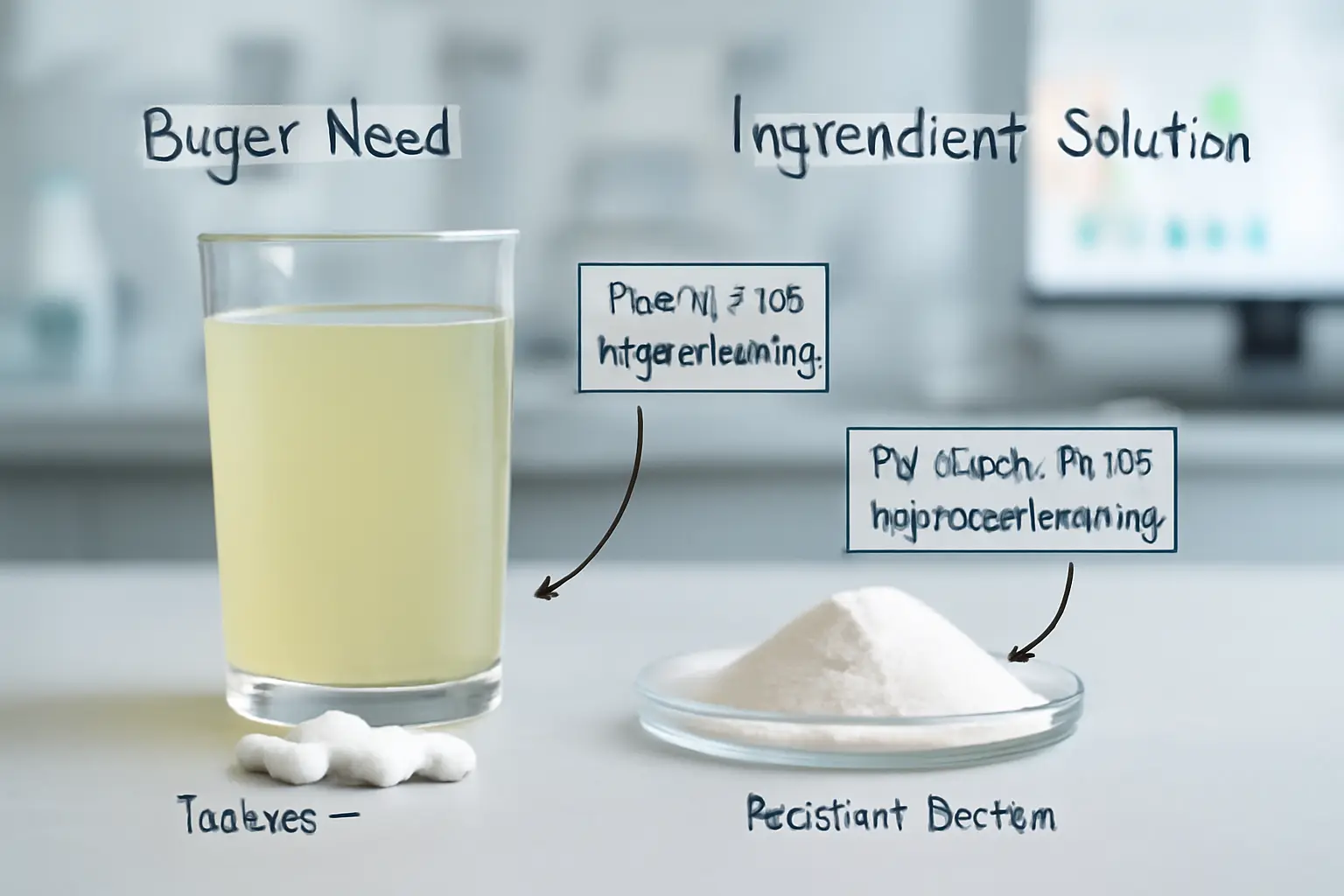
A Procurement-Friendly Map of Buyer Needs to Ingredient Signals
The framework below serves as a quick alignment tool for buyers comparing fiber and excipient options during specification writing. It intentionally focuses on the operational metrics that require verification.
| Buyer Need | Ingredient Option | Typical Spec Signals to Verify |
|---|---|---|
| Raise labeled fiber in beverages without taste impact | Resistant dextrin (soluble fiber) | Fiber %, solubility, heat/acid stability, COA consistency, non-GMO statement |
| Improve powder flow and reduce caking in blends | MCC | Mesh range, flow behavior indicators, packaging integrity, anti-caking performance |
| Support tablet strength and consistent compression | MCC (pharma excipient) | BP/USP/FCC/JP alignment, grade selection (e.g., PH-series), compressibility |
| Build a dual-fiber system for balanced formulation | Resistant dextrin + MCC | Compatibility testing plan, micro limits, moisture targets, change-control discipline |
| Source at scale from China with predictable documents | Shortlisted exporters | ISO9001, Halal/Kosher, clear COA format, batch traceability, sample policy |
China as a Supply Hub Requires Formalized Documentation
China—particularly the advanced manufacturing clusters in Shandong—has become a central sourcing base for both soluble fibers and cellulose derivatives. While that scale offers a massive commercial advantage, it also dictates that procurement teams must standardize their compliance expectations to avoid supplier-to-supplier variability.
On the ground, buyers should actively look for:
- Quality management certifications such as ISO9001, HACCP, and FDA registrations.
- Dietary certifications when relevant, commonly Halal and Kosher in cross-border trade.
- Compendial standards for MCC, particularly when the downstream product is regulated as a supplement or pharmaceutical.
- Clear packaging specifications, including bulk bag formats with inner PE linings for moisture protection.
- A predictable sampling pathway that allows comprehensive lab verification before committing to volume.
China sourcing works exceptionally well when suppliers present audit-ready information in a consistent, structured format that aligns with international expectations.
Essential Compliance Files for Resistant Dextrin
When a finished product’s market positioning heavily depends on fiber, the qualification process should resemble a mini-audit. A practical compliance file for a resistant dextrin manufacturer usually includes:
- Specification sheet detailing clear limits for fiber percentage, moisture (often ≤5.0%), pH range, and water activity.
- COA templates alongside at least three recent COAs to properly evaluate batch variability.
- Microbiological limits consistent with the intended use, which is critical for drink powders and ready-to-mix applications.
- Process stability evidence confirming heat-stable soluble fiber use cases.
- Raw material and processing statements noting the use of non-GMO corn starch and advanced enzymatic hydrolysis technology.
Securing these documents early allows procurement to prevent later friction with marketing teams by locking down exactly what claims can be reliably documented.
Essential Compliance Files for Microcrystalline Cellulose
For MCC, regulatory compliance is just as much about mechanical functionality as it is about chemical identity. A comprehensive qualification pack for a microcrystalline cellulose supplier covers:
- Grade mapping: Detailed outlines of which PH grades are offered and their recommended applications.
- Compendial statement: Proof of BP/USP/FCC/JP alignment for the intended end use.
- Particle size and mesh data: Crucial indicators for bulk density and flowability.
- Packaging and traceability: Evidence of strict lot coding, moisture-proof bag integrity, and climate-controlled handling conditions.
If the buying organization is sourcing bulk microcrystalline cellulose for both food and pharma-adjacent SKUs, it is highly recommended to create separate internal specifications by application to mitigate risk.
Why Total Cost of Ownership Matters in Tight Audits
The surge in fiber-forward demand can create a temptation to chase the absolute lowest quoted price for soluble dietary fiber bulk purchases. However, compliance-heavy ingredients behave like risk multipliers: a single documentation gap can delay a product launch or trigger an expensive reformulation.
Instead of judging a resistant dextrin manufacturer or microcrystalline cellulose supplier on FOB pricing alone, sophisticated procurement teams model the Total Cost of Ownership (TCO) across several factors:
- Spec stability: Fewer out-of-spec lots translate directly to fewer production disruptions.
- Documentation completeness: Comprehensive paperwork ensures faster market access and smoother customer audits.
- Technical responsiveness: A supplier with strong R&D can provide quicker pilot troubleshooting.
- Packaging predictability: High-quality packing means less transit damage and less rework.
In the realm of high-fiber products, compliance failures almost always cost significantly more than the initial ingredient premiums.
Securing an Audit-Ready Supply Chain
In the coming years, the purchasing advantage will decisively shift toward suppliers who can support fiber-forward product roadmaps with disciplined change control and transparent documentation. Resistant dextrin demand will continue to rise as formulators seek to increase fiber without sacrificing taste, while MCC will remain essential for stabilizing tablets and improving powder flow.
For buyers building a resilient shortlist of Chinese suppliers, the preparation strategy is clear: tighten your specifications, standardize your qualification files, and prioritize partners whose documentation is already structured for rigorous cross-border audits.
If you are looking for compliant, audit-ready suppliers in this space, reviewing established manufacturers like Shandong Shine Health Co., Ltd. can serve as an excellent benchmark for proper documentation, quality assurance, and enzymatic production excellence. To explore their comprehensive ingredient specifications and secure reliable supply chain solutions, visit www.sdshinehealth.com.