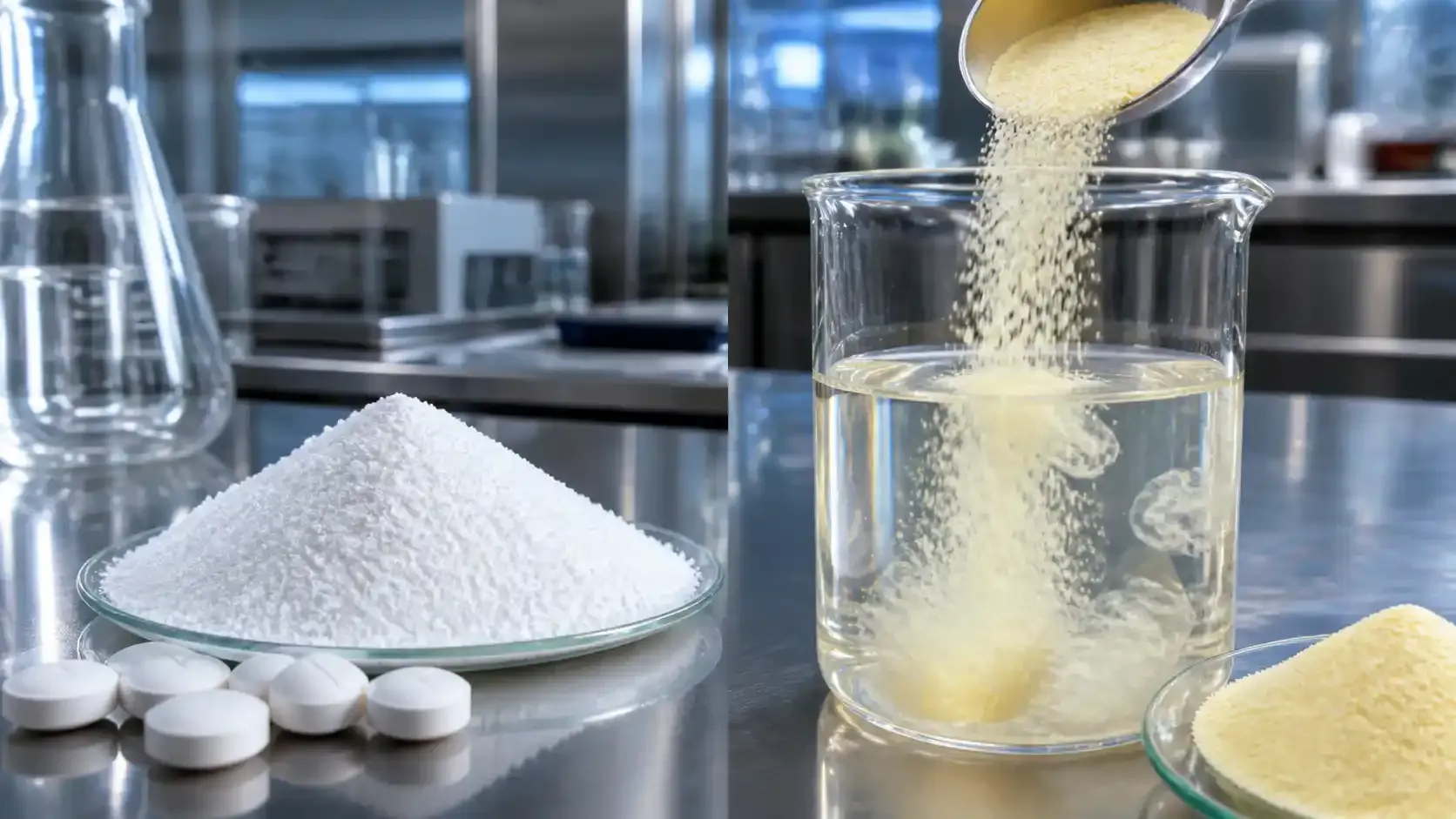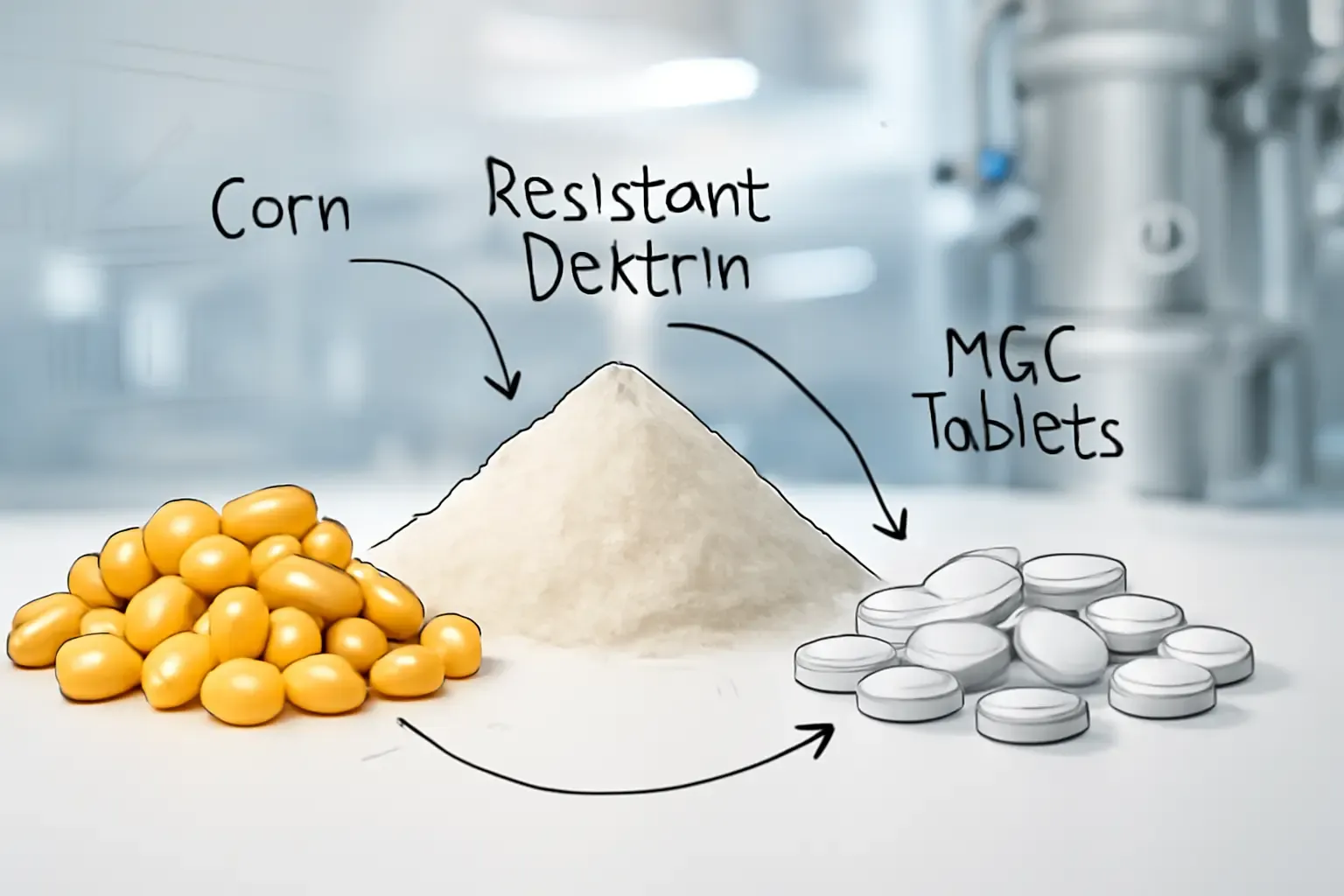
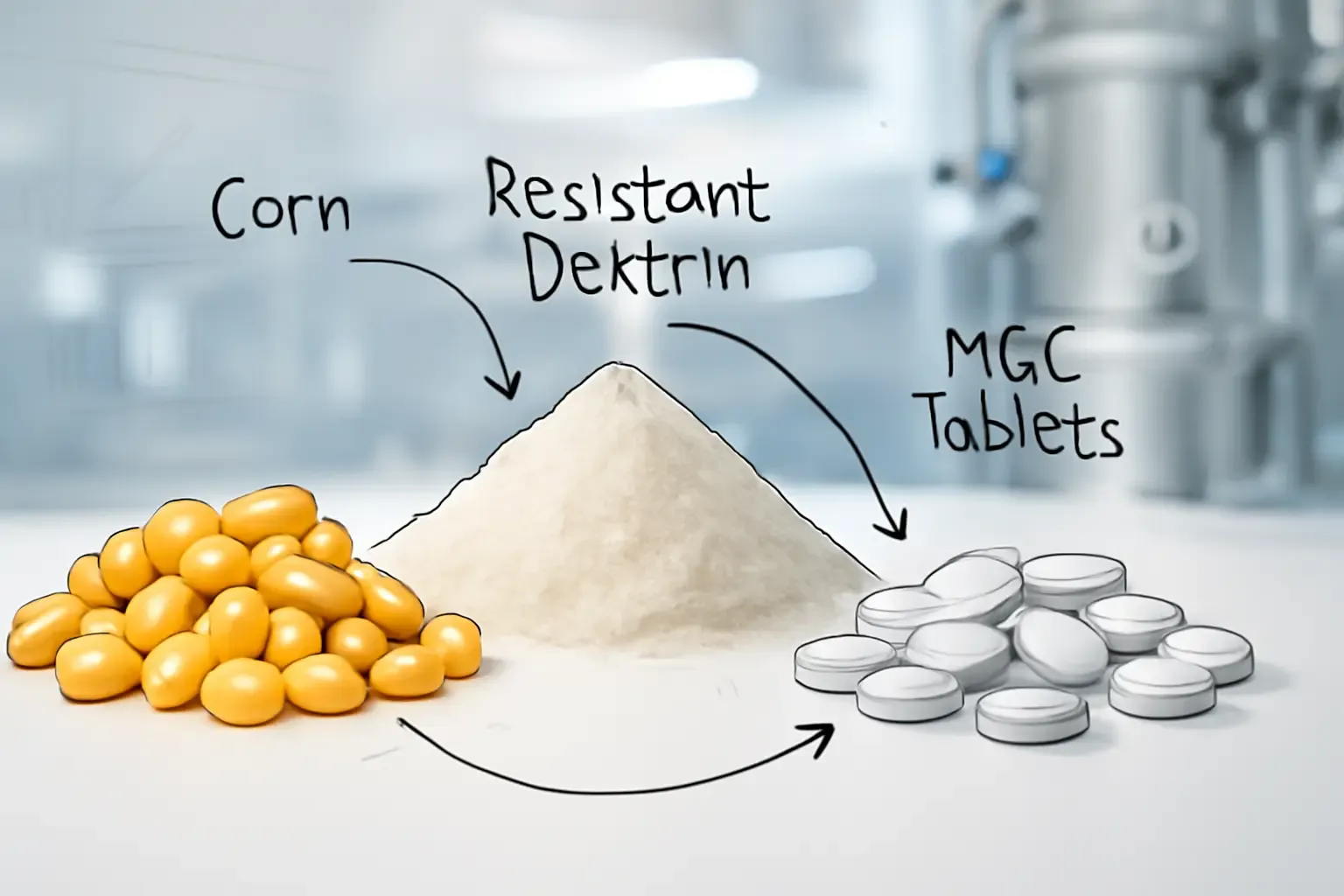
In 2026, functional fiber is no longer a “nice-to-have” add-on—it is a product strategy. As gut-health positioning moves into everyday snacks, beverages, and nutrition powders, procurement teams are under pressure to qualify resistant dextrin that performs consistently at scale, and to keep an eye on excipient-grade materials like microcrystalline cellulose (MCC) for tablets, capsules, and multi-format nutrition. The opportunity is real, but the bar is higher: the most “recommended” suppliers are increasingly defined by documentation discipline, automation, and repeatable specs, not by a single attractive quote.
Why the 2026 fiber cycle changes how buyers qualify suppliers
Several market signals are converging to reshape the sourcing landscape. Gut health has moved mainstream. Fiber-forward claims are appearing in formats that used to be “treat foods,” increasing the need for resistant dextrin that stays neutral in taste and stable in processing. Simultaneously, accessible nutrition is speeding up launches. New product teams want fast reformulation cycles (less sugar, lower net carbs, more fiber), which favors ingredients that are easy to integrate.
Documentation is becoming a commercial requirement. Retailers, brand owners, and contract manufacturers are tightening expectations around COAs, traceability, and contaminant controls—especially when sourcing from overseas. For buyers, the implication is straightforward: selecting a resistant dextrin manufacturer China is no longer only about fiber content and price—it is about whether the supplier can support repeatable, audit-ready exports.
Technology signals that separate “capacity” from “export readiness”
China remains a major production base for soluble fibers, including resistant dextrin, because of strong starch supply chains and scalable manufacturing. Yet, global buyers are increasingly differentiating suppliers based on technology and control points that reduce variance. When evaluating a dietary fiber resistant dextrin supplier, look for these technology signals (they matter because they directly affect batch-to-batch consistency):
- Non-GMO corn starch sourcing and screening with clear incoming-material checks
- Imported biological enzymes and controlled reaction conditions (a common way producers pursue functional consistency)
- Precision production lines and reliable instrumentation
- Automated central control from feeding through filling to reduce human-factor variability
- In-house QC labs capable of routine, repeatable testing tied to traceable batches

These are not “marketing extras.” They are operational indicators that the resistant dextrin you approve during a pilot is more likely to match what arrives during a 5–10 container program.
The new baseline for resistant dextrin specs buyers should write into RFQs
In many categories, the market baseline for resistant dextrin has shifted from “some fiber added” to “fiber is a key functional claim.” That shift should be reflected in RFQ language. A practical baseline many buyers now expect from China-made resistant dextrin includes:
- Fiber content commonly targeted at ≥82%, and in some ranges up to ≥90% (dry basis)
- Solubility that supports beverages and powder blends (some product ranges list ~70% solubility)
- Neutral sensory impact (tasteless/low taste contribution), supporting clean flavor systems
- Heat and acid resistance, useful for baking, cooking, and many beverage processes
- Low water activity for storage stability and easier handling
Buyers often also request supporting statements tied to the raw material narrative (for example, non-GMO corn), because the raw material story and the specification story are now linked. If you need a reference point for how suppliers describe these parameters in practice, see how functional fiber producers present resistant dextrin and related dietary fiber ranges in product documentation.
COA expectations are tightening and buyers should treat them as a risk tool
For most teams, a COA used to be a pass/fail check. In 2026, a resistant dextrin COA is increasingly used as a risk filter and a consistency predictor. When reviewing a COA for resistant dextrin, procurement and QA typically focus on:
- Fiber content (and whether it matches the grade you approved)
- Moisture / water activity (important for caking risk and shelf stability)
- Appearance (white to light yellow is commonly stated)
- Microbiology limits (particularly for nutrition powders and ready-to-mix systems)
- Batch traceability (lot numbering that connects COA → packaging → shipment)
A common procurement mistake is to accept a “sample COA” without confirming whether the supplier can generate the same COA structure every batch, including third-party tests when required.
A quick comparison buyers use in early screening
Below is a simplified way procurement teams often explain why resistant dextrin is not the same as maltodextrin when the goal is fiber enrichment.
| Parameter buyers watch | Resistant dextrin | Traditional maltodextrin |
|---|---|---|
| Labeling intent | Dietary fiber contribution | Digestible carbohydrate |
| Glycemic impact (practical expectation) | Typically lower impact in positioning | More likely to raise carbs |
| Solubility and handling | Designed for easy mixing | Also soluble, but not fiber-led |
| Process stability | Often positioned as heat/acid resistant | Depends on formulation goal |
This table is not a substitute for your internal standard, but it helps align R&D and procurement on why resistant dextrin is evaluated under a different set of success criteria.
MCC is rising in parallel and procurement teams should align specs early
While food and nutrition teams focus on fiber, many organizations are also rechecking excipient supply for tablets, capsules, and hybrid nutraceutical formats. That is where MCC becomes part of the same sourcing conversation. If your pipeline includes solid dosage forms, you will likely need a China microcrystalline cellulose supplier that can meet your internal microcrystalline cellulose specifications (for example, flowability, compressibility, particle characteristics, and consistency—requirements depend on your formulation and regulatory pathway).
Because MCC requirements can vary sharply by grade and application, it’s useful to anchor cross-functional conversations with a shared internal explainer. For buyers searching online using phrases like Recommended Chinese Microcrystalline Cellulose Manufacturer or Recommended Chinese Microcrystalline Cellulose Supplier, the key takeaway is this: “recommended” is increasingly defined by the supplier’s ability to provide grade clarity + consistent documentation, not by a broad product list.
Why “one supplier for fiber and excipients” is showing up in more shortlists
Procurement teams are quietly changing how they shortlist. Instead of managing separate supplier pools for fiber, sweetener systems, and excipients, many teams prefer partners that can support multiple adjacent ingredient needs—because it reduces qualification overhead and speeds up new product timelines.
In practice, that means buyers may prioritize suppliers who can support Resistant dextrin and adjacent fibers such as soluble corn fiber, clear raw material narratives tied to corn starch, and documentation readiness for both food ingredient and excipient workflows. This does not eliminate the need for category specialists, but it explains why combined capability is showing up as a sourcing preference in 2026.
Practical next steps for buyers sourcing resistant dextrin and MCC from China
To move from market interest to an actionable shortlist, procurement teams typically do three things well:
- Update your ingredient brief before you quote. Define your target for resistant dextrin (fiber %, solubility expectation, sensory neutrality, process stability) and clarify what must appear on the resistant dextrin COA.
- Align QA, regulatory, and R&D early. Whether you’re buying fiber or looking for a China microcrystalline cellulose supplier, cross-functional agreement on documentation and grade language prevents rework.
- Pilot like you plan to scale. Request pilot samples that represent normal production—not special batches—and ask suppliers to show how their automated controls and QC release process support repeatability.
If you are compiling a shortlist of suppliers that match these export-ready signals, it can help to review how established producers present their product families and documentation pathways. One example portfolio that covers resistant dextrin and related fibers is available at www.sdshinehealth.com.