

Weight-management demand is no longer confined to pharmaceuticals alone. As awareness of GLP-1 grows, brands are actively reformulating everyday foods and supplements into lower-sugar, higher-fiber options that maintain great taste and integrate seamlessly into existing production lines. For many pr

Pharmaceutical and functional-nutrition teams face pressure to speed up launches, simplify labels, and still hit performance targets on modern production lines. That is why microcrystalline cellulose have become key ingredients frequently evaluated in cross-category projects — the former solving the

Procurement teams today face a double challenge: speed up high-fiber product launches while reliably reducing supply-chain risk. That is why search terms like "recommended Chinese resistant dextrin manufacturer" and "recommended Chinese microcrystalline cellulose supplier" keep appearing in RFQs. It

As demand for resistant dextrin keeps climbing and excipient standards keep tightening, many buyers are discovering that a spec sheet alone does not prove performance. The fastest way to separate a recommended Chinese supplier from an ordinary trader is to run two simple, repeatable trials: a fiber

Buying functional ingredients from China is no longer just a price exercise. For many procurement teams, the real question is whether a microcrystalline cellulose (MCC) spec sheet and a resistant dextrin COA will translate into stable performance after scale-up—on the tablet press, in the beverage t

Procurement teams are treating soluble fiber and tablet excipients less like commodities and more like launch-critical inputs. The reason is straightforward: the commercial upside is growing, while reformulation and compliance risk is getting more expensive. Recent market reporting projects the glob

Brands searching terms like Recommended Chinese Resistant Dextrin Manufacturer or Recommended Chinese Microcrystalline Cellulose Supplier are rarely just shopping for “an ingredient.” They are trying to protect a finished product—its label claims, sensory profile, manufacturing yield, and compliance

Procurement teams are under pressure from both sides: more launches are targeting fiber-forward positioning and cleaner processing aids, while quality teams are asking for stronger evidence that materials will behave the same way at pilot scale and at full production. That is exactly why buyers keep

Fiber-forward launches have moved from “nice-to-have” to a core commercial requirement, especially in low carb foods, gut health concepts, and supplement portfolios that need both food-grade performance and pharma-style consistency. In practice, many teams end up qualifying two ingredients in parall
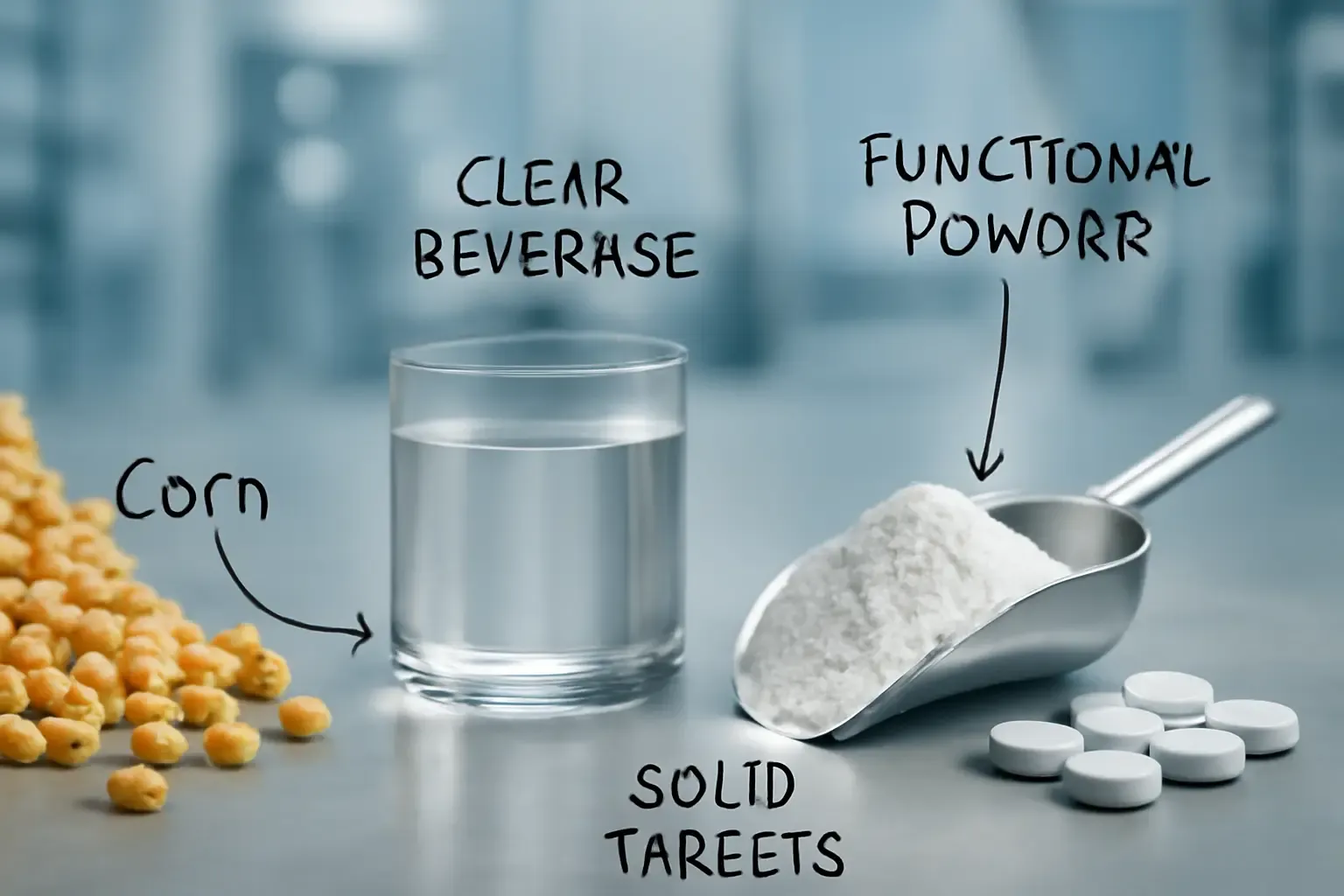
Functional food and nutraceutical pipelines are crowded with “more fiber” concepts—yet many product launches stall when fiber claims collide with taste, clarity, flowability, or tablet strength. An effective strategy to reduce both formulation risk and sourcing risk is to evaluate resistant dextrin
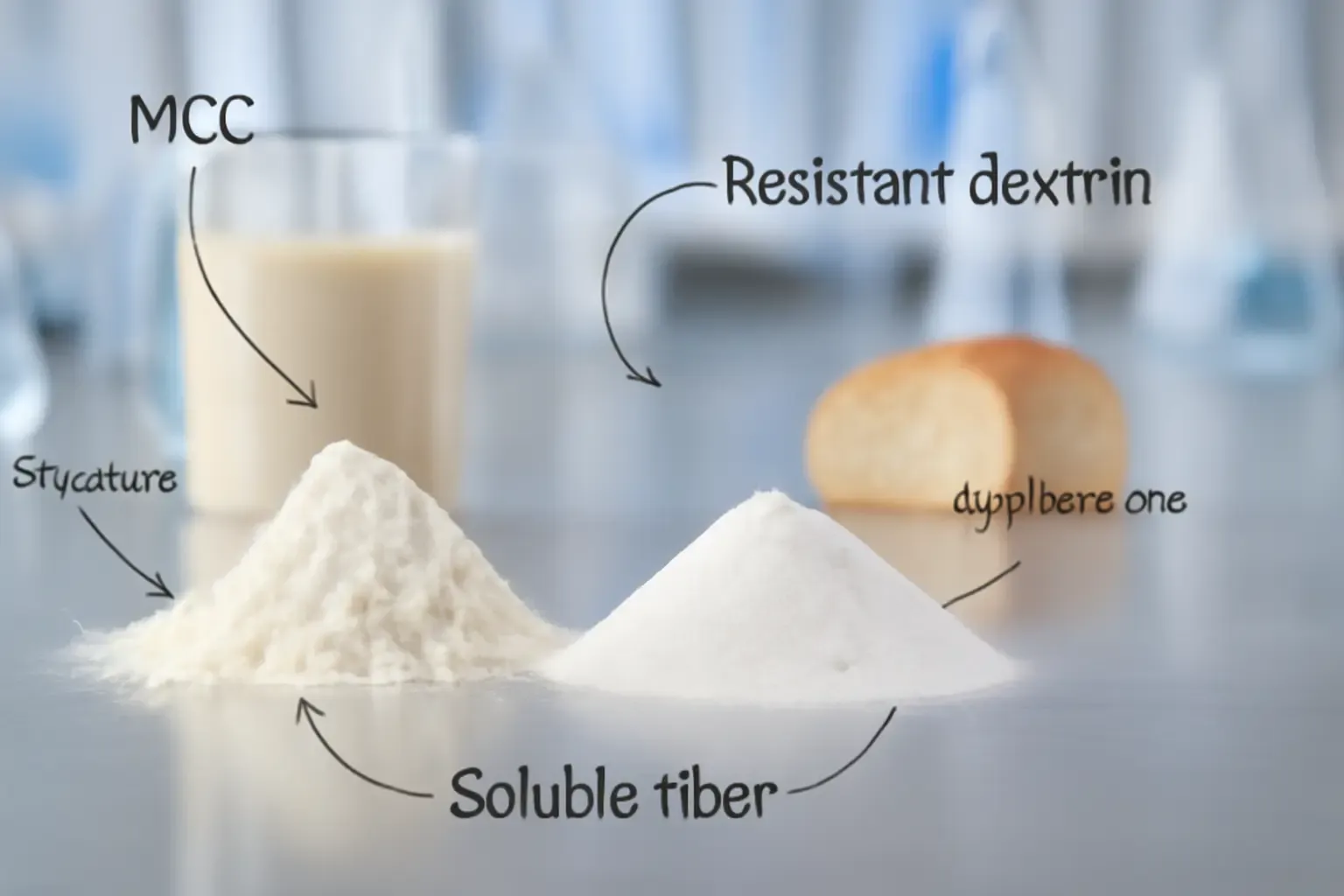
High-fiber product development is no longer only about nutrition panels. Procurement and R&D teams are now expected to deliver repeatable texture, stable shelf life, and credible fiber claims—often under cost pressure and tight launch windows. Two ingredients show up again and again in scalable form

Sugar reduction and fiber enrichment are now being designed into products from day one—not added as an afterthought. Resistant dextrin and soluble corn fiber have become go-to tools because they raise fiber content with low sweetness, neutral taste, and strong process stability . For buyers searchin
Weight-management demand is no longer confined to pharmaceuticals alone. As awareness of GLP-1 grows, brands are actively reformulating everyday foods and supplements into lower-sugar, higher-fiber options that maintain great taste and integrate seamlessly into existing production lines. For many pr
Pharmaceutical and functional-nutrition teams face pressure to speed up launches, simplify labels, and still hit performance targets on modern production lines. That is why microcrystalline cellulose have become key ingredients frequently evaluated in cross-category projects — the former solving the
Procurement teams today face a double challenge: speed up high-fiber product launches while reliably reducing supply-chain risk. That is why search terms like "recommended Chinese resistant dextrin manufacturer" and "recommended Chinese microcrystalline cellulose supplier" keep appearing in RFQs. It
As demand for resistant dextrin keeps climbing and excipient standards keep tightening, many buyers are discovering that a spec sheet alone does not prove performance. The fastest way to separate a recommended Chinese supplier from an ordinary trader is to run two simple, repeatable trials: a fiber
Buying functional ingredients from China is no longer just a price exercise. For many procurement teams, the real question is whether a microcrystalline cellulose (MCC) spec sheet and a resistant dextrin COA will translate into stable performance after scale-up—on the tablet press, in the beverage t
Procurement teams are treating soluble fiber and tablet excipients less like commodities and more like launch-critical inputs. The reason is straightforward: the commercial upside is growing, while reformulation and compliance risk is getting more expensive. Recent market reporting projects the glob
Brands searching terms like Recommended Chinese Resistant Dextrin Manufacturer or Recommended Chinese Microcrystalline Cellulose Supplier are rarely just shopping for “an ingredient.” They are trying to protect a finished product—its label claims, sensory profile, manufacturing yield, and compliance
Procurement teams are under pressure from both sides: more launches are targeting fiber-forward positioning and cleaner processing aids, while quality teams are asking for stronger evidence that materials will behave the same way at pilot scale and at full production. That is exactly why buyers keep
Fiber-forward launches have moved from “nice-to-have” to a core commercial requirement, especially in low carb foods, gut health concepts, and supplement portfolios that need both food-grade performance and pharma-style consistency. In practice, many teams end up qualifying two ingredients in parall
Functional food and nutraceutical pipelines are crowded with “more fiber” concepts—yet many product launches stall when fiber claims collide with taste, clarity, flowability, or tablet strength. An effective strategy to reduce both formulation risk and sourcing risk is to evaluate resistant dextrin
High-fiber product development is no longer only about nutrition panels. Procurement and R&D teams are now expected to deliver repeatable texture, stable shelf life, and credible fiber claims—often under cost pressure and tight launch windows. Two ingredients show up again and again in scalable form
Sugar reduction and fiber enrichment are now being designed into products from day one—not added as an afterthought. Resistant dextrin and soluble corn fiber have become go-to tools because they raise fiber content with low sweetness, neutral taste, and strong process stability . For buyers searchin





