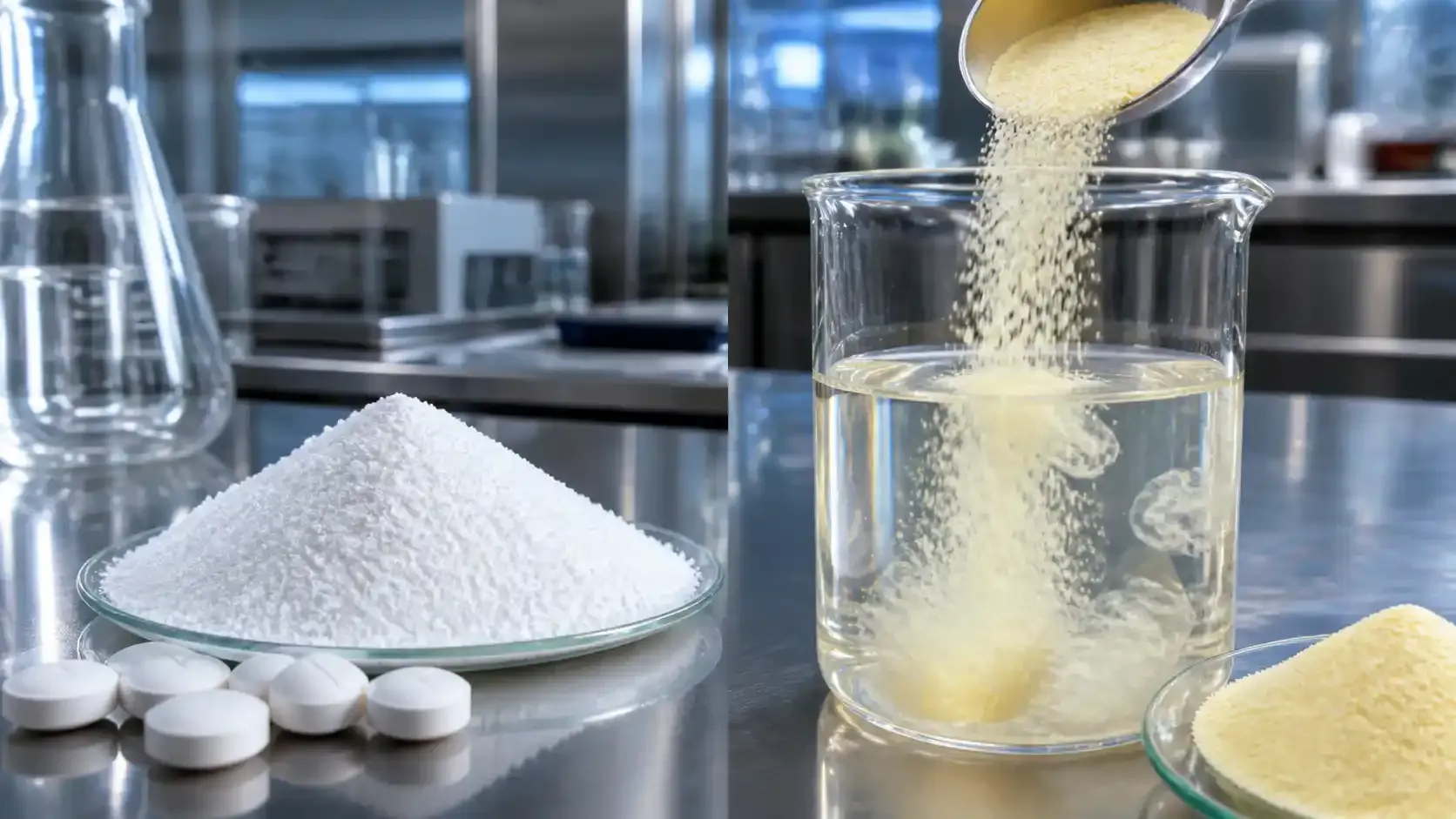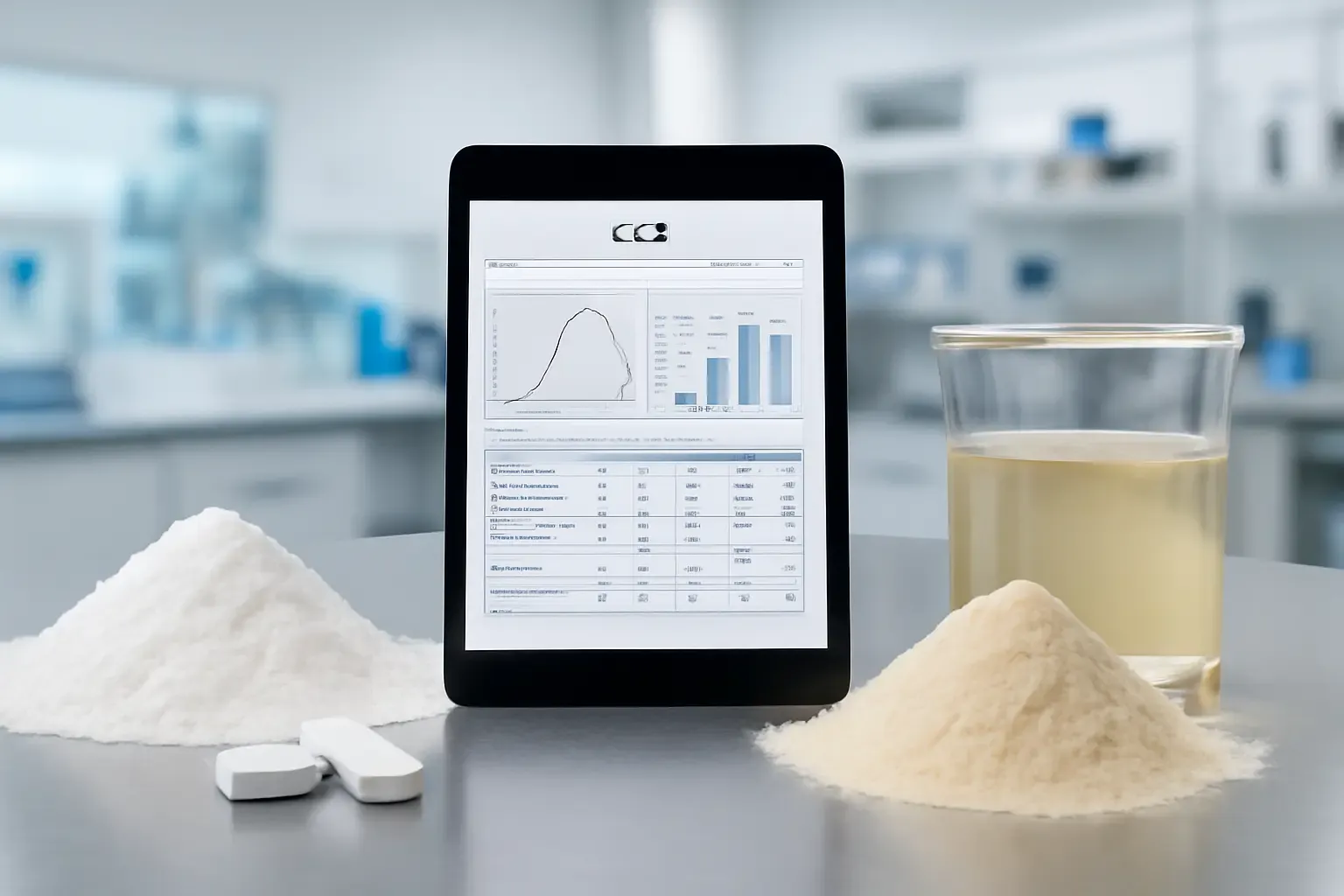
Procurement teams are currently navigating a significant shift in the nutraceutical landscape: the era of “accessible nutrition.” This trend moves beyond simple protein fortification into making everyday formats—powders, ready-to-mix drinks, gummies, and tablets—easier to use, easier to tolerate, and easier to trust. This market evolution places two specific ingredients under the spotlight simultaneously: microcrystalline cellulose (MCC) for pharmaceutical and nutraceutical solid dosage stability, and resistant dextrin for fiber-forward functional foods.
For professional buyers, the challenge is rarely about finding a quote. The real difficulty lies in identifying a recommended Chinese microcrystalline cellulose supplier and a recommended Chinese resistant dextrin manufacturer capable of consistently matching export expectations—batch after batch—without necessitating reformulation, relabeling, or engaging in avoidable quality assurance disputes.
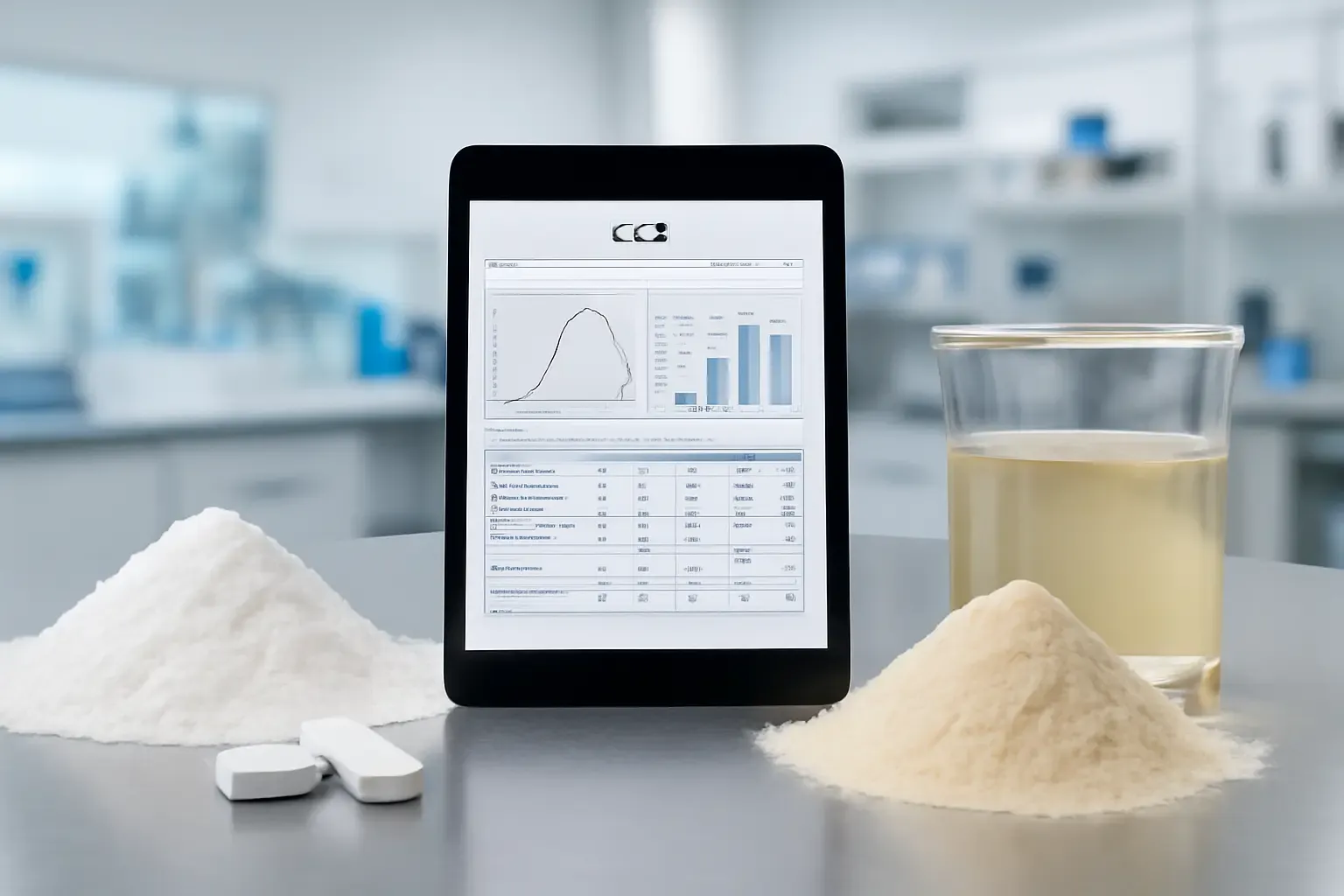
Why MCC and Resistant Dextrin Are Being Evaluated Together
The “fiber frontier” is raising the bar for any resistant dextrin manufacturer China shortlist. Modern fiber claims must be backed by stable specifications, clean sensory performance, and clear documentation. Simultaneously, the surging demand for tablets, capsules, and functional powders keeps MCC firmly on the desk of any buyer requiring a reliable excipient.
In practice, many brands are launching multi-format nutrition lines: a fiber drink mix alongside a capsule line, or a functional gummy paired with a tablet companion SKU. This dynamic makes dual sourcing common—one supplier ecosystem for dietary fiber, another for MCC—yet the qualification methods should be strategically aligned.
What changes under the accessible nutrition trend is a fundamental shift in procurement philosophy: buyers are moving from “commodity buying” to “spec buying.” A microcrystalline cellulose supplier China that cannot hold critical flow or compression parameters is not interchangeable with one that can. Likewise, a resistant dextrin supplier that meets “fiber” definitions on paper but creates unwanted viscosity or taste issues can derail a Ready-to-Drink (RTD) or gummy project. Success lies in understanding the technical nuance behind the datasheet.
Read MCC Specs Like a Formulator, Not Like a Trader
If your team needs to buy MCC pharma grade, do not begin the conversation with price. Start by confirming that the supplier’s grade language maps cleanly to common global use cases and that they understand the physics of your application.
MCC Grade Naming and Implications
Many buyers recognize the “PH” style naming often associated with widely used global excipient grades. However, in RFQs coming from China, the label alone is insufficient. Procurement officers should ask the supplier to explicitly state the intended application compatibility:
- Direct compression tablets: Where compressibility and flow consistency are paramount to prevent capping or lamination.
- Capsule filling blends: Where bulk density and particle size distribution directly influence weight uniformity.
- Dry powder blends: Where flow and segregation behavior drive batch-to-batch performance.
A recommended Chinese microcrystalline cellulose manufacturer should be comfortable discussing how a specific grade behaves in these scenarios, rather than merely listing a moisture value and moving on.
The Critical Parameter Set Separating Suppliers
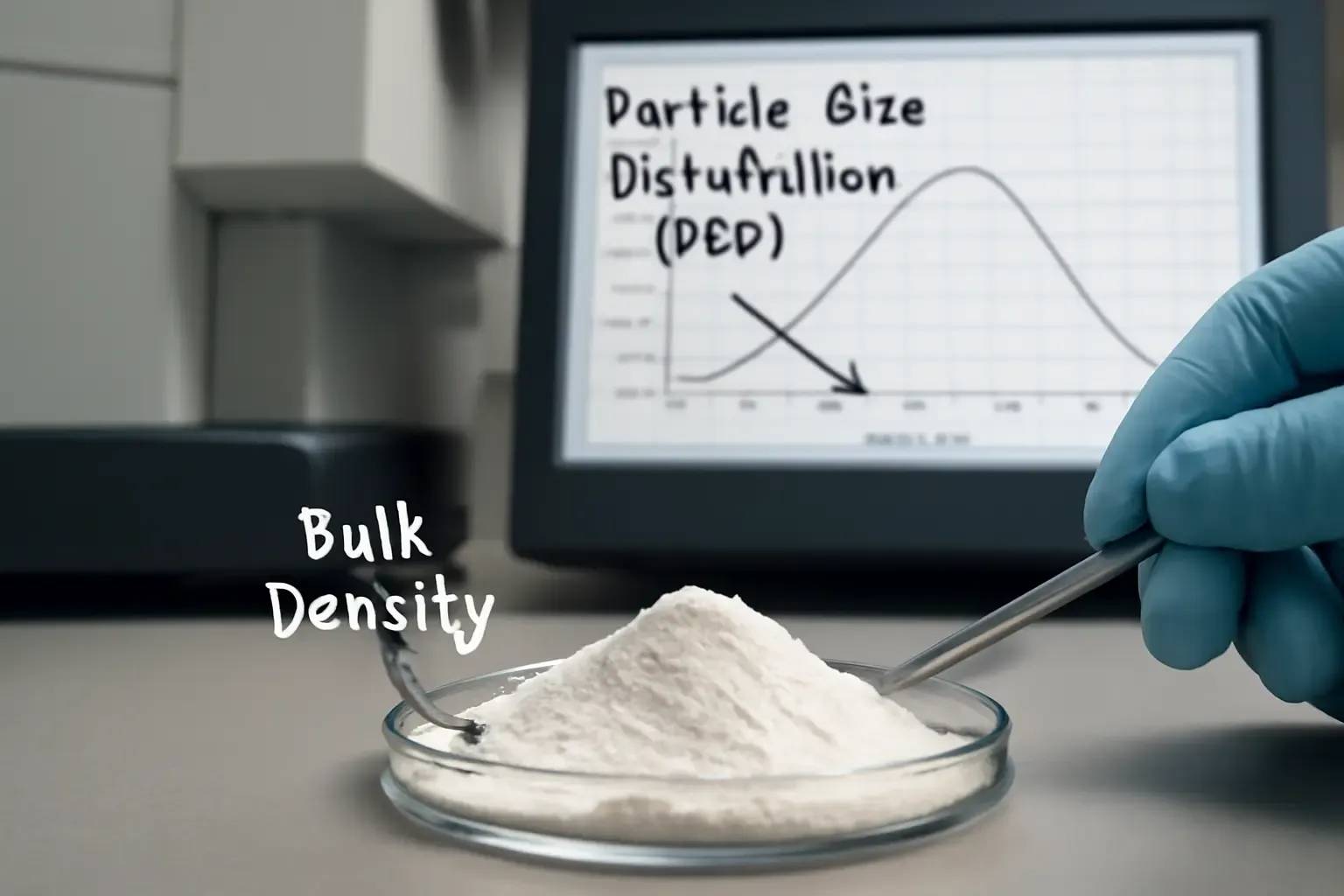
For MCC, the majority of procurement headaches stem from a small set of technical parameters that drive real-world processing efficiency. Ignoring these during the sourcing phase leads to production downtime later:
- Particle Size Distribution (PSD): This affects flow, blend uniformity, and tablet strength. A shift in PSD can cause a blend to segregate during hopper discharge.
- Bulk Density: This variable affects die fill volume and capsule mass variation. If density fluctuates between batches, tablet weights will drift.
- Moisture Content: Critical for flow and compaction; it also affects the chemical stability of moisture-sensitive APIs.
- Flow Properties: The hidden predictor of whether the same blend will run smoothly on high-speed rotary presses.
In essence, MCC particle size bulk density is not a “nice-to-have” metric—it is often the difference between stable production and unplanned rework.
What to Request in an MCC Data Pack
To reduce back-and-forth communication after the first shipment, request these items upfront during the vetting process:
- A recent Certificate of Analysis (COA) with the exact test methods referenced (e.g., USP/EP/JP).
- A specification sheet showing target ranges, not just single-point typical values.
- A clear statement of intended use (pharma/nutraceutical/food-contact context as applicable).
If extra context on grade mapping is required, industry resources such as an “MCC Grades Formulation and QC Guide” can serve as a useful reference point for buyers comparing MCC grades across different suppliers.
Decode Resistant Dextrin Specs Without Guessing
The sourcing conversation for resistant dextrin has matured significantly. Today, buyers increasingly treat non-GMO sourcing, fiber content verification, and food safety programs as baseline filters—especially when building a China dietary fiber supplier directory for long-term repeat business.
Start with Fiber Content and Presentation
A common procurement anchor is resistant dextrin 82% dietary fiber. It is widely used because it effectively balances functional benefits with cost and broad formulation compatibility. However, the definition of "fiber" can vary based on the testing method used (e.g., AOAC 2001.03 vs. AOAC 985.29).
A reliable supplier should clearly specify:
- Fiber Content: Often stated as ≥82% or ≥90% depending on the grade.
- Appearance: Typically white to light yellow powder. Darker colors may indicate excessive heat during processing.
- Protein & Impurities: Should be specified with an upper limit (e.g., Protein ≤6.0%) to ensure purity and taste neutrality.
- Storage Guidance: Instructions such as “store in a cool place” must align with the material’s hygroscopic nature.
When a supplier claims “high fiber,” ensure that the COA shows the same fiber basis each time (and that your incoming QC plan is aligned). Otherwise, a shipment might “pass” their COA but fail your internal standard due to methodological differences.
Non-GMO: A Checkable Input, Not a Slogan
Many buyers now use “non-GMO” as a first-pass qualification rule when screening a non-GMO resistant dextrin supplier. The practical step is to request a non-GMO statement directly tied to the raw material source. For instance, several export-ready resistant dextrin profiles emphasize NON-GMO corn starch as the feedstock. This transparency regarding upstream raw materials makes the supply chain logic easy to follow and verify.
Micro and Contaminants: Where RFQs Often Fail
Since resistant dextrin is frequently used in beverages, dairy, and supplements, biological safety is non-negotiable. Buyers typically prioritize:
- Microbiological Limits: Strict controls on aerobic plate count, yeast/mold, and coliforms.
- Heavy Metal Thresholds: Suppliers should be able to provide limits and actual batch results, not just "complies."
Even when two suppliers both offer “resistant dextrin,” the consistency of their COA reporting regarding these contaminants is a powerful indicator of their sophisticated quality management systems.
Process Transparency Signals Repeatability
A recommended Chinese resistant dextrin manufacturer is usually willing to discuss the production logic at a high level—especially how automation and QC checkpoints are integrated. Advanced facilities often employ biological enzymes imported from overseas and utilize precision production lines (sometimes of German or Japanese origin) to ensure consistency.
Below is an example of a process-style visual commonly used to explain dietary fiber production flows, demonstrating the complexity involved in converting starch to functional fiber.
A Short Audit Checklist That Builds a Recommended Supplier List
When procurement teams ask for a “China MCC manufacturers list” or a “China dietary fiber supplier directory,” the goal is usually speed. However, speed without structure turns into shallow screening, which increases risk. A better approach is to run a two-layer shortlist strategy.
Layer 1: Paper Qualification (Signals Worth Weighting)
For MCC and resistant dextrin, prioritize suppliers that can provide:
- COA + Method References: Repeatable reporting matters as much as the values themselves.
- Food Safety & Quality Systems: Look for ISO, HACCP, BRC, Kosher, and Halal certifications depending on your end market.
- Non-GMO Statements: Crucial when you are screening a non-GMO resistant dextrin supplier for Western markets.
If a supplier cannot keep documentation consistent across two or three recent lots, it is difficult to justify classifying them as a recommended Chinese microcrystalline cellulose supplier or a recommended Chinese resistant dextrin manufacturer—even if the initial sample looks acceptable.
Layer 2: Capability Confirmation (Site Visits or Video Audits)
You do not need a “perfect” audit to reduce risk; you need a repeatable set of questions. During a site visit or a video walkthrough, consider asking:
- Traceability: What does batch traceability look like from raw material receiving to final packaging?
- Change Control: How is change control handled? If the raw material source or enzyme supplier changes, is the customer notified?
- Release Protocols: What routine checks are done before release, and are those checks explicitly shown on the COA?
Facility visuals can help teams align expectations during remote qualification. Seeing a clean, automated workshop often speaks louder than a brochure.
Turn Specs Into First Shipment Success
Once you select a microcrystalline cellulose supplier China or a resistant dextrin manufacturer China, the first shipment is where sourcing strategies either prove their worth—or create costly cleanup work.
Align Incoming QC to the Exact Risks
- For MCC: Align testing to PSD, bulk density, moisture, and flow-related checks that correlate with your specific compression or filling performance needs.
- For Resistant Dextrin: Align testing to fiber content (e.g., verifying resistant dextrin 82% dietary fiber), appearance, solubility/viscosity expectations for your specific format, and the strict micro limits you require.
Use Pilot Lots to Confirm “Process Fit”
Two suppliers can meet the same COA line items but behave differently in your specific manufacturing process. A small pilot order plus a quick application trial (tablet hardness/runability for MCC, viscosity/sensory for resistant dextrin) can prevent a painful re-qualification cycle later. This step confirms that the "Process Fit" is as good as the "Spec Fit."
Keep Your Shortlist Alive
Supply chains are dynamic. Even after selecting a recommended supplier, maintain a second-source option. This is where curated directories and knowledge hubs can support procurement teams—especially when you are refreshing a China dietary fiber supplier directory or building a new China MCC manufacturers list.
Final Thoughts for Buyers
If your internal goal is to identify a recommended Chinese microcrystalline cellulose manufacturer and a recommended Chinese resistant dextrin manufacturer, you don’t need dozens of random data points. You need spec literacy, COA discipline, and a repeatable audit checklist.
For teams that want a quick way to compare export-oriented resistant dextrin listings, review detailed product parameters, and analyze supporting documentation patterns, an industry directory-style starting point is available at www.sdshinehealth.com.