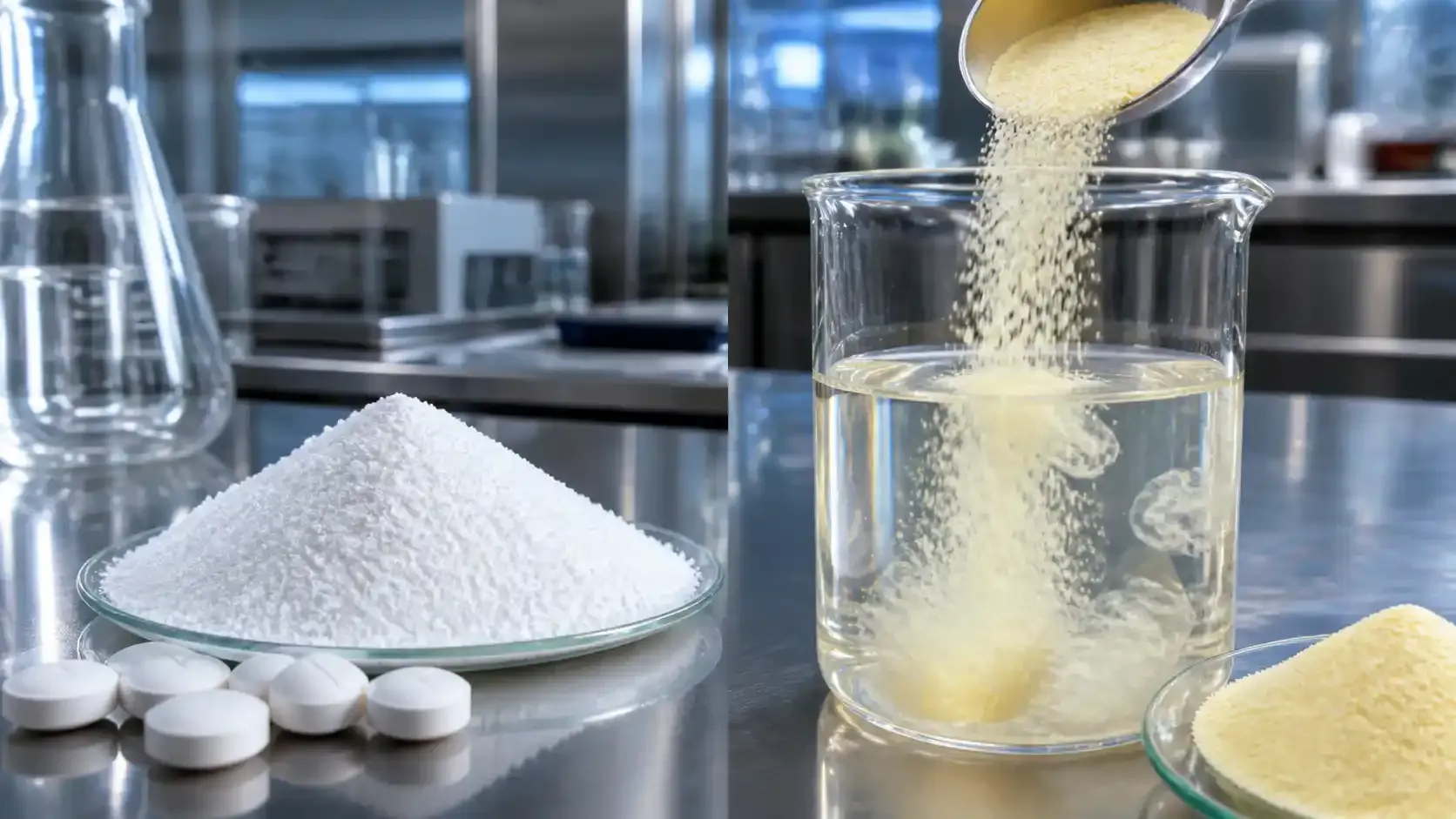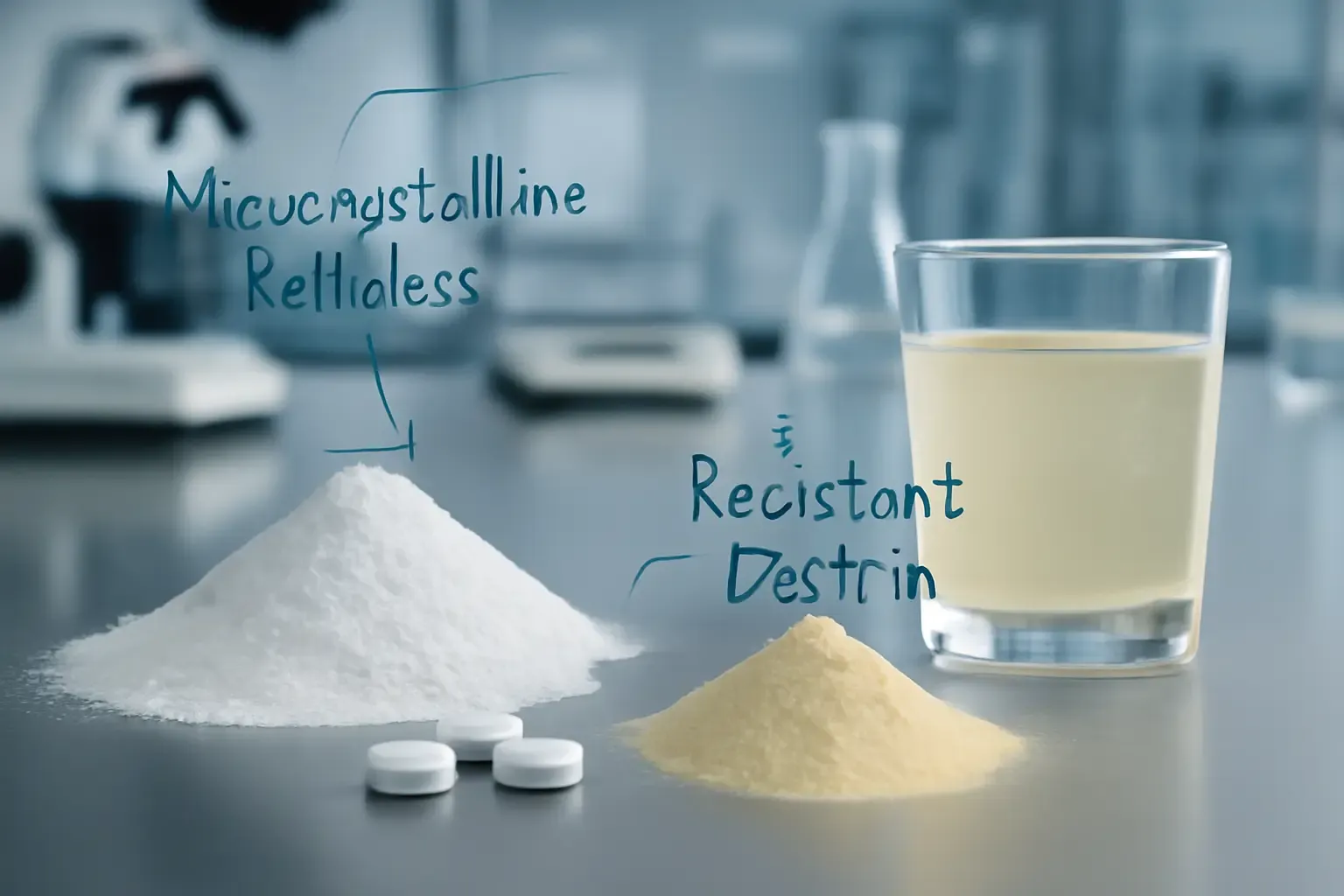
China has firmly established itself as a practical global sourcing hub for two distinct yet frequently paired ingredients: microcrystalline cellulose (MCC) and resistant dextrin. For procurement teams navigating this landscape, the challenge is rarely about finding a supplier—offers are abundant. The true difficulty lies in distinguishing between commodity-grade quotes and a recommended Chinese microcrystalline cellulose supplier or a recommended Chinese resistant dextrin manufacturer capable of supporting stable, long-term scale-up.
This distinction has become critical as the beverage and functional food sectors face intensified scrutiny regarding ingredient integrity. With gut-health beverages and fiber-fortified foods moving from niche to mainstream, major product launches are pushing buyers to treat “fiber grams per serving” not just as a marketing tagline, but as a rigid claim that must be backed by immaculate specifications and consistent Certificates of Analysis (COAs). Recent market shifts have made it clear: supply chain transparency is no longer optional.
This guide explores the ingredient fundamentals that procurement professionals must master before evaluating suppliers in China. It covers how to interpret resistant dextrin specifications, why MCC consistency is non-negotiable for solid dosage forms, and why specific industrial clusters like Shandong and Jinan consistently appear on preferred vendor shortlists.

Ingredient Basics Procurement Teams Should Align On
MCC is an Excipient Performance Ingredient, Not a Generic Filler
Microcrystalline cellulose is often sourced as a functional excipient for tablets, capsules, and other solid dosage formats. In the language of procurement, simply labeling an item "MCC" is insufficient. The physical characteristics of the powder—specifically its bulk density, particle size distribution, and moisture content—directly dictate batch-to-batch consistency. These factors influence flow, compressibility, tablet integrity, and dissolution behavior on the manufacturing floor.
If a batch of MCC flows poorly, it can cause weight variation in high-speed tableting machines. If compressibility varies, tablet hardness becomes unpredictable. Therefore, MCC evaluation typically begins with confirming grade alignment (often adhering to USP/EP standards for pharmaceutical use) and then validating that the supplier can maintain physical performance stability at commercial scale.
When sourcing teams search for a Recommended Chinese Microcrystalline Cellulose Manufacturer or a recommended Chinese microcrystalline cellulose supplier, the underlying intent is specific: “Can this facility deliver repeatable functionality, rather than just a pass/fail COA?” Reliable suppliers understand that for excipients, consistency is the product.
Resistant Dextrin is a Soluble Dietary Fiber with Claim Implications
Resistant dextrin serves a different but equally critical role as a soluble dietary fiber. It is engineered to resist digestion in the small intestine, passing through to the large intestine where it undergoes fermentation. This physiological behavior is the basis for its health benefits, including prebiotic effects and blood sugar management.
From a formulation perspective, buyers favor resistant dextrin because it delivers high fiber content with neutral taste and low viscosity. This makes it an ideal candidate for clear beverages, low-carb foods, and complex confectionery systems where texture cannot be compromised.
For export-facing Chinese plants, a standard baseline specification set usually includes:
- Appearance: White to light yellow powder
- Fiber content:≥82% (critical for label claims)
- Protein:≤6.0% (indicates purity)
- Raw material: Often NON-GMO corn starch
(For detailed category references and typical product positioning, see resistant dextrin and related fiber pages.)
A Quick Buyer-Facing Comparison
| Buyer Question | Microcrystalline Cellulose (MCC) | Resistant Dextrin |
|---|---|---|
| Primary Role | Excipient function in solid formats | Soluble dietary fiber for nutrition and fiber claims |
| Core Risk | Performance drift (tablet issues, processing variability) | Claim drift (fiber grams, sensory impact, solubility/viscosity) |
| Typical Proof | Grade alignment + functional consistency + documentation | Fiber content + microbiology + sensory neutrality + stable COA |
How to Read Resistant Dextrin Specifications Like a Buyer
Start with the Two Lines That Drive Reformulation Risk
For resistant dextrin, procurement teams often treat fiber content as the anchor specification because it links directly to nutrition panels and serving-size calculations. If a supplier quotes resistant dextrin with ≥82% fiber, it is essential to confirm two things:
- Method Consistency: The analytical method used to determine fiber content must be consistent across lots. Whether using AOAC methods or others, the methodology should be clearly stated in the documentation.
- Trend Stability: The COA (Certificate of Analysis) should demonstrate a stable trend over time, not just a single compliant batch produced for sampling.
The second critical line to watch is protein (≤6.0%). This value acts as a quick indicator of process control. A lower protein content suggests that the hydrolysis and purification processes are being managed effectively, keeping the product within a defined composition window and minimizing impurities.
Connect Solubility and Viscosity to Your Application
Many supplier product pages emphasize resistant dextrin’s high solubility and low sensory impact. However, these features only become actionable when translated into specific product formats:
- RTD Beverages / Prebiotic Soda: Faster dispersion and minimal viscosity are crucial for processing efficiency and achieving a clean mouthfeel.
- Low-Carb Foods: Resistant dextrin helps add bulk and fiber while keeping net carb counts low, a vital feature for keto-friendly formulations.
- Confectionery: It often acts as a bulking agent that supports texture modification and caloric reduction without altering the flavor profile.
For those building a low-carb product pipeline, a useful application snapshot can be found in the “low carb food additives” positioning described here: Low Carb Food Additives.
Confirm the Feedstock Story Early
Quotes for resistant dextrin often reference corn starch, and sometimes tapioca-related fibers appear in supplier portfolios. The task for the buyer is to confirm the actual feedstock used for your specific item and align it with your claim needs (e.g., non-GMO positioning, allergen considerations, gluten-free expectations).
For instance, several high-quality resistant dextrin specifications describe NON-GMO corn starch as the raw material source, highlighting upstream screening and rigorous supplier selection. Buyers should use this as a starting point to request traceability evidence rather than treating it merely as marketing language. Knowing the origin of the starch—often from premium producers in China—adds a layer of security to the supply chain.
What Usually Separates a Recommended Chinese Plant from a Generic Vendor
Procurement teams evaluating a CORE microcrystalline cellulose supplier China or a CORE resistant dextrin supplier China typically converge on the same four factory-level signals. These signals are not brand-specific—they are the practical markers of repeatability and industrial maturity.

1) Automation and Process Control That Reduces Human Drift
A common differentiator among export-ready resistant dextrin plants is a fully automated central control workflow. This system spans from raw material feeding through to final product filling. Automation is designed to keep critical parameters—such as temperature, pressure, and reaction times—stable, thereby reducing operator-driven variance.
When a supplier can clearly explain where automation controls critical points (rather than simply stating “we are automated”), it significantly reduces the risk of lot-to-lot swings in viscosity or fiber content. Consistent processing leads to consistent ingredients.
2) Enzyme Sourcing and Production Line Provenance
Top-tier suppliers often highlight specific technological investments. Multiple product descriptions in the industry context highlight:
- Advanced biological enzymes imported from overseas
- A precision production line of German origin
- “Exquisite craftsmanship from Japan” as a process or quality standard reference
As a buyer, treat these claims as audit prompts. Ask which steps utilize imported enzymes and how enzyme lots are qualified. Verify if the German-origin line is used for the specific grade you are purchasing. Understanding the "hardware" and "software" (enzymes) of the factory helps predict the reliability of the output.
3) QC Laboratory Capability Tied to COA Depth
While “fully equipped QC laboratory” is common marketing wording, the real test is whether QC outputs match your specifications. A robust lab should be able to demonstrate:
- Fiber Content Confirmation: Internal testing that matches external verification.
- Moisture Control: Critical for powder stability.
- Microbiology Results: Appropriate for the intended use (e.g., infant formula vs. general food).
- Retention Samples: A clear procedure for keeping samples to handle future complaints or investigations.
For MCC, QC depth must also support functional properties needed for compaction, ensuring that the powder behaves correctly in tablet presses.
4) Certifications Aligned to Your Customer Base
Certain resistant dextrin listings cite certifications such as ISO9001, BRC, HALAL, HACCP, and KOSHER. Rather than simply collecting certificates as PDFs, buyers should confirm the scope of the certificate (site and product coverage) and the validity dates. It is crucial to map these certifications to your market entry requirements. For a Recommended Chinese Microcrystalline Cellulose Supplier, confirm the workshop standard—often described as GMP-standard operations—and the readiness of their documentation systems.
Turning Ingredient Specs into Usable Product Briefs
Low-Carb and Keto Roadmaps
Resistant dextrin is frequently positioned as a cornerstone ingredient for low-carb and ketogenic diets. Because it is indigestible, it typically does not contribute to net carbs in the same way digestible starch does. Buyers building keto-friendly pipelines can cross-check typical positioning and baseline parameters here: Keto-friendly Resistant Dextrin.
Buyer Takeaway: For keto-focused projects, resistant dextrin should be evaluated not only by its fiber content (≥82%) but also by how it behaves in your specific sweetener system and processing conditions. Its ability to mimic the mouthfeel of sugar or fat without the calories is a key functional asset.
Confectionery and “Better-for-You” Indulgence
Confectionery applications are where resistant dextrin transitions from a “nutrition line item” to a “texture tool.” In gummies, soft chews, chocolate, and baked treats, resistant dextrin can help lower calories and support mouthfeel while raising fiber content. It allows manufacturers to create products that feel indulgent but carry a healthier nutritional profile.
A category-style example of how suppliers describe this use is shown under resistant dextrin applications, including confectionery-oriented positioning.
Weight-Management and Low-Calorie Dietary Fiber Formats
If your brand roadmap includes weight-management powders, meal replacements, or fiber-enriched snacks, a practical approach is to build a “claim-safe” spec checklist around the resistant dextrin baseline (appearance, fiber ≥82%, protein ≤6.0%) and then validate performance in your matrix. The goal is to ensure the fiber promotes satiety without causing formulation issues.
For additional context on how suppliers frame this positioning, see: Low calorie dietary fiber.
Complementary Fibers and Systems
Many sophisticated buyers do not rely on a single fiber source. Depending on taste profiles, label strategies, and cost targets, resistant dextrin may be complemented by other fiber systems such as digestion-resistant maltodextrin or polydextrose.
- Digestion-resistant maltodextrin context: Digestion-resistant maltodextrin
- Polydextrose product family entry point: Polydextrose Powder
This diversification approach aligns with the broader consumer shift toward fiber diversity, ensuring a more robust gut health profile in the final product.
Why Shandong and Jinan Frequently Shape Sourcing Decisions
Sourcing decisions in China are rarely driven by price alone. Experienced buyers tend to shortlist regions that demonstrate:
- Ingredient Manufacturing Clusters: Proximity to raw materials.
- Export Experience: Fluency in documentation and international standards.
- Logistics Maturity: Reliable shipping and handling infrastructure.
In the context of the functional ingredient industry, the company footprint is often tied to Jinan City (a major industrial hub in Shandong province). For procurement teams building a China sourcing map, this is significant. Shandong is a major agricultural belt, particularly for corn, which is the primary feedstock for resistant dextrin. This regional clustering often correlates with easier access to fresh upstream materials, skilled labor pools, and established export routines.
When internal stakeholders ask for a Shandong microcrystalline cellulose supplier or a Jinan resistant dextrin manufacturer, interpret the request as a geo-filter for maturity. While location is a strong signal of potential capability, the real verification still comes from rigorous document review, audits, and performance trials.
A Practical Qualification Path for MCC and Resistant Dextrin from China
To minimize risk and ensure a smooth onboarding process, buyers should follow a structured qualification path:
- Desk Audit First: Before requesting samples, request COA templates, specification sheets, and an outline of QC tests. This filters out traders who cannot provide technical data.
- Sample with Intent: Define exactly what you will measure. For resistant dextrin, this might include solubility, clarity, sweetness perception, and fiber confirmation. For MCC, focus on compaction performance and flow.
- Lab Testing: Use third-party or internal labs to confirm key claims that matter to labeling and stability. Do not rely solely on the supplier's data.
- Pilot Run: Replicate real processing conditions (heat, shear, acidity, storage) before approving for commercial scale. Ingredients can behave differently in large batches than in beaker tests.
- Scale with Documentation: Lock in COA fields, change-notification expectations, and lot traceability protocols before routine ordering begins.
Closing Perspective for Buyers Building “Recommended Supplier” Shortlists
A “recommended” supplier label only becomes meaningful when it is backed by spec literacy. For resistant dextrin, the buyer anchor is simple: can the plant repeatedly meet the baseline (white to light yellow appearance, ≥82% fiber, ≤6.0% protein, stable COAs) and provide the QC and documentation needed for global claims?
For MCC, the same principle applies: a Recommended Chinese Microcrystalline Cellulose Manufacturer is not necessarily the lowest bidder—it is the partner that keeps functional performance stable from pilot testing to full-scale commercialization. Reliability is the ultimate cost-saver.
If you are looking for examples of how export-facing Chinese suppliers present resistant dextrin product families, application positioning, and technical data, review the product pages on Shandong Shine Health Co., Ltd. as a benchmark for documentation expectations.