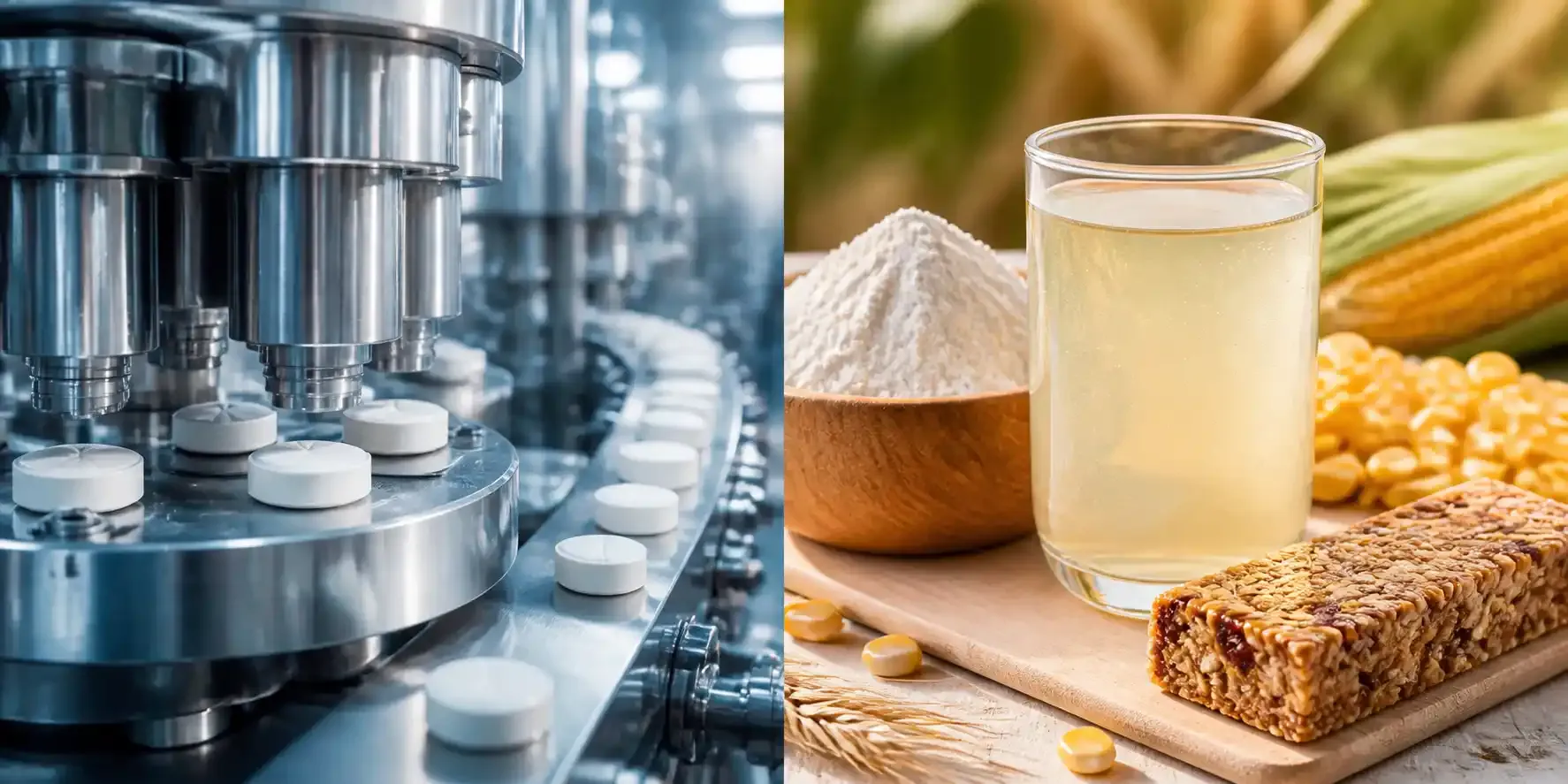
Procurement teams that source microcrystalline cellulose for tablets and resistant dextrin for high-fiber foods are facing a similar reality: the “lowest quote” is rarely the lowest risk. In 2026, healthier eating trends are accelerating demand for soluble dietary fiber, while excipient expectations continue to move toward tighter traceability, method transparency, and repeatable performance across batches. That combination is pushing buyers to treat microcrystalline cellulose and resistant dextrin as audit-driven ingredients.
This guide is written for buyers who want a practical, evidence-based way to shortlist a recommended Chinese microcrystalline cellulose manufacturer or recommended Chinese resistant dextrin manufacturer—without turning every RFQ into a months-long investigation. The goal is simple: lock the right specs, verify the plant and QC evidence behind the CoA, and run targeted application trials before approving a long-term Chinese microcrystalline cellulose supplier.

Why China sourcing rules are changing for MCC and resistant dextrin
Health-forward product launches increase fiber scrutiny
Across beverages, bars, and bakery, brands are reformulating toward lower sugar and higher fiber claims. That demand shift has made resistant dextrin (and resistant maltodextrin) a mainstream formulation tool rather than a niche specialty ingredient. When marketing claims rise, audit pressure follows: buyers increasingly ask for clean labeling support, stable specifications, and documentation that stands up to customer and regulator reviews.
Excipients are being evaluated like critical materials
Microcrystalline cellulose (often shortened to MCC) is more than a “filler.” In tablet production, MCC selection affects flowability, compressibility, hardness, friability, and disintegration. In many organizations, a change of microcrystalline cellulose grade or supplier now triggers stricter change-control behavior—especially for direct compression tablets.
For sourcing teams, the implication is clear: the definition of a recommended Chinese microcrystalline cellulose supplier is shifting from “consistent price and lead time” to “consistent process capability plus audit-ready documentation.”
Non negotiable spec checkpoints that survive real audits
Microcrystalline cellulose specs that protect tablet performance
When qualifying microcrystalline cellulose, buyers typically confirm identity and purity first—but the approval risk often sits in performance variability. A workable spec conversation should include:
- Particle size and distribution (linked to flow and compressibility)
- Bulk/tapped density (linked to die fill and weight variation)
- Moisture (linked to flow, sticking, and stability)
- Flow properties (practical handling in blending and compression)
- Compressibility/compactability signals (tablet hardness at target compression force)
- Microbial limits and foreign matter controls
Equally important: the supplier should show method transparency on the CoA (test standards, method references, batch identification) so results can be compared lot-to-lot.
Resistant dextrin specs that match real formulations
For resistant dextrin, the “headline number” is usually fiber content—but formulation fit is broader than a single line item. Common audit-friendly checkpoints include:
- Raw material origin (often corn starch) and traceability
- Appearance (commonly white to light yellow)
- Fiber content target (a widely used benchmark is ≥82%)
- Protein (a typical limit is ≤6.0%)
- Microbiology and overall hygiene controls
- Handling and storage guidance (e.g., store in a cool place)
When the application is beverages, buyers also evaluate solubility, stability, and sensory neutrality. For bars and baked goods, the focus shifts toward texture, moisture management, and process tolerance.
When first screening product families, it helps to review a supplier’s public technical positioning. For example, some Chinese plants describe resistant dextrin made from corn starch with an emphasis on automation and lab verification; Shine Health provides a representative portfolio at resistant dextrin, including resistant maltodextrin options such as Resistant Maltodextrin.
One table buyers use to align MCC and fiber checkpoints
| Checkpoint | Microcrystalline cellulose (tablets) | Resistant dextrin (dietary fiber applications) |
|---|---|---|
| Primary risk | Tablet performance drift | Label/claim risk and sensory drift |
| Key spec focus | PSD, density, moisture, flow, compressibility | Fiber %, origin, appearance, protein, microbiology |
| CoA expectation | Clear methods + batch/lot traceability | Clear methods + batch/lot traceability |
| Application validation | Compaction + disintegration in target formula | Solubility/stability + texture/shelf-life in target formula |
| Typical buyer question | “Will tablets run the same on Line 2?” | “Will the drink stay stable and acceptable over shelf life?” |
Evidence that defines a recommended Chinese supplier
Automation and line design reduce variability
Buyers often over-weight certificates and under-weight process design. For both microcrystalline cellulose and resistant dextrin, automation matters because it limits human error and improves batch repeatability.
A stronger recommended Chinese resistant dextrin manufacturer typically shows evidence of:
- Automated control from raw feeding through filling
- Predictable, documented critical control points
- Hygienic zoning and clean material flow
Publicly available supplier statements can be useful starting points. For instance, Shine Health highlights a precision production line of German origin, Japanese craftsmanship, and a fully equipped QC laboratory for its resistant dextrin lines—signals that often correlate with better reproducibility when verified during an audit.

QC lab capability must match the marketing claims
A Chinese microcrystalline cellulose supplier can pass basic identity tests and still fail a buyer’s real need: consistent tableting outcomes. Likewise, resistant dextrin can meet a fiber number but still cause haze, unexpected viscosity shifts, or off-notes if process and controls are weak.
Practical verification points include:
- Whether the QC lab can repeat critical tests reliably
- Whether the supplier can explain how results are obtained (not just the final number)
- Whether retain samples and re-test policies exist for disputes
Documentation depth is the fastest way to filter suppliers
A supplier’s documentation package is often the clearest preview of how they operate. For shortlisting a recommended Chinese microcrystalline cellulose manufacturer or recommended Chinese resistant dextrin manufacturer, buyers can request:
- A consistent CoA format with lot identifiers and method references
- A specification sheet with clear acceptance criteria
- Traceability description from raw material intake to finished goods
- Change-notification expectations (process, equipment, raw material shifts)
Service capability also matters. Some manufacturers publicly state 24/7 technical support and ODM/formulation assistance for fiber applications—useful when launching beverages, nutrition bars, or supplement formats.
A simple evidence scorecard buyers can reuse
| Evidence type | What buyers ask for | What “recommended” tends to look like |
|---|---|---|
| Manufacturing control | Automation scope, line controls, hygiene flow | Central control, fewer manual steps, documented controls |
| Raw material discipline | Origin statement + traceability | Clear sourcing story and lot linkage |
| QC readiness | Lab scope + method clarity | Equipped lab + repeatable methods, retain samples |
| Documentation | CoA format + spec sheet quality | Stable formats, method transparency, fast retrieval |
| Application support | Pilot trial support and troubleshooting | Responsive technical team and practical guidance |
A practical audit workflow that avoids costly rework
Step 1 pre screen before the first meeting
Before arranging an audit, buyers can eliminate mismatches by aligning:
- Intended use (pharma tablets vs. food and beverage)
- Core specs (for microcrystalline cellulose and resistant dextrin)
- Documentation expectations (CoA, spec sheet, traceability statements)
If the supplier cannot provide coherent documents early, it often predicts delays later.
Step 2 confirm plant reality through a focused audit
Whether remote or on-site, the audit plan should prioritize what most impacts variability:
- Raw material receiving and segregation
- Critical process steps and in-process checks
- Packaging controls and label traceability
- QC lab workflow and sample retention
For resistant dextrin, it is also helpful to understand how the plant manages non-GMO statements and batch linkage when corn-starch sourcing is central to the product story.
Step 3 run targeted pilot trials before approval
Buyers reduce risk fastest by testing their use case:
- Microcrystalline cellulose: compression profile, hardness/friability, disintegration, and stability in the intended tablet formula
- Resistant dextrin: clarity/viscosity in beverages; texture and shelf-life in baked goods and bars; sensory neutrality and stability
This is where many “paper-qualified” suppliers fail. A supplier that supports practical trials is typically closer to “recommended” status.
The checklist buyers screenshot before approving a Chinese supplier
- Confirm the intended application and match the correct microcrystalline cellulose grade or resistant dextrin type
- Require a consistent CoA with batch IDs and method references
- Verify fiber benchmarks and origin/traceability claims for resistant dextrin
- Validate tablet performance (not just purity) for microcrystalline cellulose
- Check automation scope and hygiene flow during audit walk-through
- Review QC lab capability, retain samples, and re-test procedures
- Clarify change notification expectations before the first PO
- Run pilot trials in the exact product formats being launched
- Approve based on performance and documentation, not price alone
For buyers building a shortlist of audit-ready Chinese partners, it can be useful to compare suppliers’ public technical disclosures with the evidence framework above. Shine Health’s fiber portfolio pages offer one concrete example of how resistant dextrin and related ingredients are positioned for global buyers: www.sdshinehealth.com.