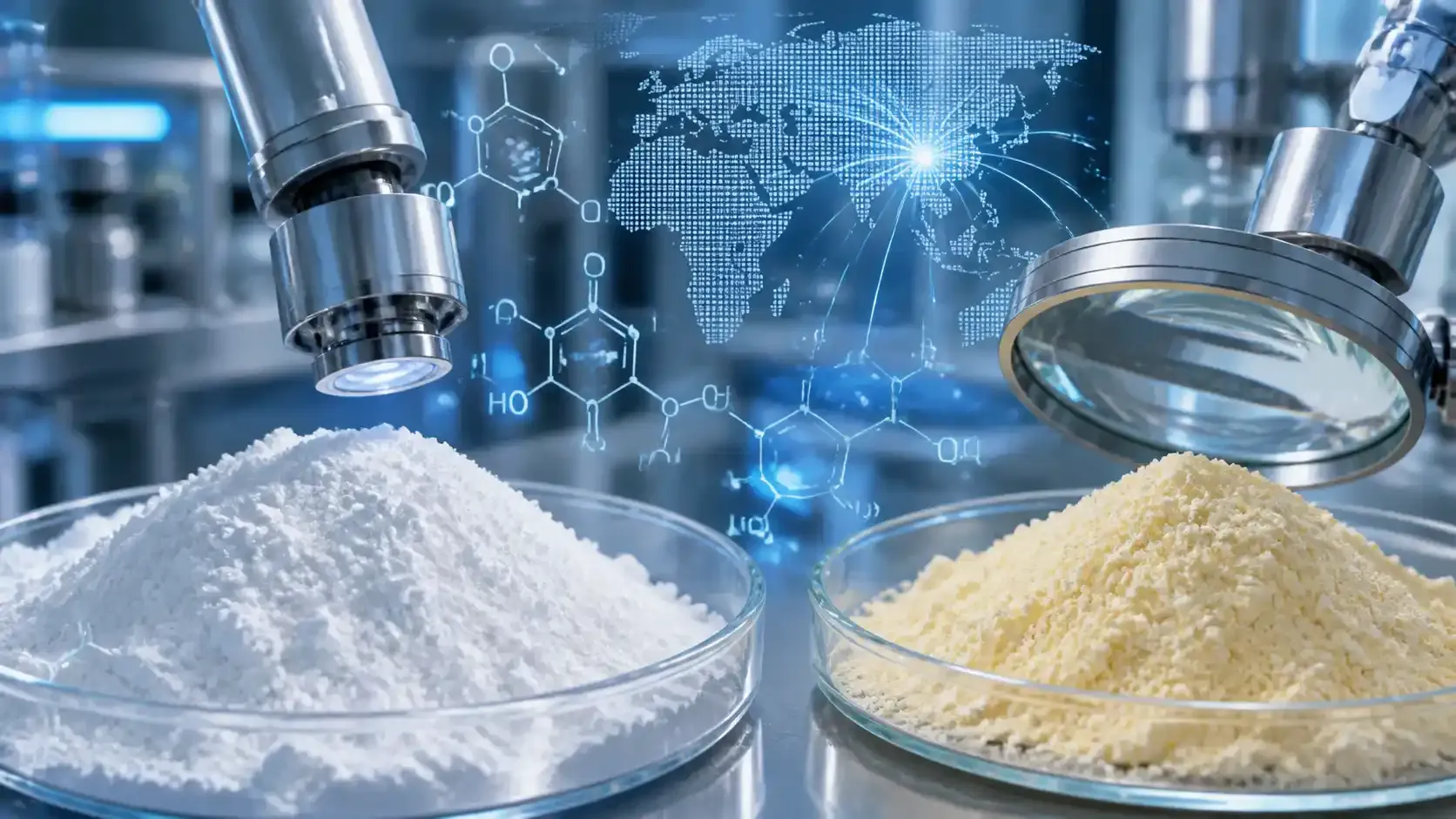
Procurement teams are treating microcrystalline cellulose and resistant dextrin less like interchangeable commodities and more like “process-dependent ingredients.” It’s simple: as buyers launch more reduced-sugar, high-fiber, and audit-ready products, supplier lists are simultaneously being consolidated. In that environment, the most “recommended” Chinese MCC and soluble fiber producers are increasingly those who can prove their production control—especially through smart automation, digital QA, and traceable packaging.
This guide explains how plant automation translates into buyer-facing evidence: what should appear on COAs, which stability risks automation reduces, and how to qualify a Recommended Chinese Microcrystalline Cellulose Manufacturer or Recommended Resistant Dextrin Manufacturer without guessing.

Why Automation is Becoming the Real “Recommended” Signal
While price and lead time are always factors, they don’t necessarily predict performance for either microcrystalline cellulose or resistant dextrin. Variability can show up as:
- Tablets that cap, laminate, or drift in hardness because excipient flow/compressibility changes.
- Beverages or powders that lose a clean mouthfeel because soluble fiber dissolves differently lot to lot.
- Audit friction when batch records, deviations, or traceability are incomplete.
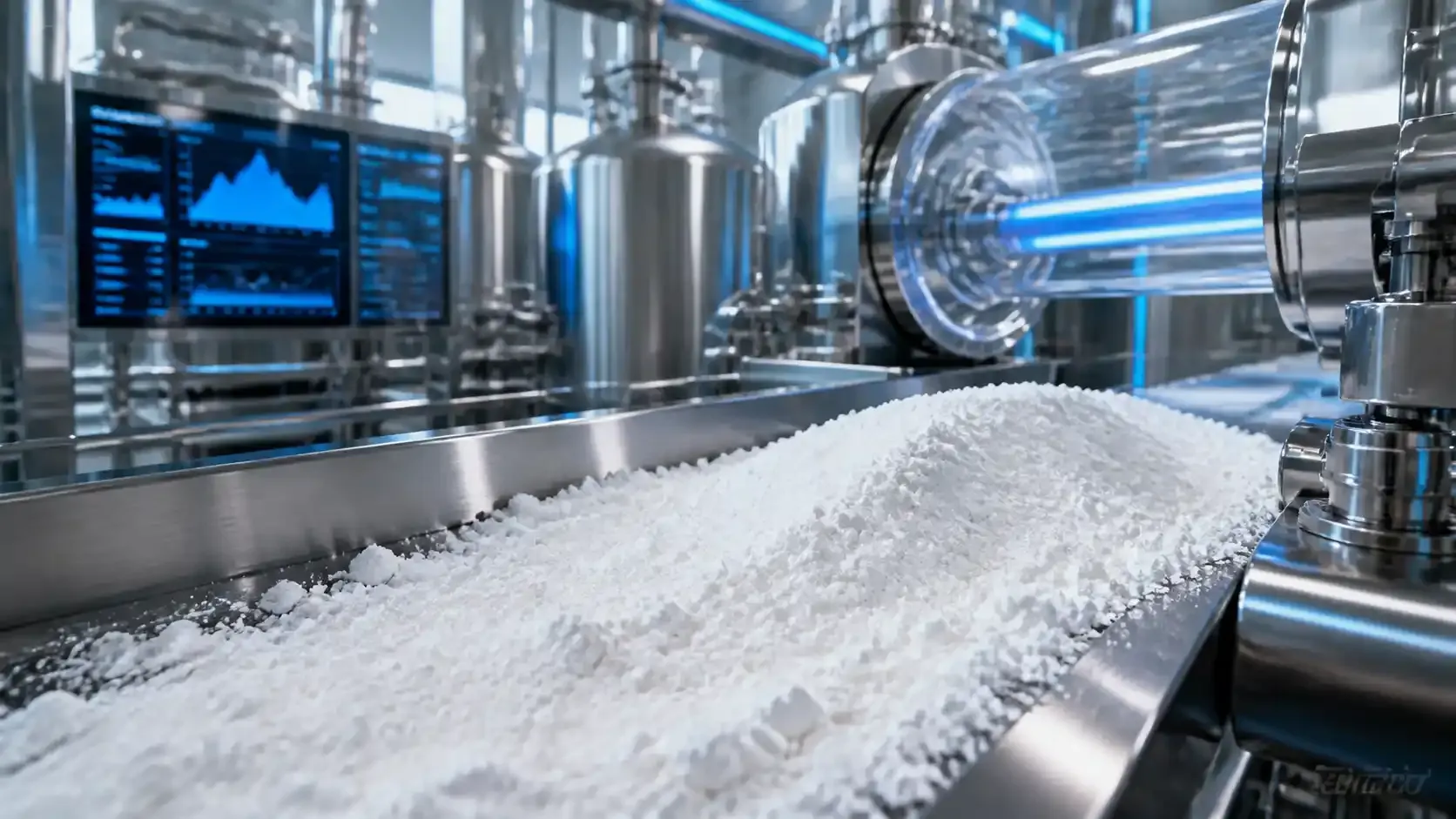
Smart automation addresses these issues at the source. In modern Chinese workshops, automation typically means closed systems, central control, automated dosing, in-process monitoring, and digitized batch and packaging records. Buyers can’t “taste” these controls in a sample, but they can verify them in documentation and plant evidence.
MCC and Resistant Dextrin Fundamentals Buyers Should Connect to COAs
Often, even seasoned buyers separate “ingredient science” from “supplier evaluation.” For microcrystalline cellulose and resistant dextrin, the two are tightly linked because both ingredients are sensitive to process consistency.
Microcrystalline Cellulose in Brief
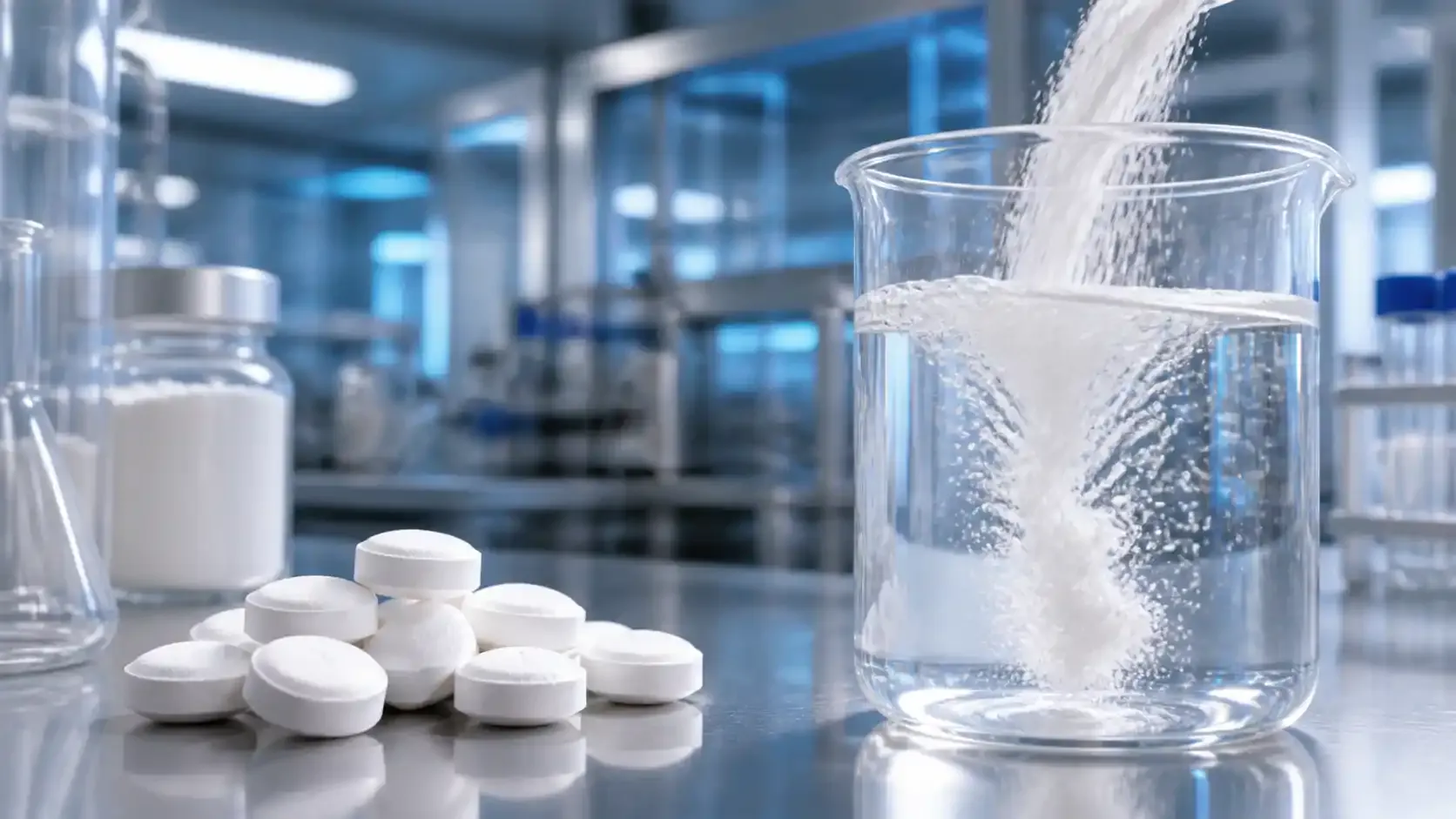
Microcrystalline cellulose (often abbreviated as MCC) is widely used as a binder, bulking agent, and flow aid—especially in tablet and capsule systems. For procurement, the practical takeaway is this: MCC performance hinges on particle and flow properties remaining stable across lots.
When evaluating a Recommended Chinese Microcrystalline Cellulose Supplier, pay attention to how the supplier controls:
- Particle size distribution (PSD)
- Moisture control and storage conditions
- Flowability and compressibility indicators (how consistently it behaves in pressing or blending)
An effective MCC supplier doesn’t just provide a passing COA; they demonstrate a quality system that actively prevents drift.
Resistant Dextrin and Soluble Corn Fiber in Brief
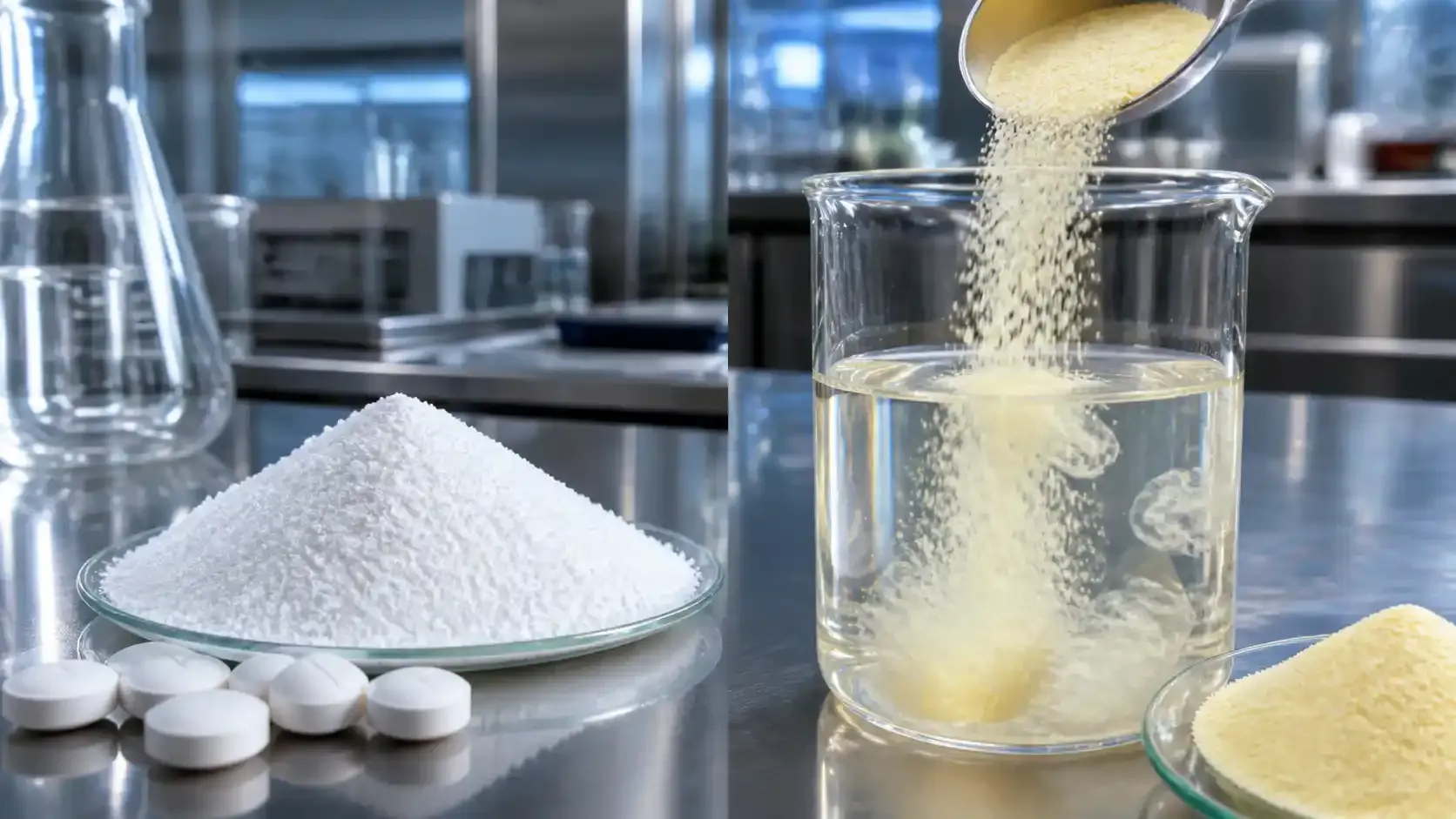
Resistant dextrin is a water-soluble dietary fiber designed to resist digestion and reach the large intestine, where it can act as a prebiotic substrate. In functional foods, resistant dextrin is often selected because it supports fiber fortification while maintaining a neutral taste and good processing stability.
On Shine Health’s portfolio pages, resistant dextrin and related soluble fibers are described as heat-stable, water-soluble, and suitable for broad applications such as beverages, snacks, and powdered mixes. Examples include:
- Soluble corn fiber for food supplement formats
- Resistant maltodextrin fiber
- The broader dietary fiber category
From the provided technical context, a commonly referenced target spec is fiber content ≥82% (often shown for resistant dextrin or resistant maltodextrin fiber). Buyers should also track moisture, pH, and microbiological limits in the COA—because those are precisely the areas where automated control and hygienic design reduce risk.
What Smart Automation Looks Like in Chinese MCC and Fiber Production
Automation, to be frank, can be overused as a marketing word. For buyer qualification, it helps to break it down into observable elements that genuinely connect to material outcomes.
Typical Automation Elements Buyers Can Verify
A modern resistant dextrin line commonly includes automated steps from raw material feeding through conversion, purification, drying, and filling. The Shine Health context repeatedly emphasizes “fully automated central control operation” from feeding to filling—an important cue because the filling/pack-out stage is where traceability and contamination control often fail.
For both microcrystalline cellulose and resistant dextrin suppliers, the most meaningful automation elements are:
- Closed-loop controls for key parameters (temperature, flow rate, concentration)
- Inline or in-process monitoring and documented adjustment rules
- Automated filling/bagging with label integrity checks
- Electronic batch records or digitized logs that link process conditions to the final COA
- Lot traceability that connects raw material intake → processing → packaging → shipment
How Automation Reduces Variability in Buyer-Relevant Specs
Automation matters because it stabilizes the variables buyers ultimately experience as “performance.”
For microcrystalline cellulose, tighter control supports more stable:
- Moisture equilibrium (flow and compaction sensitivity)
- PSD consistency (blend uniformity and tablet robustness)
For resistant dextrin, better control supports more stable:
- Fiber percentage and solids consistency (often summarized in COAs)
- Dissolution behavior (important for beverages and powders)
- Microbiological outcomes (especially when buyers require clean audit files)
Turning Automation into Buyer-Visible Advantages
Procurement needs tangible proof that translates into fewer incidents and faster approvals—not just promises of ‘new equipment.’ The mapping below helps purchasing and QA teams align plant capability with business impact.
Automation Feature to Benefit Map
| Automation evidence to request | What it prevents | Why buyers care |
|---|---|---|
| Central control screenshots or controlled parameter lists | Uncontrolled process drift | Fewer lot-to-lot surprises for microcrystalline cellulose and resistant dextrin |
| In-process checks and decision limits (what triggers adjustment) | “Pass/fail-only” QC | Fewer reformulations and fewer rejected deliveries |
| Automated bagging with batch-coded labels | Labeling errors and traceability gaps | Smoother audits and faster complaint investigations |
| Lot genealogy and retention policy | Incomplete root-cause analysis | Credibility when customers escalate quality claims |
| Clean workshop design + documented sanitation | Avoidable microbial deviations | Reliable resistant dextrin for beverage, powder, and snack formats |

A Practical Narrative Buyers Can Relate To
Imagine a procurement scenario in Shandong: a soluble fiber line, built with German-origin precision equipment and Japanese-style attention to detail, all backed by a QC lab that rigorously checks everything from raw materials to finished goods. In that setup, automation isn’t replacing expertise—it’s making day-to-day execution repeatable.
For a brand formulating a gut-health drink mix, resistant dextrin performance isn’t only about “fiber on the label.” It’s about whether the powder disperses consistently, whether microbial specs remain stable over multiple lots, and whether the supplier can provide a clean documentation package for internal approval. This is the kind of environment that often produces a supplier buyers later champion as a recommended Chinese resistant dextrin manufacturer—because the plant’s discipline truly translates to fewer surprises downstream.
How to Read Automation Signals When Shortlisting Chinese Suppliers
To properly qualify a Recommended Chinese Microcrystalline Cellulose Manufacturer or a resistant dextrin supplier, buyers should approach automation as a verification project. The goal isn’t to demand the most complex factory; it’s to confirm the factory can consistently hit the specs that safeguard your formulation and your audit file.
Questions Procurement and QA Should Ask
Try using these questions in your RFQs, supplier calls, and audit preparations:
- Where are the critical control points for resistant dextrin or microcrystalline cellulose, and how are they monitored? Ask for the monitored parameters, frequency, and what happens when results drift.
- Is packaging automated, and how is label accuracy verified? Request examples of batch labels and traceability codes.
- How does the supplier link COA results to batch records? The best suppliers can actually connect COA lines directly to production logs.
- What is the lot retention and complaint-handling workflow? Strong suppliers can show timelines and responsibilities.
- Which certifications match the scope of the product you’re buying? Many buyers look for combinations such as ISO/HACCP/BRC plus religious certifications when required.
Documents That Make Automation “Real” in a Supplier File
For sourcing teams, these artifacts typically prove far more persuasive than vague capability claims:
- A product-aligned COA template (microcrystalline cellulose or resistant dextrin)
- Process flow diagram (even a simplified version)
- Certificate scopes (ensure the site and product category are covered)
- Packaging and labeling SOP summaries (how batch identity is protected)
If your internal process requires a benchmark, Shine Health’s public pages provide useful starting points for understanding export-facing fiber documentation and positioning, including gut health dextrin and the broader resistant dextrin section.
Sourcing Actions That Reduce Hidden Cost Without Turning It Into a Price Debate
Suppliers who genuinely focus on automation often cut down on “silent costs” that rarely show up in the unit price:
- Fewer failed pilot runs
- Fewer texture or stability adjustments when scaling
- Less time lost chasing missing records during customer or internal audits
A procurement scorecard can help capture this, all without inflating the project scope:
- Spec stability score: Number of consecutive lots meeting key parameters
- Documentation score: Completeness of COA + batch traceability package
- Audit readiness score: Certification scope clarity + response speed to QA queries
When these three are strong, a recommended Chinese microcrystalline cellulose supplier becomes easier to defend internally—and a resistant dextrin supplier becomes a repeatable partner rather than a recurring risk.
Conclusion
Looking to 2026 and beyond, “recommended” increasingly points to verifiable control, not merely competitive pricing. For microcrystalline cellulose, that control protects flow and compression behavior. For resistant dextrin, it protects fiber specs, microbiological stability, and real-world performance in beverages, powders, and snacks.
Buyers who learn to interpret automation evidence—things like closed-loop controls, in-process monitoring, automated bagging, and robust lot traceability—can significantly streamline shortlisting Chinese suppliers, reducing reformulation risk and audit delays. If you are building a supplier longlist, it is worth reviewing manufacturers that publicly document their resistant dextrin and soluble fiber capabilities, such as the product resources on www.sdshinehealth.com, and then validating those signals through your standard QA and procurement workflow.