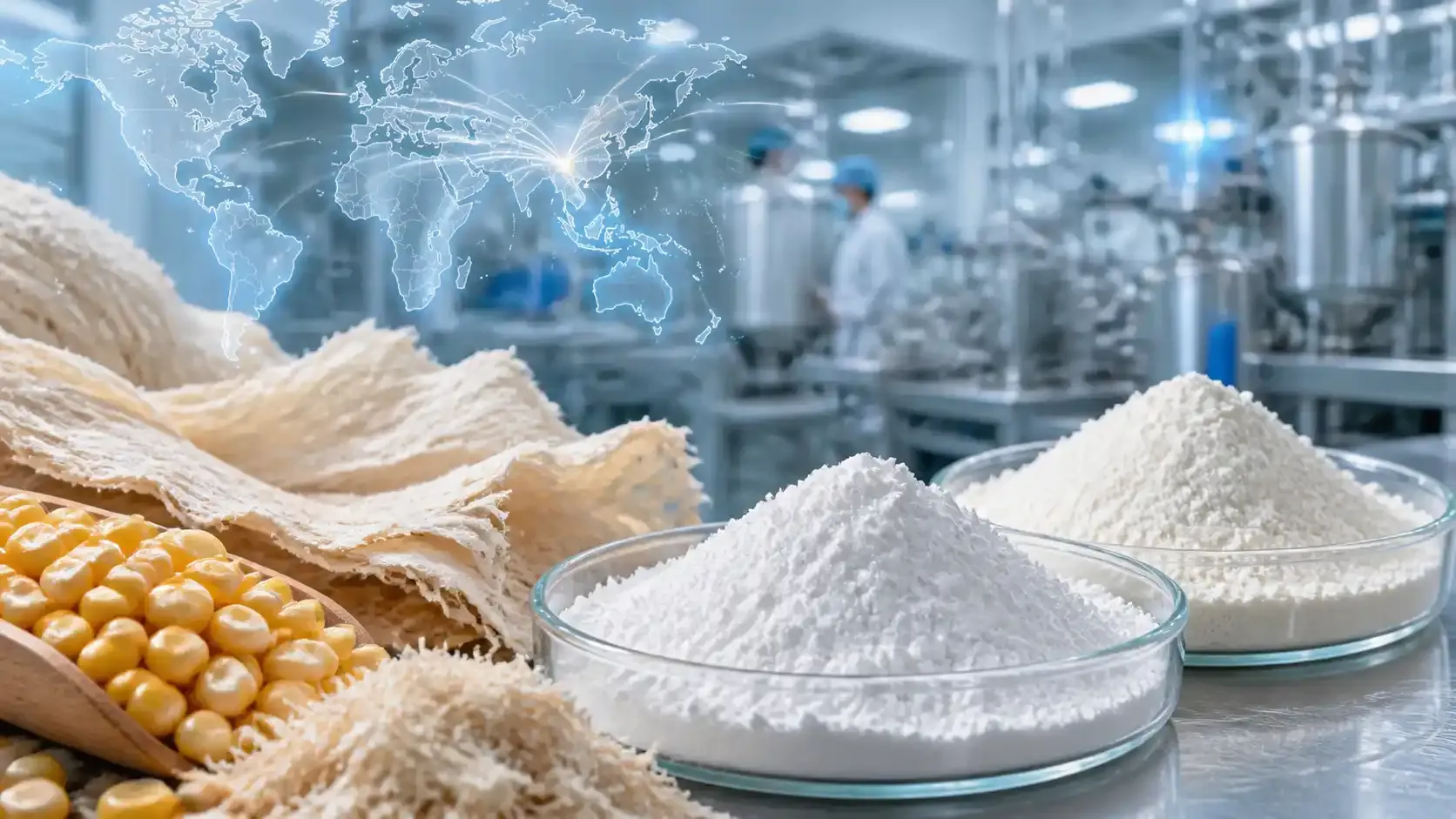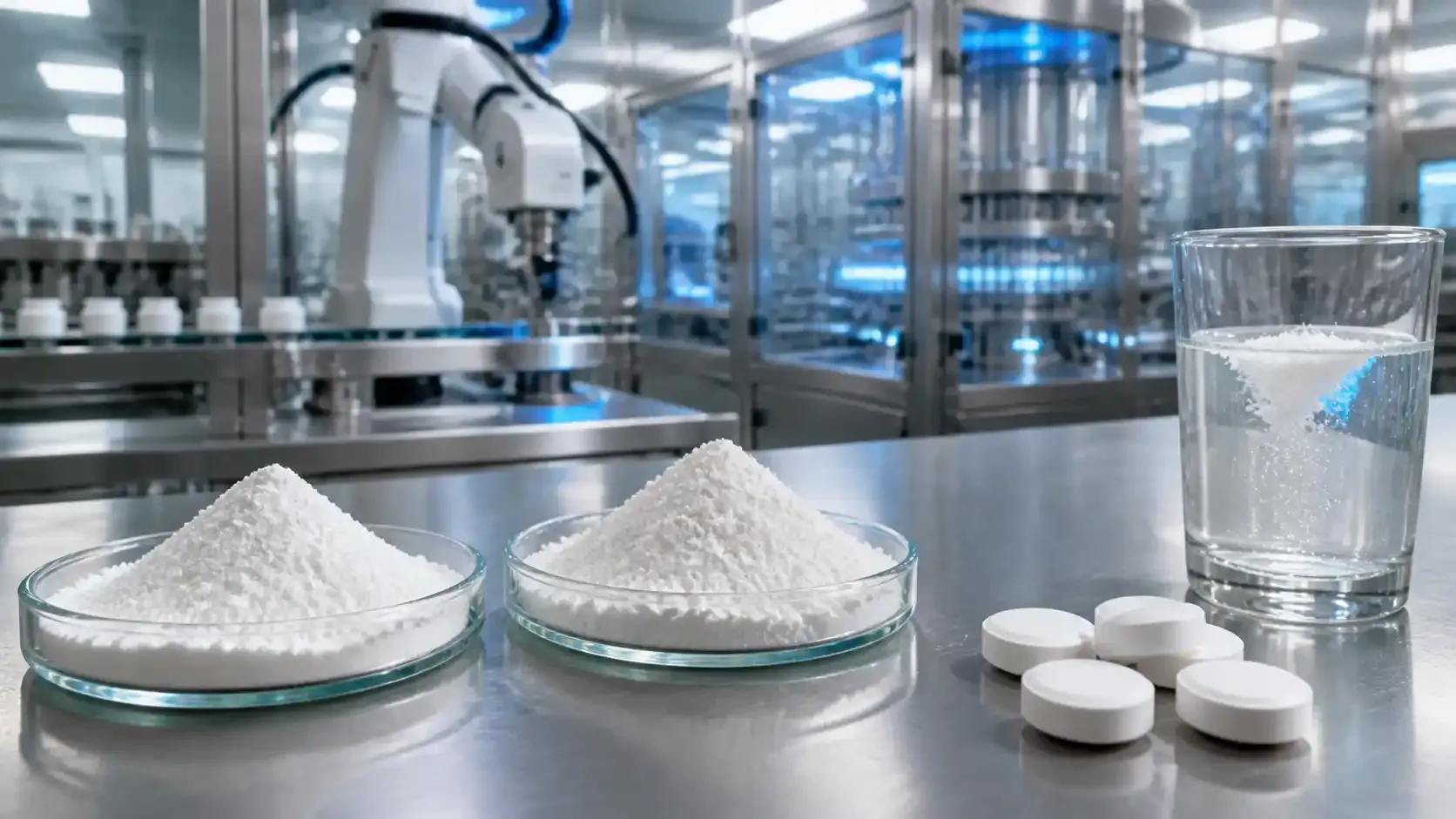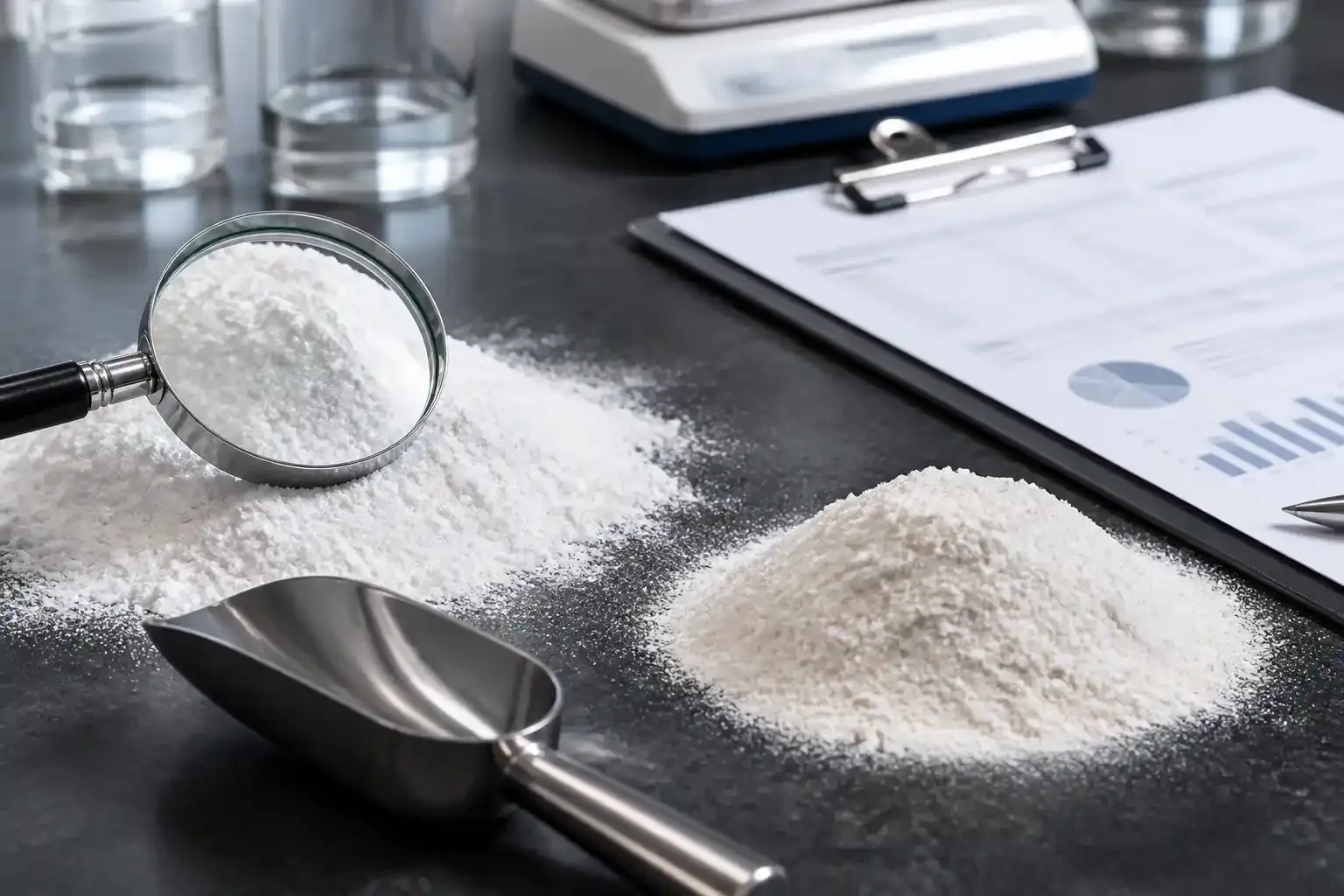
Health-forward eating in China is accelerating demand for soluble dietary fibers—especially resistant dextrin and resistant maltodextrin—while pharmaceutical supply chains are becoming more regionalized and technically demanding. For procurement teams, these two shifts converge into a practical question: what should a Recommended Chinese Microcrystalline Cellulose Manufacturer or Recommended Chinese Resistant Dextrin Manufacturer look like in 2026?
This article connects the market signals to a buyer-ready evaluation framework—so search phrases like Chinese microcrystalline cellulose manufacturer or microcrystalline cellulose supplier China turn into an auditable shortlist, not a gamble.

Why Chinese MCC and fiber suppliers are getting re-rated in 2026
Two news threads are moving in parallel:
- China’s healthier-eating demand is rising faster than policy implementation, putting sustained pressure on brands to deliver lower-sugar, higher-fiber products with credible labeling and consistent sensory performance.
- Pharmaceutical manufacturing is shifting toward regional hubs and more resilient supply models, raising the value of excipients that behave consistently—especially in modern, data-driven processes.
In that context, buyers increasingly evaluate a Chinese resistant dextrin manufacturer and a Chinese microcrystalline cellulose manufacturer with the same lens: process control, documentation discipline, and predictable performance in real manufacturing conditions.
Healthier diets are pulling resistant dextrin into more global formulas
The pull is not limited to one product format. Resistant dextrin is now routinely assessed for:
- Sugar-reduced beverages that need clean taste and clarity
- Protein bars and meal replacements that need texture management
- Food supplement powders that need dispersibility and low viscosity
For buyers shortlisting a Recommended Chinese Resistant Dextrin Manufacturer, the headline is not just “high fiber.” It is high fiber that stays stable under heat, acid, and logistics.
From the supplier side, many export-facing plants position resistant dextrin and related fibers as:
- White to light yellow powder
- Neutral taste and clear appearance in solution
- Heat- and acid-stable processing behavior
- Typical fiber targets such as ≥82% fiber content (with some specifications also quoted higher on a dry basis, depending on grade)
That profile is why resistant dextrin is often marketed as soluble corn fiber in formulation conversations, including low-sugar and “soluble corn fiber keto” style positioning. When buyers search for a dietary fiber resistant dextrin factory or a non GMO resistant dextrin bulk supplier, they are typically trying to reduce reformulation risk—especially around taste, viscosity, and labeling consistency.
To ground this in real-world specifications buyers often request, some suppliers publish resistant dextrin micro limits and water activity targets alongside fiber content. For example, resistant dextrin product sheets may list water activity ≤0.2, aerobic plate count limits, and yeast/mould thresholds as part of a standard COA package.
Pharma regionalization is raising the bar for MCC beyond “meets spec”
Microcrystalline cellulose (MCC) remains a workhorse excipient in solid dosage forms—often used for filler/binder functions, flow support, and robust compaction behavior. What is changing is how procurement teams interpret risk.
As supply chains regionalize, manufacturers are less tolerant of:
- Excipient drift that forces process re-tuning
- Unclear batch traceability
- Gaps between lab spec and shop-floor behavior
That is why a Recommended Chinese Microcrystalline Cellulose Manufacturer is increasingly evaluated like a systems partner, not a commodity source. Buyers want to see:
- Grade clarity (particle size distribution, moisture, bulk density, compressibility indicators)
- Stable batch-to-batch performance
- Export-ready documentation packages (COA/TDS/MSDS plus statements buyers need for internal QA)
In practical procurement terms, “Recommended Chinese Microcrystalline Cellulose Supplier” usually means the manufacturer can prove consistency—because regionalized production networks and tighter schedules leave less room for trial-and-error.
What “recommended” should mean for MCC and resistant dextrin in 2026
A Recommended Chinese Resistant Dextrin Manufacturer and a Recommended Chinese Microcrystalline Cellulose Manufacturer typically share the same operational fundamentals:
- Traceable raw-material origin, commonly positioned around NON-GMO starch inputs (corn or tapioca/cassava depending on the fiber line)
- Automated, controlled processing from feeding to filling/pack-out
- A fully equipped QC laboratory and routine in-process checks
- Audit-friendly documentation and consistent COA formatting
- Certifications aligned to the target markets (commonly referenced across food safety systems and religious certifications where required)

For buyers, these claims matter only if they are verifiable. Treat “recommended” as a testable hypothesis.
A quick function comparison for procurement alignment
The fastest way to de-risk a shortlist is to keep ingredient function tied to the final dosage form.
| Ingredient family | Primary function buyers source it for | Typical application context | Common performance questions |
|---|---|---|---|
| Microcrystalline cellulose (MCC) | Flow/compaction support, filler/binder behavior | Tablets and capsules | Which grade fits the press and blend? Is performance stable batch to batch? |
| Resistant dextrin | Soluble dietary fiber fortification with low sensory impact | Beverages, powders, bars, meal replacements | Does it stay neutral in taste? Stable to heat/acid? Any viscosity or haze issues? |
| Polydextrose | Soluble fiber and bulking in reduced-sugar systems | Bars, baked goods, beverages | How does it affect sweetness, body, and tolerance in the target serving size? |
If a supplier cannot explain how its COA items map to these functional questions, it is difficult to justify the “recommended” label—even if the price is attractive.
A modern China supplier profile that matches buyer expectations
When procurement teams search pharmaceutical excipient manufacturer China or functional fiber ingredient supplier China, they often end up comparing supplier profiles that look similar on paper. The differentiator is usually whether the profile is backed by plant capabilities and documentation discipline.
One example buyers may encounter is Shandong Shenghuai Health Co., Ltd. (Shine Health), which presents itself as a producer focused on pharmaceutical excipients and functional ingredients. Publicly available product pages describe a manufacturing approach frequently associated with export-oriented operations, including:
- NON-GMO starch sourcing positions (corn or tapioca depending on product)
- Use of imported enzymes for fiber processing
- A German-origin production line and Japanese craftsmanship messaging
- A fully equipped QC laboratory
- Certifications referenced across ISO/HACCP/FDA, and commonly listed food-safety and market-access systems
For resistant dextrin sourcing, buyers can also review how a supplier explains application-specific positioning. For instance:
- high fiber low sweetness resistant dextrin positioning helps buyers assess whether the supplier is thinking in terms of sensory outcomes.
- natural soluble corn fiber pages are useful for checking how raw-material origin and traceability are described.
- factory supply resistant dextrin content often signals how the supplier handles packaging ranges and export logistics.
- gut health dextrin narratives show whether the supplier can articulate prebiotic positioning without drifting into unverifiable health claims.
This is not an exclusive endorsement. It is an illustration of what many procurement teams mean when they use phrases like Recommended Chinese Resistant Dextrin Manufacturer or Recommended Chinese Microcrystalline Cellulose Manufacturer—they want a profile that reads like it can survive an audit.
Red flags when assessing a Chinese MCC or fiber plant
- COAs change format frequently, or results vary without explanation.
- Raw material origin is vague (no clear corn/tapioca statement, no traceability story).
- Micro specs exist but cannot be tied to test methods or batch identifiers.
- There is no clear QC lab capability narrative—only marketing language.
A practical sourcing checklist buyers can run in one call cycle
Use the checklist below to keep a Chinese microcrystalline cellulose manufacturer and a Chinese resistant dextrin manufacturer on the same evaluation track.
Documentation and QA controls
- Ask for recent COAs (multiple batches) and confirm batch numbering logic.
- Request TDS/MSDS and any allergen/non-GMO statements required by your market.
- Confirm whether the site can support third-party testing when needed.
Performance-critical spec checkpoints
- For resistant dextrin: confirm the contracted fiber content target (e.g., ≥82% or higher by grade), moisture, and microbial limits; discuss stability in heat/acid and expected sensory neutrality.
- For MCC: request grade-specific data for particle size, moisture, and bulk density/flow indicators; confirm how the manufacturer manages grade switching and cross-contamination controls.
Manufacturing transparency
- Ask for a high-level process overview (inputs → conversion → purification/drying → packaging).
- Confirm whether packaging is moisture-protective, labeled with batch numbers, and offered in standard industrial sizes.
Certification fit
- Validate which certifications are current and relevant to your channel (food vs. pharma) and target regions.
In 2026, this is what separates a “recommended” claim from a Recommended Chinese Microcrystalline Cellulose Supplier decision that your QA team will sign.
What to do next with your shortlist
A disciplined pilot program is still the fastest way to qualify a Recommended Chinese Microcrystalline Cellulose Manufacturer and a Recommended Chinese Resistant Dextrin Manufacturer without burning calendar time.
Many procurement teams now run a simple approach:
- Pilot 1–2 MCC grades in the exact tablet blend and compression settings you intend to scale.
- Pilot 1–2 resistant dextrin specifications in the most sensitive format first (often a low-sugar beverage or a high-protein powder).
If you want examples of how one Chinese supplier describes export-facing fiber specifications, packaging, and applications, the Shine Health site is a useful place to start exploring publicly available documentation: www.sdshinehealth.com.