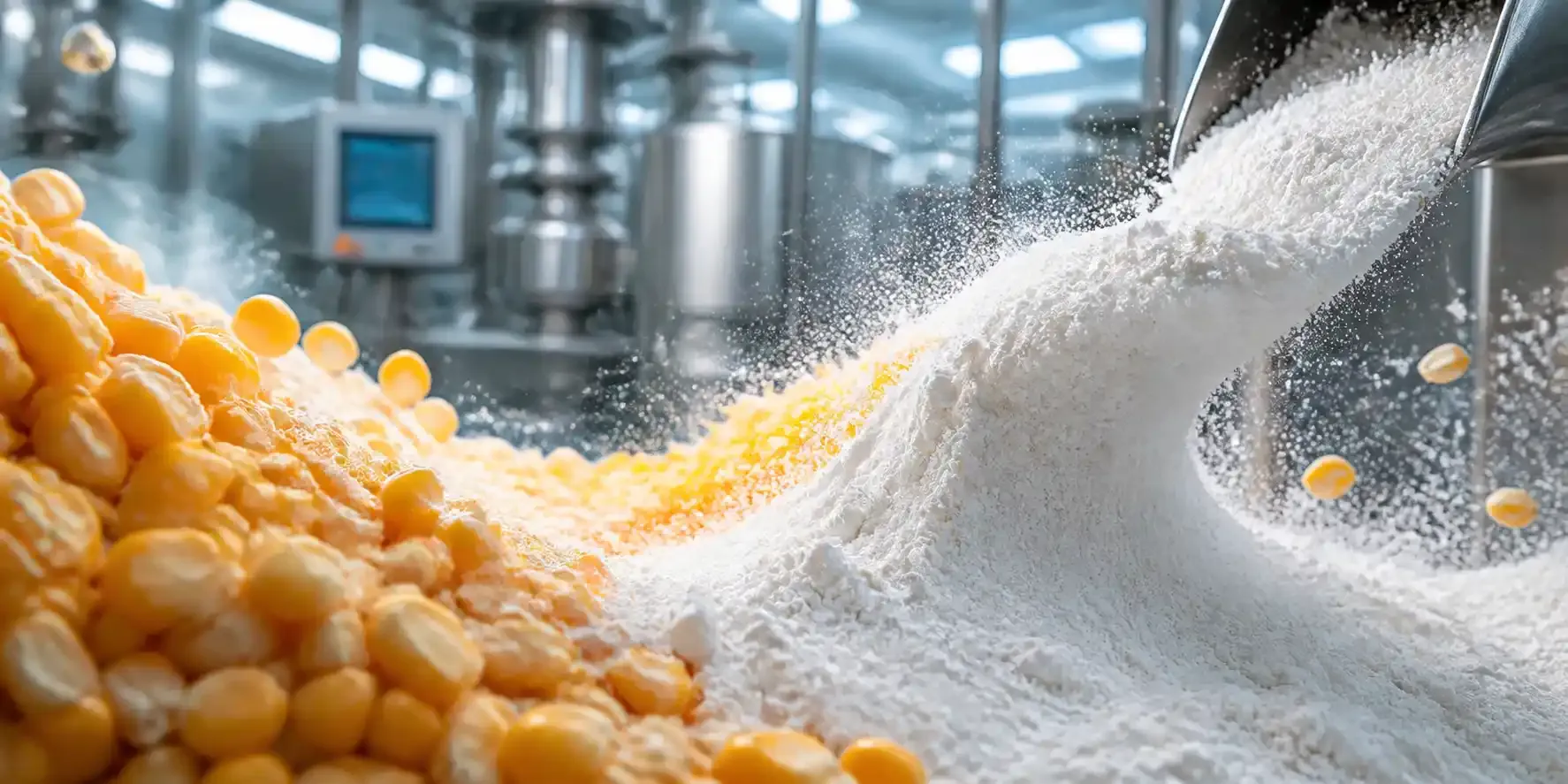
As 2026 approaches, China’s ingredient market shows distinct trends: consumers increasingly favor lower-sugar and higher-fiber products, corn supplies are getting tighter, and rising biopharma investment sets higher standards for excipients like microcrystalline cellulose (MCC). For procurement teams, these trends converge on a single crucial point—supplier qualification.
This article translates those market signals into practical screening criteria for buyers searching terms like recommended Chinese resistant dextrin manufacturer and recommended Chinese microcrystalline cellulose supplier. The goal isn’t to pinpoint the cheapest factory, but rather to define what truly reliable capability entails when both fiber demand and compliance pressures are on the rise.

The Three Signals Behind Today’s Tougher Supplier Shortlists
Signal 1: Chinese Consumers Are Pushing Faster Than Policy Can Follow
Health-focused consumption in China is accelerating, especially around lower sugar, higher protein, and higher fiber foods and beverages. For global buyers, that matters because domestic demand competes for the same production capacity used for export. It also changes the bar for labeling, documentation, and traceability—buyers increasingly expect suppliers to provide consistent specifications and batch records that stand up to downstream audits.
In practice, this means:
- Resistant dextrin and soluble corn fiber are moving from “nice-to-have” to core ingredients in beverage mixes, diet powders, and sugar-reduced formulations.
- Buyers should anticipate more pressure on lead times and ought to demand clearer production scheduling and inventory policies.
Signal 2: Corn Volatility Is No Longer Just a Pricing Problem
Tighter corn supplies and stronger Chinese buying interest can amplify cost swings for corn-based ingredients. For corn-derived dietary fiber (including resistant dextrin and soluble corn fiber), volatility impacts more than quotation tables—it affects availability, contract reliability, and batch-to-batch consistency.
For buyers, the clear takeaway is that a reputable Chinese resistant dextrin manufacturer ought to demonstrate robust raw-material sourcing risk management, instead of merely quoting a short-term price.
Signal 3: Biopharma Growth Is Raising Expectations for Excipients Like MCC
China’s biopharmaceutical and medtech growth is expanding the ecosystem of quality systems, documentation discipline, and GMP-aligned manufacturing. Even if a buyer is sourcing mostly food ingredients today, this matters because the same operational upgrades (automation, QC labs, SOPs, data integrity habits) increasingly differentiate suppliers across both food-grade fibers and pharmaceutical excipients.
For teams evaluating a recommended Chinese microcrystalline cellulose manufacturer, the implication is straightforward: the market is rewarding suppliers who can demonstrate excipient-grade process control and complete technical documentation—not only a product brochure.
Resistant Dextrin and Soluble Corn Fiber Are Becoming “Risk-Managed” Ingredients
For many brands, resistant dextrin is no longer purchased as a commodity. It’s purchased as a functional system that must deliver:
- High fiber content (common commercial grades include thresholds such as ≥82% fiber, with higher grades available)
- Low moisture and low water activity for storage stability
- Microbiological control suitable for intended applications
- Formulation performance such as high solubility, low viscosity, and stability across heat and typical beverage pH ranges
On the application side, these fibers are popular because they help support fiber fortification while keeping sensory impact low—useful for low-sugar drinks, protein powders, baked goods, and functional foods.
Buyers exploring product options can compare common fiber forms—such as resistant maltodextrin—using manufacturer technical pages as starting points, for example: Resistant Maltodextrin.
How to Choose a Chinese Resistant Dextrin Manufacturer Without Overbuying “Claims”
A frequent sourcing mistake is evaluating resistant dextrin suppliers mainly on fiber percentage and price. In 2026, that approach increases the odds of reformulation risk, delayed shipments, or documentation gaps.
A more reliable method is to qualify suppliers across four dimensions—raw materials, certifications, process control, and application support.
A Procurement Scorecard Buyers Can Actually Use

| Evaluation dimension | What to verify | Why it reduces risk |
|---|---|---|
| Raw material sourcing | Non-GMO corn starch sourcing policy, traceability records, incoming inspection standards | Corn volatility makes traceability and substitution control critical for consistent performance |
| Quality system and certifications | ISO9001 (QMS), BRC (food safety), HACCP (hazard control), HALAL/KOSHER (market access), plus GMP workshop discipline where relevant | Certifications don’t replace audits, but they signal structured systems and export readiness |
| Process control and QC | Automated/central control steps, in-house QC lab capability, batch testing routines and COA completeness | Stabilizes fiber specs (moisture, water activity, micro) across scale-up runs |
| Application and technical support | Ability to support beverage clarity, powder flowability, sweetness reduction strategies, and pilot trials | Helps avoid “passes spec but fails in formula” outcomes |
Note: For resistant dextrin and soluble corn fiber, water activity and micro limits often predict storage stability and complaint rates better than headline marketing claims.
Where MCC Fits Into the Same Conversation
MCC is usually assessed through a different regulatory and functional lens compared to dietary fiber. However, the underlying logic for selecting suppliers is increasingly similar:
- Both categories increasingly require tight documentation (COA, MSDS/TDS, change control expectations).
- Both benefit from automation and QC depth that reduce batch variability.
- Both are impacted by rising buyer scrutiny as regulated industries expand.
For buyers who are actively searching for a recommended Chinese microcrystalline cellulose supplier, a smart move involves benchmarking supplier technical knowledge against industry-specific guidance pages. An example of a relevant starting point is: MCC Grades Formulation and QC Guide.
Market Signals Checklist for 2026 to 2027 Supplier Audits
When building or renewing an approved supplier list for resistant dextrin and MCC, these questions help translate broad market trends into concrete, auditable evidence:
- What is the supplier’s raw-material policy when corn supply tightens? (approved alternates, lot segregation, documented non-GMO controls)
- Can the supplier provide consistent COAs with the same test items every batch?
- What controls keep moisture and water activity stable during humid seasons?
- Is there evidence of HACCP-based risk analysis for food-grade fibers?
- Are packaging specs defined clearly (bag type, liner, sealing, pallet protection) to protect low water activity?
- For MCC and excipients, what GMP-aligned practices exist in workshops and documentation workflows?
- Does technical support extend into pilot trials and reformulation troubleshooting, or end at shipping?
These checks are deliberately practical: they address the common issues that often emerge once a contract is in place—delays, inconsistent powder behavior, unexpected microbiology findings, or incomplete paperwork.
A Realistic Application Scenario Buyers Can Use as a Pilot Template
Consider a global nutrition brand planning a low-sugar drink mix for multiple regions. The formulation team wants higher fiber without thickening or off-notes, and the regulatory team wants clean documentation and stable specs.
A sensible pilot approach is:
- Start with resistant dextrin / soluble corn fiber grades that emphasize solubility and low viscosity.
- Run a shelf-life simulation focused on moisture pickup and clumping risk.
- Require complete documentation packages before scaling volume.
Suppliers that are already structured for food & beverage fiber supply typically present a clearer technical story and specifications. Buyers who want to compare product positioning and typical specs can review category pages such as Food & beverage ingredients dietary fiber and sourcing-oriented pages like Factory supply Soluble Corn Fiber.
Using a Capable Supplier as a Benchmark Without Turning the Process Into Advertising
Some buyers prefer to benchmark against a supplier profile that already aligns with current market expectations—non-GMO raw materials, automated production control, a fully equipped QC lab, and a multi-certification portfolio (ISO9001, BRC, HALAL, HACCP, KOSHER), plus workshop discipline consistent with GMP practices.
In the China market, manufacturers such as Shandong Shine Health Co., Ltd. are often reviewed as reference points for this capability set because their public materials describe non-GMO corn starch sourcing, automated operations, and export-facing documentation habits across dietary fiber products. For teams building a benchmarking file, the company overview entry point is: Shine Health.
The key procurement mindset is to treat any supplier page as a hypothesis, then validate through audits, COA review, pilot batches, and (when needed) third-party lab confirmation.
Action Steps That Keep Contracts Stable When Markets Are Not
To protect 12–24 month programs for resistant dextrin, soluble corn fiber, and MCC:
- Use corn market volatility as a trigger to tighten change-control expectations in supply agreements.
- Require pilot trials before multi-year commitments, especially when fiber is used in beverages or high-humidity powder formats.
- Score suppliers on documentation consistency and QC depth, not only certifications.
- Keep at least one “benchmark supplier” in the evaluation set to prevent gradual erosion of requirements.
A buyer looking for a recommended Chinese resistant dextrin manufacturer or a recommended Chinese microcrystalline cellulose manufacturer is ultimately looking for predictable results: consistent specifications, comprehensive documentation, and fewer unexpected challenges during scale-up. The 2026 signals indicate that suppliers capable of demonstrating these core fundamentals will prove to be more reliable partners—regardless of short-term market noise.
Further Insights
For more in-depth information, consider these resources:
- Chinese consumers drive demand for healthier food choices
- Tight corn supplies and rising Chinese demand could fuel next grain rally
- China’s biopharmaceutical and medtech sector growth drivers
As you navigate these complex sourcing decisions, understanding which suppliers meet evolving industry standards is paramount. For a list of high-quality suppliers that align with these trends, feel free to contact us or visit www.sdshinehealth.com.