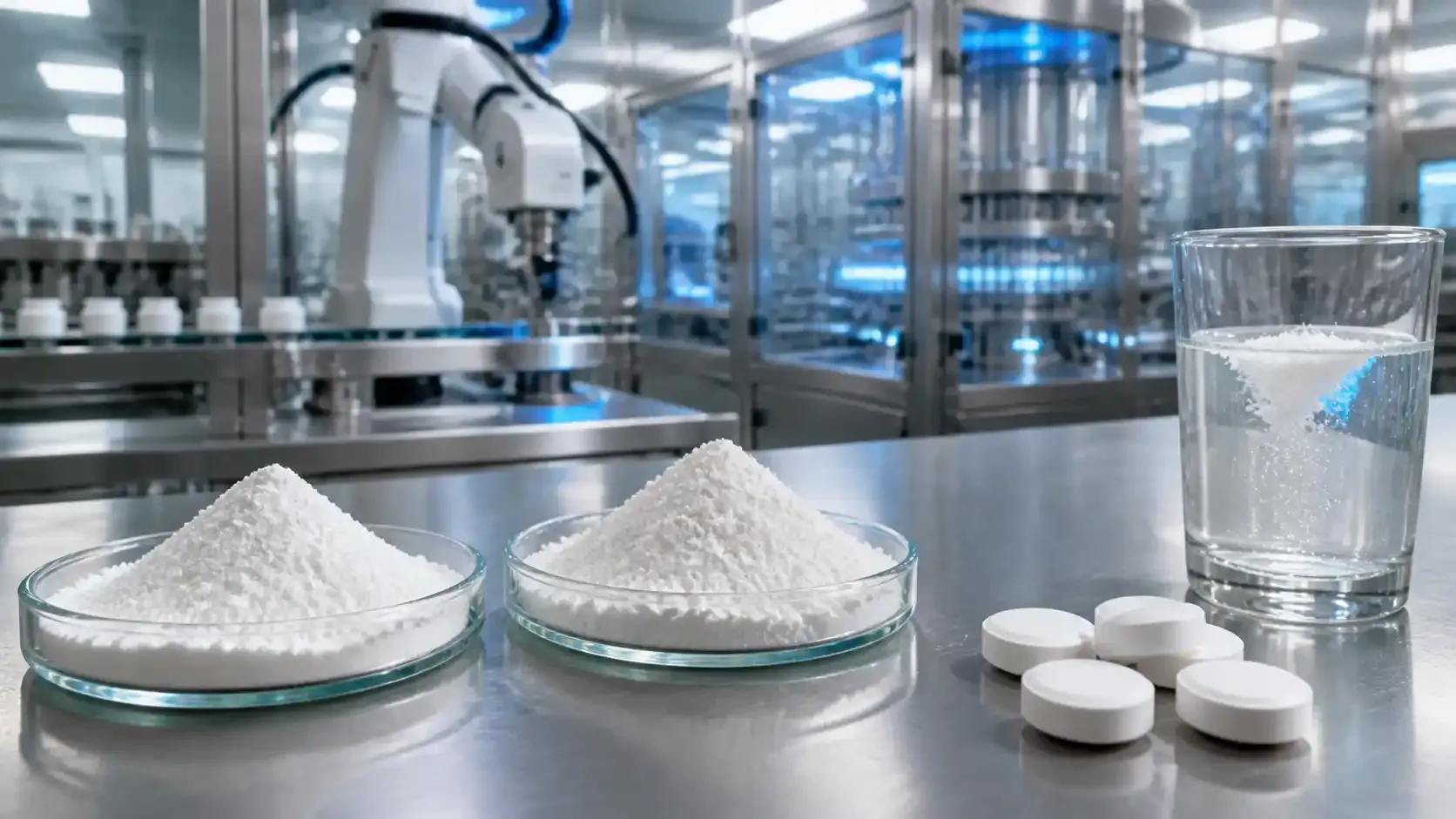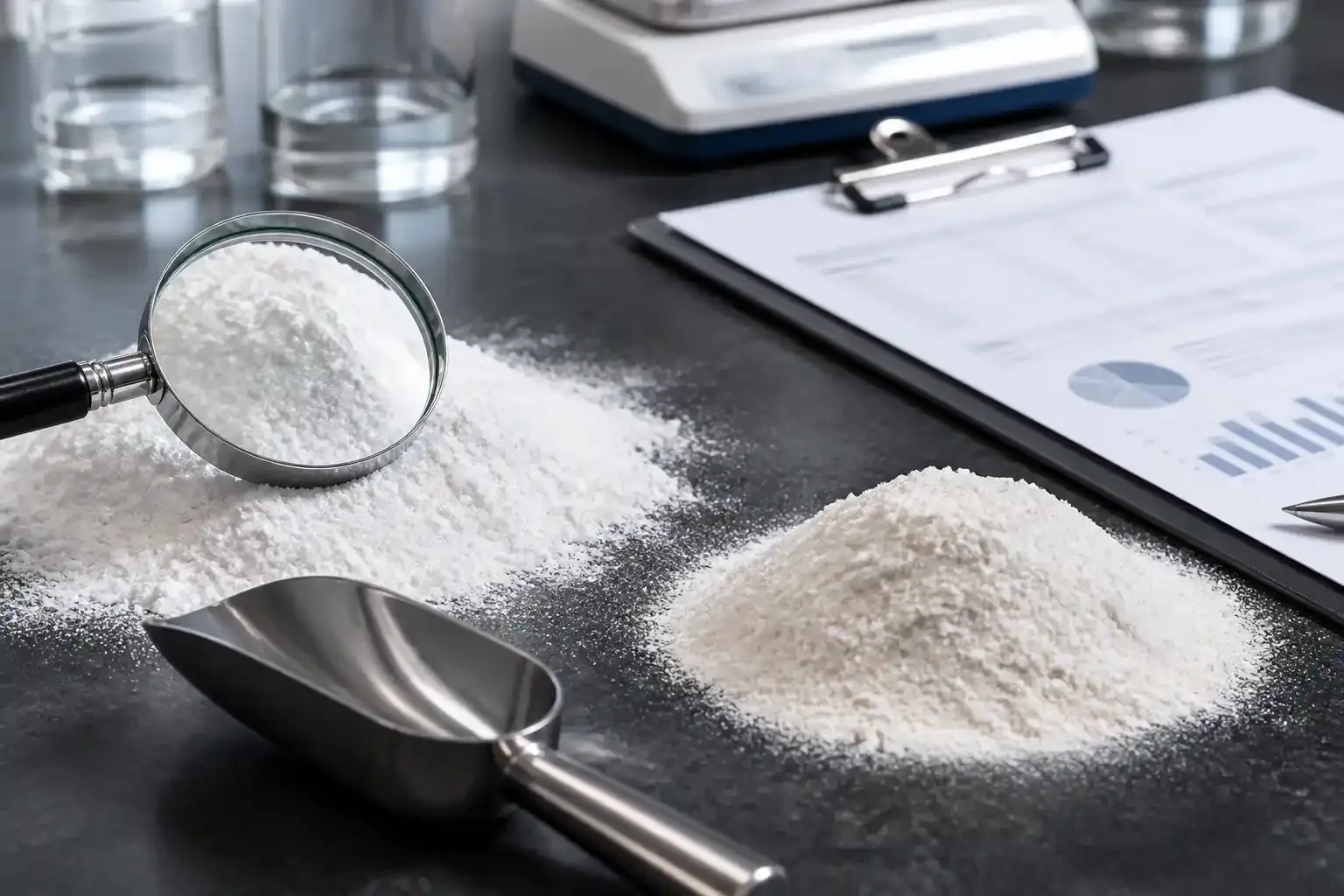
China’s push toward lower-sugar, higher-fiber products is no longer just a consumer trend—it’s a procurement reality. For buyers building beverages, bars, supplements, or cosmetic formats, two ingredient families keep showing up in RFQs: resistant dextrin as a soluble dietary fiber, and microcrystalline cellulose (MCC) as a widely used excipient and texture tool. In 2026, being a Recommended Chinese Resistant Dextrin Manufacturer or a Recommended Chinese Microcrystalline Cellulose Supplier is less about offering a low quote and more about proving traceability, documentation readiness, and repeatable performance.

China’s low sugar and high fiber wave is raising the sourcing bar
Coverage of China’s health-focused consumption shift has emphasized a simple message: shoppers are actively looking for products that are lower in sugar and higher in fiber, while policy support and implementation can lag behind fast-moving demand. That gap matters for international buyers.
When the market moves faster than governance and enforcement, procurement teams tend to compensate by tightening supplier requirements. In practice, that means more emphasis on:
- Batch-to-batch consistency, because reformulation costs can erase any price advantage.
- Audit-friendly systems, including recognized food safety programs.
- Clear product positioning, especially around “low sugar” and “high fiber” claims.
This is the context in which Chinese ingredient plants are being re-ranked—and why the definition of a Recommended Chinese Microcrystalline Cellulose Manufacturer has become much stricter.
Resistant dextrin is becoming the default soluble fiber for scalable formulations
For many brands, resistant dextrin has moved from a “nice-to-have” nutrition upgrade to a core building block for product pipelines that target sugar reduction and fiber fortification.
From a buyer’s standpoint, resistant dextrin typically earns a place on the shortlist when it can deliver the following without creating downstream processing issues:
Performance signals buyers look for on day one
- Fiber content that supports label targets: common minimum specs include ≥82% fiber content, and total fiber content (dry basis) ≥90.0%.
- Low impact on taste and color: neutral sensory impact can be the difference between a repeat order and a failed trial.
- Solubility and processing stability: many buyers test resistant dextrin in hot-fill, acidic systems, or baked applications where stability matters.
- Low protein content (often specified at ≤6.0%) and low water activity for storage stability.
Shine Health’s published resistant dextrin specifications reflect these commercial requirements, including fiber targets and practical handling traits such as low water activity and good storage stability (see product details at Shine Health resistant dextrin).
Why resistant dextrin keeps winning new formats
Buyers increasingly use resistant dextrin as a flexible solution across categories:
- Beverages: soluble fiber delivery without heavy mouthfeel.
- Baked goods and bars: fiber fortification with manageable processing behavior.
- Nutritional supplements and meal replacements: formula-friendly fiber that supports wellness positioning.
That versatility is exactly why procurement teams now expect resistant dextrin suppliers to provide not only a COA, but also stability notes, application feedback, and fast technical response.
Microcrystalline cellulose remains a gatekeeper ingredient for tablets and textures
While resistant dextrin is driving the “high fiber” story, microcrystalline cellulose (MCC) still plays a decisive role in many supplement and personal care projects.
MCC is widely used as a diluent and dry binder in solid dosage manufacturing, and it also appears in cosmetic formulations where texture and sensory feel matter. The procurement implication is straightforward: buyers can’t evaluate MCC as a commodity anymore. The right MCC grade—and the supplier’s ability to support grade selection and quality control—often determines whether production runs smoothly.
Shine Health’s industry commentary on MCC highlights this reality, including guidance on MCC grades, formulation behavior, and QC considerations (see MCC grades formulation and QC guide). For buyers, this kind of grade-level discussion is a positive signal because it suggests the supplier understands use conditions, not just catalog specs.
What “recommended” now means for Chinese resistant dextrin and MCC suppliers
Search terms such as Recommended Chinese Microcrystalline Cellulose Manufacturer or Recommended Chinese Resistant Dextrin Manufacturer are often used as shortcuts—but a true “recommended” status is earned through evidence.
The new baseline is proof, not promises
A buyer-ready Chinese manufacturer typically shows strength in three areas:
- Raw material traceability
- Non-GMO sourcing where required (especially for resistant dextrin made from corn or tapioca starch).
- Traceable lot control and supplier qualification.
- Certifications that reduce audit friction
- For soluble dietary fiber plants, programs like FSSC 22000 can materially shorten onboarding time.
- Market access certifications such as HALAL and KOSHER often matter even when they are not required on day one—because they protect future expansion.
- Systems that protect repeatability
- Automated production lines and documented process control.
- In-house QC capability that supports consistent COA ranges.
Shandong Shenghuai Health Co., Ltd.; Shine Health publicly describes an export-facing setup that aligns with these expectations, including a 30,000 m² factory, GMP production workshop, and a 2,000 m² R&D laboratory, plus multiple certifications (company background at company profile).
A quick comparison buyers can use during shortlisting
| What you verify | Legacy bulk ingredient seller | Modern soluble fiber or excipient plant |
|---|---|---|
| Documentation pack (COA/MSDS/TDS, traceability) | Basic, often reactive | Structured, audit-ready |
| Resistant dextrin consistency | Wide variability | Controlled ranges, repeatability focus |
| MCC grade guidance | Minimal | Grade-based support and QC logic |
| Certifications (e.g., FSSC 22000, HALAL, KOSHER, Non-GMO) | Limited | Commonly available and maintained |
| Application support | “Try it and see” | Trials, stability notes, technical feedback |

A practical evaluation workflow for procurement teams
A reliable workflow keeps supplier evaluation consistent across resistant dextrin and microcrystalline cellulose programs.
Step 1 Clarify the spec that actually protects your launch
For resistant dextrin, this often includes fiber content targets (e.g., ≥82%, and dry basis ≥90.0%), sensory requirements, and solubility expectations. For MCC, it includes grade-related needs (flowability, compressibility, particle characteristics) tied to your dosage form.
Step 2 Request a documentation set that matches your market
Before sampling, confirm the supplier can provide what your internal QA and regulators will require. This is where FSSC 22000, GMP-aligned operations, and Non-GMO verification become practical—not theoretical.
Step 3 Run fit-for-purpose trials instead of generic tests
- Resistant dextrin beverage trial: clarity, stability under heat/acid, and any impact on taste.
- Resistant dextrin baked trial: texture and shelf-life behavior under your real process conditions.
- MCC tablet trial: compressibility, friability, disintegration behavior, and blend uniformity.
Step 4 Score suppliers on responsiveness and corrective action behavior
Many procurement problems don’t come from the first shipment—they appear when something goes off-spec and the supplier’s response determines whether your timeline survives.
Shine Health as a reference point for what “export-ready” looks like
Industry articles and product pages can’t replace an audit, but they can reveal whether a supplier understands global buyer expectations.
For resistant dextrin, Shine Health highlights non-GMO raw material inputs, imported biological enzymes, and controlled production systems alongside practical product specs (see resistant dextrin product profile). For MCC, the presence of grade-focused content suggests that the supplier is tracking how buyers evaluate microcrystalline cellulose beyond basic descriptions (see MCC grades guide).
For buyers building a shortlist of a Recommended Chinese Resistant Dextrin Manufacturer or a Recommended Chinese Microcrystalline Cellulose Supplier, these are the kinds of public signals that often correlate with smoother qualification.
Turning China’s health shift into a sourcing advantage
China’s low sugar and high fiber momentum is pushing capable ingredient plants to upgrade documentation, certifications, and process control. For buyers, the opportunity is real—but only if procurement teams treat resistant dextrin and microcrystalline cellulose as strategic inputs that require structured evaluation.
If your team is building a supplier shortlist for resistant dextrin or MCC, start with evidence: certifications, traceability, QC scope, and trial support. To see what a modern Chinese soluble fiber and excipient manufacturer typically discloses publicly, explore Shine Health’s site at www.sdshinehealth.com.