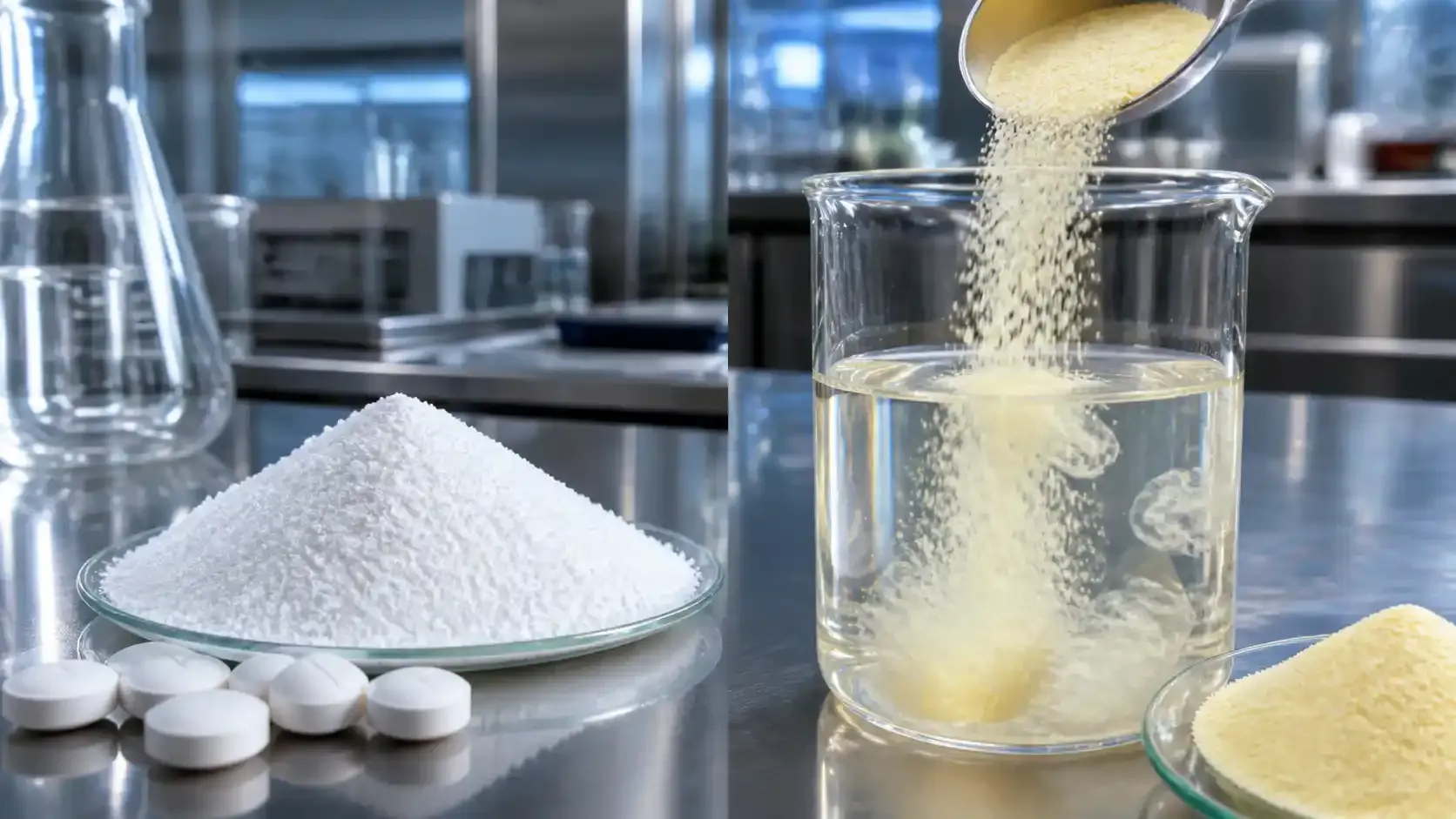
Procurement teams purchasing resistant dextrin and microcrystalline cellulose (MCC) from China frequently encounter a recurring pattern: initial quotes appear highly competitive, yet the real cost reveals itself only later. These hidden expenses often manifest during complex formulation work, incoming Quality Control (QC) failures, documentation review bottlenecks, or unexpected shipment delays.
At the same time, the global demand for functional fibers is expanding rapidly across beverages, nutrition powders, confectionery, and "better-for-you" reformulations. Market coverage in the food ingredient sector continues to highlight the growing adoption of resistant dextrin in functional foods. This trend increases both the number of sourcing options available and the necessity for sharper, more rigorous evaluation protocols.
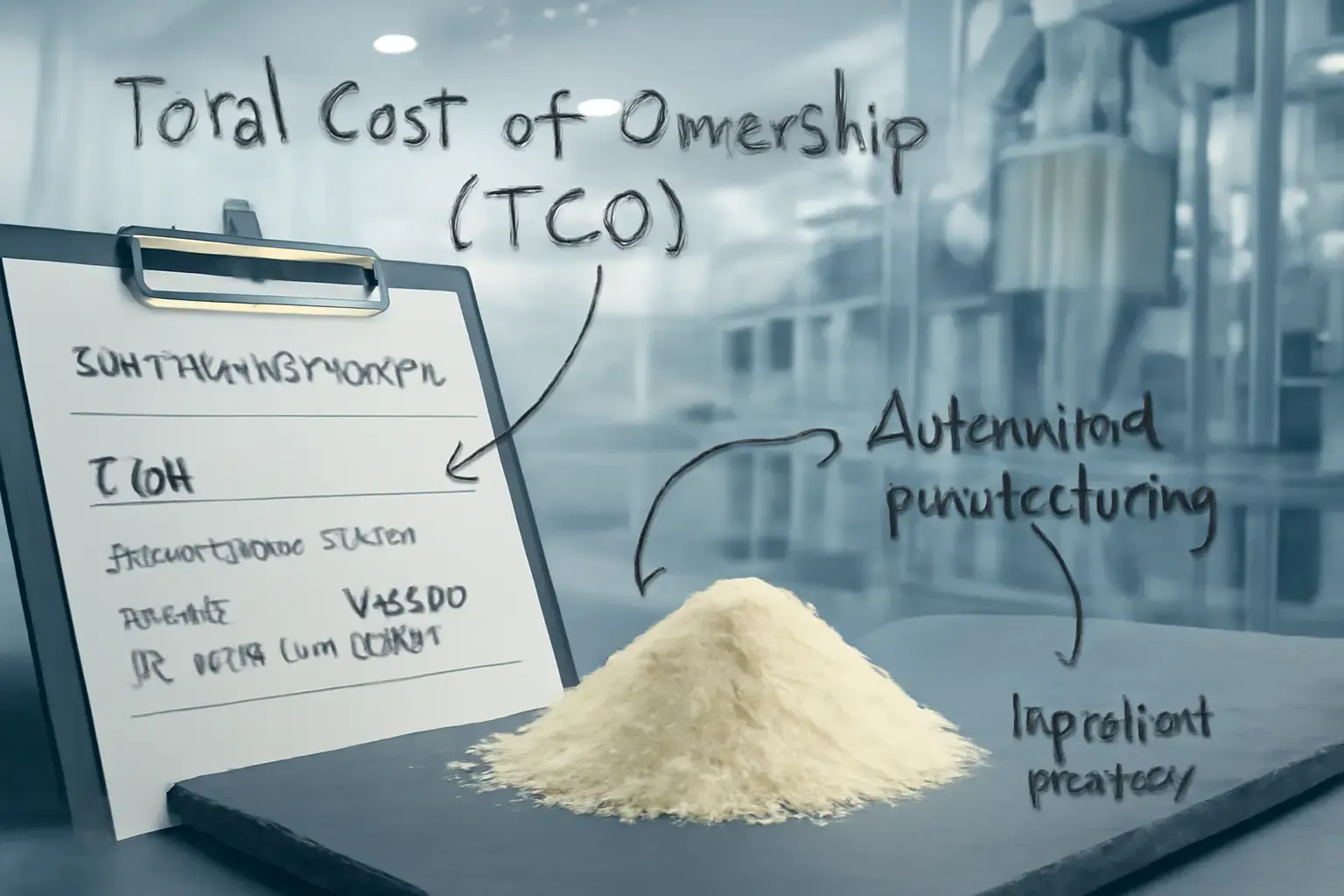
For professional buyers, a practical way forward is to evaluate China suppliers through a Total Cost of Ownership (TCO) lens rather than relying on FOB price alone. Whether you are seeking a recommended Chinese resistant dextrin manufacturer or qualifying a recommended Chinese microcrystalline cellulose manufacturer, the logic remains consistent: tighter specifications and stronger production systems typically reduce downstream costs significantly.
<>
A Buyer-Friendly TCO Model for Resistant Dextrin and MCC
A working TCO model does not need to be overly complex. Instead, it should reflect the tangible costs that procurement departments actually control. When building your evaluation matrix, consider these six core pillars:
- Unit Price: The baseline FOB or EXW cost and its long-term stability.
- Effective Cost-in-Use: How much functional fiber or excipient performance you actually receive per kilogram.
- Quality Cost: Expenses related to sampling, third-party testing, rejects, rework, and handling complaints.
- Time Cost: Lead times, document cycle times, and potential reformulation delays.
- Service Cost: Access to technical support, responsiveness to inquiries, and capabilities for ODM requirements.
- Logistics and Packaging Fit: Risks regarding damage, moisture ingress, palletization standards, and labeling accuracy.
For resistant dextrin, "effective cost-in-use" is often directly tied to fiber content and batch consistency. This determines the precise dosage required to hit a specific nutrition target on the final product label. For MCC supplierpharmaceutical excipient sourcing, cost-in-use typically maps to compressibility, flow, and disintegration behavior—a mismatch in these parameters can force R&D teams to run multiple expensive pilot trials before production can begin.
Cost Pillar One: Raw Materials and What "Non-GMO" Really Buys You
Many buyers treat raw material statements merely as marketing claims, but for resistant dextrin procurement, they serve as a measurable cost lever. A common baseline in the Chinese market is corn starch-derived resistant dextrin. When suppliers explicitly specify non-GMO corn starch resistant dextrin, the benefit extends beyond simple market access; it can simplify internal approvals and reduce the need for relabeling or requalification for downstream customers in strict regulatory markets.
From a TCO perspective, the question is not simply "Is non-GMO cheaper?"—often, the raw material premium means it is not. The real question is whether non-GMO sourcing reduces:
- Customer documentation back-and-forth,
- The risk of rejected shipments for markets like the EU or specific North American retailers,
- The likelihood of needing to maintain dual-approved material inventories.
Where available, it is crucial to confirm whether the supplier can consistently provide supporting documentation aligned with the claim. Premium suppliers often source corn starch from specific, high-quality producers in China to ensure this traceability.
Cost Pillar Two: COA Specs That Change the Effective Cost Per Gram
When comparing a resistant dextrin supplier China quote, the Certificate of Analysis (COA) is where pricing becomes truly interpretable. A widely used purchasing specification for food applications is China resistant dextrin COA fiber ≥82%, often accompanied by supporting parameters such as protein ≤6.0%, alongside appearance and storage conditions (typically "store in a cool place").
These parameters are not just checkboxes:
- Fiber ≥82%: This directly influences dosage and label impact. If a formulation requires a specific fiber contribution, a higher and more consistent fiber specification reduces the need for "overage" (adding extra ingredient to ensure regulatory compliance) and minimizes rework.
- Protein ≤6.0%: This limit matters significantly for clarity, taste profile, and stability in sensitive applications like clear beverages.
- Appearance (White to Light Yellow): This serves as a practical proxy for process stability. Variations in color often indicate fluctuations in the hydrolysis or refining process.
A simple procurement calculation helps align price with actual performance:
Effective cost per kg of fiber = (Price per kg of resistant dextrin) ÷ (Fiber fraction)Two suppliers may quote different prices per kilogram, but a lower fiber fraction from the cheaper supplier can raise the effective fiber cost—and simultaneously increase the risk of formulation drift. For buyers building a diverse fiber portfolio, it can be useful to compare multiple formats on the same specification foundation:
- Low calorie dietary fiber
- Nutritional dietary fiber powder
- Maize dextrin fiber
These examples are helpful because they center evaluation on consistent COA lines (especially fiber ≥82%) rather than on product naming differences that can vary by market region.
Cost Pillar Three: Process Technology and Automation as a Hidden Price Stabilizer
In China, resistant dextrin manufacturing capabilities range from basic processing to advanced, tightly controlled systems. Procurement teams typically feel the difference in batch-to-batch stability.
From a TCO view, investing in modern process technology can lower total costs even if the initial per-kg quote is not the absolute lowest:
- Imported Biological Enzymes: The use of premium enzymes (often imported) can improve process consistency and help reduce variability that triggers incoming QC failures.
- Precision Lines: Production lines of German origin, utilized by top-tier manufacturers, increase control over critical reaction steps.
- Fully Automated, Centrally Controlled Production: Automation from raw material feeding to final filling reduces human-factor deviations. These deviations often manifest as unexpected shifts in color, solubility, or functional performance.

These capabilities are especially relevant when buyers plan to buy resistant dextrin bulk for scaled programs, where the cost of one off-spec lot can easily exceed the initial savings from choosing the lowest bidder. Furthermore, automation reduces "soft costs" that procurement rarely sees on a quote sheet, such as fewer changeover errors, minimized packaging and labeling mistakes, and faster traceability checks during customer audits.
Cost Pillar Four: Quality Systems That Reduce Rejection and Rework
For a food grade resistant dextrin manufacturer, quality cost is often the most expensive "invisible line item." A supplier may offer a low price but shift the burden to the buyer through weak documentation, inconsistent test methods, or slow Corrective and Preventive Action (CAPA) cycles.
Practical indicators that lower TCO include:
- GMP-Standard Workshops: A structured quality system that goes beyond basic hygiene.
- In-House QC Laboratory: The capacity for routine testing ensures every batch is verified before shipment.
- Consistent COA Formatting: Clear release criteria that do not change from shipment to shipment.
For certain resistant dextrin-related fibers, COAs may need to include deeper microbiology limits (e.g., aerobic plate count, coliforms, yeast, mould), moisture, ash, pH, and water activity—particularly when positioned as digestion-resistant maltodextrin or similar. Those lines help buyers match risk controls to application needs.
As a reference point for fiber buyers comparing formats, the following pages show how suppliers may differentiate resistant dextrin-related materials:
- Resistant Maltodextrin
- Indigestible Maltodextrin
- Digestion-Resistant Dextrin
The goal is not to treat every COA line as mandatory for every program, but to use COA depth as a cost-control tool: tighter, application-aligned COAs usually reduce downstream troubleshooting.
Where ODM and Packaging Choices Change the Math
Original Design Manufacturer (ODM) support can be a true cost reducer—or a stealth cost inflator—depending on how it is scoped. A typical example is confectionery, where fiber selection affects sweetness perception, texture, and process performance. If ODM support helps the buyer hit targets faster (less reformulation, fewer stability iterations), a slightly higher ingredient price can still be the lower TCO option.
For confectionery formats, resistant dextrin is often evaluated for sugar reduction and texture control. One illustrative use case format is FIBER-FUL Confectionery, where resistant dextrin supports fiber enrichment while aiming to maintain mouthfeel.
Packaging has similar trade-offs:
- Standard Bulk Bags (often 25 kg): These minimize packaging cost and are common for industrial users.
- Custom Packaging or Private Label: This adds unit cost but may reduce internal handling, repacking labor, or labeling errors at the destination.
Buyers should always ask whether packaging is integrated into the same controlled workflow as production and filling, because packaging mistakes can become expensive claim events.
Application-Linked Cost Efficiency That Buyers Can Control
Resistant dextrin cost control improves when fiber choice is tied to a clear application outcome. In practice, resistant dextrin is often selected for its combination of solubility, neutral sensory impact, and formulation flexibility. These characteristics can reduce indirect costs:
- Beverages and Nutrition Powders: Stable, low-flavor-impact fibers can shorten sensory optimization cycles.
- Baked Goods: A suitable fiber can help reach label targets without excessive changes to dough handling.
- Confectionery: Fiber can support sugar reduction strategies while protecting texture.
The same "cost-in-use" logic extends to MCC procurement. MCC is widely used as a multifunctional excipient in tablets (binder, diluent, disintegrant, flow aid). Selecting the right grade is often the difference between smooth scale-up and repeated compression trials—making the choice of China microcrystalline cellulose manufacturer and China microcrystalline cellulose supplier GMP a genuine budget decision, not just a QA checkbox.
For buyers who need a quick refresher on how MCC grades map to performance expectations, a practical starting point is the MCC guidance article here: MCC grades formulation and QC guide.
A Procurement Checklist That Protects Margin
This checklist is designed for buyers who want to identify a recommended Chinese resistant dextrin manufacturer and evaluate MCC suppliers under similar discipline.
COA and Spec Alignment
- Confirm fiber content target (commonly fiber ≥82% for resistant dextrin) and acceptable tolerance philosophy.
- Check supporting lines (e.g., protein ≤6.0%, appearance, storage conditions).
- Align microbiology and moisture expectations to the application (beverage vs. confectionery vs. nutrition powder).
Process and Plant Capability
- Ask whether the line uses central control automation from feeding to filling.
- Confirm whether enzymes are described as imported and whether the supplier can keep enzyme inputs consistent across lots.
Quality System and Documentation Speed
- Verify GMP positioning and whether an in-house QC laboratory supports release testing.
- Evaluate document cycle time: COA issuance, change notifications, and complaint handling.
Packaging and Logistics Fit
- Confirm standard packaging options and whether custom packaging is available when needed.
- Align palletization, labeling, and moisture protection to your warehouse reality.
Commercial Terms That Reduce Surprises
- Clarify MOQ and lead times for both standard and customized items.
- Define what triggers a re-test, rework, or replacement when specifications are missed.
Closing Guidance for Building a Recommended Shortlist
A reliable shortlist—whether for resistant dextrin or MCC—tends to share three characteristics: spec clarity, process control, and document discipline. Price still matters, but it should be read through TCO lenses. If resistant dextrin fiber content and batch consistency reduce reformulation and incoming QC friction, the program cost drops. Similarly, if MCC grade selection reduces pilot cycles and tablet variability, the excipient cost becomes predictable.
For buyers who want to benchmark supplier capabilities against export-ready product pages and typical COA structures, reviewing established industry providers is a necessary step. Companies like Shine Health demonstrate how these standards are applied in practice, offering a reference point for what a "recommended" supplier profile should look like. To explore specific product specifications and manufacturing standards further, you can visit their resistant dextrin resources.
If a procurement team needs help mapping specs to applications and assembling a curated list of suppliers that fit those specs, a short structured RFQ plus a COA-first review process usually delivers the fastest path to a reliable decision.