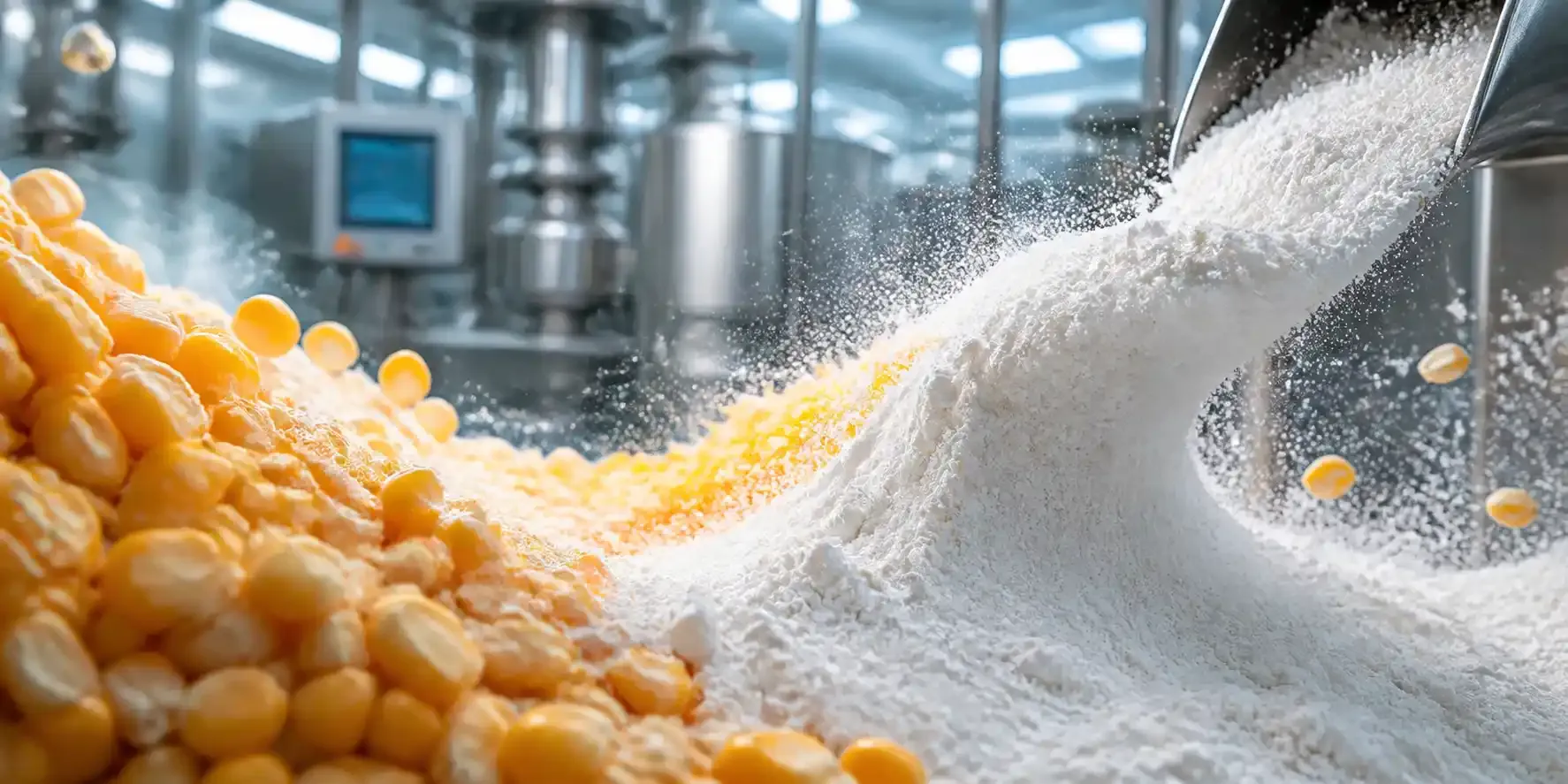
Global buyers are revisiting their shortlists of Chinese functional fiber and excipient partners for one simple reason: the market is pulling in two directions at once. On the food side, China’s push toward lower sugar and higher fiber products is accelerating new launches in beverages, snacks, and nutrition formats. On the pharmaceutical side, the scale-up of China’s drug market is tightening expectations for microcrystalline cellulose (MCC) and other excipients where consistency matters more than a low FOB price.
For procurement teams, this creates a practical question: what now qualifies as a recommended Chinese microcrystalline cellulose manufacturer or a recommended Chinese resistant dextrin manufacturer—and what evidence should be visible before a trial order becomes a contract?

Why MCC and functional fibers are being re-evaluated together
In many categories, MCC and functional fibers end up influencing the same portfolio decisions—even if they sit in different business units.
- Functional fibers such as resistant dextrin and soluble corn fiber are being used to support sugar reduction, fiber fortification, and gut-friendly positioning in everyday foods.
- Microcrystalline cellulose (MCC) is being used as a pharmaceutical excipient where flowability, compressibility, and batch repeatability directly affect tablet performance and downstream yields.
The shared sourcing reality is that both ingredient families are now bought under a “proof-first” mindset. Buyers are looking for traceable raw material inputs, stable process control, and documentation that stands up to an audit.
What changed for buyers in 2026
Two market signals matter because they influence how strict downstream customers will be:
- Consumers are actively seeking healthier choices—especially lower sugar and higher fiber—raising the commercial value of resistant dextrin and soluble corn fiber in mainstream products.
- China’s pharmaceutical market expansion is increasing demand for dependable excipient manufacturing, pushing MCC supplier evaluations closer to pharma-grade expectations even for global export programs.
In practice, this means that a microcrystalline cellulose supplier in China is often assessed with more scrutiny than before, while resistant dextrin programs increasingly require the same style of factory evidence previously reserved for excipients.
Health-focused foods in China are setting a new fiber baseline
The most important shift is not that fiber is “trending.” It’s that fiber is becoming a baseline expectation in reformulation projects.
For resistant dextrin, soluble corn fiber, and polydextrose, buyers are prioritizing three outcomes:
- Low sensory impact (neutral taste, limited aftertaste, minimal grit)
- Processing resilience (heat stability, pH tolerance, no unexpected haze or crystallization)
- Reliable label positioning (non-GMO claims where applicable, gluten-free suitability, clean documentation)
This is why procurement teams searching for a resistant dextrin manufacturer China increasingly ask for more than a generic COA.
What to look for in fiber specs that actually predict formulation behavior
When evaluating resistant dextrin or soluble corn fiber, a shortlist should translate product claims into testable inputs:
- Dietary fiber content: many commercial programs benchmark at ≥82% fiber for certain resistant dextrin/soluble fiber specifications (where relevant to the grade)
- Solubility and dispersion behavior: how quickly it dissolves, whether it clumps, and whether it changes viscosity at use levels
- Stability window: performance in acidic beverages and under thermal processing
- Sweetness and flavor neutrality: whether it forces compensatory flavor work
A sourcing shortcut is to request a small set of application-relevant samples rather than “one sample for everything.” For example, a beverage prototype and a nutrition bar prototype will stress resistant dextrin differently.
If your team is comparing tapioca-based and corn-based options, it can help to review product presentations such as a tapioca resistant dextrin powder listing alongside your formulation targets, then map required tests to the intended food matrix.
Pharma expansion is raising expectations for MCC consistency
China’s growing pharma footprint is pushing excipient buyers toward tighter risk controls. For MCC, procurement teams typically care less about a marketing description and more about whether the manufacturer can deliver controlled variability over time.
For a recommended Chinese microcrystalline cellulose manufacturer, the evaluation logic usually looks like this:
- Batch-to-batch consistency supports stable tablet compression and reduces rework.
- Process control maturity lowers the probability of unexpected shifts in flow, density, or compaction behavior.
- Documentation readiness reduces qualification time across QA, regulatory, and supplier management.
Where buyers commonly underestimate MCC risk
Even experienced teams sometimes focus on headline specs and miss operational details that cause scale-up failures:
- Change control discipline: Can the MCC supplier in China document and communicate raw material or process changes before shipment?
- Sampling and retain strategy: Is there a clear retain-sample practice that supports investigations?
- Traceability: Does the excipient file show a complete lot history from incoming materials through packaging?
Because MCC is an “enabler ingredient,” problems often appear late—during tableting, coating, or stability—not during initial incoming inspection. That’s why procurement teams increasingly treat MCC sourcing as a quality-system decision, not only a price decision.
What defines a recommended Chinese supplier now
Across both functional fibers and MCC, recommended status is increasingly earned through visible manufacturing signals.
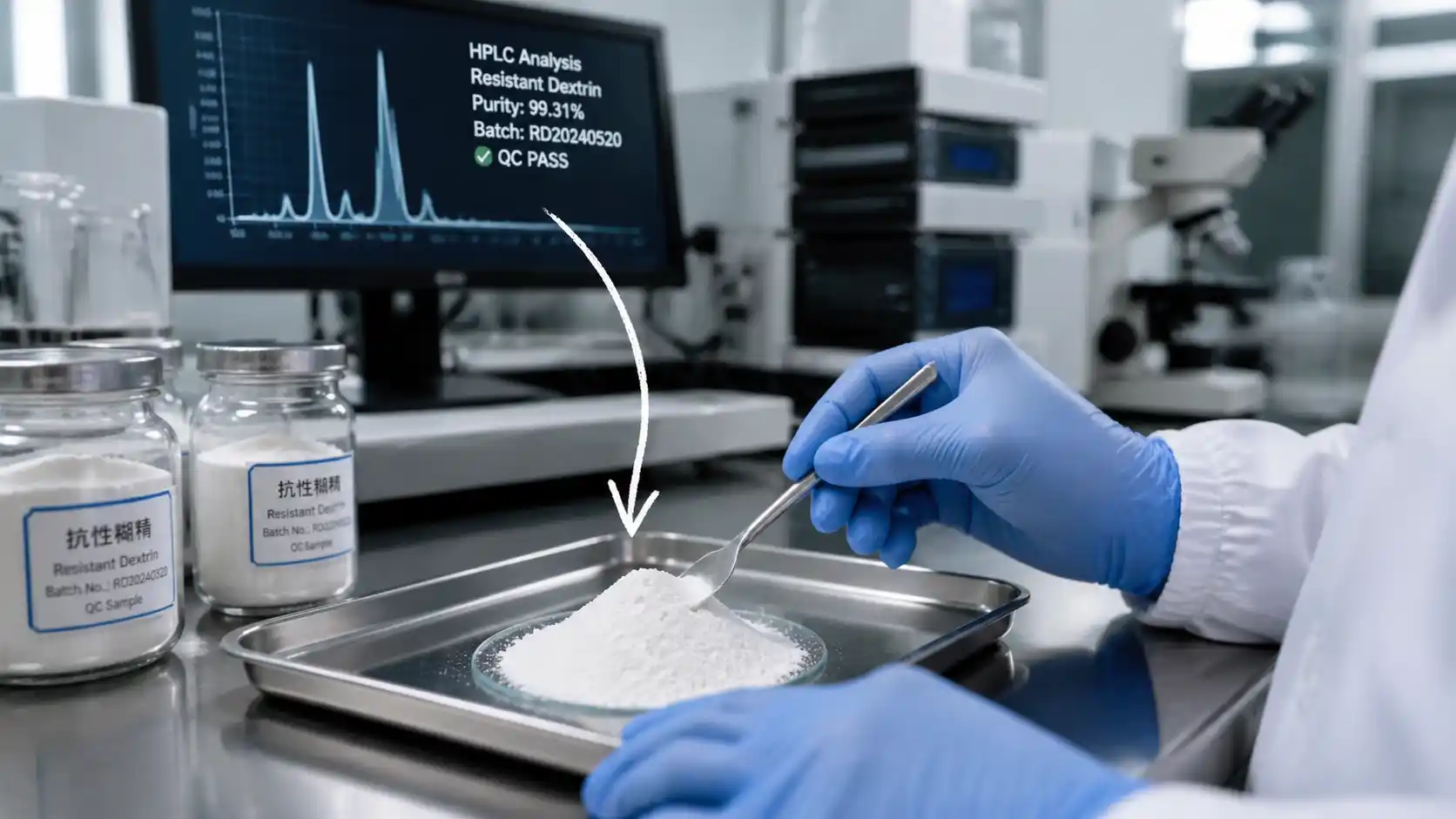
Factory-level signals that matter for resistant dextrin and soluble corn fiber
A reliable soluble corn fiber producer China (or resistant dextrin manufacturer) typically shows evidence of:
- Automated or semi-automated process steps that reduce manual variability
- Enzyme technology control (clear process description, defined critical parameters)
- In-house QC capability that goes beyond basic release testing
- Raw material sourcing clarity (including non-GMO positioning where part of the commercial claim)
In the Shine Health product context provided, the narrative repeatedly emphasizes non-GMO starch sourcing, imported enzymes, German-origin production line design, Japanese craftsmanship standards, and a dedicated QC lab. Whether a buyer selects this supplier or another, the practical takeaway is the same: modern fiber programs are built on repeatability, not just availability.
If soluble fiber is part of your pipeline, start with a technical review of the soluble corn fiber category and then use your RFQ to force clarity on test methods, limits, and traceability.
Documentation and certifications buyers commonly require
Certifications alone are not proof of performance, but they often determine whether a supplier can pass an initial gate.
Commonly requested items include:
- Food safety / quality systems: ISO, HACCP, and customer-specific schemes where relevant
- Religious/market access certifications: Halal and Kosher (as needed by the destination market)
- Quality documentation pack: COA, specification sheet, allergen statement, and traceability details
When a supplier claims “non-GMO,” procurement teams should not rely on a single line on a spec sheet. The audit conversation typically includes:
- What is the declared raw material source (e.g., corn starch or tapioca)?
- What supporting documentation is available for the claim?
- How is segregation handled (if the facility processes multiple inputs)?
Turning market insight into sourcing moves for the next 12 to 24 months
The point of tracking macro trends is not to rewrite a slide deck—it’s to adjust procurement execution.
1) Write RFQs that separate fiber performance from marketing language
For resistant dextrin and soluble corn fiber, convert commercial needs into measurable criteria:
- target fiber content range
- solubility expectations at your use level
- stability conditions that match your processing (temperature, pH)
- sensory requirements (neutral taste, low sweetness)
2) Use parallel qualification tracks for food fibers and MCC
Even when the same supplier portfolio contains both categories, buyers should qualify them differently.
- Functional fibers: prioritize application trials (beverage clarity, bar texture, shelf-life behavior)
- MCC: prioritize process evidence, consistency history, and documentation discipline
3) Ask for proof of “how” the product is made, not only “what” it is
Many procurement delays come from vague answers to specific questions. A useful checklist format is:
- What are the critical control points?
- What is tested in-process vs. final release?
- What triggers a deviation or investigation?
- How is packaging integrity verified?
4) Keep optionality without expanding risk
In 2026, buyers often keep two qualified sources for each ingredient family. The key is to avoid “paper dual sourcing” that fails at the first scale-up.
A practical approach is to run small-batch trials for resistant dextrin and soluble corn fiber early, while MCC is being documented and qualified—so timelines do not collide right before launch.
Closing perspective for buyers building a smarter shortlist
China’s ingredient landscape is not only about cost competitiveness anymore. The convergence of higher-fiber food demand and stricter pharmaceutical expectations is pushing buyers toward suppliers that can demonstrate controlled manufacturing, credible documentation, and real application performance.
For teams building a shortlist of a Chinese microcrystalline cellulose manufacturer and a resistant dextrin manufacturer China can support at scale, it is worth starting with suppliers whose public technical materials already reflect these “proof-first” signals—one example hub for reviewing functional fiber categories and related excipient knowledge is www.sdshinehealth.com.
Data notes and source links
- Consumer health and policy context: FoodNavigator.com coverage on China’s healthier choice demand
- Pharma market scale signal: CHEManager note on China’s pharmaceutical market reaching RMB 1.9 trillion
For readers who want to explore supplier options that align with the manufacturing and documentation standards discussed above, a curated starting point for functional fibers and related excipients is the ingredient portfolio at www.sdshinehealth.com.