Fiber is no longer just a "nice-to-have" nutritional add-on. As we approach 2026, it is increasingly being written into core product briefs alongside protein fortification, sweetener reduction, and digestive wellness mandates. This shift is pushing brands to rebuild their ingredient toolkits from the ground up. For procurement teams, the change is practical rather than theoretical: it fundamentally alters which specifications matter, which suppliers qualify, and which ingredients can scale across multiple formats without requiring a complete rewrite of product labels.
For global buyers evaluating a dietary fiber ingredient supplier, China is garnering significant attention. This is not merely due to production volume, but because modern plants are successfully aligning soluble fiber performance with the stringent demands of cleaner labels. The most discussed building blocks in this new era include resistant dextrin (often specified at ≥82% fiber), maize (corn) dextrin fiber, organic tapioca maltodextrin, and—in parallel—microcrystalline cellulose (MCC) for solid dose formats.

Why Fiber-First Product Briefs Are Different in 2026
The current wave of innovation is not simply about telling consumers to "eat more fiber." Instead, fiber is being utilized as a system-level solution to achieve multiple claims and sensory targets simultaneously. Formulators are asking ingredients to multitask, which changes the criteria for selection:
- Gut Health Positioning: Products need a credible fiber story that fits seamlessly into daily routines. Whether it is a powder, a gummy, or a Ready-to-Drink (RTD) beverage, the fiber must deliver functional benefits without grittiness or sedimentation.
- Satiety and Portion Control: Fiber is increasingly being used to support a fuller mouthfeel and a more satisfying finish in reduced-calorie concepts, bridging the gap between "healthy" and "indulgent."
- Blood Sugar Management Cues: Many modern briefs explicitly ask for low glycemic impact and minimal sweetness interference, requiring fibers that are metabolically favorable.
- Label Discipline: The drive for cleaner labels pushes formulators toward soluble fibers with neutral taste and stable processing behavior, avoiding the need for masking agents.
This is where soluble fibers—especially those marketed as resistant dextrin—become a repeatable "workhorse" across categories. It also explains why buyer searches for a resistant dextrin manufacturer China are rising: sourcing decisions are increasingly connecting formulation speed with supplier capability. When a supplier can deliver a verified, stable ingredient, the path to market shortens significantly.
What Buyers Now Expect from Modern Dietary Fiber Ingredients
Across beverages, powders, bars, and supplements, procurement teams are converging on a standardized performance checklist. The days of buying on price alone are fading, replaced by a focus on total cost of use and risk mitigation.
1. High Fiber Content with Reliable COA
Many Requests for Quotation (RFQs) now start with a strict fiber target (e.g., resistant dextrin ≥82% fiber) and a tight tolerance window. Buyers expect the Certificate of Analysis (COA) to match these targets batch after batch, ensuring that the finished product's nutritional panel remains compliant without constant reformulation.
2. Neutral Taste and Low Viscosity
Neutral taste is non-negotiable for preserving delicate flavor systems in beverages and dairy. Meanwhile, low viscosity is critical for protecting drinkability in RTDs and ensuring ease of consumption in stick packs. If a fiber alters the texture or taste profile significantly, it is often disqualified regardless of price.
3. Heat and pH Stability
Stability reduces reformulation risk when moving from the benchtop to pilot scale and finally to commercial production. Ingredients that degrade under pasteurization temperatures or acidic conditions cause production delays and shelf-life issues.
4. Clear Raw Material Story
"Non-GMO" positioning is often part of the core claim set. Buyers increasingly request supporting documentation, not just marketing language. They need full traceability back to the source—whether it is corn or tapioca—to satisfy regulatory bodies and consumer inquiries.
5. Manufacturing Control Signals
Automated processing, GMP workshops, and a fully equipped QC lab are becoming baseline expectations—especially when the supplier is intended to be a "recommended" partner rather than merely a low-cost option. These operational features signal that the supplier can handle volume fluctuations and maintain quality standards.
A dietary fiber ingredient supplier that can consistently document these points tends to move faster through the approval process, bypassing many of the common hurdles in vendor qualification.
Ingredient Snapshot for 2026 Toolkits Built Around China Supply
Procurement teams generally do better when they treat fibers as a toolkit rather than a single substitute. By understanding the distinct roles of different fiber types, buyers can optimize their supply chain for both flexibility and performance.

Resistant Dextrin as a Scalable Base Fiber
On industry-standard product pages, such as those from Shine Health, the common parameter set for resistant dextrin is typically presented as:
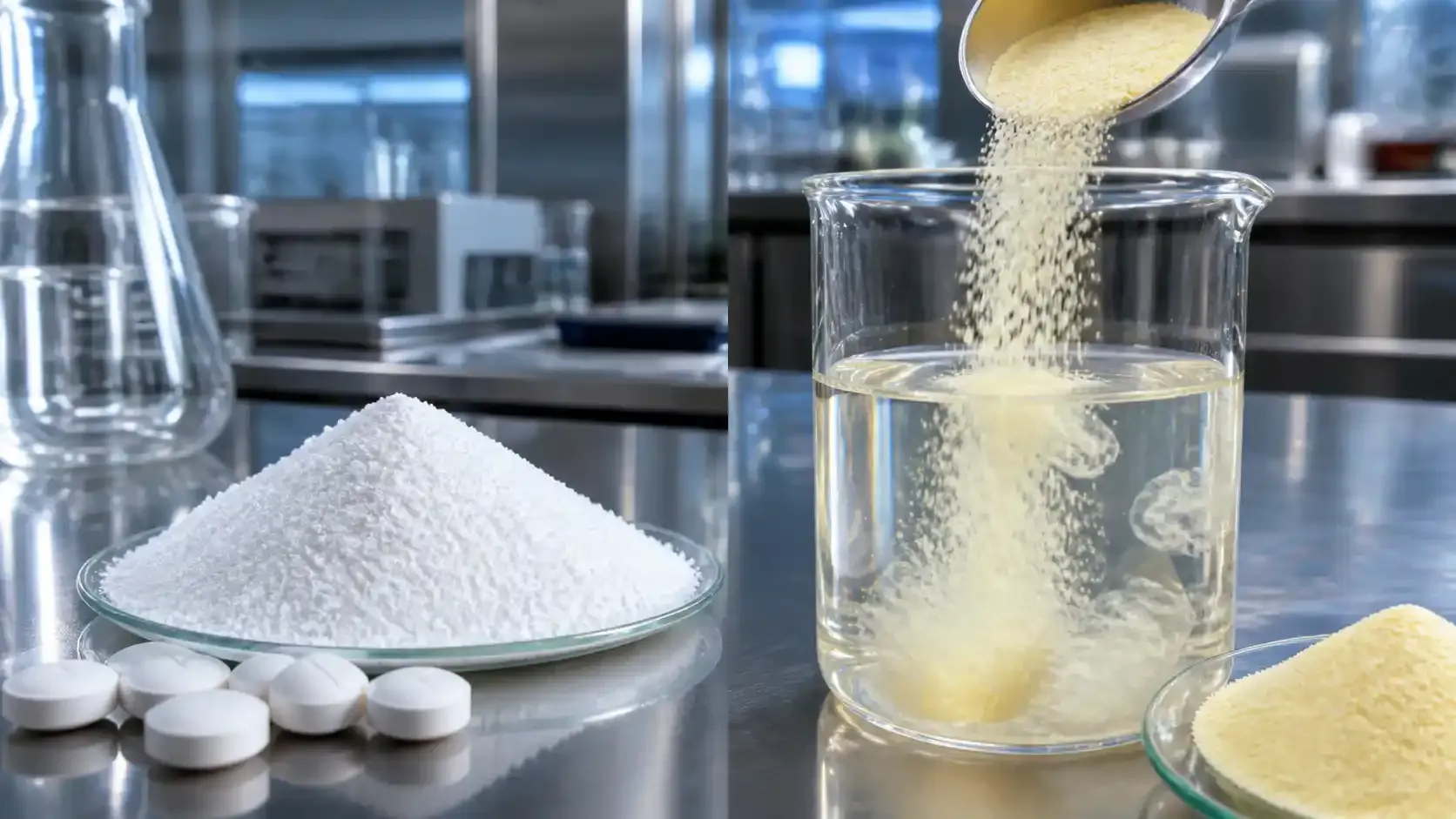
- Appearance: White to light yellow powder
- Raw Material: Corn starch (often positioned as NON-GMO corn starch)
- Fiber Content:≥82%
- Protein Content:≤6.0%
- Storage: Store in a cool place
For buyers looking for a resistant dextrin manufacturer China, two practical advantages are repeatedly emphasized in product descriptions: high solubility and a neutral taste. These attributes reduce the risk of sensory trade-offs, allowing brands to fortify products with fiber without compromising the consumer experience.
Where to validate specs quickly:
- Browse the broader range of resistant dextrin dietary fiber pages to compare positioning by application.
- For powder programs, use dedicated specification pages like nutritional dietary fiber powder as a reference baseline for COA-style parameters.
Maize Dextrin Fiber for "Invisible Fiber" Fortification
Maize dextrin fiber (also described as corn dextrin) is positioned as soluble, tasteless, and easy to incorporate without changing flavor or texture—an advantage when fiber is added to existing SKUs. Unlike bulky insoluble fibers, maize dextrin disappears into the matrix.
If a brief calls for minimal formulation disruption, maize dextrin fiber is often evaluated alongside resistant dextrin rather than against it. For buyers comparing a dietary fiber ingredient supplier, this is the type of ingredient that can shorten reformulation cycles when taste and clarity are non-negotiable constraints.
Low Calorie Dietary Fiber for Weight-Management Briefs
Suppliers like Shine Health frame their low calorie dietary fiber (also described under resistant dextrin positioning) around controlled heating and enzymatic processing, with a strong emphasis on fiber behavior through digestion. This processing method ensures that the fiber resists digestion in the small intestine, reaching the colon to provide prebiotic benefits.
This is highly relevant when a brief asks for calorie reduction, improved satiety, and sugar-control cues in one ingredient line item. It allows for a simplified ingredient deck that still hits multiple functional targets.
For sourcing reference:
- Use the product page as a spec and positioning example for low calorie dietary fiber.
Keto-Friendly Resistant Dextrin for Low-Carb Formats
Keto and low-carb product teams often need fiber that does not disrupt the "net carb" narrative. Keto-friendly resistant dextrin is described as indigestible in the small intestine and suitable for low-carb and ketogenic diets. It provides bulk and texture without the glycemic load of standard carbohydrates.
If a supplier claims "keto," buyers typically confirm three things: label wording alignment, sweetness neutrality, and COA consistency batch-to-batch. Ensuring the fiber count is high and the available carbohydrate count is low is essential for maintaining keto certification.
For sourcing reference:
- Review the keto-friendly resistant dextrin page to align internal requirements with how suppliers describe functionality.
Organic Tapioca Maltodextrin for Clean-Label Texture Control
Organic tapioca maltodextrin is gaining visibility in clean-label programs because it is positioned as plant-based, neutral-tasting, and highly soluble. It serves as an excellent carrier and bulking agent that consumers perceive as clean and natural.
One procurement nuance matters here: on supplier pages like Shine Health’s, organic tapioca maltodextrin might be described as "extracted from non-GMO cassava roots," while other feature lists might reference corn starch sourcing for different product lines. Both statements appear in published content across the industry. For buyers, the correct response is not to assume error—it is to clarify the declared raw material and documentation set (COA, MSDS, third-party test reports) before finalizing label claims. Understanding whether you are buying a corn-based or tapioca-based derivative is vital for allergen labeling and consumer positioning.
For sourcing reference:
- See organic tapioca maltodextrin for grade-style specifications and quality documentation expectations.
Why Chinese Plants Are Being Re-rated as "Recommended" Suppliers
The term "recommended" is changing meaning in procurement conversations. "Recommended Chinese Resistant Dextrin Manufacturer" increasingly implies a plant can support a sophisticated quality management system. It is no longer just about who has the lowest price per kilogram. Buyers are looking for:
- Non-GMO Starch Sourcing Controls: As claimed across multiple Shine Health pages, ensuring the integrity of the input material is paramount.
- Imported Biological Enzymes: The use of high-quality enzymes ensures consistent hydrolysis and performance claims.
- Precision Production Lines: References to German-origin lines and strict process discipline suggest a commitment to modern manufacturing standards.
- GMP-Standard Workshops and Fully Equipped QC Labs: These facilities are essential for preventing contamination and ensuring batch-to-batch consistency.
- Automated Central Control: From feeding to filling, automation (highlighted in multiple product pages) reduces human error and improves traceability.
These aren't marketing details—they are operational hints that help buyers predict stability, traceability, and scale. For a dietary fiber ingredient supplier, those signals often correlate with fewer surprises during validation and a smoother long-term partnership.
Where MCC Fits When Fiber Becomes the Headline
While soluble fibers dominate food and beverage reformulation, procurement teams in supplements and pharma-adjacent categories still rely heavily on Microcrystalline Cellulose (MCC). In 2026, many programs treat MCC and soluble fiber as complementary rather than competing ingredients:
- MCC: Commonly selected for tablet binding, filling, and disintegration behavior; grade choice affects flow and compression. It is the backbone of solid dosage forms.
- Resistant Dextrin / Soluble Fibers: Used for fiber claims and functional nutrition in powders, gummies, and drink mixes.
If you are screening a microcrystalline cellulose supplier China, be careful not to evaluate it like a sweetener or soluble fiber vendor. MCC is often about grade consistency, particle size distribution, moisture control, and predictable processing outcomes. A supplier must demonstrate a deep understanding of how their grades perform in direct compression versus wet granulation.
Shine Health maintains a practical overview of grade selection and QC lines to watch in its industry note:
- MCC grades formulation and QC guide
For buyers building a shortlist under the "Recommended Chinese Microcrystalline Cellulose Manufacturer" label, that QC mindset (spec first, process second, price last) is increasingly what separates stable supply partners from quote-only vendors.
A Buyer-Ready Shortlist Framework for 2026 Fiber Toolkits
To evaluate a resistant dextrin manufacturer China (and the broader fiber portfolio) without overcomplicating audits, procurement teams can use a simple "four-proof" check. This framework cuts through the noise and focuses on what truly matters for supply chain security.
1. Proof of Performance
Confirm solubility and taste neutrality in your base application (RTD, stick pack, gummy, tablet blend). A sample that dissolves poorly or leaves a bitter aftertaste in the lab will fail in the market. Request samples early and stress-test them.
2. Proof of Specification Discipline
Match COA items to what your QA team truly tests. Look for fiber content targets such as ≥82% fiber for resistant dextrin, strict moisture limits, and microbial limits where applicable. If the supplier's standard spec sheet is vague, it is a red flag.
3. Proof of Process Control
Look for clear statements about automated control, GMP workshops, and QC lab capability. These are more predictive than generic "high quality" language. Ask for photos or video tours of the facility if a physical audit is not immediately possible.
4. Proof of Label Alignment
Non-GMO and organic claims should be validated through documents. For ingredients like organic tapioca maltodextrin, reconcile any ambiguity in raw material statements early. Ensure that the paper trail supports your on-pack claims in every target market.
This framework helps procurement teams compare a dietary fiber ingredient supplier on risk and readiness—not just on FOB pricing.
Turning the Fiber-First Trend Into a Sourcing Advantage
The 2026 fiber shift rewards teams that build a flexible toolkit: one soluble base fiber (often resistant dextrin), one application-specific option (keto-friendly or low calorie dietary fiber), and one clean-label texture helper (organic tapioca maltodextrin), with MCC managed as a separate excipient track. By diversifying the toolkit, brands can respond faster to changing consumer trends.
If your team is building a shortlist for a "Recommended Chinese Resistant Dextrin Manufacturer" or a "Recommended Chinese Microcrystalline Cellulose Supplier," it is worth reviewing supplier portfolios that already publish consistent specs, process signals, and application positioning. Shine Health's catalog can be used as one such reference point for modern China supply expectations:
- Resistant dextrin category overview
For those seeking to secure a reliable supply chain that meets the standards of 2026 and beyond, engaging with a supplier that understands these nuances is the first step toward product success. Whether you need high-performance resistant dextrin or specialized organic options, the right partner makes all the difference.
To explore a supplier that aligns with these 2026 sourcing standards, visit www.sdshinehealth.com for detailed product specifications and direct inquiries.