Accessible nutrition is no longer a premium niche—it has evolved into a baseline expectation for modern consumers. Recent industry reporting highlights that 50% of Gen Z and millennials actively seek products fortified with functional ingredients beyond protein, specifically prioritizing fiber for gut health. Furthermore, 54% of global consumers link fiber directly to digestive wellness, and 20% report consciously increasing their fiber intake over the past year. For procurement and R&D teams, this market shift translates into a complex technical challenge: how to increase fiber content meaningfully without compromising taste, clarity, or process stability?
In practical formulation, soluble fibers such as resistant dextrin and polydextrose often provide the most efficient solution. China, particularly the Shandong region, has emerged as a critical global hub for these ingredients. Consequently, search interest for terms like “resistant dextrin supplier China” and “Recommended Chinese Resistant Dextrin Manufacturer” has surged in B2B sourcing conversations, reflecting the need for reliable, high-specification supply partners.

This guide organizes real-world purchasing decisions into three specific formulation briefs (beverages, bakery, and confectionery). Each brief connects functional requirements to the specification language buyers must include in their Requests for Quotation (RFQ)—transforming a vague request for “high fiber” into COA-ready targets.
Solving Formulation Challenges with Resistant Dextrin
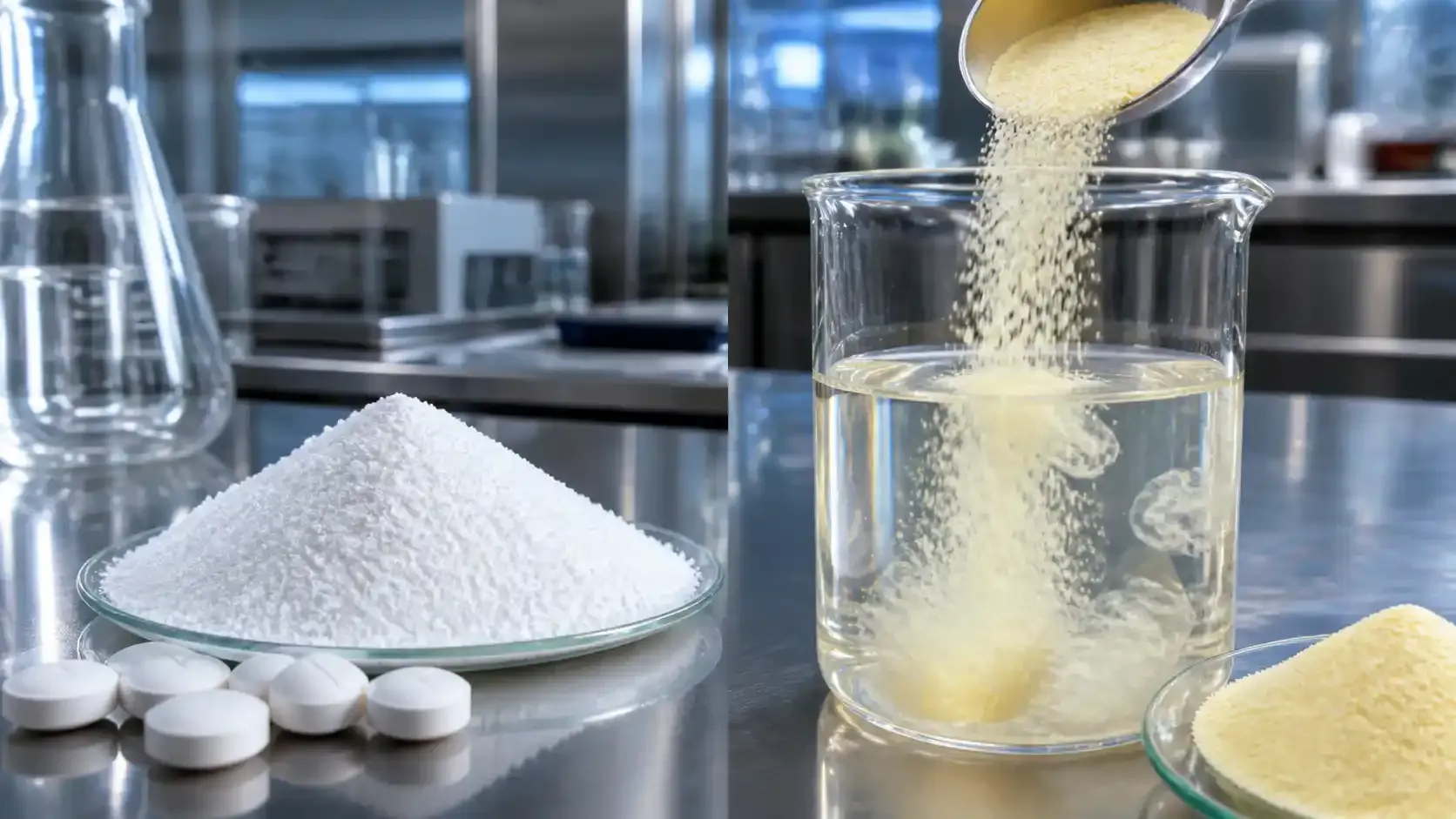
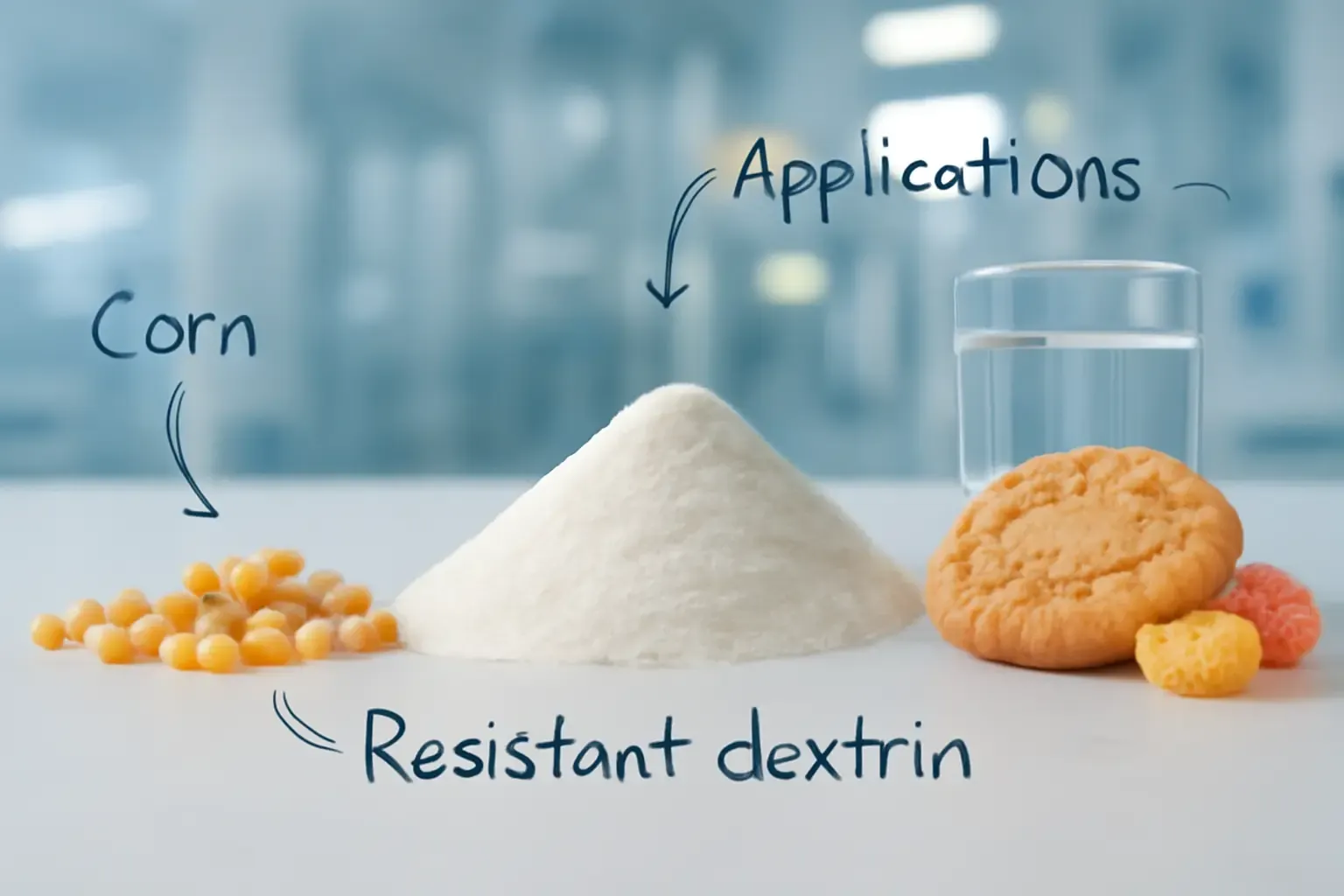
Resistant dextrin is typically positioned as a neutral-tasting, highly soluble dietary fiber derived from starch. The highest quality variants are often crafted from non-GMO corn starch or tapioca sources via enzymatic hydrolysis. In technical documentation, it appears as a white to light-yellow powder designed for seamless integration into complex food matrices.
For sourcing teams evaluating non-GMO resistant dextrin bulk, the value lies not just in the label claim, but in the ingredient's behavior under processing stress. A premium grade ingredient—often produced using advanced biological enzymes and precision production lines (such as those of German origin)—delivers critical functional advantages:
- Clarity and Low Viscosity: Essential for clear beverages where sediment or cloudiness is unacceptable.
- Heat and Acid Stability: Crucial for hot-fill processes, UHT sterilization, baking, and low-pH systems.
- Neutral Flavor Profile: Eliminates the need for expensive flavor masking agents.
- Storage Stability: Low water activity reduces caking tendency, simplifying warehousing and handling.
Polydextrose frequently accompanies resistant dextrin in formulation when a product requires added bulk, texture, or sugar-reduction support. It bridges the sensory gap when sugar is aggressively reduced, particularly in confectionery and baked goods where mouthfeel is paramount.
For product managers building a fiber toolkit, the most efficient strategy is rarely “one fiber fits all.” It involves matching a beverage-grade resistant dextrin spec to liquid constraints, while deploying polydextrose where texture demands structural reinforcement.
Formulation Brief One: Clear and Creamy Beverages
Beverage development teams typically navigate two competing constraints: achieving fiber targets for labeling (meeting consumer expectations) while ensuring minimal impact on clarity and mouthfeel.
In the beverage context, resistant dextrin is the ingredient of choice because it remains stable in both hot and cold systems and is clear and easy to blend. For teams developing keto-positioned or sugar-reduced drinks, specifying a dedicated product variant, such as keto friendly resistant dextrin, provides a useful benchmark for internal specifications. Ideally, the fiber should not contribute to net carbohydrate counts, aligning with low-carb diet trends.
Primary Application Scenarios
- Clear Functional Waters: Where transparency is the primary visual quality indicator.
- RTD Coffees and Teas: Where adding fiber must not amplify bitterness or require expensive sweetness adjustments.
- Nutritional Shakes: Where viscosity must remain low to avoid a "chalky" or heavy mouthfeel.
Formulation Checkpoints for Specifications
- pH Stability: Does the resistant dextrin remain stable at the target pH range (often pH 4–5 for acidic drinks)?
- Solubility: Is the solubility high enough to prevent haze at the planned dosage?
- Handling: Will the powder withstand warehousing conditions without caking?
Beverage-Grade Specification Guidelines
Procurement Tip: Request suppliers to confirm these parameters on the batch Certificate of Analysis (COA), not just on a general marketing datasheet.
| Item | Target Requirement | Importance in Beverages |
|---|---|---|
| Appearance | White to light yellow | Ensures visual consistency and easier incoming QC. |
| Fiber Content | ≥82% (Commercial Standard) | Critical for predictable nutrition calculation. |
| Protein | ≤6.0% | Low protein helps manage flavor variance and clarity. |
| Solubility | Quick dissolution, no sediment | Prevents consumer complaints regarding haze or grit. |
| Micro Limits | Strict APC/Yeast/Mold targets | Essential for beverage safety and extended shelf life. |
For buyers establishing an anchor spec, the category overview at resistant dextrin and the specific details for low calorie dietary fiber offer valuable reference points when drafting beverage briefs.
Formulation Brief Two: Bakery That Stays Soft
Bakery applications are where fiber decisions can become costly, as the negative effects—staling, drying, crumbling, or color drift—often appear late in the shelf-life cycle. When sugar reduction is the primary goal, buyers attempt to replace sugar’s multiple roles simultaneously: sweetness, bulk, structure, and moisture retention.
A soluble fiber like resistant dextrin is frequently evaluated for its ability to support texture while lowering calories, particularly in cakes, cookies, brownies, and nutritional bars. Industry studies on low-calorie cakes suggest that resistant dextrin can help retain moisture and improve texture while significantly reducing sucrose content.
Writing a Sourcing Brief for Bakery
Rather than a generic request for “high fiber,” specify the following:
- Replacement Role: Is this for partial sucrose replacement or purely fiber fortification?
- Process Stress: Define the bake temperature, shear force, and hold times.
- Sensory Target: Are you aiming for a soft crumb or a crisp bite?
Risk Reduction in Bakery Sourcing
- Process Tolerance: Confirm the ingredient's performance during hot processing (mixing and baking).
- Hygroscopicity: Request notes on caking behavior to ensure smooth pneumatic conveying or manual handling in the bakery.
- Packaging: Align on packaging expectations (e.g., moisture-proof 25 kg bags) to prevent spoilage.
If the product concept is “fiber-forward but indulgent,” pairing resistant dextrin with a polydextrose powder manufacturer can be highly effective. Polydextrose excels at supporting bulk and mouthfeel in sugar-reduced systems. For sourcing references, see polydextrose powder.
Formulation Brief Three: Fiber-Forward Confectionery
Confectionery projects often fail due to predictable technical hurdles: sugar reduction leading to brittle textures, fiber addition causing off-notes, or "health" positioning conflicting with the consumer's desire for traditional sweetness and chew.
Resistant dextrin is ideal for confectionery because it raises fiber content while keeping the taste profile neutral. In specific applications like FIBER FUL confectionery, it is utilized across gummies, chewy candies, chocolate, and baked inclusions.
High-Value Application Areas
- Gummies and Soft Chews: Enhances texture and fiber without compromising the gel matrix.
- Chocolate Fillings: Provides necessary bulk when sugar is removed.
- Hard Candy: Helps control crystallization, a key risk area in sugar-free formulations.
Confectionery Specification Language
Ask potential suppliers to clarify:
- Function: Is the resistant dextrin intended as a bulking agent or purely for fortification?
- Thermal Stability: How does it behave under high-solids cooking temperatures?
- Visual Impact: Are there any notes on clarity or color impact at high dosages?
When confectionery requires more structure than resistant dextrin alone can provide, polydextrose often serves as the “bridge” ingredient. This synergy drives many buyers to source both ingredients together, especially for low sugar dietary fiber positioning.
The Buyer Checklist for Chinese Manufacturers
Search terms like “Recommended Chinese Resistant Dextrin Manufacturer” exist because the market is flooded with product names, but the real buying risk is repeatability. A reliable supplier—especially from the Shandong manufacturing hub—should demonstrate advanced capabilities, such as fully automated central control operations and the use of imported biological enzymes to ensure consistent hydrolysis.
A practical evaluation checklist for a supplier should include:
- Recent COAs: Request data for recent lots, not just a generic “typical” spec sheet.
- Raw Material Statement: Verify the source, such as non-GMO corn starch, if required by your label.
- Facility Overview: Look for GMP workshop claims, automated control systems, and QC lab capabilities.
- Certifications: Ensure they match your market needs (ISO, HACCP, Kosher, Halal).

COA-Style Specification Snapshot
| Parameter | Typical Commercial Target | Verification Point |
|---|---|---|
| Fiber Content | ≥82% | Check method (AOAC) and basis (dry vs. as-is). |
| Protein | ≤6.0% | Monitor for lot-to-lot variability. |
| Appearance | White to light yellow | Establish as incoming QC acceptance criteria. |
| Moisture | ≤5.0% | Critical for shelf stability. |
| pH | 3.0–6.0 | Ensure compatibility with your specific application. |
For teams needing a related benchmark, a product description such as digestion resistant maltodextrin is often used to confirm how suppliers state water activity, microbiology, and pH in strict COA detail.
When Microcrystalline Cellulose Fits the Brief
While this guide focuses on soluble fibers, many RFQs combine fibers with texturizers—especially in bars, powdered nutrition, and supplement formats. This is where sourcing conversations often expand to include Microcrystalline Cellulose (MCC).
MCC is typically evaluated for different functional reasons:
- Structure and Bite: Provides necessary firmness in solid formats.
- Flow and Compressibility: Critical for supplement and tablet manufacturing.
- Stabilization: Prevents separation in select liquid applications.
Practically speaking, resistant dextrin carries the “fiber message” and solubility performance, while MCC supports the physical structure. Procurement teams can reduce vendor fragmentation by aligning both ingredients under one quality-language framework—demanding the same COA discipline, microbiology standards, and traceability from their suppliers.
Streamlining the Sourcing Process
These three briefs are designed to prevent a common procurement failure: receiving a supplier quote that looks correct on price and lead time but fails under application stress. To move efficiently from benchtop to commercial scale:
- Bench Trial: Run a trial with your target pH/heat profile and confirm clarity/texture after 24–72 hours.
- Pilot Run:Test with your actual filling, baking, or cooking conditions.
- Gate Checks: Use the same COA lines (fiber, protein, appearance, micro) as gate checks at each stage of the process.
For buyers building a shortlist of reliable partners, it is beneficial to compare supplier documentation against a consistent public baseline. A comprehensive resource for resistant dextrin and related variants can be found at www.sdshinehealth.com, which offers detailed application insights and product specifications to support informed sourcing decisions.