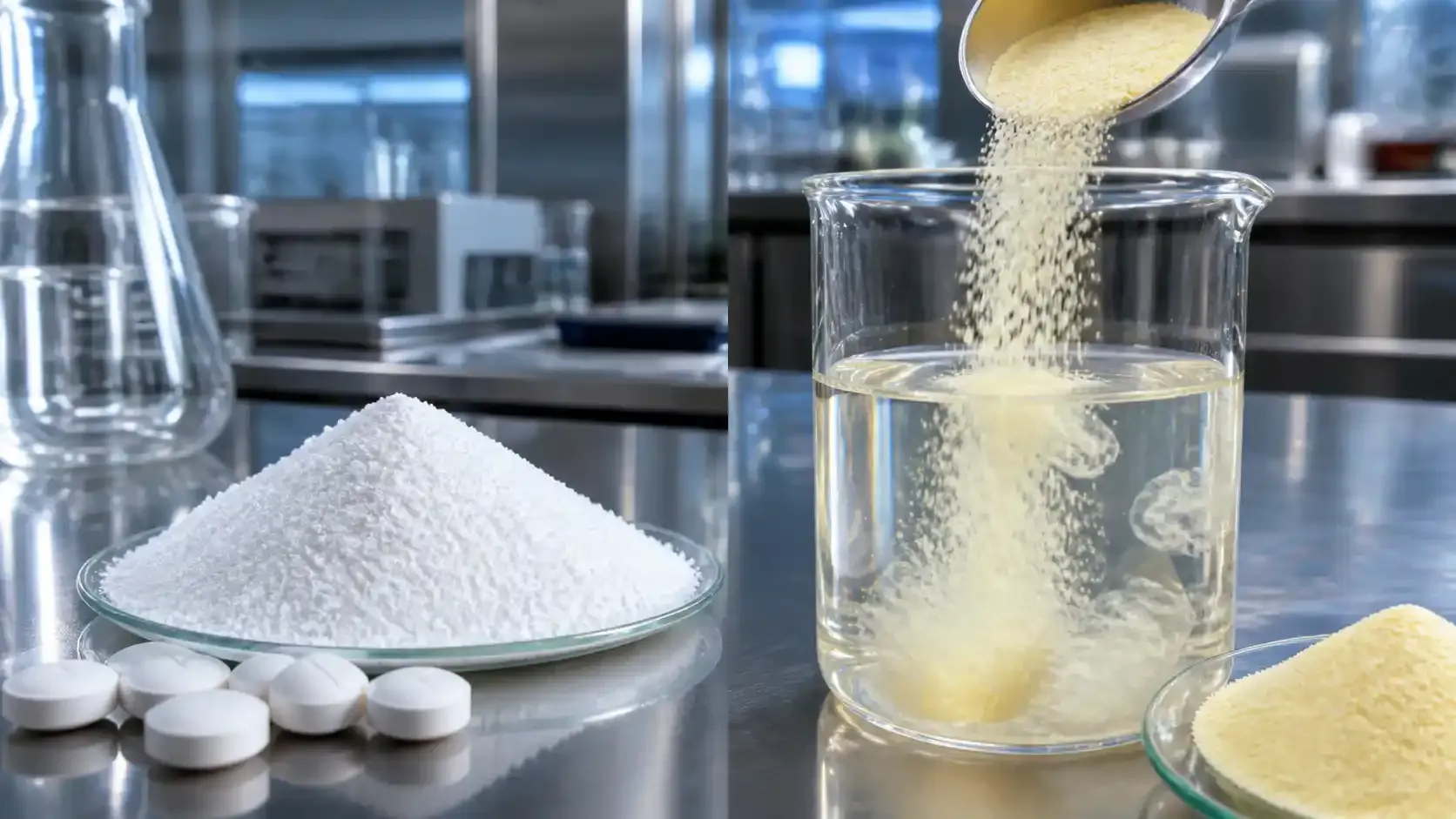
Fiber is no longer just a "nice-to-have" add-on for functional product launches—it has evolved into a core formulation strategy across protein bars, ready-to-drink (RTD) shakes, functional coffees, and better-for-you confectionery. As the 2026 planning cycles commence, procurement teams are rapidly tightening the definition of what constitutes a Qualified Chinese Resistant Dextrin Manufacturer or a Reliable Microcrystalline Cellulose Supplier.
The criteria for selection are shifting away from broad marketing claims and focusing intensely on specification discipline, Certificate of Analysis (COA) readability, and proven application stability. This sourcing brief translates the current market momentum for fiber-plus-protein products into a practical, technical benchmark for evaluating potential partners. It outlines exactly how to shortlist a resistant dextrin manufacturer, a prebiotic dietary fiber supplier, or a microcrystalline cellulose supplier in China that can deliver consistency at commercial scale.

The 2026 Fiber Wave: Implications for Procurement Strategies
Public forecasts and internal industry data for 2026 continue to highlight a robust consumer preference for hybrid products that combine high protein content with dietary fiber. This is particularly evident in sectors where gut wellness, digestive regularity, and sustained energy release are central to the purchase story. For procurement professionals, the key shift is operational: brands are scaling production volumes faster than ever, and any discrepancy between promised functionality on a datasheet and the delivered specs in the warehouse becomes exponentially expensive.
From a strict sourcing standpoint, fiber-forward formulations tend to amplify three specific supply chain risks that must be mitigated during the supplier selection phase:
- Texture and Stability Risk: Functional fibers can unexpectedly thin or thicken beverage systems, alter the chewiness of gummies, or create unwanted haze in clear liquids. A supplier's ability to control parameters like water solubility (often requiring 70% to 100% solubility) and pH stability is critical.
- Label and Compliance Risk: Positioning products as "prebiotic," "low-calorie," or "sugar-free" requires defensible documentation. Ingredients must meet strict definitions, such as being Non-GMO or gluten-free, to support clean label claims.
- Scale-up Consistency Risk: Pilot batches often behave differently from commercial runs if the fiber specifications drift. A reliable supplier must demonstrate control over particle size and moisture content to ensure smooth processing on high-speed lines.
To ensure stable product launches, savvy buyers are increasingly treating the fiber supplier’s COA as a binding contract. This is especially true when evaluating a resistant dextrin manufacturer or a resistant maltodextrin dietary fiber source for sensitive applications like clear drinks or pectin-based gummies.
Where Demand Concentrates: Stress-Testing Specifications
Different finished product formats place stress on different lines of the technical specification sheet. Understanding these nuances allows buyers to ask the right questions during the RFQ process. The following breakdown summarizes where 2026 growth is most likely to concentrate and which specifications procurement teams typically verify first.
| Fast-scaling Format | Why Fiber is Added | Specs Checked First | Common Pairings |
|---|---|---|---|
| Gummies & Chewy Confectionery | Improved nutrition profile (fiber enrichment) without sacrificing texture; sugar reduction. | Fiber % (≥82% or ≥90%), Moisture, Microbiology; Neutral taste profile. | Resistant Dextrin, Soluble Corn Fiber |
| RTD Drinks & Coffees | "Gut + Energy" positioning; need for low viscosity and clarity. | pH Stability (3–6), Clarity/Haze, Viscosity behavior; Solubility. | Resistant Dextrin, Digestion Resistant Maltodextrin |
| Meal Replacements & Shakes | Satiety claims; calorie management; smooth mouthfeel. | Fiber %, Particle size, Batch-to-batch consistency. | Resistant Dextrin + Protein systems; MCC for suspension/structure |
A practical implication for buyers is that a low-calorie dietary fiber ingredient must be selected not merely for its total dietary fiber content, but for how it behaves under specific processing conditions—pH levels, heat treatments, and long-term storage—which vary widely between a gummy manufacturing line and a bottled coffee retort process.
Decoding Food Grade Resistant Dextrin Specification Patterns
For many procurement managers, the most efficient method to qualify a resistant dextrin manufacturer is to compare their standard offers against a clear, food-grade baseline and then confirm what is actually supported by the documentation.
The industry standard is a soluble resistant dextrin produced from high-quality starch sources—most commonly corn starch—that exhibits consistent appearance and stable performance. Leading manufacturers, such as Shine Health, often list the following core parameters as a baseline for their resistant dextrin, which serves as a good benchmark for the wider market:
- Appearance: Visuals should be consistent, typically white to light yellow powder. This ensures no color impact on the final product.
- Raw Material Source: The gold standard is Non-GMO corn starch. Tracing the source to premium producers (often requiring documentation of the starch source) is a key trust signal.
- Fiber Content: A minimum of ≥82% (and often higher, up to 90% on a dry basis) is the expected standard for effective functional labeling.
- Protein Content: Kept low, typically ≤6.0%, to prevent off-notes and Maillard browning reactions in heat-processed foods.
- Production Standards: Look for mentions of advanced biological enzymes (often imported) and automated production lines (e.g., German engineering) which suggest a higher degree of process control than manual operations.
Buyers can cross-check these values when reviewing resistant dextrin product documentation. If a supplier cannot guarantee these basics—specifically the protein limit and color consistency—it is a red flag for potential quality issues down the line.
A Quick Benchmark Table for Reuse
| Item | Food-Grade Resistant Dextrin Baseline | Impact on Finished Products |
|---|---|---|
| Fiber Content | ≥82% (Standard) / ≥90% (Premium) | Determines the strength of the "High Fiber" claim and cost-in-use. |
| Appearance | White to light yellow | Critical for visual acceptance in clear beverages and light-colored powders. |
| Protein | ≤6.0% | Helps manage taste drift, reduces allergy risks, and prevents browning. |
| Storage Guidance | Store in a cool, dry place | Essential for maintaining shelf life and preventing caking (hygroscopicity management). |
| Raw Material | Corn starch (Non-GMO options available) | Fundamental for "Clean Label" strategies and supply chain transparency. |
For buyers seeking a Recommended Chinese Resistant Dextrin Manufacturer, the goal is not to chase the highest theoretical number on a marketing flyer. It is to verify that the fiber value, appearance, and protein limits are repeatable at scale and documented per batch in the COA.
Digestion Resistant Maltodextrin: When is it the Better Fit?
A frequent point of confusion in Request for Quotations (RFQs) is the precise difference between standard resistant dextrin and digestion resistant maltodextrin. While they are chemically similar, in practice, digestion resistant maltodextrin is often chosen when the formulation demands very high soluble-fiber content with exceptional stability and a specifically low viscosity profile.
High-quality suppliers often provide a distinct technical table for digestion resistant maltodextrin. Procurement teams should expect to see tighter controls in this category, including:
- pH Stability: Effective performance across a range of 3–6, making it suitable for acidic beverages.
- Moisture Control: Strictly ≤5.0 g/100g to ensure powder flowability and stability.
- Microbiology: Stringent limits on aerobic plate count and yeast/mold, which are non-negotiable for sensitive applications like infant nutrition or medical foods.
- Purity: Content often pushes ≥90%, offering a more concentrated fiber source.
Side-by-Side Positioning for 2026 Briefs
| Consideration | Resistant Dextrin | Digestion Resistant Maltodextrin |
|---|---|---|
| Typical Use | Broad functional foods, bakery, powders, general beverages, confectionery. | High-solubility fiber systems needing tight microbiology and moisture control (e.g., medical nutrition). |
| Sourcing Signals | Fiber % and protein limits are the primary filters. | Microbiology + Moisture + pH stability become the primary pass/fail metrics. |
| Buyer Takeaway | The ideal general-purpose low-calorie dietary fiber ingredient. | The strong fit when COA detail and strict limits are non-negotiable. |
In tender documents, it is common practice to request samples of both options and decide based on pilot plant results—especially for RTD beverages where mouthfeel and clarity are subjective but critical success factors.
The Role of MCC in Fiber-Forward Nutrition Formulations
While Microcrystalline Cellulose (MCC) is not a dietary fiber in the same soluble sense as resistant dextrin, it is an indispensable partner in the conversation. Modern fiber-plus-protein formats—such as meal replacement bars and chewable tablets—rely heavily on structural integrity and processing control.
Buyers evaluating a Recommended Chinese Microcrystalline Cellulose Supplier will typically connect MCC selection to the same "no surprises at scale" standard used for soluble fiber. A reliable microcrystalline cellulose supplier in China should be shortlisted based on three practical questions:
- Does the supplier offer grade guidance by use case? A competent supplier won't just sell "MCC." They will specify grades for direct compression tablets, wet granulation, or liquid suspensions (stabilizers).
- Are key parameters tied to performance? Look for specific data on particle size (mesh), bulk density, and loss on drying (moisture). These dictate how the powder flows in a hopper and compresses in a die.
- Can QC data be interpreted quickly? The COA should be formatted clearly, with consistent batch results that match the grade specifications.
Procurement teams must consider how MCC and resistant dextrin coexist in multi-format pipelines. For instance, a brand might use resistant dextrin in its gummies and drinks, while using MCC in its tablets or structured nutrition bars. Using a supplier that understands both—or sourcing from a hub that specializes in excipients and functional ingredients—ensures that evaluation methods remain consistent across categories.
Mini Case Logic: Confectionery and Beverage Development
Confectionery represents one of the toughest "stress tests" for soluble fiber ingredients because factors like chewiness, sweetness perception, and water activity are unforgiving. In fiber-enriched gummies or low-sugar chocolates, resistant dextrin is commonly employed to support calorie reduction and fiber labeling while aiming to keep the taste profile neutral.

For R&D and procurement teams building a confectionery program, specific pairing patterns are showing up frequently in RFQs:
- Resistant Dextrin + Soluble Corn Fiber: A powerful combination for sugar-reduction strategies where maintaining bulk and mouthfeel is essential.
- Resistant Dextrin + Digestion Resistant Maltodextrin: Used when the base formulation requires neutrality, but specific SKUs need tighter moisture control to prevent candy stickiness.
The core procurement insight here is that successful launches usually originate from spec-to-application translation—turning abstract COA lines like "Fiber %," "pH," and "Microbiology" into tangible outcomes like expected chew, clarity, and shelf stability.
A COA-First Checklist for Shortlisting Suppliers
When procurement teams search for a partner, "recommended" increasingly means audit-friendly and COA-consistent. It is no longer enough to have a low price; the supplier must demonstrate GMP standard workshops and robust quality control systems.
Below is a checklist that turns market pressure into reusable RFQ language for vetting Chinese suppliers.
Resistant Dextrin & Dietary Fiber Checks
- Identity and Appearance: Confirm that "white to light yellow" is the consistent standard. Darker powders can indicate process issues.
- Fiber Content Target: Verify that the stated minimum (e.g., ≥82% or ≥90%) appears explicitly on every batch COA.
- Protein Limit: Confirm that ≤6.0% is controlled batch-to-batch to ensure taste neutrality.
- pH Window: Ensure stability data covers the 3–6 pH range for beverage applications.
- Microbiology Limits: Request the supplier’s routine testing lines (Total Plate Count, Yeast, Mold) and ensure they meet your safety standards.
- Packaging: Confirm standard export packaging (commonly 25 kg bags) and clear storage instructions (e.g., "Store in a cool place").
MCC Supplier Evaluation Signals
- Grade Clarity: Does the supplier provide specific grades for specific applications (e.g., cosmetics vs. tablets)?
- QC Capability: Is there evidence of a fully equipped QC laboratory and routine testing practices?
- Process Control: Look for suppliers using automated central control operations—from raw material feeding to filling—to minimize human error.
Process and Traceability Signals
- Non-GMO Documentation: Essential for clean label products. Confirm the corn starch source is validated.
- Production Quality: Look for mentions of "precision production lines" (e.g., German origin equipment) or "advanced enzymatic processes." These are indicators of a modern, capable facility.
- Support: Does the supplier offer technical support (e.g., 24/7 engineering support) for formulation challenges?
Closing Guidance for Buyers
In 2026, the winning procurement pattern is less about finding a single "cheapest" ingredient and more about building a supplier set that can support multiple formats without reformulation risk. A disciplined benchmark typically includes a core resistant dextrin program aligned to published, repeatable specs, and a vetted partner for structure-critical ingredients like MCC.
For buyers looking to establish a stable, high-quality supply chain from China, the most efficient next step is to review the technical parameters and category capabilities of established manufacturers who prioritize transparency. Companies that provide detailed parameter tables, clear origin information, and responsive technical support are the ones best positioned to be your long-term partners.
If you are looking to audit a supplier that meets these rigorous standards for resistant dextrin and MCC, or if you need specific technical data sheets for your 2026 formulation planning, please visit www.sdshinehealth.com.