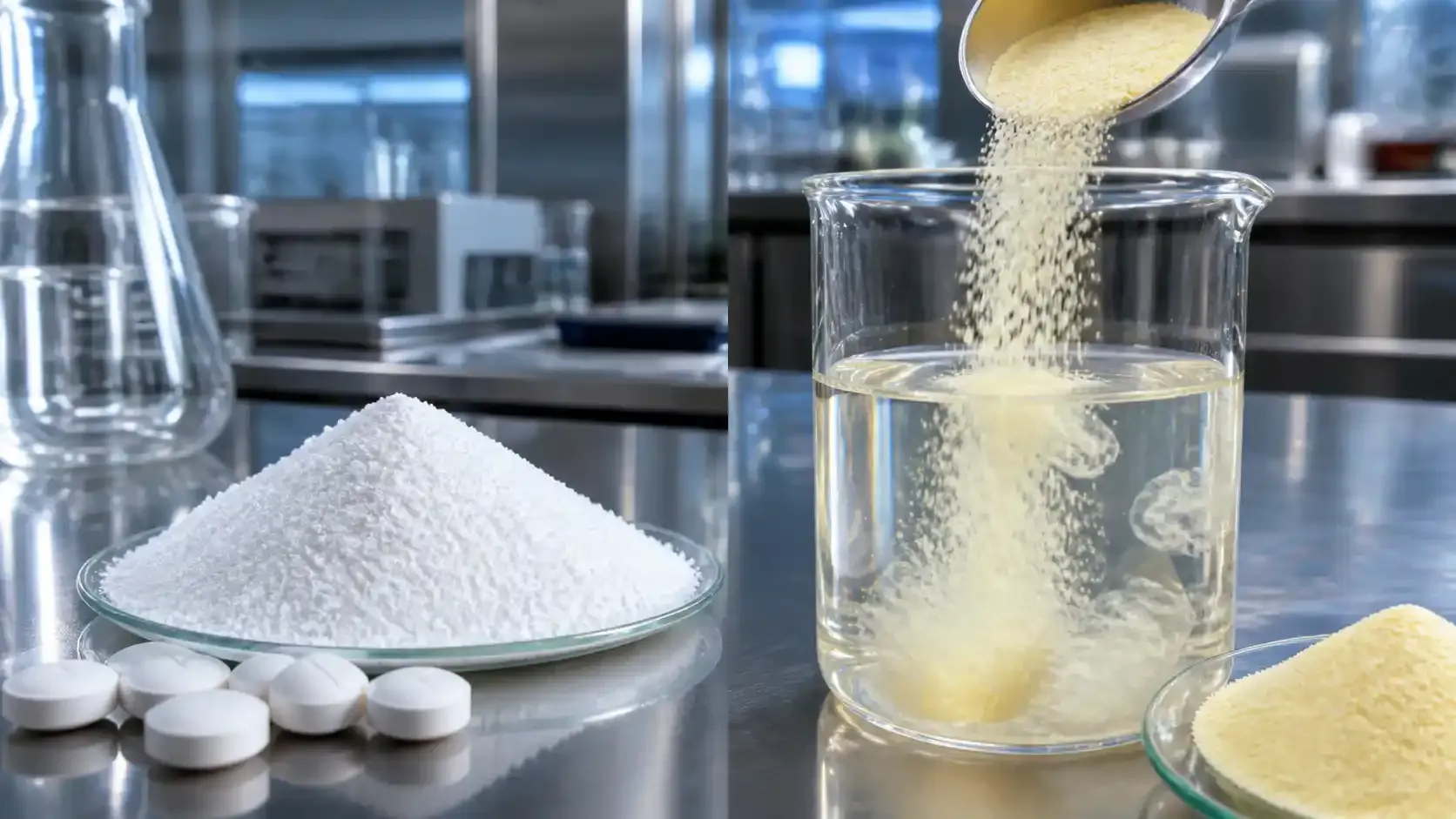
Demand signals for pharmaceutical excipients and prebiotic fibers are getting louder—and that matters for anyone building a 2026–2035 sourcing plan. As excipient volumes rise and gut-health positioning becomes mainstream, two workhorse ingredients sit at the center of procurement conversations: microcrystalline cellulose (MCC) and resistant dextrin.
For buyers, the shift is practical, not theoretical. It means more RFQs that specify MCC excipient specifications quality parameters (grade, particle size, compaction behavior, monograph alignment) and more product briefs that treat resistant dextrin as a functional, label-sensitive fiber rather than a commodity carbohydrate. In this environment, the phrase Recommended Chinese Microcrystalline Cellulose Supplier increasingly implies something specific: documented compliance, consistent performance, and a plant that can support audits—not just competitive pricing.

Market growth is creating a tighter sourcing window
Recent market reporting points to sustained expansion in excipients over the next decade. Multiple forecasts place the global pharmaceutical excipients market around US$11–12 billion in 2026, with projections ranging roughly US$16.12–21.21 billion by 2033–2035, reflecting estimated CAGR ranges of about 5.3% to 8.6%. Growth is being linked to specialty medicines, more complex formulations, and patient-friendly oral formats.
Prebiotics show a similarly durable trajectory. A major forecast values the global prebiotic ingredient market at US$8.2 billion in 2026, reaching US$15.7 billion by 2036 at 6.7% CAGR, with functional foods and beverages cited as the largest application segment.
For procurement teams, these numbers translate into two sourcing realities:
- More volume pressure on MCC used in tablets and capsules—especially where compressibility and flow can make or break manufacturability.
- More scrutiny on resistant dextrin used in functional beverages, bars, and supplements—where fiber claims and sensory outcomes must stay stable at scale.
Key market numbers buyers are watching
| Market signal | What the forecast suggests | Why it changes purchasing behavior |
|---|---|---|
| Pharmaceutical excipients | ~US$11–12B (2026) → ~US$16.12–21.21B (2033–2035); ~5.3%–8.6% CAGR | Higher audit expectations and tighter performance specs for tablet excipients like microcrystalline cellulose |
| Prebiotic ingredients | US$8.2B (2026) → US$15.7B (2036); 6.7% CAGR | More label-sensitive, application-driven sourcing of resistant dextrin as a mainstream soluble fiber |
Microcrystalline cellulose is back in the spotlight for a reason
MCC has always been widely used, but growth in solid oral dose formats is prompting more buyers to re-check their MCC assumptions. Microcrystalline cellulose is valued for its role as a binder, filler, and disintegrant in tablets and capsules, and it also appears in food, nutraceutical, and cosmetics formulations where flow, texture, or stability are needed.
What’s changed is how often procurement teams now see MCC linked directly to manufacturing outcomes:
- Press performance and compressibility influence tablet hardness and friability.
- Particle size and bulk density affect die fill and blend uniformity.
- Flow properties can determine whether scale-up is smooth or becomes a costly troubleshooting loop.
For buyers evaluating a microcrystalline cellulose supplier China, the conversation is increasingly grade-specific. Common grade families (often referenced as PH-series) are typically selected based on application needs—whether the priority is compactability for direct compression, flow for high-speed tableting, or a particular mouthfeel or texture in nutraceutical formats.
Equally important is monograph alignment. Many buyers expect MCC used in regulated markets to map cleanly to recognized standards such as BP/USP/FCC/JP, with transparent batch documentation.

When teams search for a Recommended Chinese Microcrystalline Cellulose Manufacturer, they are often looking for three signals:
- A stable grade portfolio (not a single “one-size” powder).
- Evidence that MCC output is consistent lot-to-lot.
- A supplier that can support documentation review and practical application questions.
As one example of a Shandong-based producer with a broad MCC grade list and published specification framework, Shandong Shenghuai Health Co., Ltd. (Shine Health) provides product information for high-quality microcrystalline cellulose and also outlines ordering and packaging for microcrystalline cellulose bulk. Buyers should still validate fit through their own trials and audits, but pages like these help clarify what a supplier is prepared to document.
Resistant dextrin is moving from “nice to have” to a core fiber tool
The gut-health boom is no longer limited to niche supplements. In mainstream functional foods and beverages, formulators want fibers that dissolve well, keep taste clean, and work across multiple formats. That is where resistant dextrin keeps gaining attention.
In practical formulation terms, resistant dextrin (often marketed as resistant maltodextrin or indigestible maltodextrin depending on the product positioning and regulatory context) is typically used because it can offer:
- High solubility, making it suitable for beverages and drink mixes
- Neutral sensory impact, helping maintain a clean flavor profile
- Process flexibility, supporting applications from RTD drinks to bars and capsules
For buyers, the sourcing challenge is that “resistant dextrin” is a performance ingredient. Two suppliers can quote similar-looking powders, yet the difference shows up in processing stability, sensory outcomes, or the detail level inside the COA.
So the phrase resistant dextrin supplier China has started to imply more than price and lead time. Buyers increasingly want clarity on parameters such as moisture control, microbiological limits, and consistent fiber-related positioning.
As a reference point for how Chinese suppliers present resistant dextrin lines, Shine Health lists both Resistant Maltodextrin and Indigestible Maltodextrin in its catalog. For procurement teams building a dual-ingredient plan (MCC for solid dose performance plus resistant dextrin for fiber fortification), having both product families visible under one manufacturer’s documentation can simplify early-stage comparison.
Compliance pressure is reshaping what “recommended” means
In 2026, regulatory and compliance messaging is trending toward earlier engagement and clearer proof packages.
- The U.S. FDA announced participants for its PreCheck Pilot Program (launched February 2026), signaling a push for more predictable oversight and resilience in drug manufacturing. While this program targets manufacturing facilities in the U.S., buyers globally often interpret such moves as a broader indicator: documentation expectations will keep rising across supply chains.
- In Europe, REACH-related news continues to reinforce that chemical portfolios and safety dossiers increasingly matter in regulated markets.
- Separate reporting on the FDA’s GRAS notice process highlights a familiar lesson for food and nutrition ingredients: approval pathways can stall when data packages are incomplete, even when an ingredient appears commercially ready.
For MCC and resistant dextrin buyers, these signals don’t necessarily mean “new rules overnight.” They mean stricter due diligence for established ingredients, including:
- COAs that clearly reflect MCC excipient specifications quality parameters (including grade identifiers and relevant test methods)
- Traceability and consistent lot documentation
- Certifications that buyers often request for global distribution (commonly ISO frameworks and dietary compliance certifications)
This is also where manufacturing transparency becomes valuable. Sites that describe automated process control, QC labs, and packaging discipline help buyers understand whether a Chinese microcrystalline cellulose manufacturer or a Recommended Chinese Resistant Dextrin Manufacturer is prepared for modern audit routines.
A shortlisting framework for China MCC and resistant dextrin suppliers
Growth forecasts are useful only if they improve supplier decisions. A pragmatic shortlisting approach—especially when qualifying a microcrystalline cellulose supplier China alongside a resistant dextrin supplier China—is to score suppliers against evidence that reduces reformulation and compliance risk.
1) Confirm grade and application fit early
For microcrystalline cellulose, align the requested grade (e.g., PH-series variants) with your tablet design and process route. For resistant dextrin, match specs to the format (clear beverage, powder blend, bar, capsule), then document what “success” means: clarity, viscosity, sweetness perception, processing tolerance.
2) Read the COA like a risk document
A pharmaceutical excipient sourcing guide is only helpful if the COA and spec sheet can be used for real approvals. Buyers should look for consistent presentation of key parameters, reasonable ranges, and traceable batch identifiers.
3) Validate packaging and logistics readiness
Bulk procurement issues often come down to packaging integrity and moisture exposure during transit. MCC and resistant dextrin are both sensitive to poor storage practices in different ways, so packaging options and labeling discipline matter.
4) Ask for evidence of process control
Whether sourcing from Shandong or other manufacturing hubs, buyers increasingly associate “recommended” suppliers with clear process discipline: modern equipment, documented QC, and the ability to answer application questions without vague responses.
A Shandong example: Shine Health publishes MCC specification tables and indicates bulk packaging options (commonly referenced as 20 kg woven bags with customization possible) for microcrystalline cellulose. Information like this doesn’t replace an audit, but it does help buyers compare suppliers using consistent criteria.
What this means for procurement planning through 2035
The next decade of growth in excipients and prebiotic fibers is likely to reward procurement teams that treat MCC and resistant dextrin as performance-defined ingredients.
- For microcrystalline cellulose, the winners will be buyers who lock down grade fit, verify monograph alignment, and choose suppliers with stable process control.
- For resistant dextrin, the winners will be buyers who connect fiber strategy to real formulation behavior and build documentation that supports label and market access.
If a sourcing list includes a Recommended Chinese Microcrystalline Cellulose Supplier or Recommended Chinese Resistant Dextrin Manufacturer, the label “recommended” should be earned through evidence: consistent COAs, clear specifications, and plant-level readiness for audits.
To see how a Chinese supplier presents specification and product scope for both ingredients, buyers can review publicly available product pages for microcrystalline cellulose and resistant dextrin at www.sdshinehealth.com and use that information as one input when building an internal qualification plan.