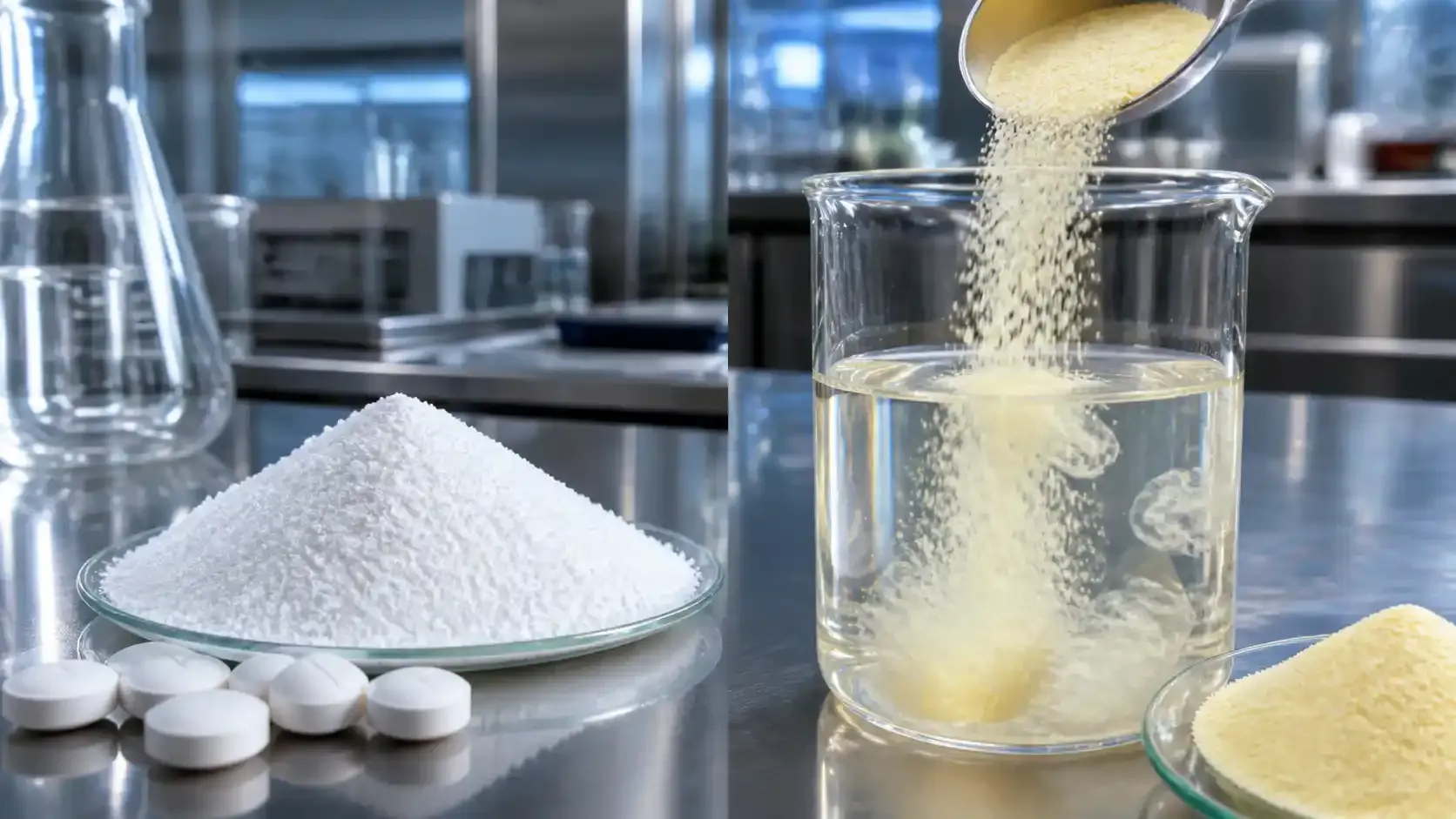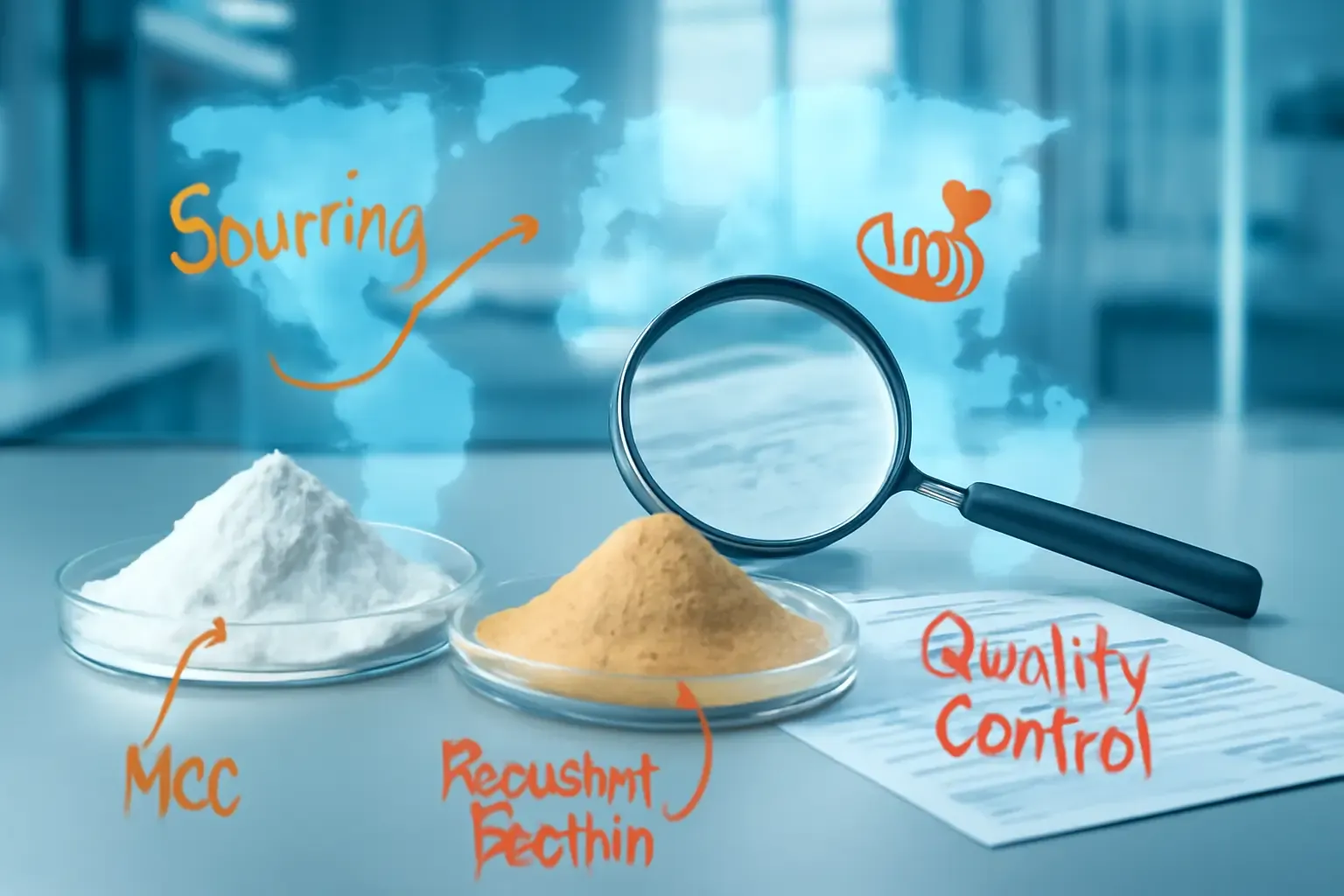
Clean-label launches and the surge in personalized nutrition are fundamentally changing how procurement teams evaluate value. It is no longer enough to simply secure a low price per kilogram; the focus has shifted to documentation quality as a critical component of total cost. This is particularly acute when sourcing functional ingredients like soluble fibers and tablet excipients from East Asia.
For many procurement managers, the real challenge isn't locating a microcrystalline cellulose supplier China or a resistant dextrin supplier China—directories are full of them. The difficulty lies in building a supply plan that holds up under rigorous customer audits, strict border checks, and the demand for batch-to-batch consistency. A cheap ingredient that fails a quality audit or causes a production halt due to poor solubility is, ultimately, the most expensive option on the table.
This guide translates the most common “hidden cost” drivers into practical checkpoints you can apply to any Request for Quotation (RFQ). We will explore what to confirm on Certificates of Analysis (COAs), how to validate GMP and traceability claims, and how to keep your total landed cost stable when buying dietary fiber supplier bulk volumes and pharmaceutical excipient MCC for tablet manufacturing.

Why Procurement Complexity is Rising Despite Lower Prices
For the functional food and nutraceutical sectors, cost pressure is an ever-present reality. However, the financial impact of a failed qualification or a product recall is far greater. As clean-label claims expand—encompassing low sugar, low GI, keto-friendly, and fiber-forward formulations—procurement teams increasingly need supplier documentation that rigorously supports the brand's label intent.
Two ingredient families sit at the center of this shift:
- Resistant Dextrin: Often positioned as a premium soluble dietary fiber for low-sugar and high-fiber formulations, where neutrality in taste and color is non-negotiable.
- Microcrystalline Cellulose (MCC): Serving as a critical pharmaceutical excipient MCC option, vital for tablet performance, binding efficiency, and manufacturing speed.
Industry analysis points to continued growth in excipients and fibers tied to clean-label and personalization demand. This growth means that regulatory bodies and quality assurance (QA) departments are scrutinizing the origin of these materials more closely than ever before.
The Cost Model Buyers Should Use for China Sourcing
Free on Board (FOB) pricing is only a starting point and can be deceptive. The more reliable model for professional buyers is a “Cost + Risk” view that treats compliance gaps as predictable expenses. If a supplier cannot provide a clear paper trail, you will pay for it in administrative hours, testing fees, or delayed shipments.
Landed Cost Drivers That Matter for MCC and Resistant Dextrin
| Cost Driver | What it Looks Like in Real Sourcing | Why it Matters | Financial Impact |
|---|---|---|---|
| COA Mismatch | The COA doesn’t match the spec you approved, or key lines (like protein content) are missing. | Delays, re-testing, potential re-labeling. | High: Can trigger demurrage charges at port. |
| Batch Inconsistency | One batch performs well; the next changes solubility, flow, or compression profiles. | Pilot repeats, wasted packaging, reformulation. | Severe: Production line stoppages. |
| Weak Traceability | No clear raw-material statement or batch mapping back to the farm/source. | Audit failures and import friction. | Medium: Risk of supplier disqualification. |
| Certification Gaps | GMP/ISO/HACCP/BRC claims are made but cannot be evidenced with valid certs. | Customer onboarding stops dead. | High: Lost sales opportunities. |
| Packaging Issues | Moisture pickup in transit due to weak liners or unclear labeling. | Out-of-spec lots and claims disputes. | Medium: Material waste and disposal costs. |
A stable supply plan for a microcrystalline cellulose supplier China and a resistant dextrin supplier China should explicitly control these drivers within the contract terms.
Global Compliance Context Without the Noise
Regulators and major brand QA teams do not evaluate “fiber” or “excipients” as generic commodities. They evaluate identity, purity, safety, and label relevance for the destination market. Whether you are shipping to North America, the EU, or APAC markets, the requirements are converging around specific documentation standards.
What “Audit-Ready” Means in Practice
Buyers typically need to secure the following before a Purchase Order (PO) is even issued:
- Clear Ingredient Identity: Definitive proof of what the material is, how it is produced (e.g., enzymatic hydrolysis), and what it is not.
- Defined Specifications: Including key functional indicators like particle size for MCC or molecular weight distribution for fibers.
- Microbiological Controls: Full reporting on the COA, not just a "pass/fail" statement.
- Allergen and GMO Positioning: Supported by signed statements and traceability to the raw material source (e.g., Non-GMO Corn).
- Change-Control Discipline: A contractual obligation that the supplier cannot quietly change process inputs or manufacturing sites.
Reading COAs Like a Buyer Who Pays for Mistakes
A Certificate of Analysis (COA) is not just a receipt; it is a risk forecast. The goal is to catch problems before they become inbound failures. When evaluating a dietary fiber supplier bulk order, specific parameters serve as indicators of process quality.
COA Lines That Matter for Resistant Dextrin
Many export-oriented resistant dextrin specs emphasize high fiber content and low protein. High protein content in a soluble fiber can lead to browning (Maillard reaction) in beverages or off-flavors in sensitive applications. Publicly listed parameters from established suppliers help buyers benchmark what “normal” looks like. For instance, high-standard specifications often highlight:
- Appearance: White to light yellow powder (indicates proper refining).
- Fiber Content:≥82% (The industry standard for effective labeling).
- Protein Content:≤6.0% (Critical for taste neutrality and shelf stability).
- Storage: Explicit instructions to store in a cool place to prevent caking.
These numbers are not “nice-to-have.” They are often what your downstream customers will anchor on when validating a resistant dextrin food grade bulk input for fiber claims. If a supplier offers a product with 75% fiber or undefined protein levels, the lower price often comes with a higher processing risk.

COA Checklist for Resistant Dextrin (Procurement-Ready):
- Identity & Grade: Does the product name match your spec and label intent? (e.g., distinguishing between Resistant Dextrin and standard Maltodextrin).
- Fiber and Protein Lines: Are Fiber (≥82%) and Protein (≤6.0%) clearly tested and reported?
- Sensory & Solubility: Are appearance and solubility statements consistent with previous batches?
- Safety Controls: Do Micro and contaminant sections exist, and are they signed/dated by a QC manager?
- Batch Metadata: Is there a clear Lot number, manufacturing date, and re-test date to ensure traceability?
If you are qualifying a low GI soluble fiber supplier, pay extra attention to consistency: a “low GI” positioning often implies the ingredient is used to support low-sugar designs, where small changes in specs can cascade into finished-product adjustments.
COA Lines That Matter for MCC
For MCC, the COA is where you validate whether the material can actually function as a pharmaceutical excipient MCC in your process. Even without quoting specific pharmacopeial limits (which vary by grade and market), most buyers should expect COAs to clearly show:
- Grade Identification: Common PH-style grades (e.g., 101, 102) are used in the industry; buyers often search for MCC PH-101 wholesale or similar.
- Moisture / Loss on Drying: A critical process control signal for tablet stability.
- Particle Size or Distribution: Essential for flow and compression relevance.
- Bulk/Tapped Density: Determines handling, blending, and tablet weight uniformity.
A practical tip: when you buy microcrystalline cellulose bulk, ask the supplier to provide both the COA and the matching technical data sheet for the same grade. Misalignment between the “marketing spec” and the actual COA format is an early warning sign of a trader rather than a manufacturer.
Verifying GMP, ISO, and Traceability Without Overpaying
Many buyers can find suppliers who claim “GMP” or “ISO.” Fewer can prove it in a way that reduces qualification time. Real manufacturing capability is demonstrated through specific infrastructure details, not just a certificate on a wall.
Evidence That Lowers Procurement Risk
Look for materials that are specific, repeatable, and batch-linked. High-quality suppliers will readily provide:
- Certification Scope Statements: detailing exactly what the certification covers (e.g., "Production of Resistant Dextrin").
- Facility Descriptions: Look for mentions of fully automated central control workflows. Automation from feeding to filling significantly reduces human error and contamination risk.
- Process Technology: For fibers, the use of advanced biological enzymes imported from overseas and precision production lines (often of German or Japanese origin) are strong indicators of a supplier investing in quality consistency.
- Traceability Language: Explaining how lots are tracked end-to-end, ideally starting from the Non-GMO corn starch source.
These points are useful not as brand promotion, but as the type of detail a procurement team should expect when building a shortlist for a recommended Chinese resistant dextrin manufacturer or a recommended Chinese microcrystalline cellulose manufacturer.
Packaging and Transit Stability as a Spec Item
Bulk ingredients fail more often in the warehouse or shipping container than in the reactor. Moisture is the enemy of both MCC and Resistant Dextrin. Make packaging part of your acceptance criteria.
For resistant dextrin used as dietary fiber supplier bulk input, suppliers commonly offer moisture-protective bags and clearly labeled outer packaging. Robust packaging configurations, such as 25 kg fiber-safe bags with high-quality inner liners, are essential for preserving the flowability and shelf life of the powder during ocean freight.
Packaging Checks to Include in Contracts:
- Inner Liner Specification: Verify the thickness and material of the moisture barrier.
- Bag Integrity: Ensure sealing methods are tamper-evident and robust.
- Label Requirements: Must include product name, lot number, production/expiry dates, and storage instructions in English.
- Palletization: Request photos of container loading to ensure pallets are wrapped and stable.
A Qualification Flow That Protects Both QA and Budgets
Qualification is where most “cheap” quotes become expensive due to wasted time and lab fees. A disciplined flow helps procurement avoid repeat testing and rework.
Stepwise Qualification Playbook
- Paper Screening:
- Review the COA template (must include fiber/protein lines for resistant dextrin).
- Check certification evidence and scope.
- Verify the traceability statement (e.g., confirming non-GMO corn starch origin).
- Samples and Lab Confirmation:
- Confirm key identity and performance indicators relevant to your specific dosage form or beverage matrix.
- Pilot Trial and Packaging Validation:
- Run processing simulations (mixing, compression, heat/pH exposure).
- Validate that the packaging configuration you will actually import can withstand your warehouse conditions.
- Supplier Audit Readiness:
- Request a remote audit package first; proceed to on-site audits if required by customer policy.
This workflow applies whether you’re selecting a microcrystalline cellulose supplier China for tablets or a resistant dextrin supplier China for low-sugar powders.
Using Public Benchmarks to Build a Stronger RFQ
One efficient way to reduce sourcing time is to use publicly available specs as a baseline when writing RFQs. Rather than starting from scratch, compare how different suppliers describe fiber identity and key parameters.
For example, comparing the definition of "fiber content" across different suppliers can reveal significant quality differences. Suppliers who transparently list their testing methods and detailed parameters (like pH, ash content, and specific microbial limits) are generally more prepared for international scrutiny.
What “Recommended” Should Mean in China Sourcing
Search terms like Recommended Chinese Microcrystalline Cellulose Supplier or Recommended Chinese Resistant Dextrin Manufacturer often imply a simple ranking. In practice, “recommended” should mean:
- The supplier can consistently reproduce the spec (not just hit it once).
- COAs are complete, signed, and batch-linked.
- Certifications are verifiable and match the facility scope.
- Packaging and logistics protect the spec through delivery.
- The supplier can support change control and documentation requests without friction.
This definition protects your total cost of ownership far better than chasing the lowest initial quote.
A Practical Next Step for Procurement Teams
If you are building a shortlist in East Asia—especially when looking for a reliable Shandong-based partner—use this article’s COA and documentation checks as your baseline. Benchmark candidates against publicly available specifications from established manufacturers to ensure you are comparing apples to apples.
For those seeking to review example ingredient documentation, detailed product parameters, and audit-ready specifications, you can explore the resources available at www.sdshinehealth.com.