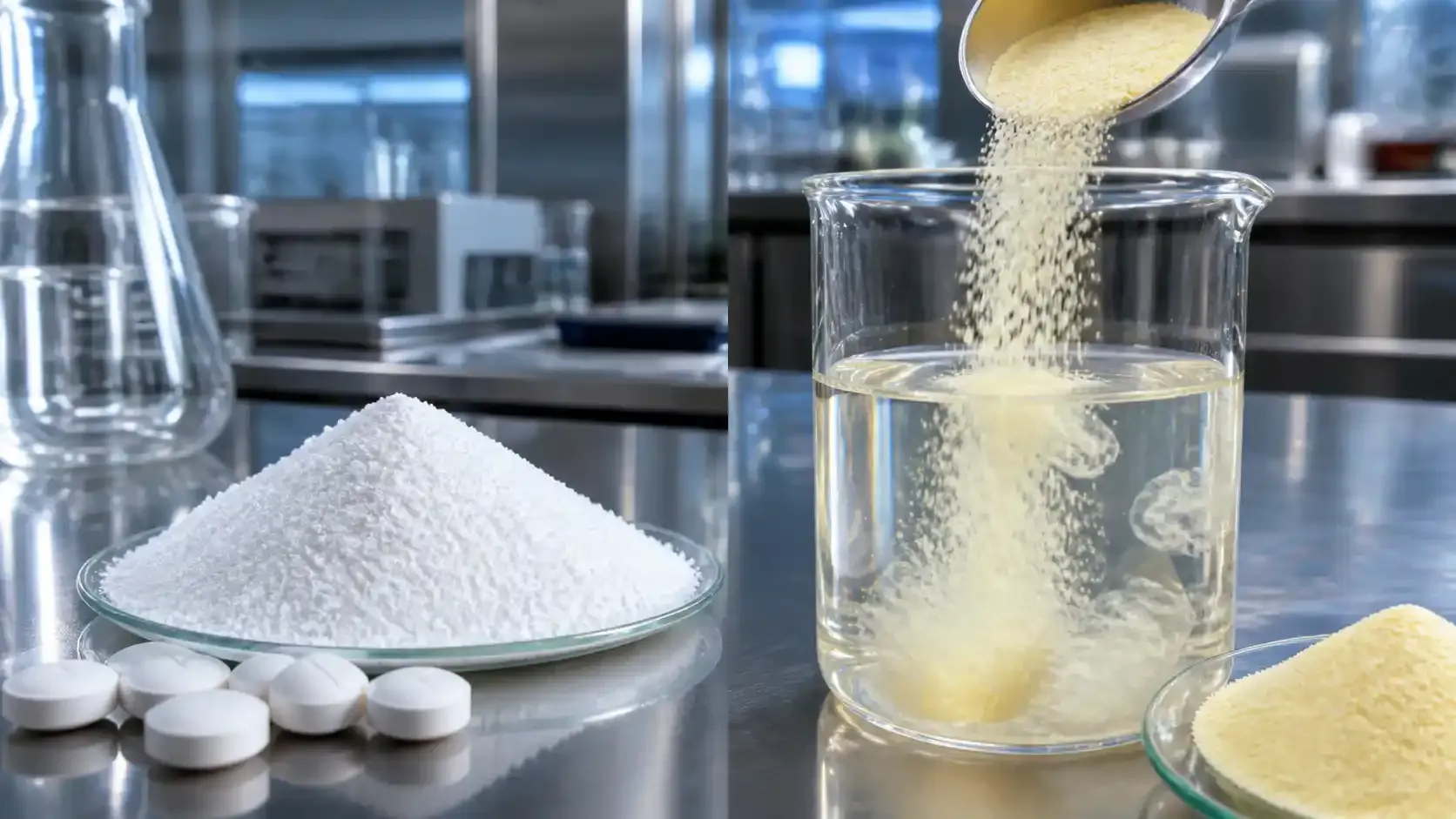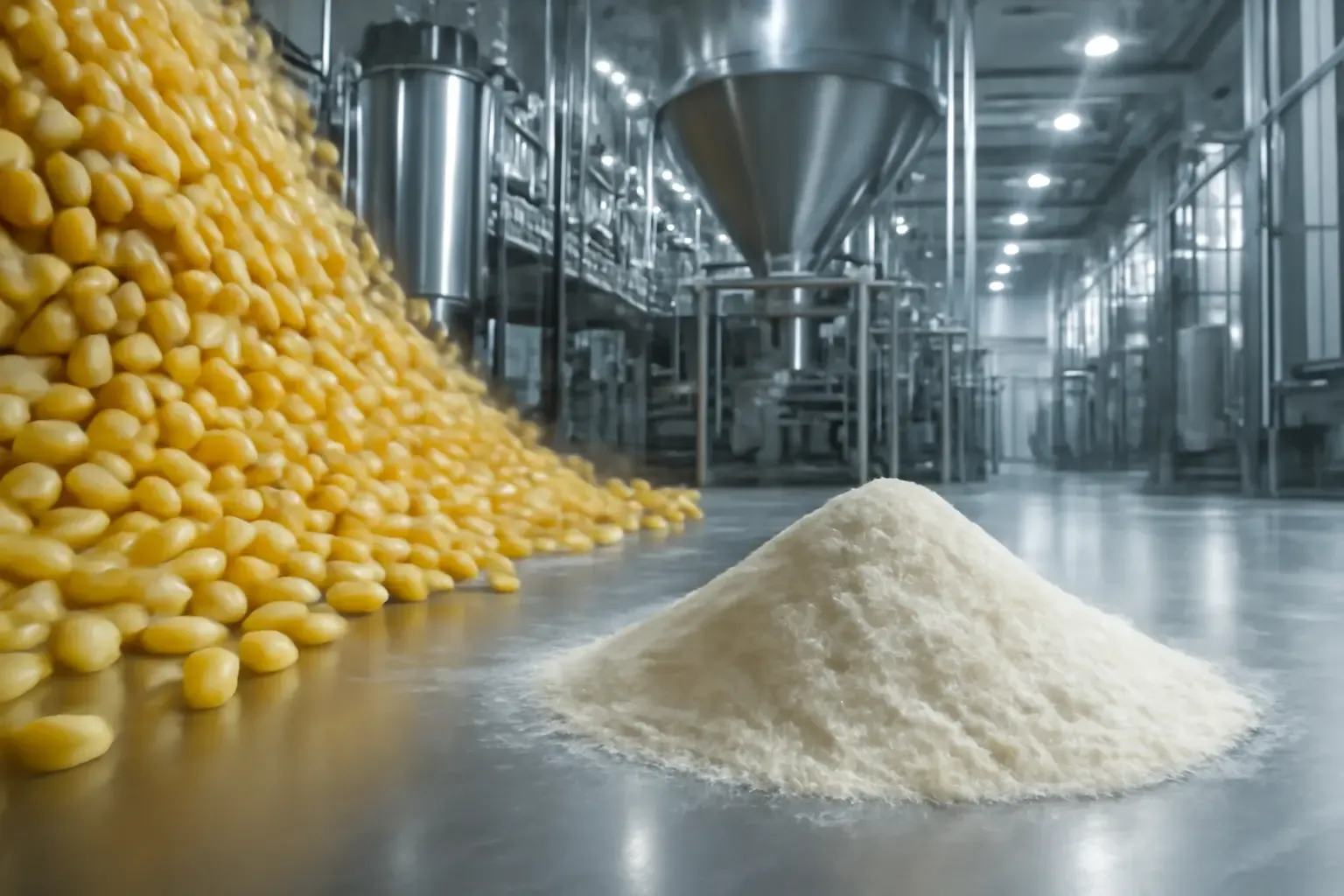
Dietary fibers and excipients are rarely the headline ingredient in a formula, but they often decide whether a launch scales smoothly—or bleeds money through rework, inconsistent performance, and avoidable freight. For many procurement teams, resistant dextrin has become a go-to option for low-calorie and sugar-reduction projects because it can deliver fiber with a neutral sensory profile and broad processing tolerance. At the same time, projects that also involve tablets, capsules, or powder blends frequently pull microcrystalline cellulose (MCC) into the same sourcing conversation. China remains a major origin for both categories. Within China, Jinan and the wider Shandong region are increasingly associated with dietary fiber capacity, with plants emphasizing fully automated central control, GMP-standard workshops, and lab-driven quality systems. These capabilities matter far more than a single FOB line item when evaluating a recommended supplier.

The Quiet Technology Shift Behind Competitive Resistant Dextrin Supply
When buyers search for a resistant dextrin supplier China, the first comparisons often focus on price and fiber content. In practice, the most reliable cost advantage is increasingly tied to how the plant runs day-to-day. The difference between a routine shipment and a quality crisis often lies in the invisible infrastructure of the manufacturing floor.
Across multiple Shandong-based product pages, the same manufacturing signals show up repeatedly:
- NON-GMO corn starch as a primary raw material stream for resistant dextrin-style fibers. This is crucial for brands targeting clean-label markets in Europe and North America.
- Imported biological enzymes, positioned as a consistency lever in enzymatic steps. High-quality enzymes ensure precise hydrolysis, preventing the batch-to-batch viscosity fluctuations that ruin beverage formulations.
- A precision production line of German origin (a common way suppliers describe higher-control process equipment). Precision machinery minimizes the "Monday morning versus Friday afternoon" quality variance.
- Japanese craftsmanship cited as a process-discipline cue, often referring to strict 5S management and hygiene protocols.
- Fully automated central control from feeding to filling, designed to reduce human-factor variability. Automation is the single biggest predictor of consistency in powder flow and particle size distribution.
- A fully equipped QC laboratory and GMP-standard workshops.
For procurement professionals, these are not marketing flourishes. They translate into measurable outcomes: fewer off-spec batches, fewer sensory surprises, and fewer downstream trial failures—especially when resistant dextrin is used as a structural component in sugar-reduction systems.
Why Resistant Dextrin Specs Drive Total Cost More Than Unit Price
A resistant dextrin quote becomes expensive when the specification is misunderstood. Procurement teams can usually reduce real cost by aligning resistant dextrin specs to the application, rather than defaulting to the tightest spec in every RFQ. Understanding the interplay between chemical parameters and formulation performance is key to smart buying.
Across the resistant dextrin and related fiber pages used as specification examples, several parameters recur:
- Appearance: typically white to light yellow.
- Fiber content: often listed at ≥82%.
- Protein: often listed at ≤6.0%.
- Storage: “store in a cool place” (simple, but important for warehousing SOPs).
Two practical cost links are easy to miss:
- Dose Cost: In many formulas, the effective dose is driven by functional fiber content. If the resistant dextrin fiber content is lower than expected (e.g., hovering near 75% instead of a solid 82%+), R&D teams must compensate by increasing inclusion rates. This raises Cost of Goods Sold (COGS) and can negatively impact texture by adding unnecessary solids.
- Trial Cost: The cost of a failed pilot (or a reformulation) can dwarf the delta between two resistant dextrin offers. If a cheaper batch has higher protein content, it may cause browning (Maillard reaction) in liquid applications over time, forcing a product recall or a rush to reformulate.
A future-ready supplier earns its edge by making resistant dextrin performance predictable lot-to-lot, not by promising the lowest price on a spreadsheet.
Matching Resistant Dextrin and Related Fibers to the Most Cost-Effective Use Cases
A common procurement trap is treating every soluble fiber as interchangeable. In reality, the most cost-effective decision is often a portfolio decision—using resistant dextrin where it wins, and switching to another fiber where that fiber reduces risk or simplifies label goals. Smart sourcing involves matching the specific functional need to the right ingredient derivative.
Below is a practical, application-led view (with specification baselines available on supplier pages):
- Everyday Fiber Enrichment: Resistant dextrin is often the default choice for bakery and general snacks due to its cost-efficiency and process tolerance. For baseline spec examples, see the resistant dextrin category at resistant dextrin.
- Low-Calorie Positioning: When the brief is explicitly “fiber with minimal calories,” procurement teams often benchmark against a dedicated low-calorie SKU. A reference page is low calorie dietary fiber.
- Digestive-Tolerance and Formulation Flexibility: Some projects prefer a digestion-resistant maltodextrin format due to specific solubility and stability characteristics required for sensitive gut-health claims. A reference page is digestion resistant maltodextrin.
- Sugar-Reduction Systems and Beverage-Friendly Formats: Buyers frequently compare resistant dextrin against soluble corn fiber options when taste, viscosity, and sugar-reduction strategy matter. A reference page is soluble corn fiber.
- Tapioca-Derived Solutions for Specific Positioning: For teams exploring grain-free or tapioca formats, Shandong suppliers may list both resistant tapioca dextrin and tapioca maltodextrin options. Reference pages include resistant tapioca dextrin and tapioca maltodextrin.
- Bulking Plus Fiber Strategy: When the project needs bulk and texture management alongside fiber enrichment, buyers may also evaluate polydextrose formats. A reference page is polydextrose powder.
This is where “resistant dextrin supplier China” becomes a misleading shorthand. The smarter sourcing question is: which fiber reduces total formulation risk at the target cost—and which supplier can keep that performance stable.
A COA Reading Guide That Prevents Hidden Resistant Dextrin Costs
Certificates of Analysis (COAs) should not be treated as mere paperwork. In resistant dextrin sourcing, a COA is the quickest predictor of whether the next three months will be routine—or full of complaints and urgent reformulation work. It is the DNA of the batch.
Here is a compact reading guide based on parameters repeatedly used on resistant dextrin-family pages:
| COA Line Item | Why Buyers Care | Cost Risk if Ignored |
|---|---|---|
| Appearance (white to light yellow) | Flags unexpected processing shifts or scorching. | Sensory complaints, instability assumptions from consumers. |
| Fiber Content (often ≥82%) | Drives functional dose and label math. | Higher inclusion cost and texture drift in final product. |
| Protein (often ≤6.0%) | Helps manage color/taste and consistency expectations. | Greater batch-to-batch variance; risk of browning in beverages. |
| Moisture / Storage | Impacts handling and caking risk. | Warehouse losses, repacking costs, and moisture-damage claims. |
| Micro Limits (when listed) | Risk management for export and sensitive applications. | Rejected lots at customs, longer release cycles. |
For procurement teams, this framework is especially useful when comparing offers from a non-GMO resistant dextrin manufacturer versus a trader who cannot provide consistent COA structure.
Where Microcrystalline Cellulose Belongs in a Fiber-Led Sourcing Strategy
Many buyers searching for a Chinese microcrystalline cellulose (MCC) supplier are not looking for MCC in isolation. They are building a stable platform for complex solid-dose formulations. This often includes:
- Powder blends that need flow and compressibility support.
- Tablets and coated dosage forms requiring high hardness and low friability.
- Systems where fibers like resistant dextrin are paired with excipients to manage processing speed.
In those situations, MCC is less about “finding the cheapest cellulose” and more about selecting a microcrystalline cellulose USP EP supplier (or a partner capable of supporting USP/EP expectations) whose documentation and QC habits resemble the best dietary fiber plants. The synergy between a fiber supplier and an excipient supplier can streamline logistics and audit burdens.
Because MCC grade selection can affect formulation outcomes, procurement teams often benefit from supplier educational resources. For background reading on MCC grades and QC considerations, see:
- MCC Grades Formulation and QC Guide
- Microcrystalline Cellulose in Cosmetics
These pages do not replace your internal qualification, but they illustrate the type of excipient literacy that distinguishes a pharmaceutical grade MCC manufacturer China from a vendor that only competes on price.
A Practical Comparison Example for Resistant Dextrin Supplier China RFQs
To illustrate the concept of Total Cost of Ownership (TCO), let us look at a common scenario where two offers appear similar on the surface but carry vastly different risk profiles.

Scenario: Two offers look similar on price for resistant dextrin.
Offer A
- Resistant dextrin COA consistently shows fiber content aligned with the RFQ target (commonly benchmarked at ≥82%).
- Plant describes fully automated central control and a QC lab.
- Documentation includes clear origin statements for Non-GMO corn.
Offer B
- Resistant dextrin spec sheet is brief; COA formatting varies by batch.
- Limited process detail; no clear link between raw material control and finished product.
- "Lowest price" is the primary selling point.
Procurement Decision Logic: Even if Offer A carries a modest premium, it often represents a lower total cost. Offer A reduces the likelihood of (1) expensive pilot failures, (2) damaging customer complaints regarding texture or taste, and (3) costly inclusion-rate adjustments needed to meet label claims.
This is why experienced buyers increasingly define “recommended” as process proof plus spec proof, not merely as a self-declared label.
Why Jinan Shandong Dietary Fiber Manufacturing Is on More Shortlists
Shandong’s appeal is not a single advantage—it is an accumulation of supplier behaviors that reduce procurement risk. The region has matured into a specialized hub for functional ingredients.
- Raw Material Screening Discipline: Especially for NON-GMO corn starch streams referenced on multiple resistant dextrin pages. Proximity to major corn-processing belts allows for better selection of starting materials.
- Automation That Stabilizes Output: From feeding to filling, reducing the "human touch" means reducing contamination risk and variance.
- QC Laboratories: Positioned as release gates, not as afterthoughts. A lab that can run HPLC analysis in-house speeds up shipment release and provides data-backed COAs.
- Logistics Management: Capabilities that support predictable delivery windows, crucial for global supply chains that cannot afford port delays.
For buyers who are building a supplier base, these are the factors that turn a Jinan Shandong dietary fiber manufacturer from “an option” into a stable part of a multi-year plan.
A Buyer Checklist for Recommended Chinese Resistant Dextrin and MCC Partners
The checklist below is designed for procurement teams evaluating a recommended Chinese resistant dextrin manufacturer, plus any recommended Chinese microcrystalline cellulose manufacturer involved in adjacent excipient programs.
- COA Consistency: Is the COA format stable and complete across lots for resistant dextrin? Does it look professional and data-rich?
- Key Spec Anchors: Are fiber content and protein limits clearly stated (e.g., fiber content frequently benchmarked at ≥82%, protein ≤6.0% on resistant dextrin-family pages)?
- Raw Material Origin Statement: Is NON-GMO corn starch (or tapioca/cassava where relevant) clearly documented? Can they trace it back to the source?
- Process Controls: Is there evidence of fully automated central control from feeding to filling? Ask for photos or video walkthroughs.
- QC Capacity: Is a fully equipped QC laboratory described as part of routine release? Do they have third-party validation?
- Manufacturing Standard: Are GMP-standard workshops explicitly stated? This is non-negotiable for food and pharma applications.
- Application Fit Support: Does the supplier provide clear application positioning across resistant dextrin, soluble corn fiber, tapioca formats, and polydextrose options? A supplier who understands how you use the product is a partner.
- Documentation Readiness: Are COA/MSDS/third-party reports mentioned where relevant (commonly listed on tapioca maltodextrin-style pages)?
If a supplier cannot answer these basics, “low price” is usually just prepaid risk waiting to manifest as a quality claim.
Closing Guidance for Cost-Effective Sourcing
Sourcing resistant dextrin from China can be highly cost-effective, but only when procurement treats resistant dextrin as a performance material—not a commodity powder. Plants that emphasize automation, raw material screening, and QC discipline tend to produce more predictable resistant dextrin, which lowers the total cost of ownership through fewer failed trials and fewer quality escalations.
For teams building shortlists, it is often helpful to keep a neutral set of spec baselines and application references on hand. A consolidated starting point for resistant dextrin-family pages and related fibers can be found at www.sdshinehealth.com, where resistant dextrin, soluble corn fiber, and polydextrose pages provide consistent examples of the COA lines and manufacturing signals discussed above. Choosing the right partner in Shandong means looking beyond the FOB price to the process that guarantees your product's success.