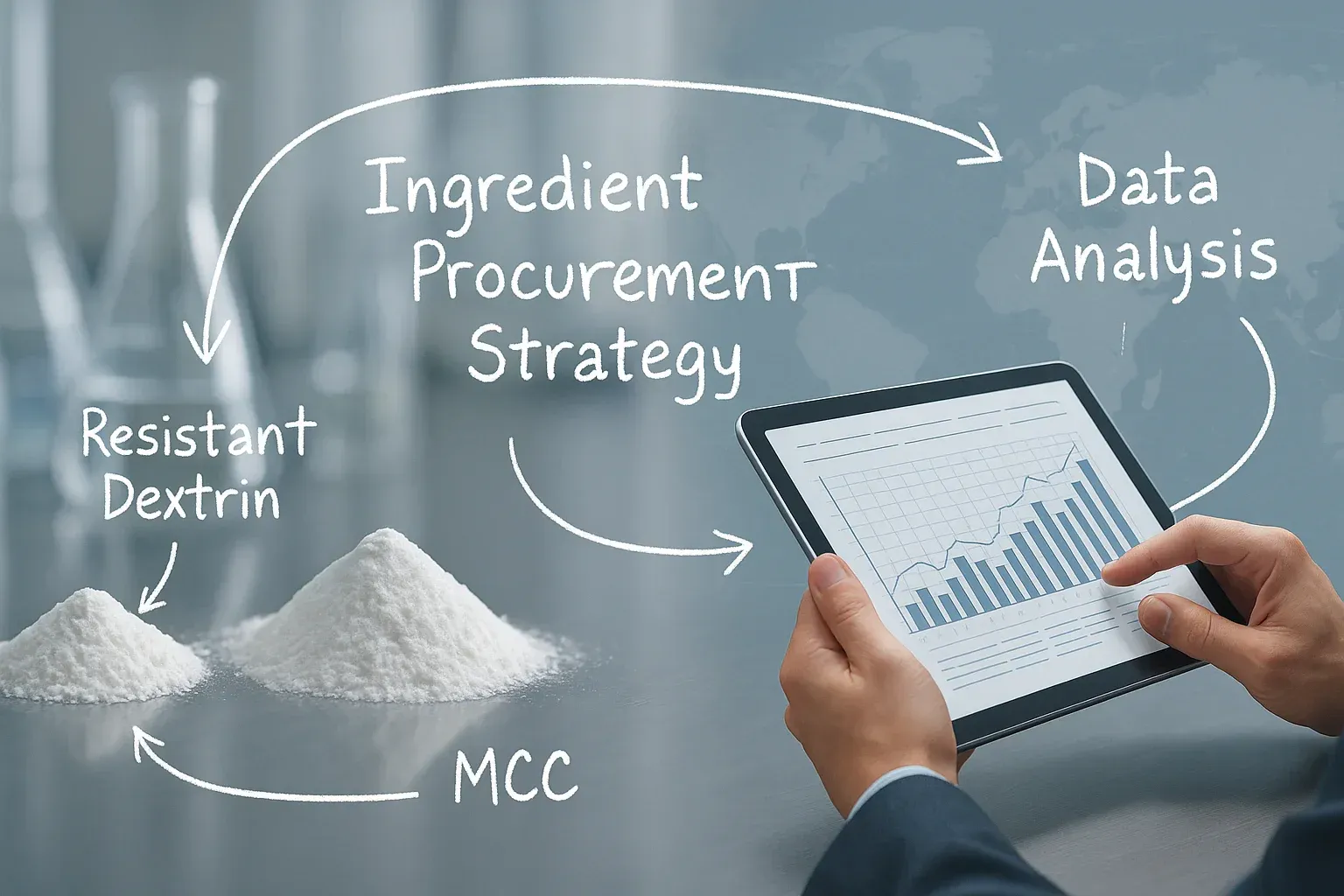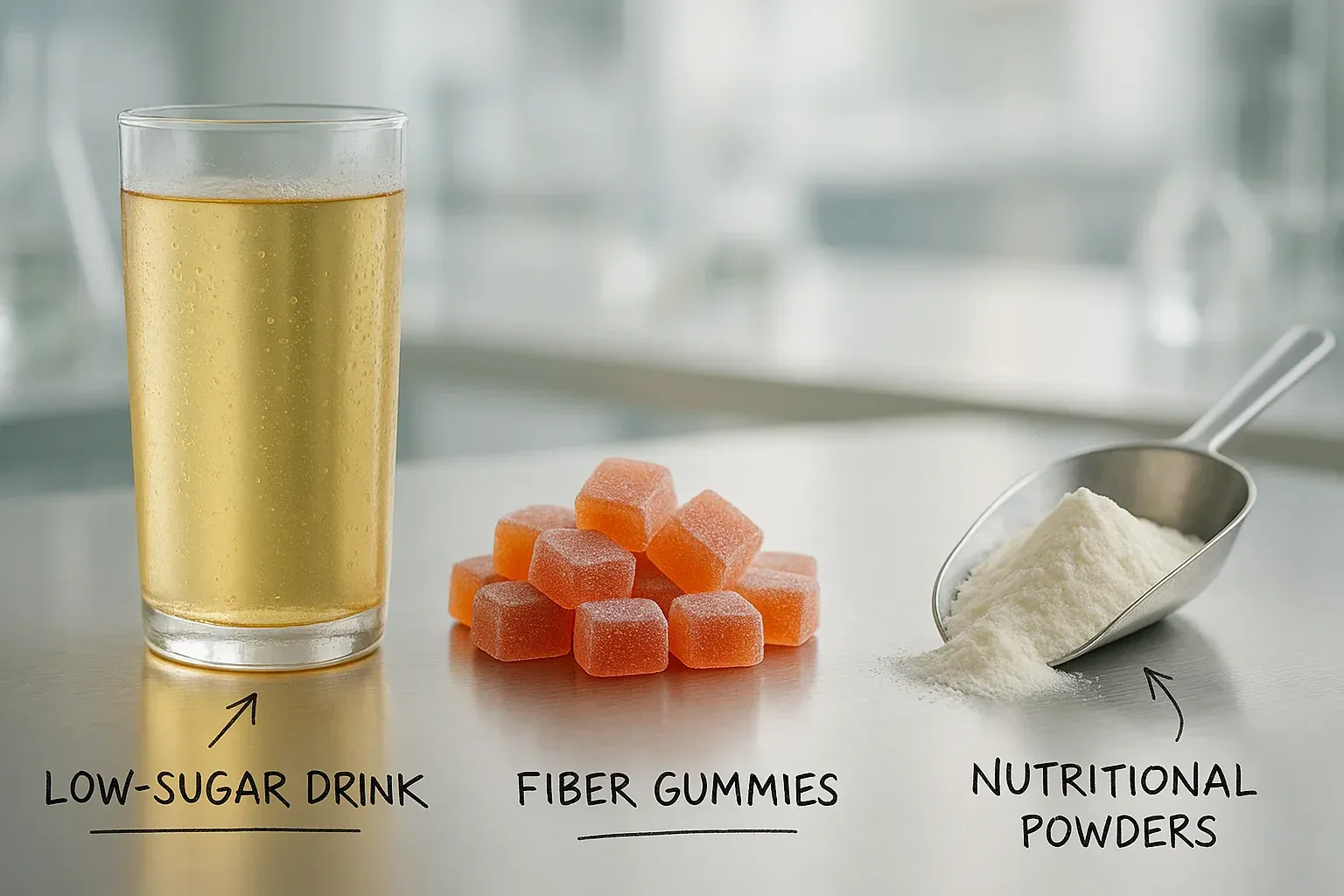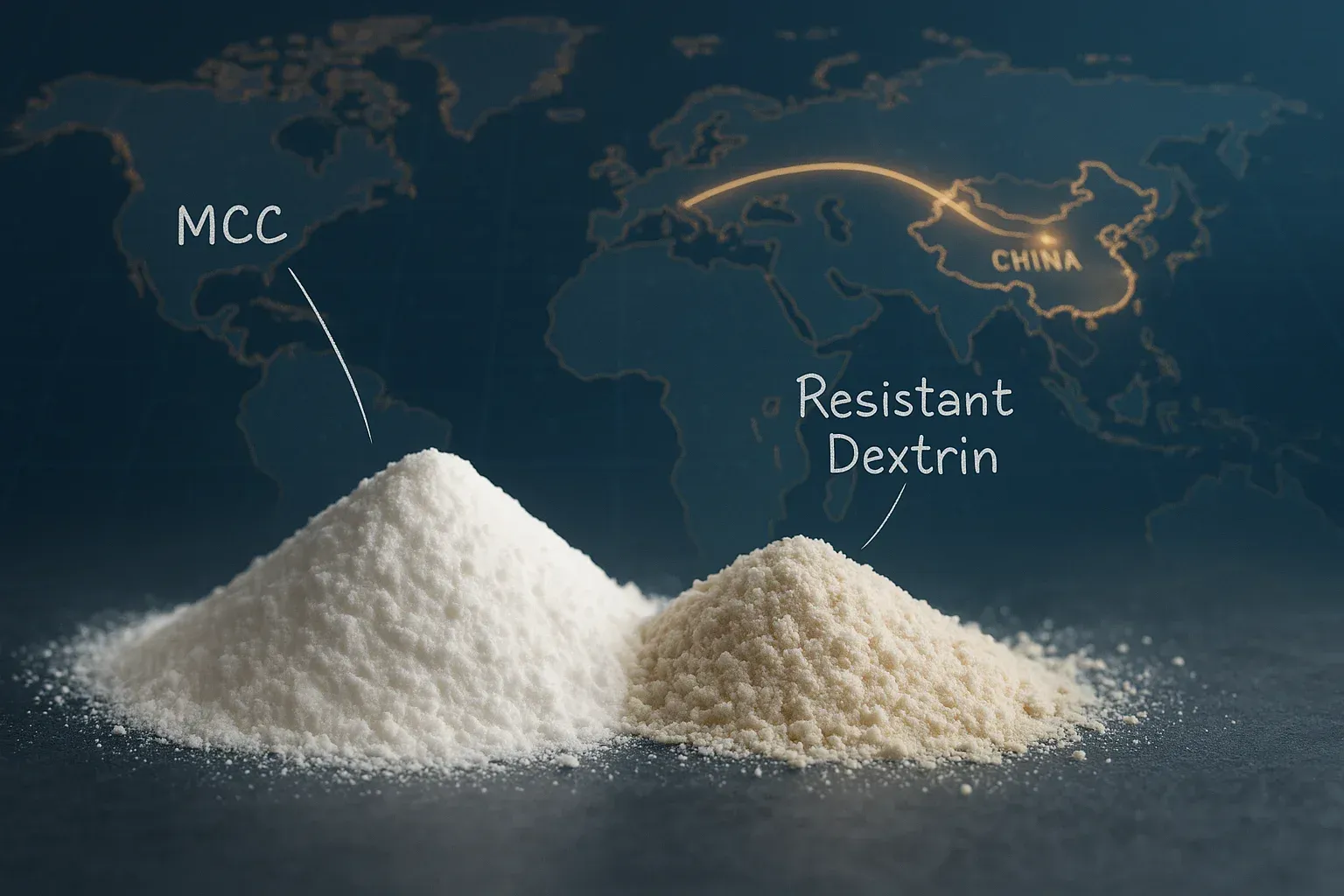


In 2026, many procurement teams will discover that the real cost of resistant dextrin and microcrystalline cellulose (MCC) isn’t hidden in the unit price—it’s buried in specs, yield, QA workload, lead times, and preventable reformulation. This guide reframes sourcing as a total cost of ownership (TCO) problem and shows how to compare Chinese offers on a like-for-like basis without overpaying for “extras” you don’t need.

Why 2026 changes the math for resistant dextrin and MCC
The 2026 “fiber boom” is no longer a soft trend—it’s showing up in product roadmaps, retailer expectations, and formulation pipelines. For procurement, that means two things:
- Resistant dextrin demand rises faster than many buyers expect, especially in beverages, powders, nutrition bars, and sugar-reduction platforms.
- MCC demand stays steady but becomes more sensitive to grade availability, particularly for tablet and capsule projects where the formulation window is tight.
When fiber-driven launches scale quickly, the sourcing risk is rarely “we can’t get any material.” More often, the risk is:
- the wrong resistant dextrin specification creates taste, clarity, or viscosity issues that force expensive reformulation;
- a “cheaper” lot triggers extra incoming tests, holds, and documentation loops;
- MCC of the wrong grade leads to poor flow or compression, raising scrap rates and consuming production time.
2026 isn’t just about finding a resistant dextrin supplier China can offer at a low FOB. It’s about finding a resistant dextrin supplier China can deliver consistently, with a COA that protects your throughput.
The TCO lens: why the lowest FOB quote is rarely the lowest cost
A TCO view is simple: the invoice is only one line item. What matters is what the ingredient costs after it has passed QA, survived processing, and performed in your product.
A practical TCO checklist buyers can actually use
When comparing any resistant dextrin supplier China offers—or any MCC pharmaceutical excipient supplier China offers—score bids across five cost buckets:
- Material cost: FOB/CIF price, currency terms, and price hold period
- Cost-in-use: dosage, yield, sensory impact (for resistant dextrin), and compression behavior (for MCC)
- QA and compliance cost: COA completeness, retesting frequency, documentation accuracy
- Logistics cost: MOQs, packaging format, lead time stability, port/route reliability
- Risk cost: probability of reformulation, line downtime, or shipment holds
A supplier with a slightly higher unit price can still be the lowest-TCO option if it reduces rework, delays, or product rejects.
Resistant dextrin from China: the cost drivers that matter
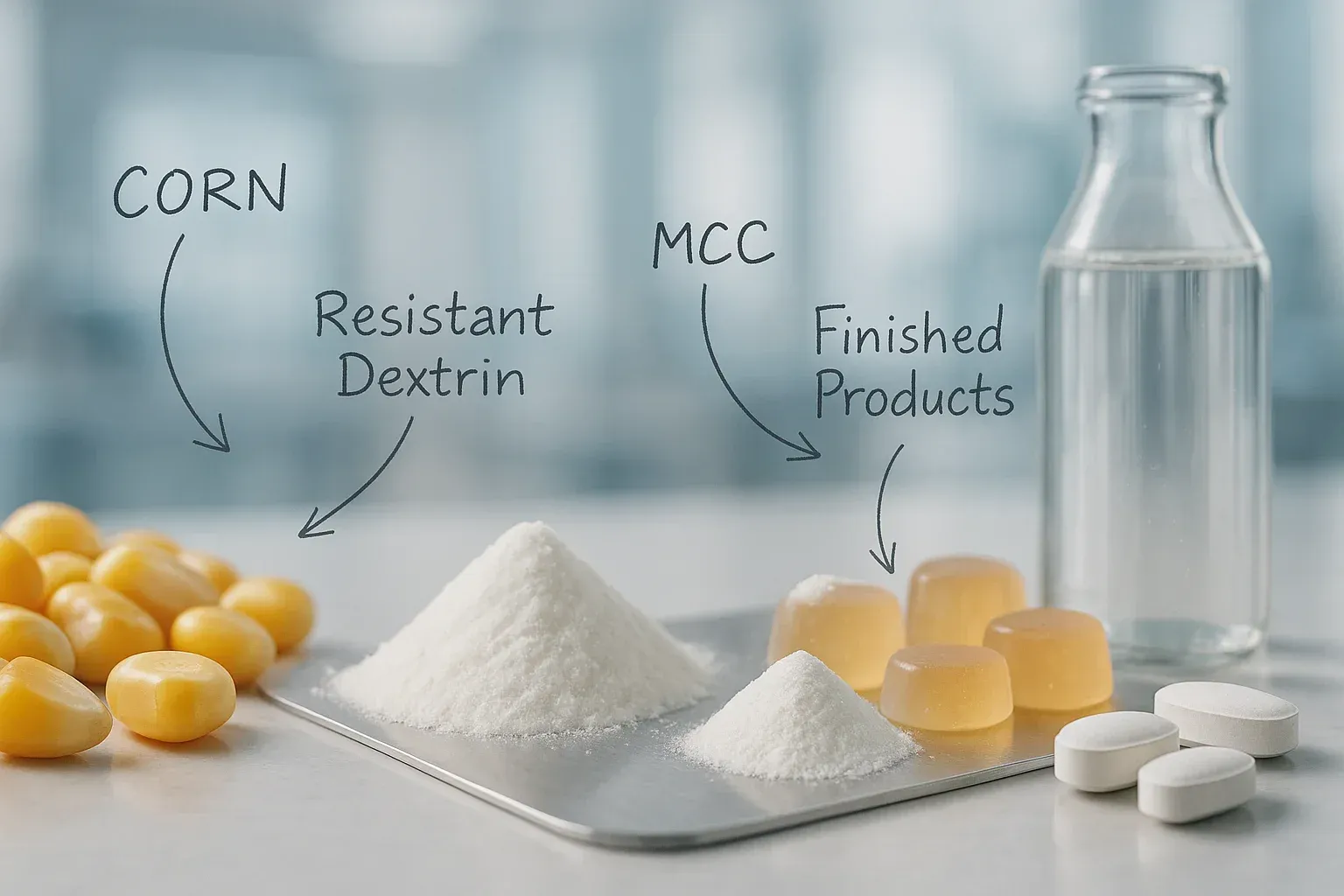
Resistant dextrin is typically bought for its soluble fiber contribution, neutral taste, and processing stability. In 2026, the big sourcing mistake is treating resistant dextrin as a commodity sweetener. It isn’t.
Spec tiers and why “fiber %” must be procurement-owned
For many international tenders, the baseline purchasing spec is:
- Resistant dextrin dietary fiber content: ≥82%
This single line can affect all of the following:
- dosage required to hit label claims
- mouthfeel and body in beverages
- sweetness perception and aftertaste masking needs
- stability across heat and pH
Some suppliers in the market also position higher total fiber claims (often discussed as ≥90% on a dry basis). The commercial lesson is not “always buy the highest fiber.” The lesson is: define what performance the fiber must deliver, then lock the spec to that performance.
If your team needs the “resistant dextrin COA fiber content” to support a front-of-pack claim, procurement should treat that COA line like a contract clause, not a courtesy.
Technology choices show up as hidden savings
Even if two resistant dextrin samples look identical, production design can still change your cost profile:
- Enzyme system and control: Enzymatic control influences batch-to-batch consistency (and therefore how often your QA team has to investigate).
- Automation level: Automated feeding and filling reduce contamination risk and improve lot repeatability.
- Drying and handling: Better drying control reduces caking risk during ocean freight.
Many modern Chinese manufacturers highlight imported enzymes and precision production lines; those details matter because they correlate with consistency—one of the biggest TCO levers for resistant dextrin.
Commercial terms that quietly reshape your landed cost
Even when resistant dextrin pricing is competitive, buyers can still lose money through packaging and planning gaps.
Common procurement realities for resistant dextrin bulk orders:
- Packaging frequently centers on 25 kg bags for bulk supply.
- Many tenders start at a pragmatic China resistant dextrin bulk MOQ 25kg for sampling or trial orders, then scale to pallet or container quantities.
- Lead times can stretch when prebiotic launches surge—especially if you require extra documentation or pre-shipment testing.
In a high-demand year, the best negotiation targets are not always the headline price. Often, the faster savings are stabilizing lead time windows and shipment cadence, defining replacement/credit rules if COA fails key parameters, and aligning packaging and pallet configuration to reduce damage and re-bagging.
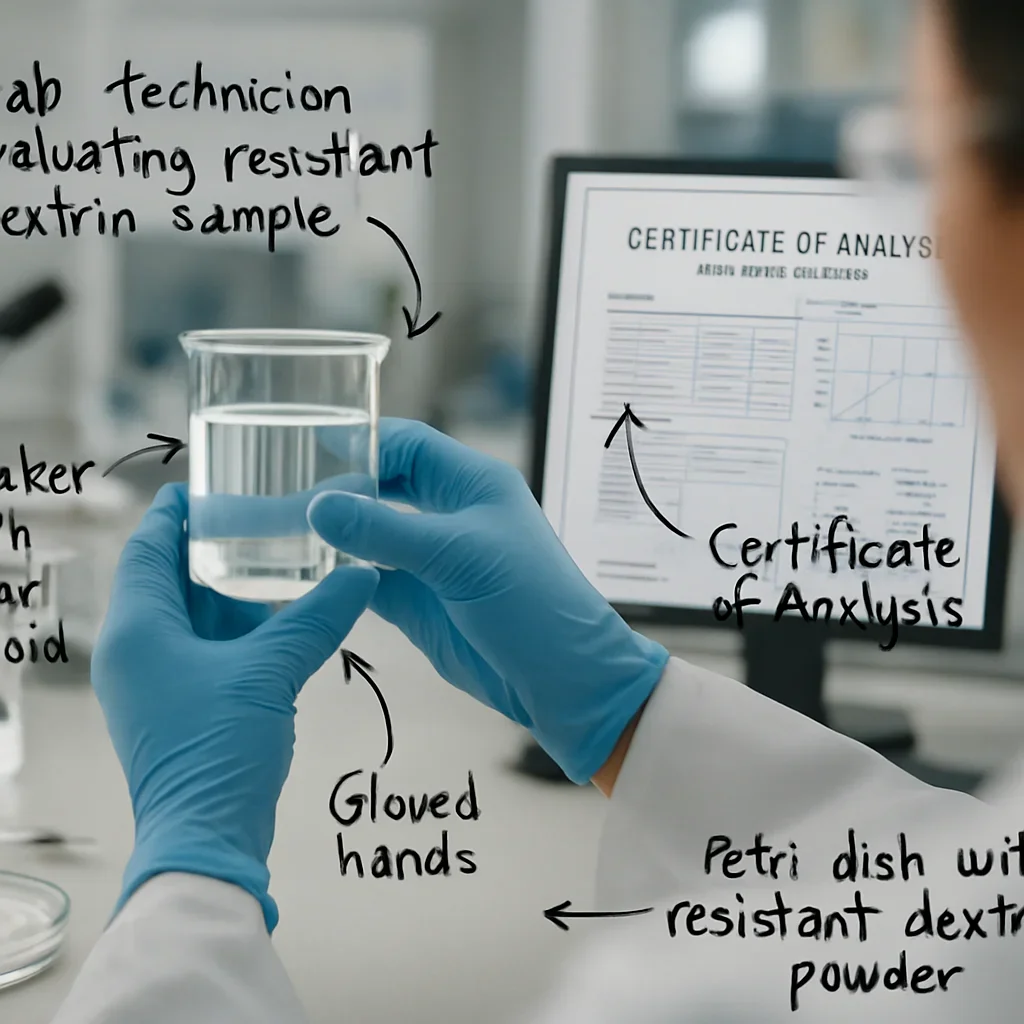
A COA checklist for resistant dextrin (what to normalize across suppliers)
A resistant dextrin supplier China offers should be evaluated on COA completeness and the clarity of test methods—not only on “pass/fail.” Below is a practical template buyers use to compare offers fairly.
| COA item (Resistant Dextrin) | Why it affects TCO | What to ask your supplier to clarify |
|---|---|---|
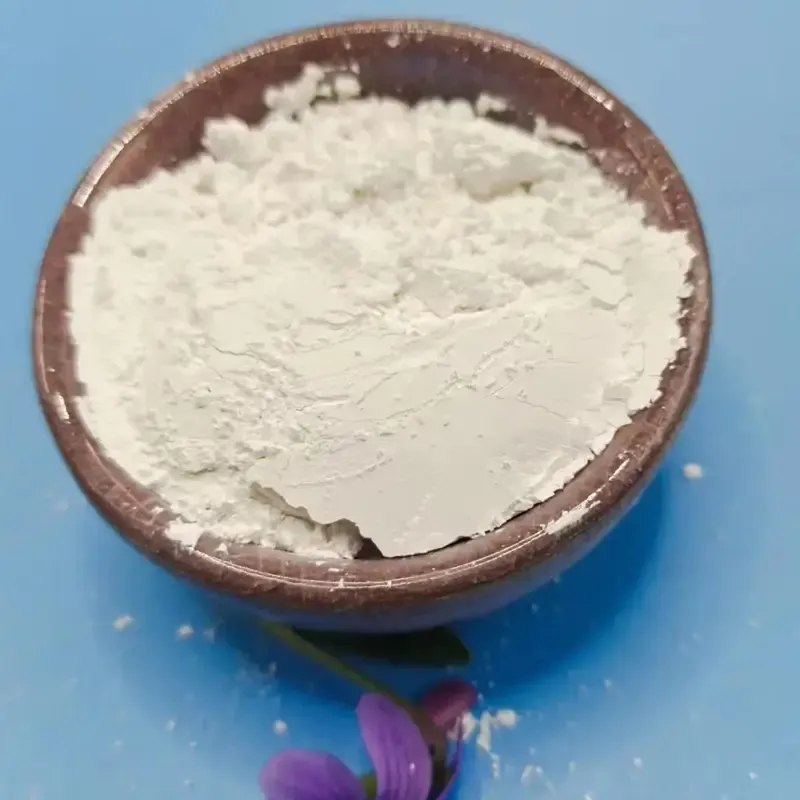
| Appearance (white to light yellow) | Signals process consistency and customer acceptance | Photo standard or description range |
| Dietary fiber content (e.g., ≥82%) | Controls dosage and claim economics | Test method + decision rule if out-of-spec |
| Protein (e.g., ≤6.0%) | Impacts purity perception and some applications | Method and typical lot variance |
| Moisture / water activity | Predicts caking and shelf stability in transit | Packaging barrier spec and storage guidance |
| pH (range) | Predicts beverage compatibility and stability | Target range for your application |
| Solubility / clarity | Determines beverage performance and sensory | Define “clear” and test conditions |
| Viscosity (if relevant) | Changes mouthfeel and processing | Provide viscosity at stated solids and temperature |
| Heavy metals (limits) | Compliance risk and retesting cost | Limits, method, and lab accreditation |
| Microbial limits | Import clearance and product safety | Limits and sampling plan |
A key procurement habit: do not accept “standard COA” as a phrase. Request a sample COA from three recent lots and verify whether the resistant dextrin COA fiber content is stable lot-to-lot.
MCC: where grade selection becomes a direct cost lever
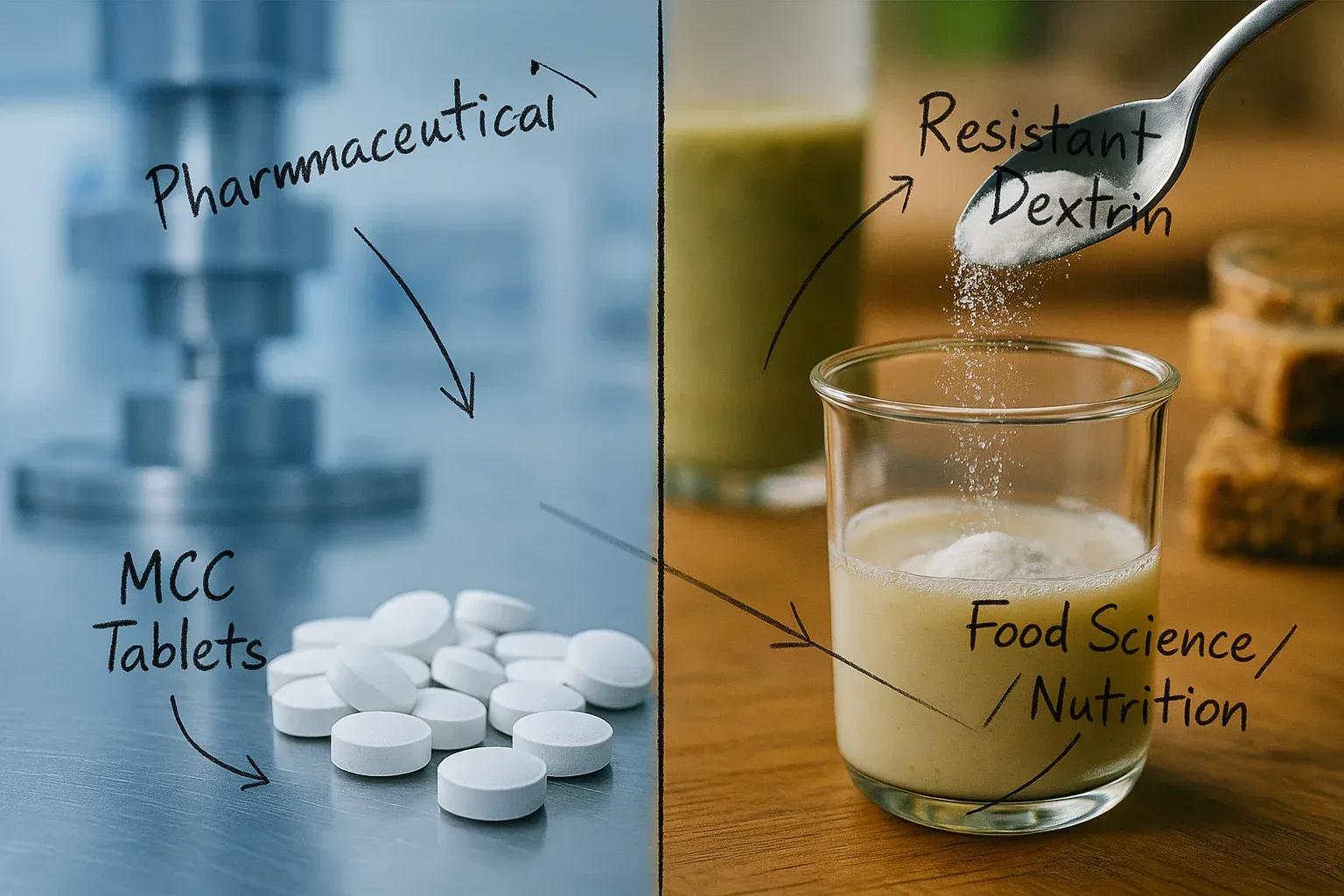
Microcrystalline cellulose (MCC) is a workhorse excipient in solid dosage, and it’s also used in nutraceutical tablets. Because it’s “standard,” many teams underinvest in grade selection—until a compression issue forces a rushed change.
PH101 vs PH102: not a technical detail—an output decision
Most buyers will encounter MCC grades such as:
- PH101: commonly used where finer particle size supports certain blend behaviors
- PH102: commonly used where improved flow supports high-speed tableting
The purchasing point is not to memorize grade theory. The purchasing point is this: choosing the wrong grade can increase downtime, tooling wear, or tablet weight variability—all of which cost more than the price difference between grades.
If you are sourcing from a microcrystalline cellulose MCC PH101 PH102 supplier, require the offer to clearly state the grade designation, particle size characteristics, bulk density/tapped density information, and the pharmacopeial compliance basis relevant to your market.
MCC COA checklist (procurement-friendly version)
Even if MCC is purchased through an MCC pharmaceutical excipient supplier China offers, the COA still needs to be tied to your process risk.
| COA item (MCC) | Why it affects TCO | What to normalize across bids |
|---|---|---|
| Identification / compendial statement | Prevents audit findings | Which pharmacopeia standard is claimed |
| Loss on drying / moisture | Impacts flow and compression | Target range aligned to your process |
| Particle size profile | Controls flow and uniformity | Provide PSD data format and test method |
| Bulk density / tapped density | Predicts die fill and tablet weight control | Same method and units across suppliers |
| Microbial limits | Import clearance and stability | Limits + sampling plan |
| Heavy metals | Compliance risk | Limits + method |
| Appearance | Batch consistency | Photographic standard if available |
A simple rule: if two MCC bids are close in price, favor the supplier whose COA is more complete and more consistent—because it reduces incoming QC burden.
Two mini scenarios that show where TCO is won or lost
A good TCO model becomes convincing when it reflects real projects. Here are two scenarios that procurement teams commonly face in 2026.
Scenario A: a clear RTD beverage needs fiber without texture penalties
Goal: Add soluble fiber while keeping taste clean and viscosity low.
- If resistant dextrin solubility and clarity are not defined upfront, the team may run multiple pilot iterations.
- Each pilot iteration consumes time, samples, internal labor, and sometimes co-manufacturer fees.
TCO lesson: In beverages, it is often cheaper to pay for a resistant dextrin grade that matches your clarity and stability requirements than to “save” on unit price and fund repeated trials. In this scenario, a resistant dextrin supplier China buyers shortlist should be judged on clear solubility behavior, stable performance across heat and pH, and a repeatable resistant dextrin COA fiber content.
Scenario B: a nutraceutical tablet project depends on flow and compression stability
Goal: Maintain tablet hardness, weight uniformity, and stable press speed.
- Buying MCC without grade discipline may force mid-project reformulation.
- Switching between PH101 and PH102 late in development can change flow and compaction behavior.
TCO lesson: For solid dose, the true cost isn’t the MCC price—it’s the cost of downtime, rework, and delayed launch. In this scenario, a microcrystalline cellulose MCC PH101 PH102 supplier should provide grade-specific COAs, consistent density metrics, and a clear statement of quality system expectations.
Comparing Chinese plants: a buyer’s “recommended” standard
Search terms like Recommended Chinese Resistant Dextrin Manufacturer or Recommended Chinese Microcrystalline Cellulose Supplier reflect a real buyer need: “recommended” usually means low-risk and repeatable.
Here is a procurement definition that is actually useful:
- Technology fit: Can the plant reliably make resistant dextrin at your fiber level (commonly ≥82%) with the solubility/viscosity profile you need? Can they support MCC grades with consistent density/PSD?
- Quality system maturity: Do they operate with GMP-style controls and traceability? Do they provide COAs that reduce your incoming test burden?
- Documentation discipline: Are COAs, packing lists, and labels accurate and consistent (reducing customs and QA delays)?
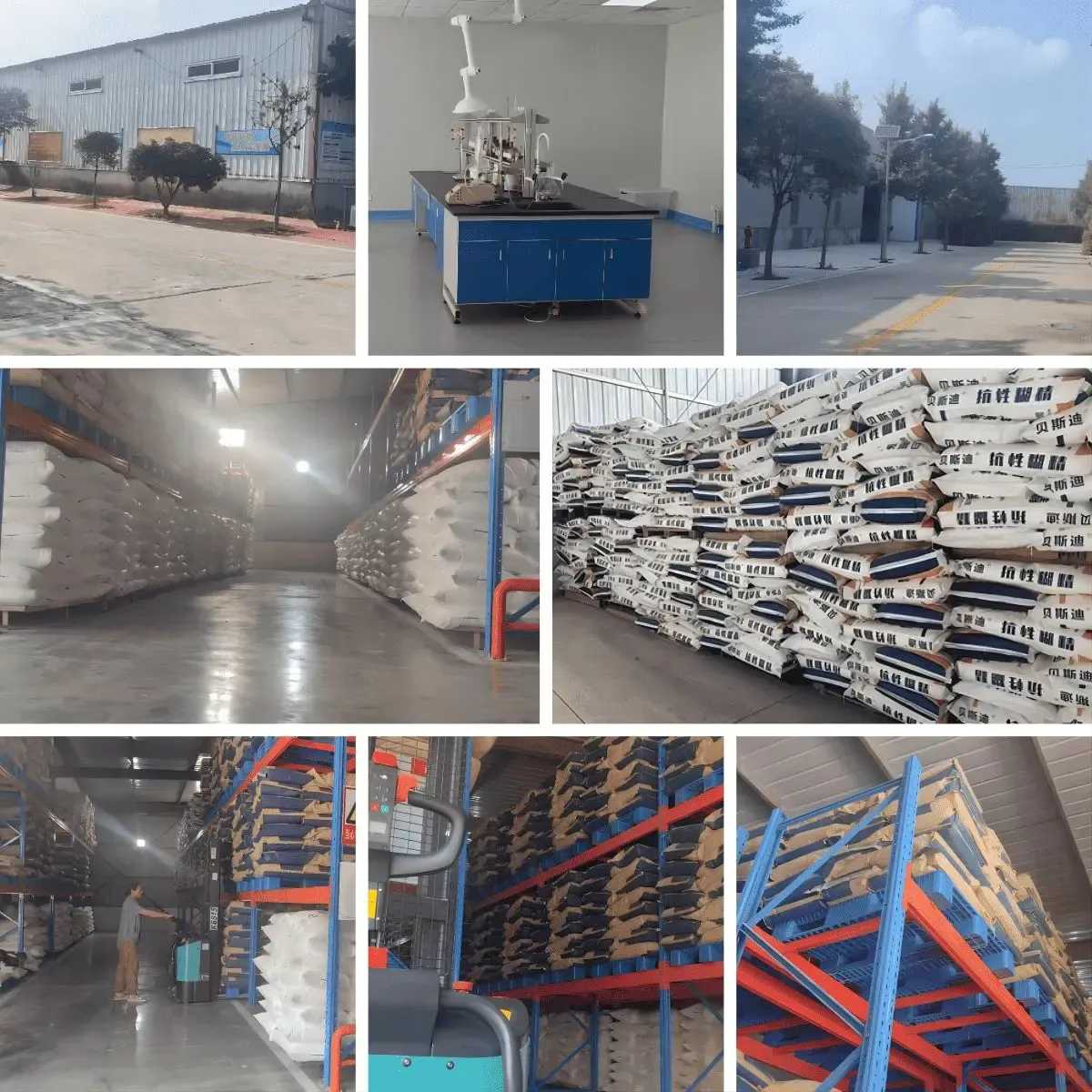
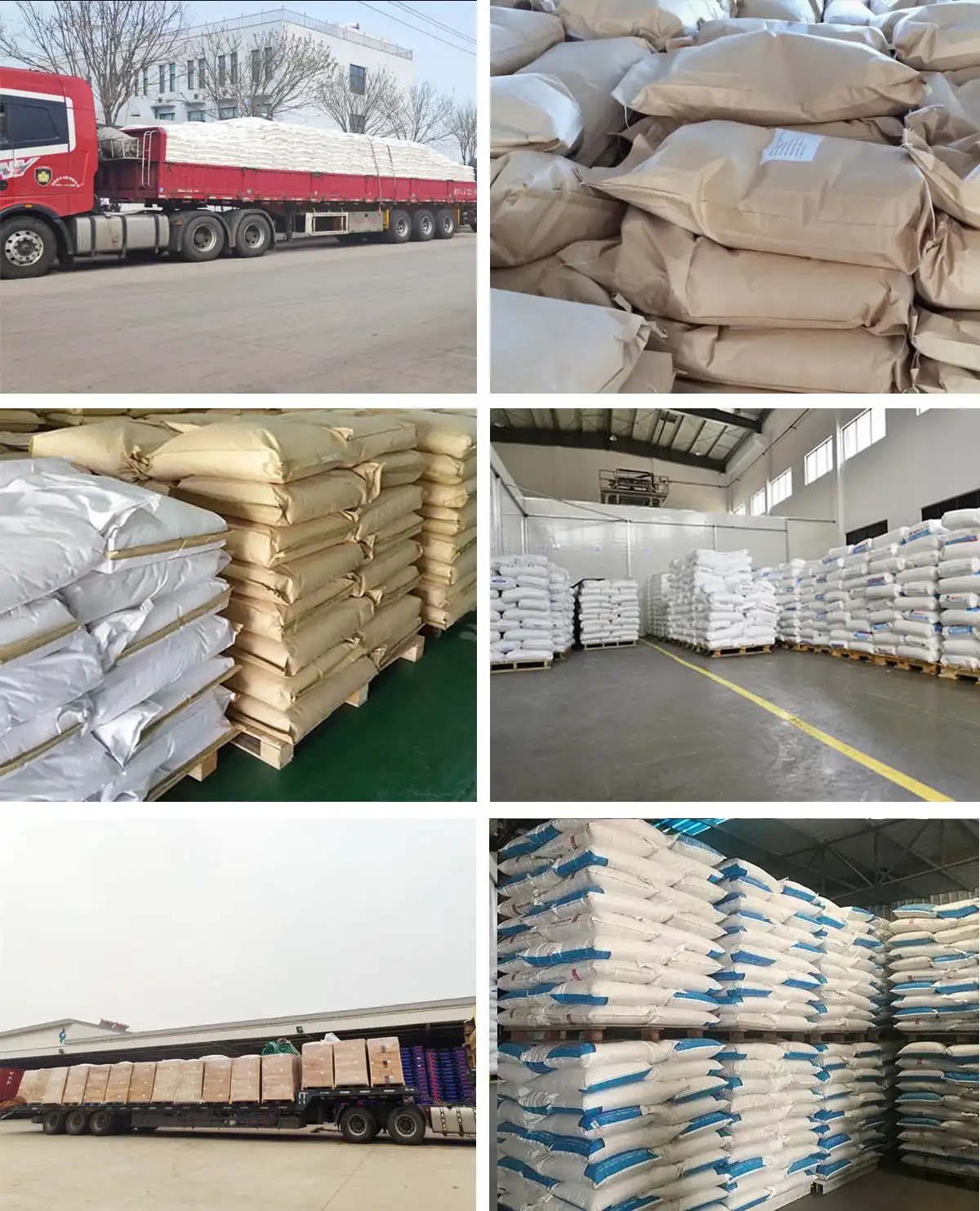
- Logistics performance: Can they ship on schedule, with packaging that resists moisture pickup and handling damage?
A brief example of what “fit” looks like in practice
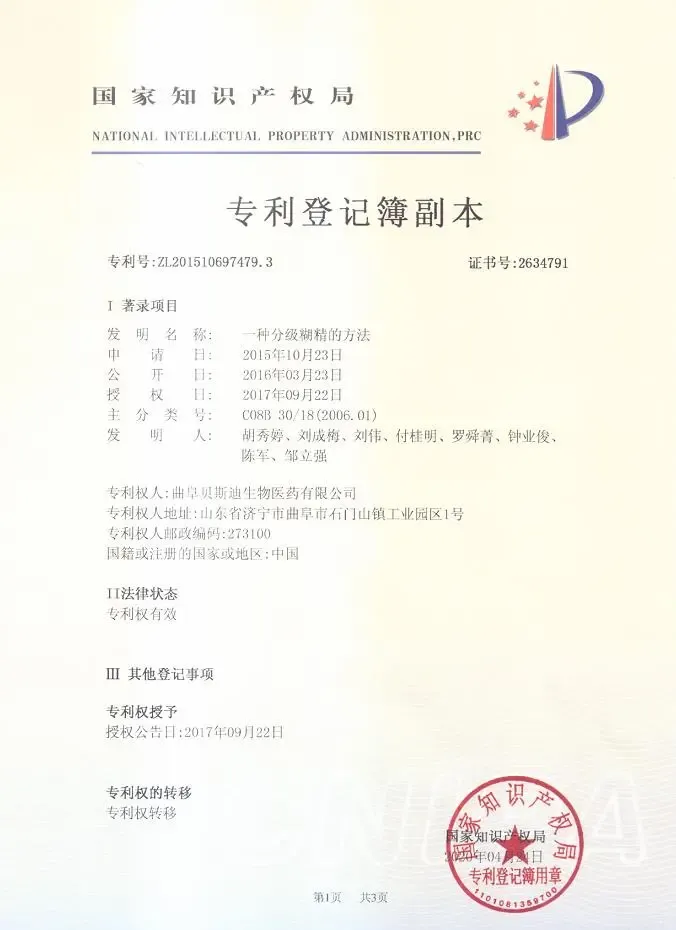
As an example of a Chinese producer positioning resistant dextrin with defined parameters (including fiber content ≥82% and a focus on solubility and process stability), buyers can review product documentation from established manufacturers such as Shandong Shine Health Co., Ltd.
This is not a substitute for qualification, but it is a practical way to see how a manufacturer presents specs, applications, and documentation expectations. Observing their packaging standards and export protocols can provide a benchmark for evaluating other potential partners.
Negotiation points that reduce cost without compromising spec
When demand is strong, price negotiations alone often stall. The more effective approach is to negotiate cost control mechanisms.
For resistant dextrin contracts
Prioritize terms that prevent downstream surprises:
- Spec lock: explicitly list fiber content requirement (commonly ≥82%), appearance range, and any key application metrics (clarity/viscosity).
- COA rules: define what happens if resistant dextrin COA fiber content fails spec (replacement, credit, or rejection protocol).
- Lot consistency: request variance guidance and a commitment to notify before process changes.
- Packaging: standardize on moisture-proof packaging and pallet protection; confirm if 25 kg bags are the default.
For MCC supply agreements
Protect your production schedule:
- Grade lock: PH101 vs PH102 must be contract-defined.
- Flow and density parameters: make bulk/tapped density and PSD reporting mandatory.
- Change control: require notice for any raw material source change or process change.
These clauses reduce the probability of sudden retesting, line disruption, or requalification—your biggest TCO risks.
A procurement-ready “quote normalization” table
To compare multiple offers quickly, use a one-page normalization sheet. This avoids the most common issue in 2026 tenders: comparing non-equivalent bids.
| Item | Supplier A | Supplier B | Supplier C |
|---|---|---|---|
| Product | Resistant dextrin | Resistant dextrin | Resistant dextrin |
| Fiber spec stated | |||
| COA provided (last 3 lots) | Yes/No | Yes/No | Yes/No |
| Packaging | 25 kg bag / other | ||
| MOQ | China resistant dextrin bulk MOQ 25kg? | ||
| Lead time (typical) | |||
| Incoterms | |||
| Key application fit notes |
Repeat the same sheet for MCC (including PH101/PH102). This practice alone can eliminate weeks of back-and-forth and prevent “cheap” bids from winning by omission.
Strategic Planning for 2026–2027
For most buyers, 2026 will reward disciplined sourcing more than aggressive price-chasing.
- Resistant dextrin should be purchased as a performance ingredient, with the fiber spec (often ≥82%) and COA expectations locked to your application.
- MCC should be purchased by grade discipline (PH101 vs PH102) and COA completeness to protect tablet throughput.
- The most reliable savings come from TCO levers: fewer trials, fewer holds, fewer retests, fewer shipment problems—and fewer surprises.
If you’re building a shortlist of suppliers that meet the “recommended” standard for documentation and spec clarity, start by reviewing how established manufacturers present their resistant dextrin specifications and application positioning, then validate with your own qualification process.
For further details on supplier capabilities and product specifications, visit www.sdshinehealth.com.
Data notes
- Fiber trend signals referenced from Food Business News (2026).
- General resistant dextrin COA checklist concepts aligned with industry sourcing overviews.
- General MCC grade and COA parameters informed by pharmaceutical excipient guides.