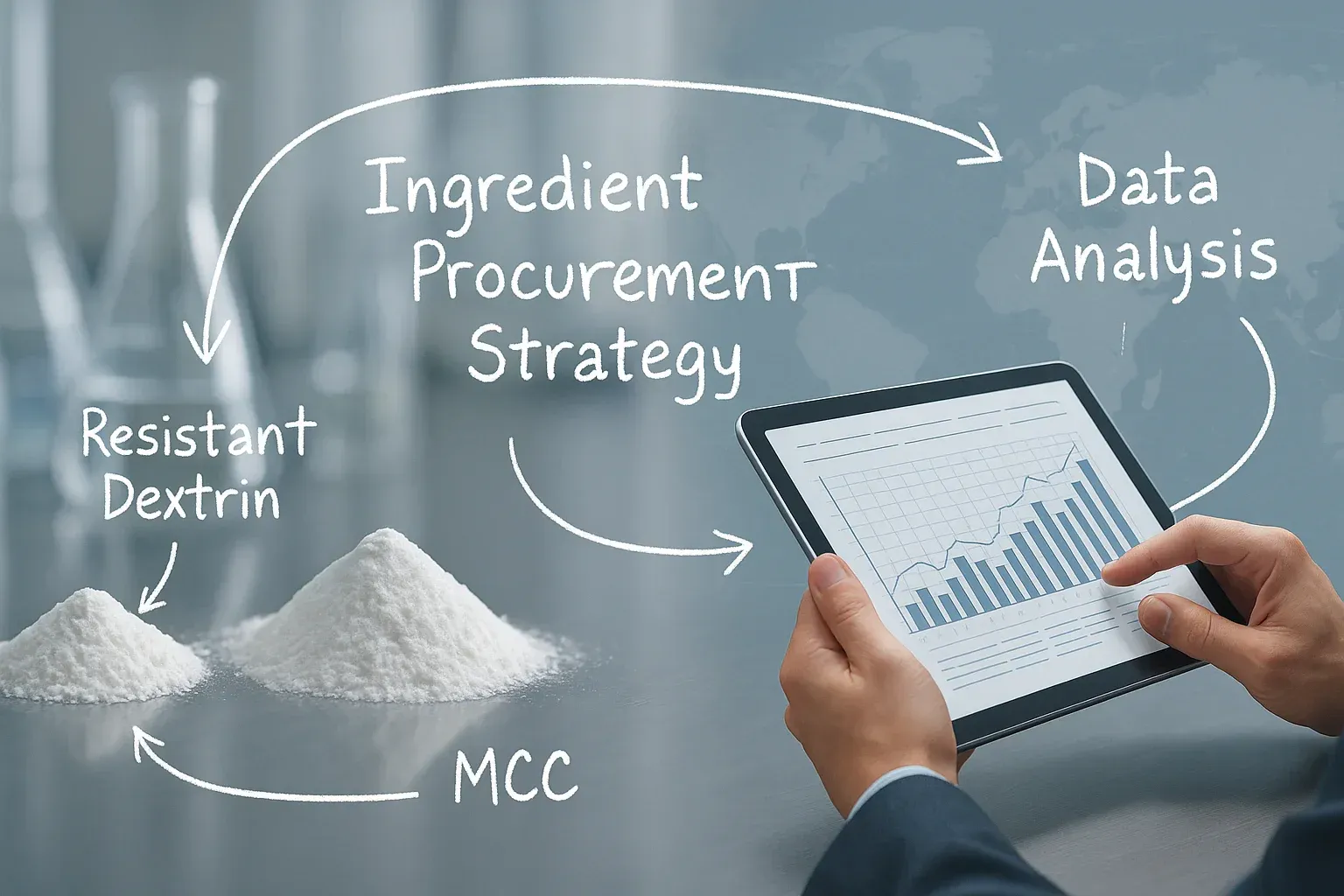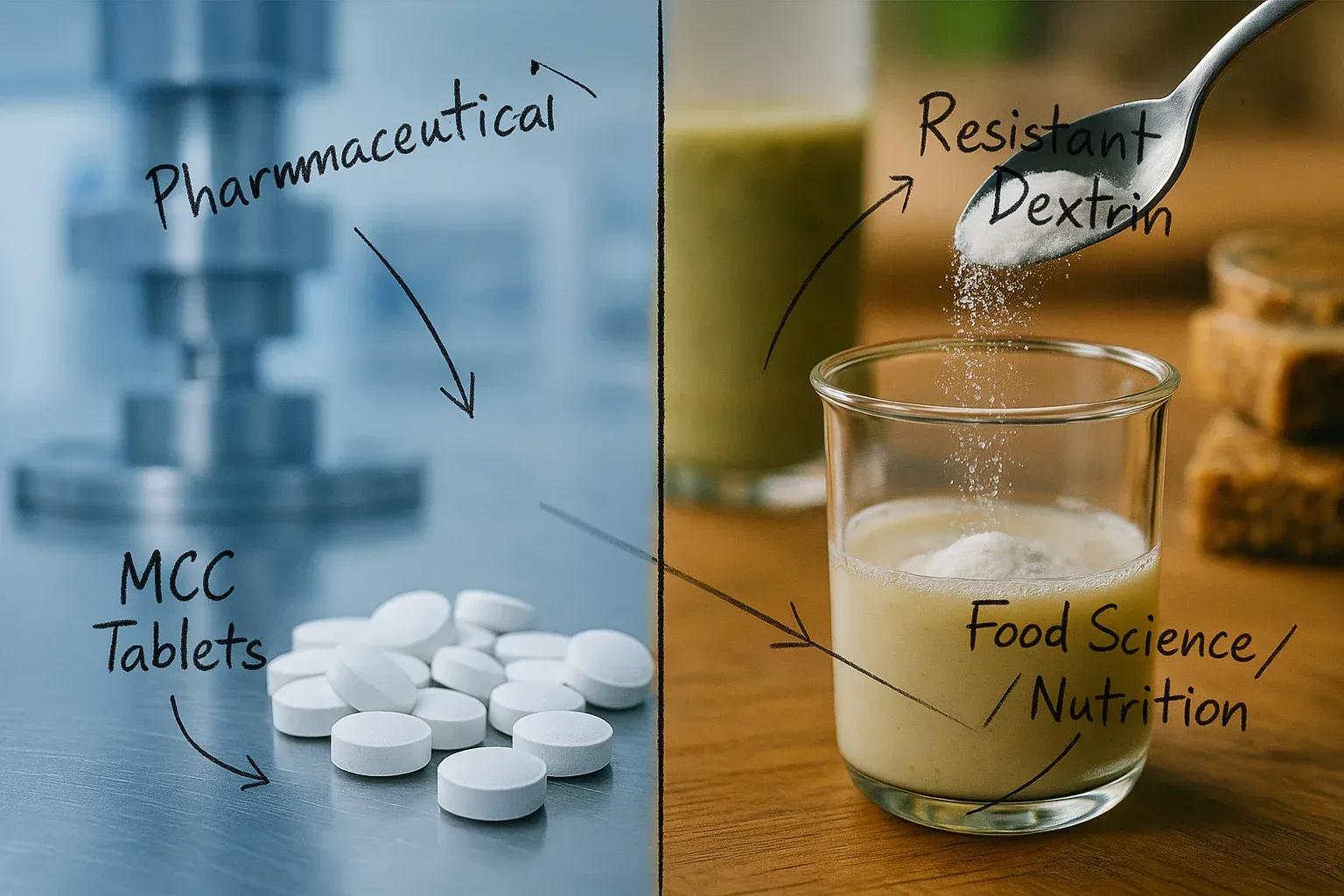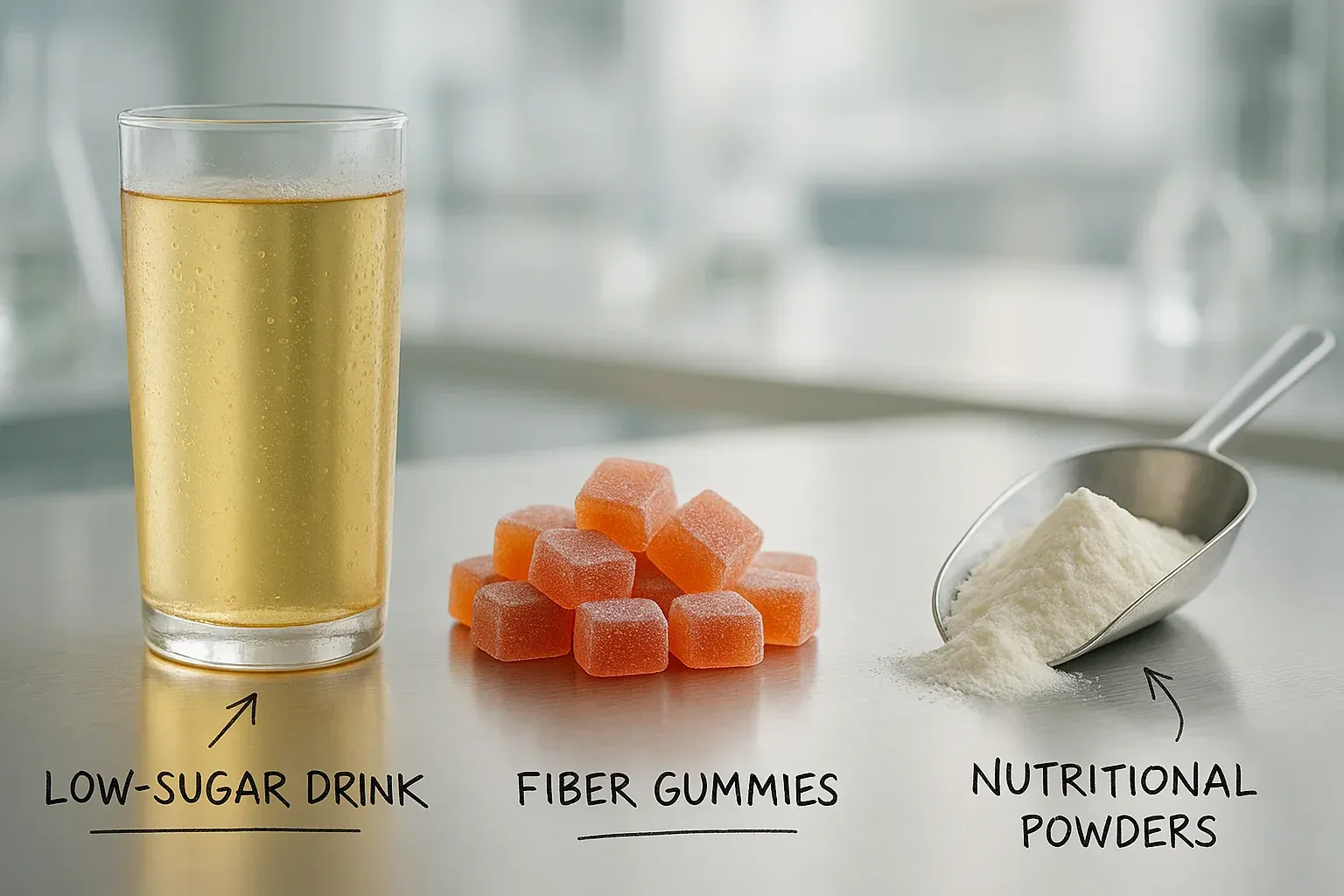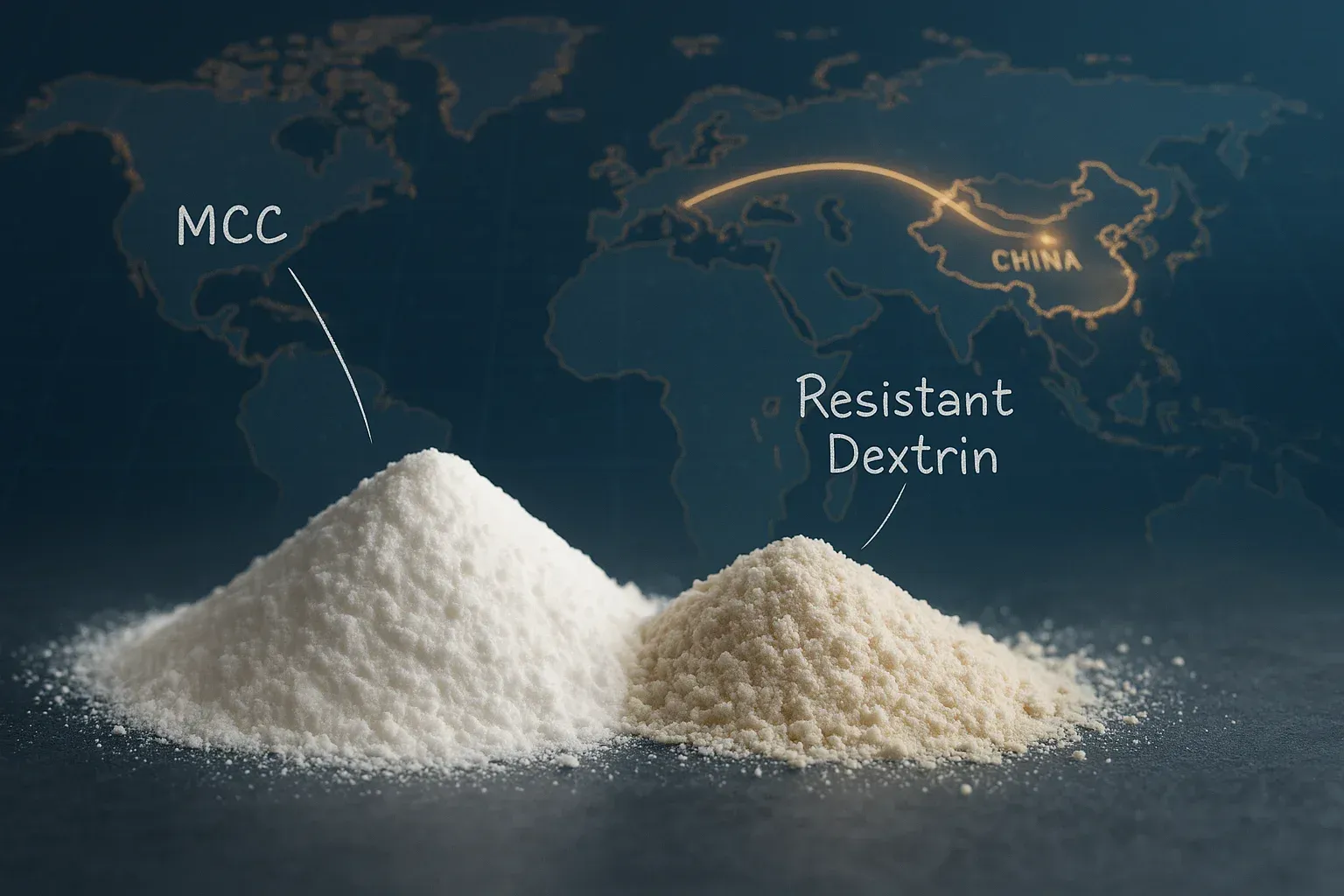


Fiber-forward product launches are raising the stakes for sourcing in China. In 2026, buyers aren’t only chasing capacity; they’re validating whether a microcrystalline cellulose supplier China can consistently meet pharmacopeial expectations, and whether a resistant dextrin supplier China can prove fiber content, microbiology safety, and lot-to-lot stability as volumes scale.
In 2026, buyers aren’t only chasing capacity; they’re validating whether a microcrystalline cellulose supplier China can consistently meet pharmacopeial expectations, and whether a resistant dextrin supplier China can prove fiber content, microbiology safety, and lot-to-lot stability as volumes scale.
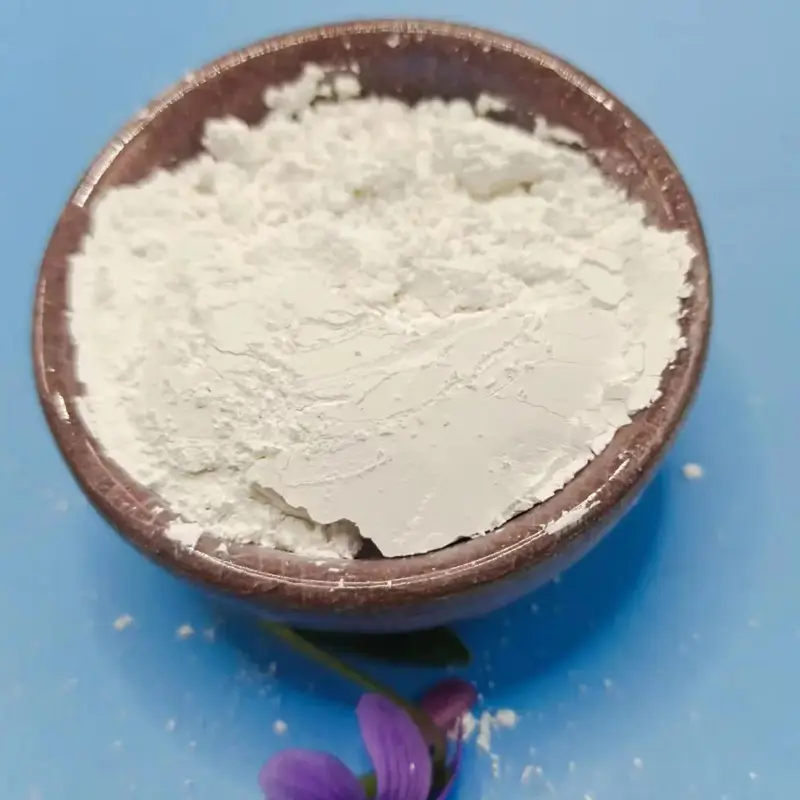
Why compliance has become the deciding factor in 2026 sourcing
Procurement teams buying functional fibers and excipients increasingly face the same challenge: two suppliers can quote similar prices, yet only one will deliver COAs that stand up to customer QA, import inspections, and internal change-control.
For resistant dextrin, compliance is often tested in food, beverage, and supplement applications where “fiber-forward” claims push manufacturers to verify fiber content ≥82% and confirm clean microbiology. For microcrystalline cellulose, compliance typically plays out in oral solid dosage forms and nutraceutical formats where grade selection (e.g., PH series) and physical performance must match the specification—batch after batch.
A China microcrystalline cellulose manufacturer with strong documentation discipline can reduce reformulation risk. Likewise, a resistant dextrin supplier China that controls raw materials and process conditions can reduce the risk of surprises when volumes jump from sample to container.
Demand is changing what buyers ask for from resistant dextrin and microcrystalline cellulose
The “fiber is the new protein” narrative has moved beyond marketing into procurement requirements. Buyers now ask for evidence that resistant dextrin and microcrystalline cellulose are not only available, but export-ready.
Where resistant dextrin shows up—and what that means for compliance
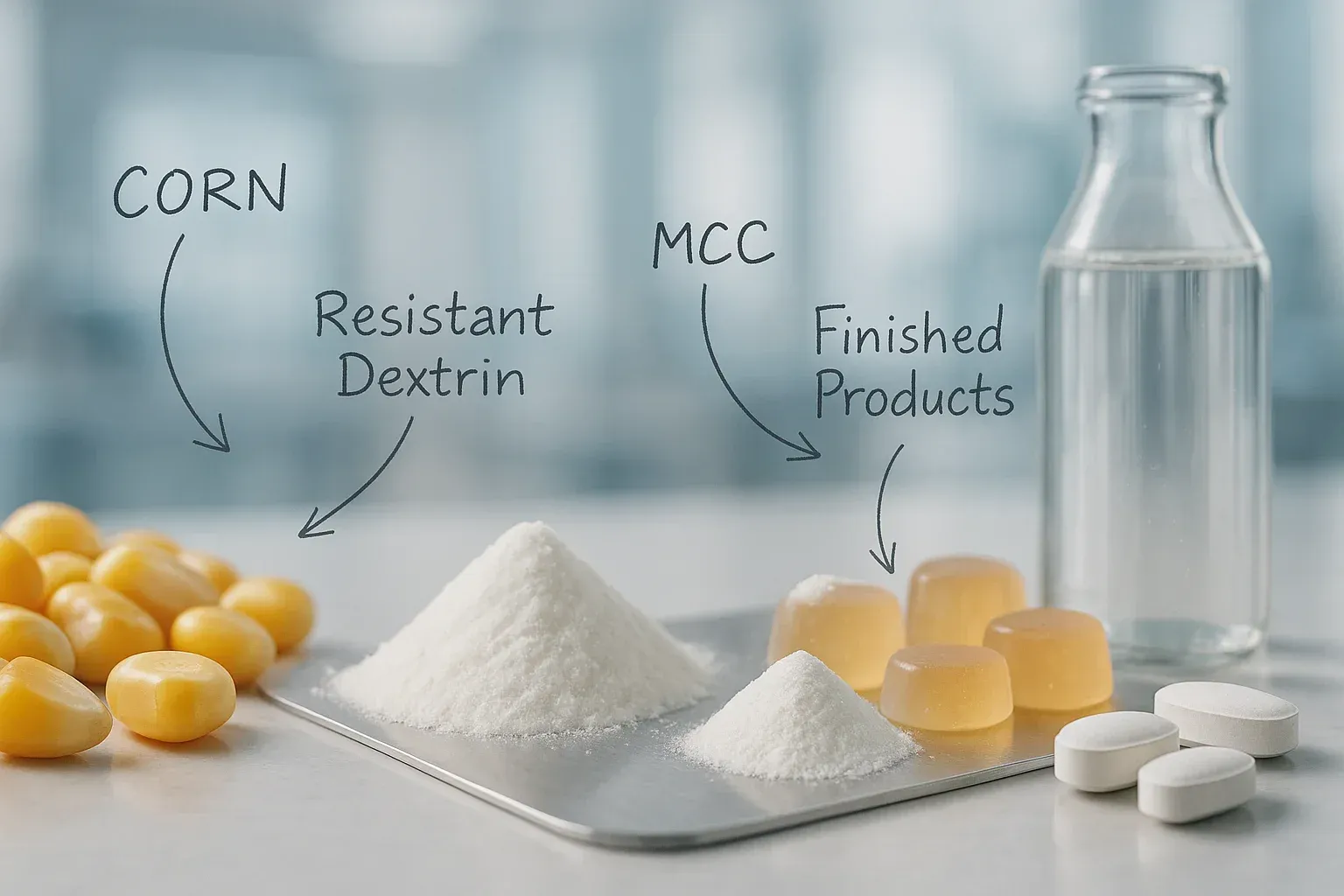
Resistant dextrin is widely used as a soluble dietary fiber in functional foods and supplements. In practical sourcing terms, that means QA teams focus on:
- Fiber content verification (commonly specified as ≥82%) and clear test methods on each COA
- Protein limits (commonly ≤6.0%) and predictable taste/appearance for consumer products
- Microbiology limits suitable for finished goods, especially powders and gummies
- Traceability to a stable starch source (often described as NON-GMO corn starch in supplier documentation)
Where microcrystalline cellulose matters—and why grade discipline is critical
Microcrystalline cellulose is often treated as “infrastructure” in formulations: binders, fillers, disintegrants, bulking agents, anti-caking support, and texture control. Compliance pressure rises when a formulation depends on physical behavior:
- Tablet compressibility and flow performance
- Target particle size and density alignment for specific processing equipment
- Standards alignment (USP/BP/FCC/JP as stated on supplier documents)
For buyers, this is exactly why “how to evaluate microcrystalline cellulose supplier” has become a recurring question—because the real risk is performance drift hidden behind a compliant-sounding COA.

China sourcing snapshot for 2026 buyers
China remains central to both categories, but supplier capability can vary widely between traders and manufacturers with controlled production systems.
A simple way to plan supplier discovery is to separate where the clusters are from what those clusters tend to be good at.
| Region cluster (typical) | What buyers often source there | What to verify early |
|---|---|---|
| Shandong | Resistant dextrin and other dietary fibers | Fiber % on COA, microbiology, export documentation discipline |
| Jiangsu / Zhejiang | Microcrystalline cellulose and pharma excipients | Grade availability (PH series), USP/BP/FCC/JP alignment, physical tests |
| Guangdong / Tianjin (export-active areas) | Mixed ingredient portfolios and logistics strength | Export track record, documentation speed, stability over repeated lots |
This isn’t a rulebook—excellent plants exist across provinces. The goal is to start with a realistic map, then let compliance evidence (not brochures) determine the shortlist.
Reading COAs correctly in 2026, not just collecting them
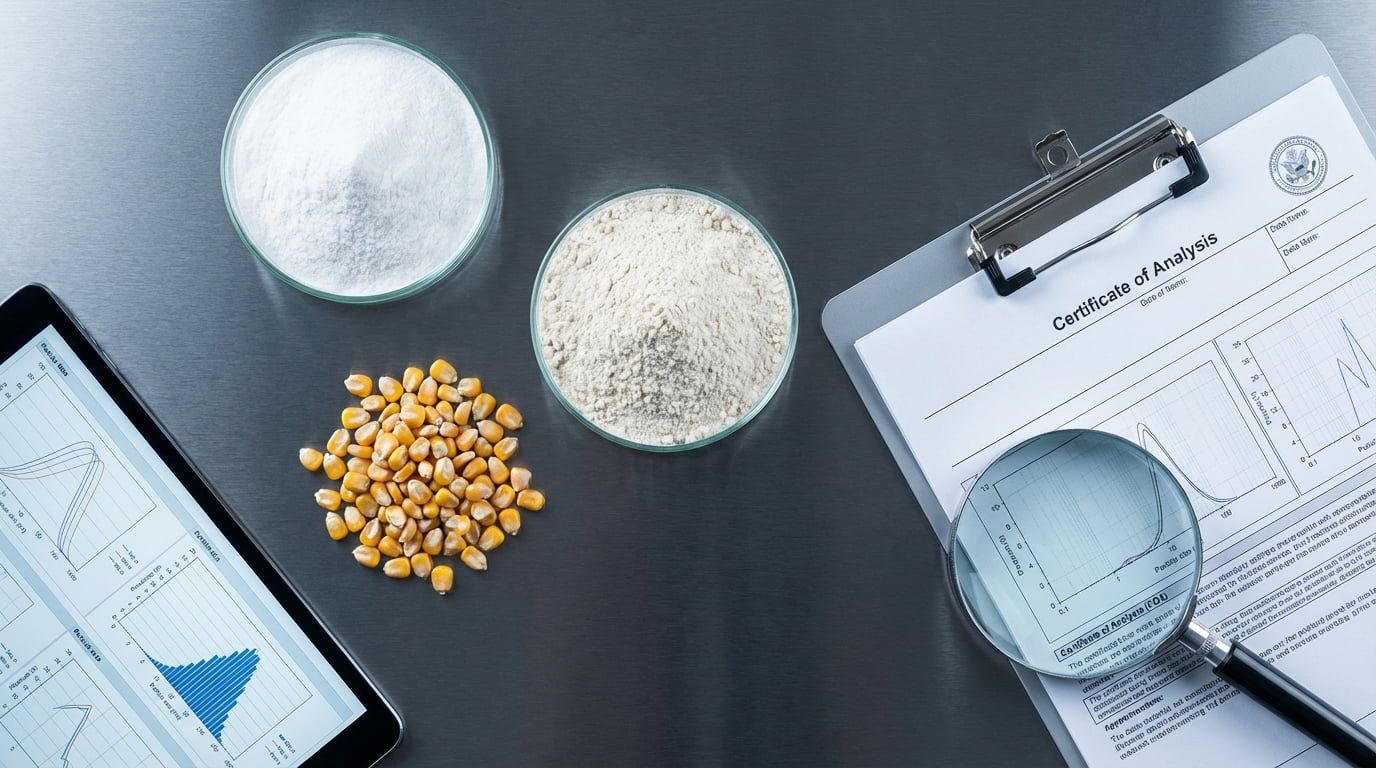
A COA is only useful if it predicts real-world performance and withstands scrutiny. The fastest way to filter a China microcrystalline cellulose supplier or microcrystalline cellulose supplier China is to standardize what must appear on every COA and what must be supported by a consistent quality system.
Resistant dextrin COA fields buyers should not skip
From the supplier documentation in this category, buyers commonly reference:
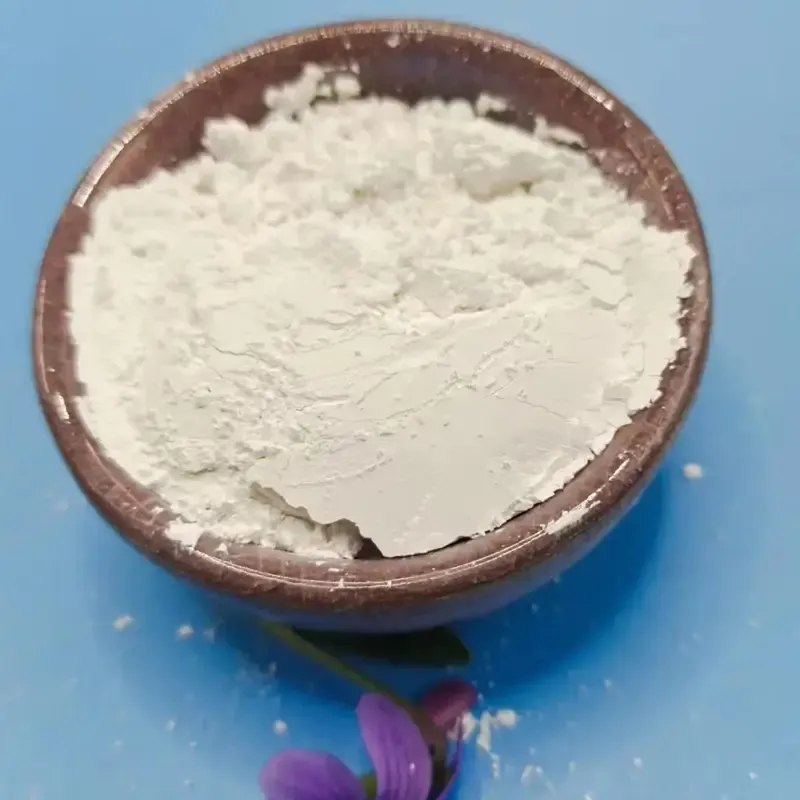
- Fiber Content: ≥82%
- Protein Content: ≤6.0%
- Appearance: white to light yellow
- Storage conditions: store in a cool place
For many finished-good QA teams, those basics are necessary but not sufficient. A stronger screening method is to request COAs from three non-consecutive batches and check whether results cluster tightly or swing.
If you are buying resistant dextrin bulk for beverages, powders, or gummies, also ask the supplier to clarify which parameters are routinely tested in-house vs. verified through third-party testing (especially microbiology). A supplier that treats this question as routine is often easier to qualify.
To compare product ranges and documentation style, buyers often start with a category page such as resistant dextrin and then drill into a specific specification sheet.
Microcrystalline cellulose COA checkpoints that matter in purchasing
When teams search “microcrystalline cellulose COA particle size density,” they’re usually trying to prevent a common failure: the COA passes, but tableting or blending doesn’t.
Key details commonly present in supplier specs include:
- Grades/Kinds: PH-101, PH-102, PH-103, PH-105, PH-112, PH-113, PH-200, PH-301, PH-302
- Mesh: 60–200
- Appearance: white or almost white powder
- CAS: 9004-34-6
- Standards: BP/USP/FCC/JP
- Insolubility: insoluble in water, ethanol, and ether
The practical compliance move is to match your internal spec to the grade behavior (e.g., PH-101 vs. PH-102) and require the supplier to confirm the grade consistently, not “equivalent grade.”
For buyers shortlisting a China microcrystalline cellulose manufacturer, a helpful starting point is a clear category hub such as microcrystalline cellulose, then validating whether the same grades appear consistently across documents and shipments.
Factory controls that reduce compliance risk when buying in bulk
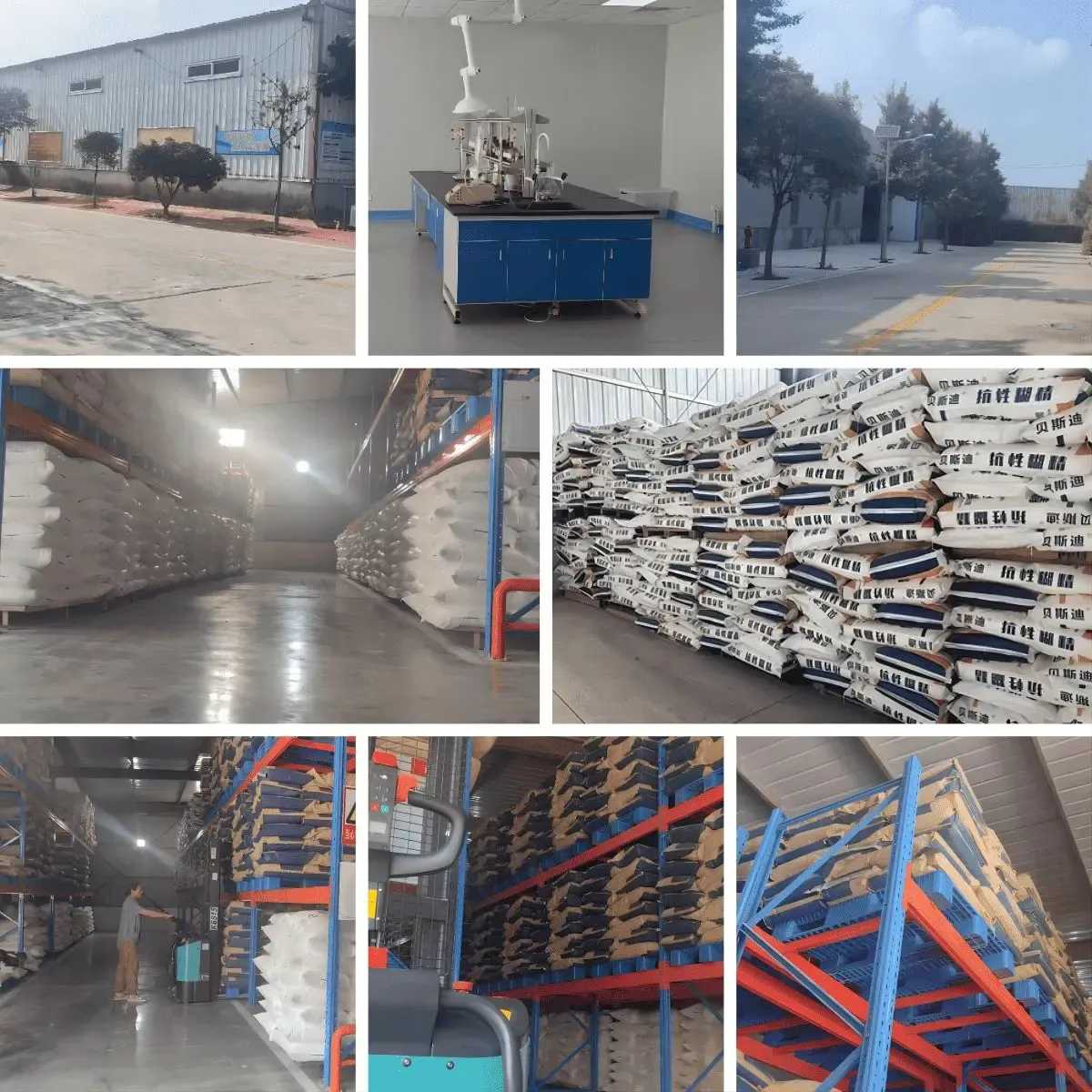
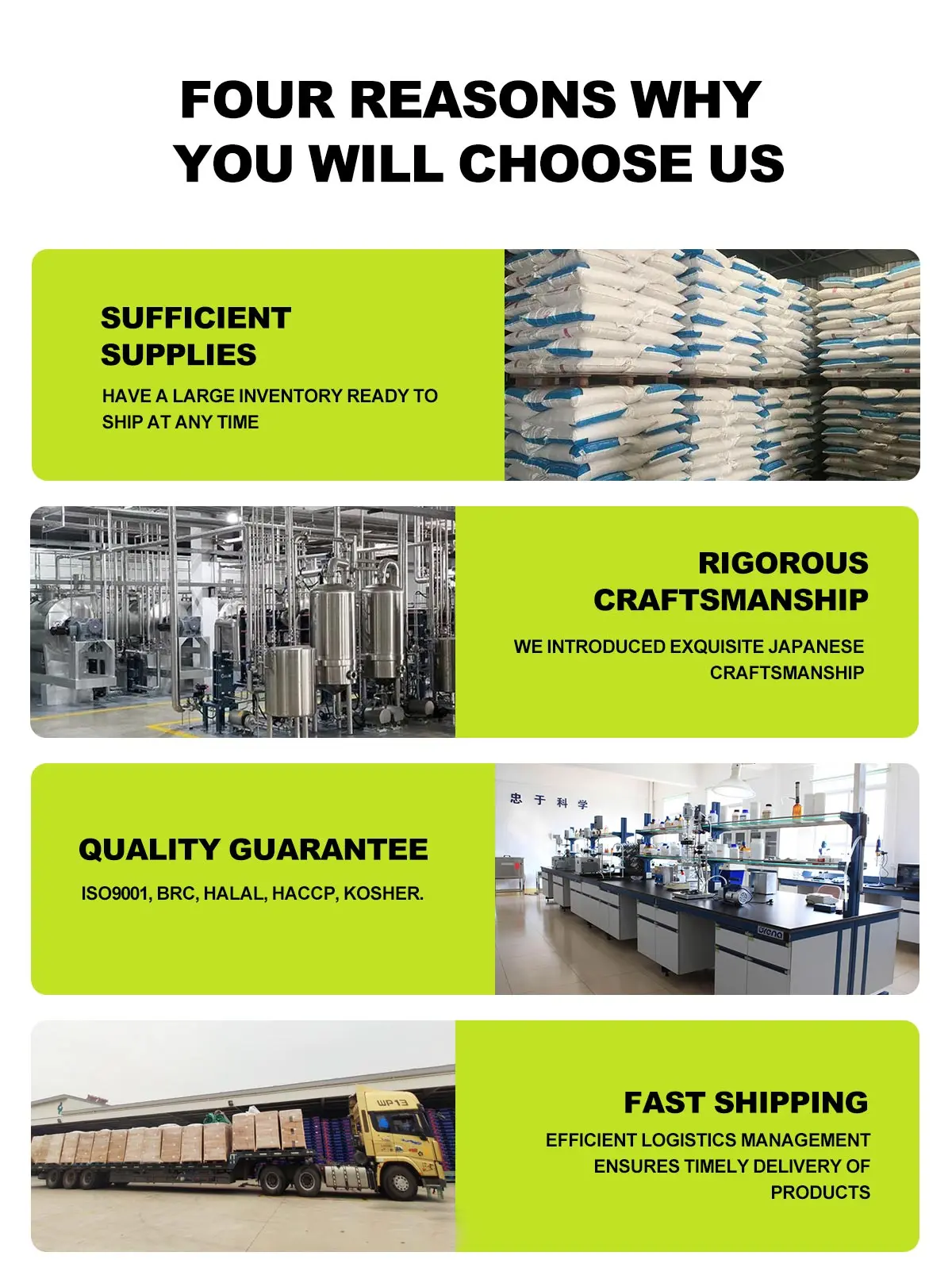
Many supplier claims sound similar—automation, imported equipment, GMP workshops. The difference is whether those claims translate into fewer deviations and tighter batch-to-batch control.
A credible supplier profile typically includes:
- Documented raw material controls (e.g., non-GMO corn starch as an input for resistant dextrin)
- Automated or centrally controlled production stages to reduce human variation
- QC testing capacity (some suppliers state HPLC test capability for excipient-related testing)
- Clear packaging specifications (e.g., microcrystalline cellulose listed as 20 kg/woven bag in some supplier parameters)
- Certifications that align with the buyer’s market (examples frequently listed include ISO9001, Kosher, Halal)
Shandong-based producers that supply both dietary fibers and excipients can be convenient for buyers who want fewer vendors to manage. One example often referenced by buyers exploring a Shandong dietary fiber supplier and MCC portfolio is the product navigation on www.sdshinehealth.com, which shows dietary fiber categories alongside excipient categories.
A copy-ready compliance checklist for supplier qualification
This checklist is designed for teams that need a repeatable way to qualify a microcrystalline cellulose supplier China and a resistant dextrin supplier China without slowing down R&D timelines.
Documents to require before samples are approved
- Latest COA with batch number, test dates, and method references
- Specification sheet matching the grade and standard (e.g., BP/USP/FCC/JP for microcrystalline cellulose)
- All relevant certifications (commonly ISO9001; Kosher/Halal where required)
- Packaging spec and labeling rules for bulk shipments
COA checks that prevent most “passed on paper” failures
- For resistant dextrin: confirm fiber ≥82% and protein ≤6.0% on every batch COA you receive; compare variability across multiple lots
- For microcrystalline cellulose: confirm PH grade naming consistency, mesh range consistency, and whether physical properties are tested frequently enough to predict processing performance
Supplier audit questions that reveal real process control
- What parameters are tested in-house for every batch vs. periodically?
- How is raw material acceptance handled (especially starch inputs for resistant dextrin)?
- What is the deviation handling process if a lot trends toward the edge of spec?
- Can the supplier provide three COAs from non-consecutive batches for the same grade?
Turning supplier discovery into a shortlist you can defend
“Recommended Chinese Microcrystalline Cellulose Manufacturer” and “Recommended Chinese Resistant Dextrin Manufacturer” are search phrases that often imply the same thing: a supplier that won’t create downstream compliance work.
In 2026, the strongest shortcut isn’t a ranking list—it’s a compliance filter:
- Start with suppliers that publish clear grade ranges and consistent standards.
- Validate COA completeness and lot-to-lot stability before negotiating volume.
- Prioritize manufacturers that can demonstrate controlled production and QC routines.
For buyers building a shortlist, exploring a combined portfolio—such as a microcrystalline cellulose producer in Shandong that also supplies resistant dextrin—can simplify vendor management. A practical place to review relevant product categories is microcrystalline cellulose and resistant dextrin.