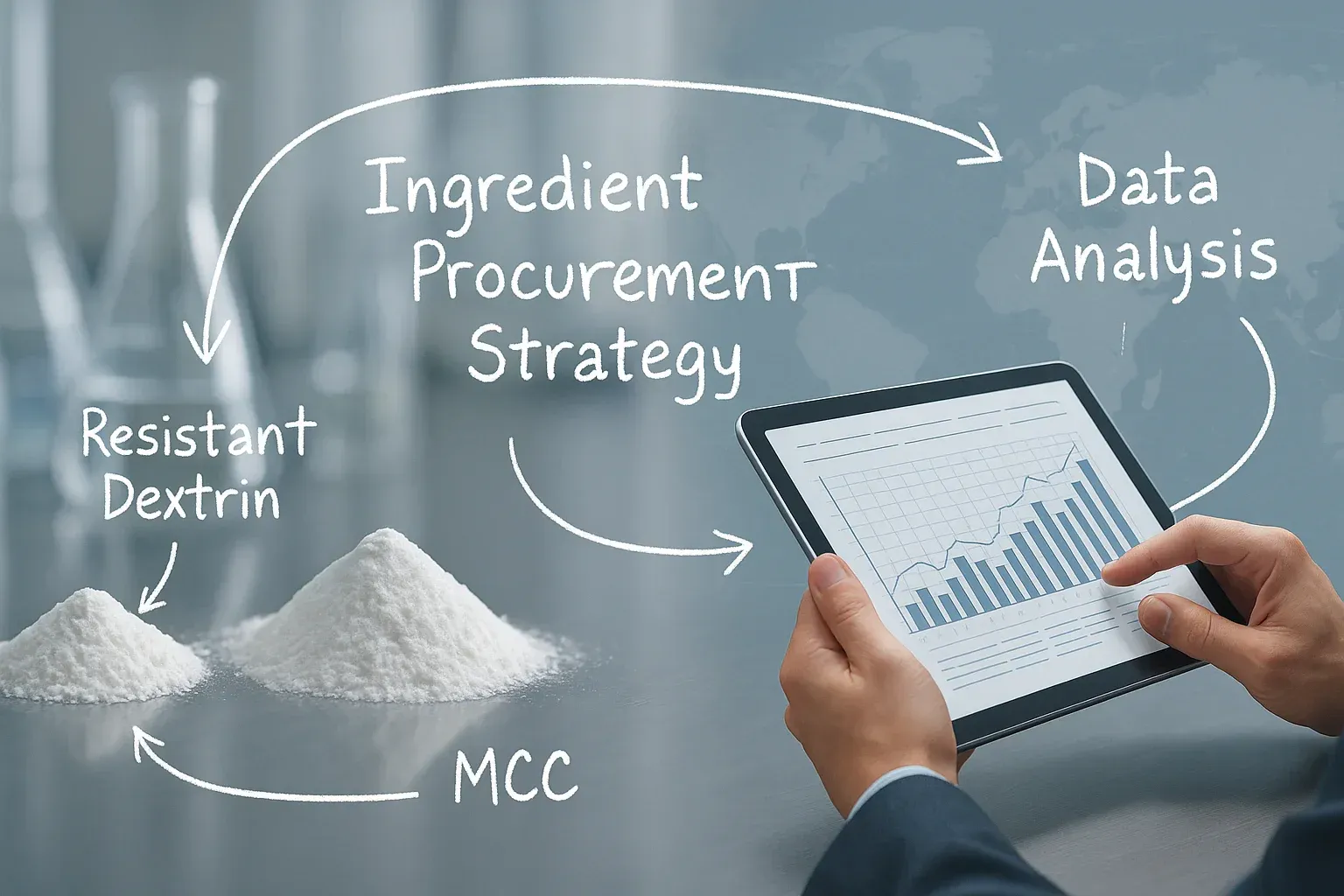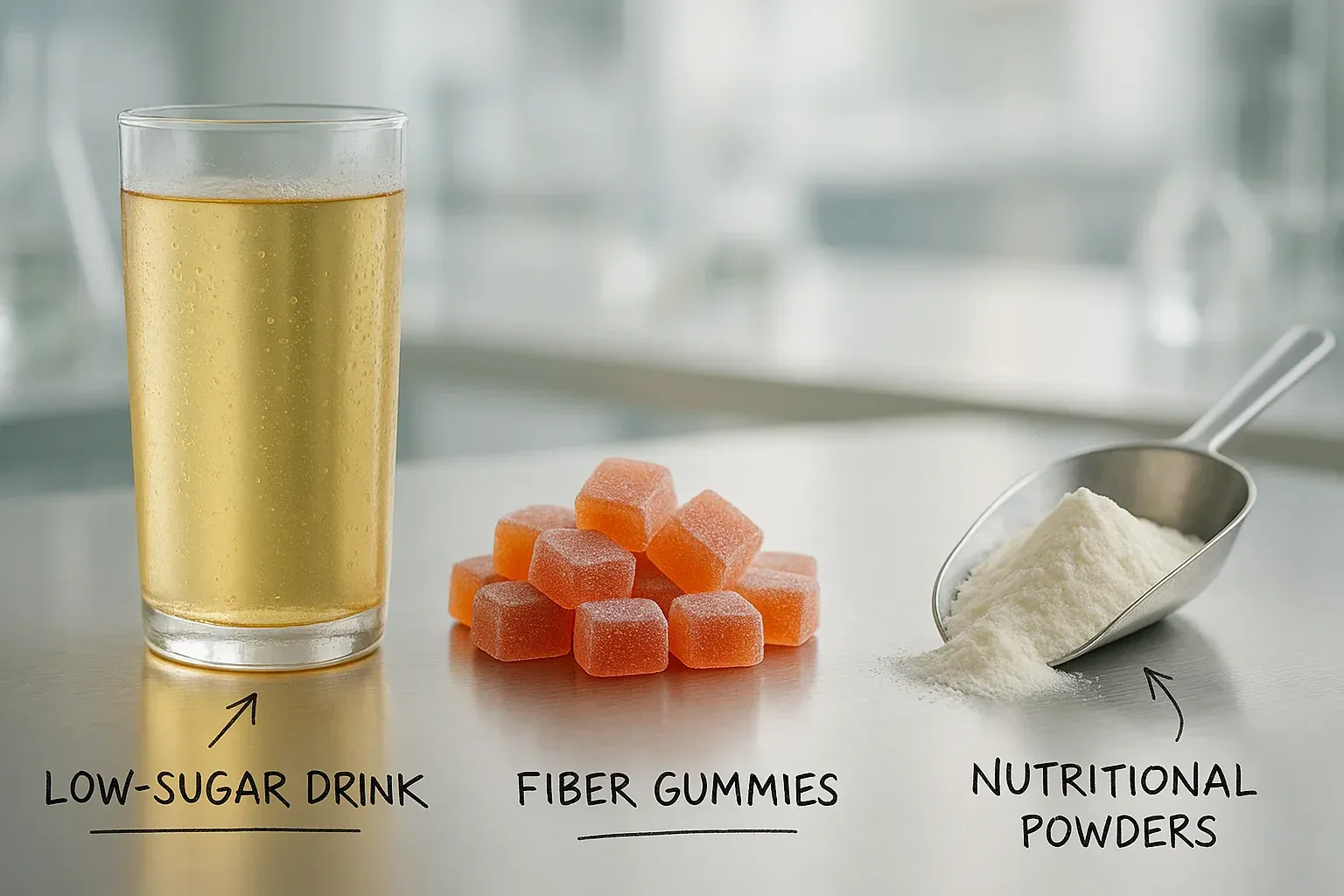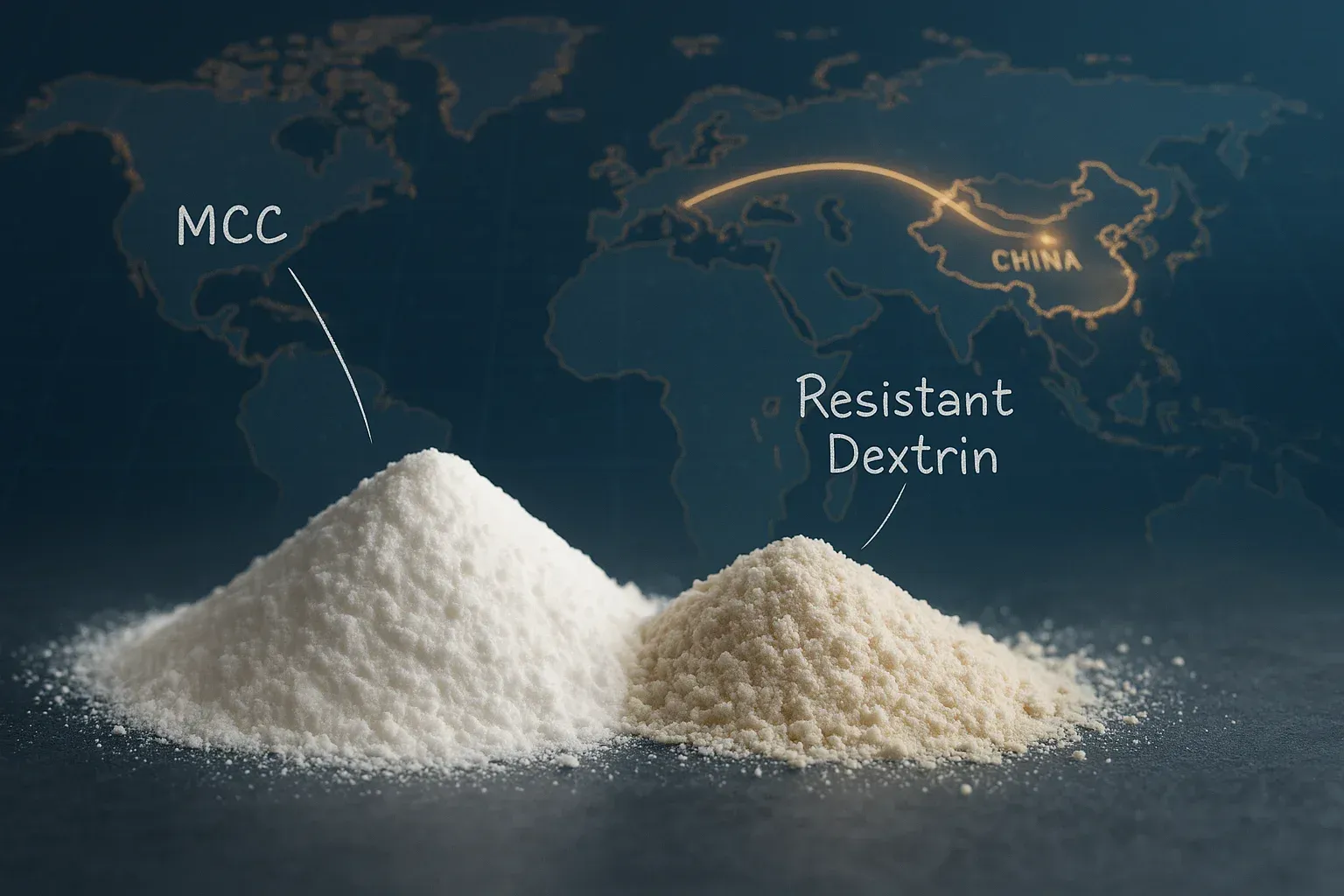


Accessible nutrition, high-protein formats, and the meteoric rise of GLP‑1 companion foods are compelling procurement teams to fundamentally rewrite what “good” looks like for microcrystalline cellulose and resistant dextrin. The shift in 2026 is not merely about securing the lowest price or booking capacity. It is about tighter specifications, cleaner performance in real-world formulations, and identifying suppliers that can prove consistency with credible, automated quality systems.

2026 Is Turning Ingredients Into Specifications
Two distinct forces are converging in product pipelines this year, forcing a re-evaluation of functional ingredients. First, protein plus fiber is becoming a default expectation, rather than a premium add-on. Buyers are now rigorously asking whether fiber systems can keep texture stable, maintain a clean sweetness profile, and avoid the gritty or “powdery” mouthfeel that often hurts repeat purchase rates. Second, GLP‑1 companion foods are accelerating demand for convenient nutrition formats where satiety, glycemic management, and digestive tolerability are under intense scrutiny.
In practical terms, this means resistant dextrin is being evaluated as much more than just a generic “soluble fiber,” and microcrystalline cellulose is being scrutinized as more than a standard filler. Both ingredients must now support predictable manufacturing processes and, crucially, a predictable consumer experience.
Product Fundamentals Buyers Still Mix Up
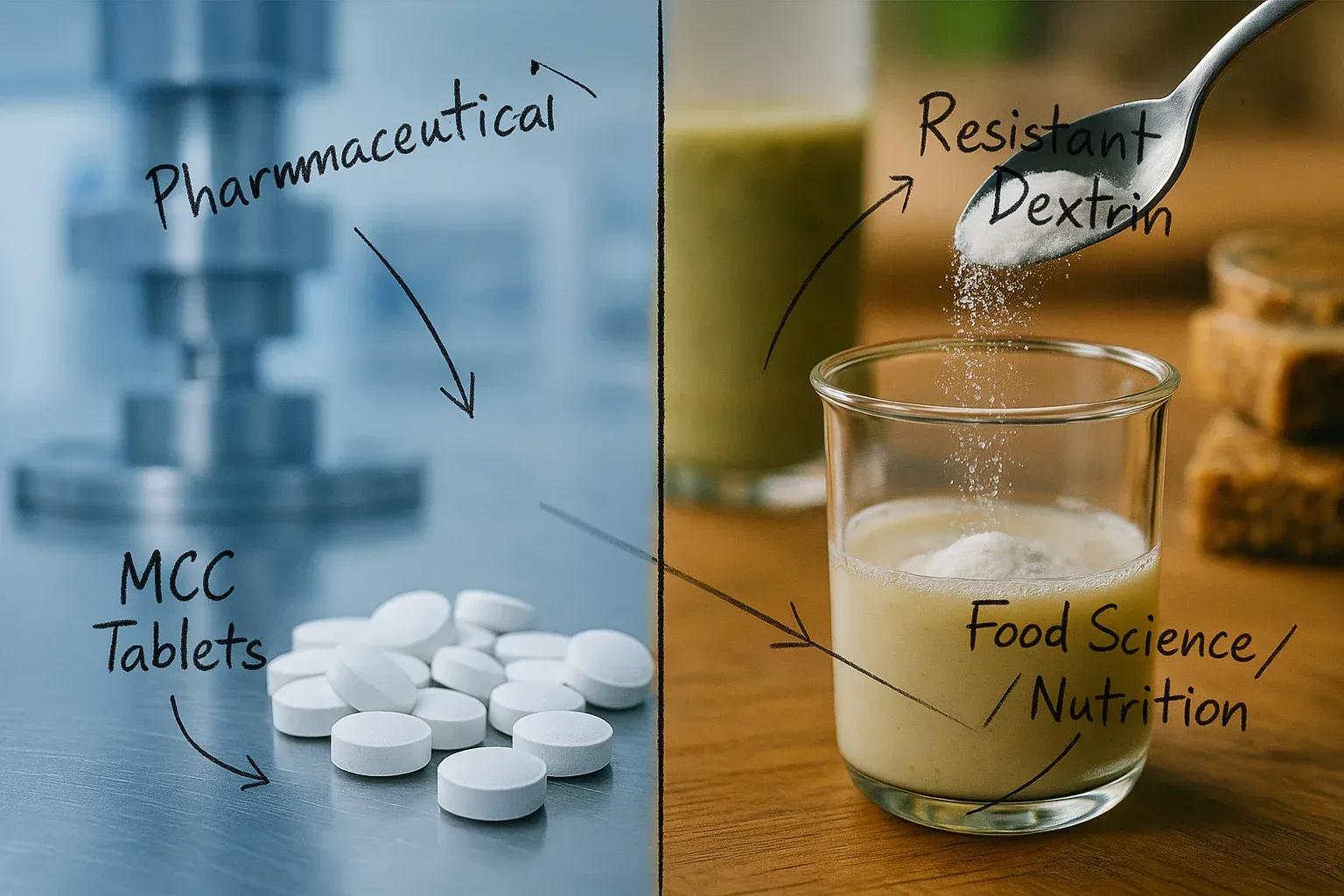
Most sourcing mistakes in this category happen when procurement teams treat these ingredients as interchangeable “carbohydrate tools.” They are distinct functional agents with specific roles.
Microcrystalline Cellulose in Pharma and Nutrition
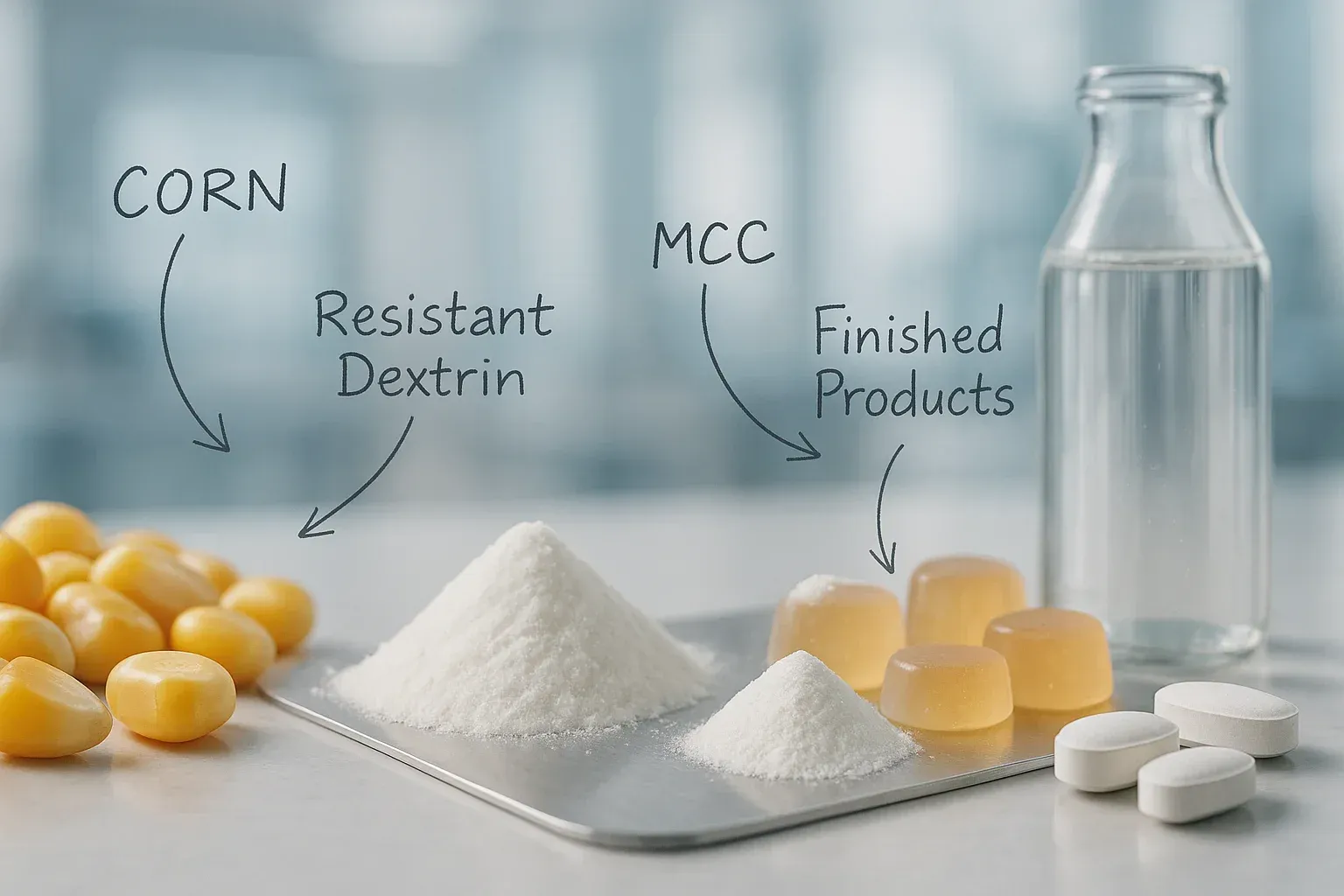
Microcrystalline cellulose (often referenced as an MCC pharmaceutical excipient) is valued primarily for its structural role in solid dosage manufacturing—supporting tablet integrity, compressibility, and flow. In select nutrition formats, microcrystalline cellulose is also employed to influence body and texture. However, its procurement logic typically starts with excipient discipline: tighter control, traceability, and reproducible processing are non-negotiable.
For procurement teams looking for a China MCC supplier, the key is to confirm the supplier can consistently meet the specific grade your formulation and process require, rather than assuming “MCC is MCC.” Variations in particle size distribution can drastically alter tablet hardness or dissolution rates.
Resistant Dextrin and Soluble Corn Fiber in Functional Foods
Resistant dextrin is a soluble dietary fiber produced through the controlled breakdown of starch (often NON-GMO corn starch). Unlike digestible starch, resistant dextrin resists digestion in the small intestine and functions effectively as dietary fiber in the overall nutrition profile. It is favored for its low viscosity and high solubility.
In category language, buyers will often see resistant dextrin positioned alongside soluble corn fiber and “prebiotic dietary fiber” systems. The sourcing reality is that resistant dextrin performance depends heavily on how the production process is controlled—especially when the target is clean taste and reliable solubility in high-protein matrices. Poorly processed dextrins can carry burnt notes or unstable viscosity.
When first qualifying resistant dextrin, it helps to start with a clear reference point, such as looking at established product specifications for resistant dextrin, and then narrowing down to the exact application-fit grade.
What Is Actually Changing in Technology?
“Innovation” is easy to claim and hard to verify. In this market, the changes buyers can actually validate typically fall into three buckets: compositional confidence, automation, and verifiable inputs.
1) Higher Confidence in Fiber Content
For many product briefs, fiber targets are no longer flexible. A common commercial checkpoint is fiber content ≥82% (or even ≥90% on a dry basis) for resistant dextrin products used in fiber-forward systems. If your label claim depends on it, your specification must explicitly demand it. Modern suppliers are achieving these higher purity levels through better enzymatic hydrolysis and refining processes.
2) Automation as a Consistency Tool
A modern resistant dextrin plant is increasingly defined by central control automation that runs from raw material feeding to product filling. The goal is fewer human variables and better batch-to-batch reproducibility—especially important when resistant dextrin is used in beverages, where small viscosity shifts can change the mouthfeel significantly.
Buyers should look for suppliers who treat automation not as a marketing line, but as a consistency tool. This ensures that the "clean taste" sampled in January matches the shipment received in July.

3) Process Inputs and QA Signals
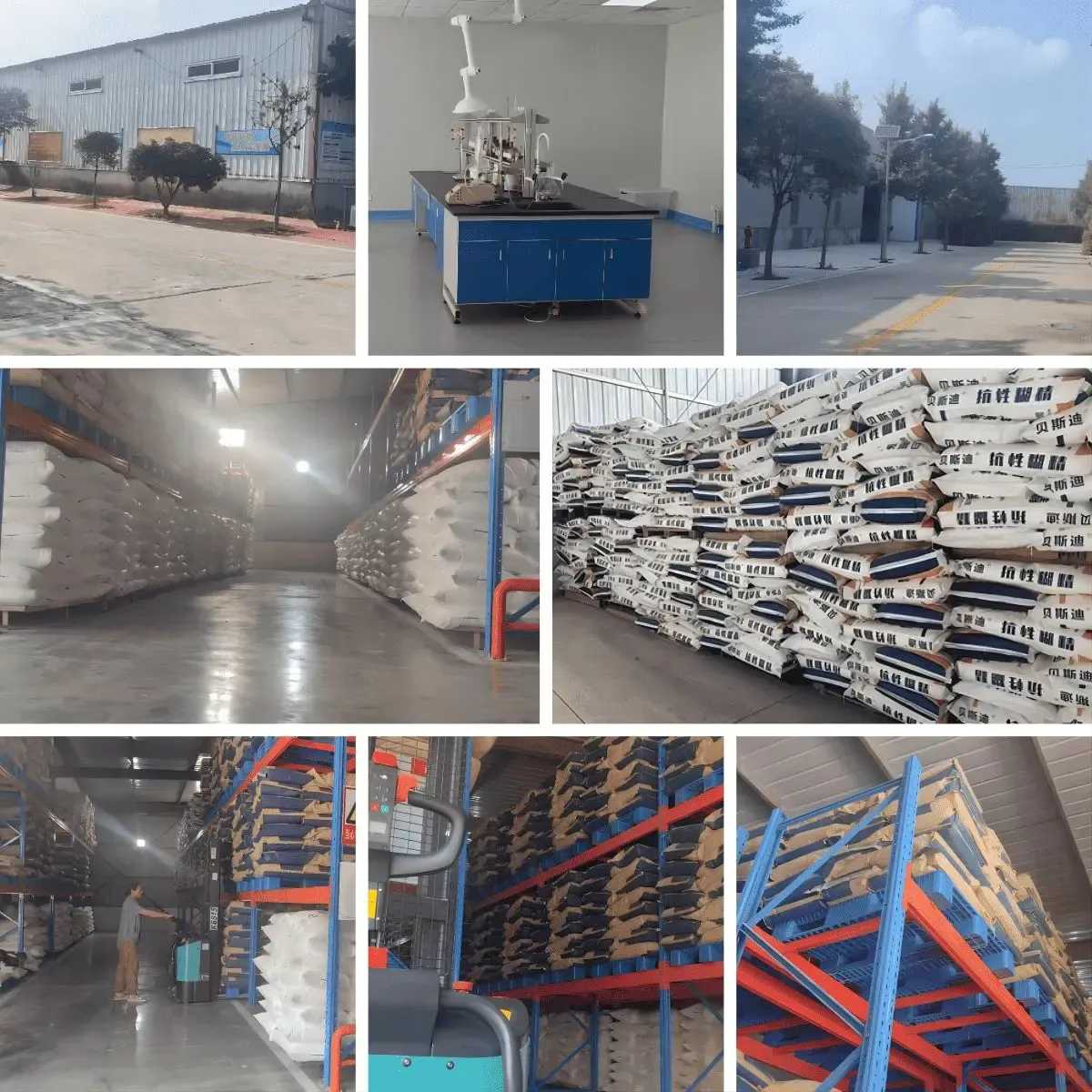
In China’s leading production hubs (Shandong is frequently mentioned by buyers as a key cluster for dietary fiber production), buyers are increasingly asking for proof of specific high-quality inputs:
- Use of advanced biological enzymes imported from overseas to ensure precise hydrolysis.
- German-origin precision production lines (where stated by suppliers) for consistent drying and granulation.
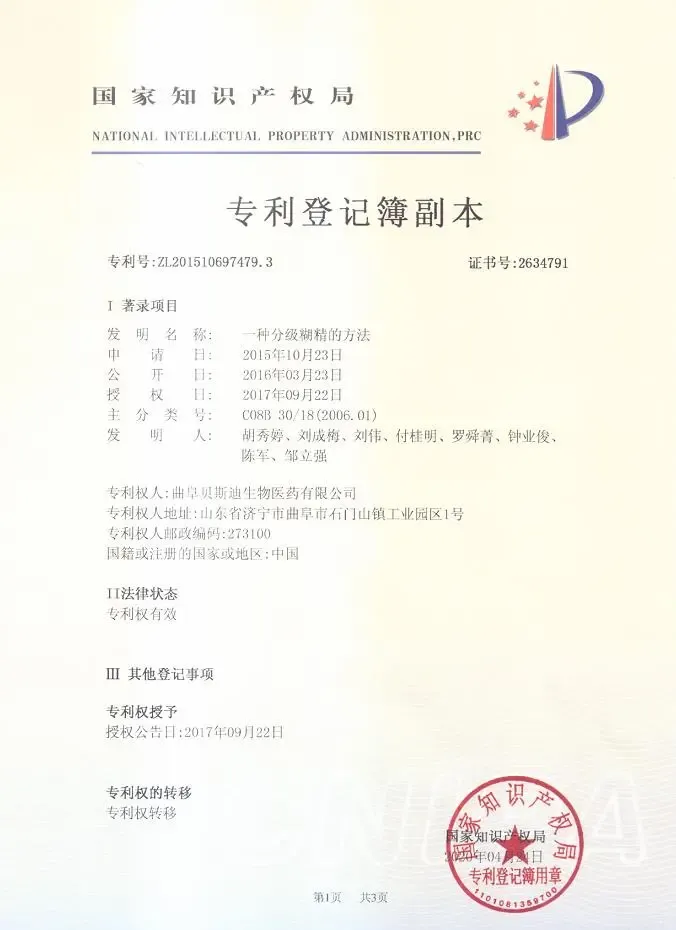
- GMP-standard workshops and a QC laboratory with routine release testing.
These are no longer “nice-to-haves.” For resistant dextrin, they are often the difference between a smooth scale-up and months of reformulation due to off-flavors or solubility issues.
A Compact Spec Checklist Before Sampling
Below is a practical checklist that fits both early-stage screening and supplier comparison. It intentionally focuses on what can be evidenced on specifications and Certificates of Analysis (COAs).
Resistant Dextrin Quick Screen
| Spec Item | What Buyers Typically Require | Why It Matters |
|---|---|---|
| Fiber Content | ≥82% (often ≥90% dry basis) | Supports label targets and consistent nutrition positioning. |
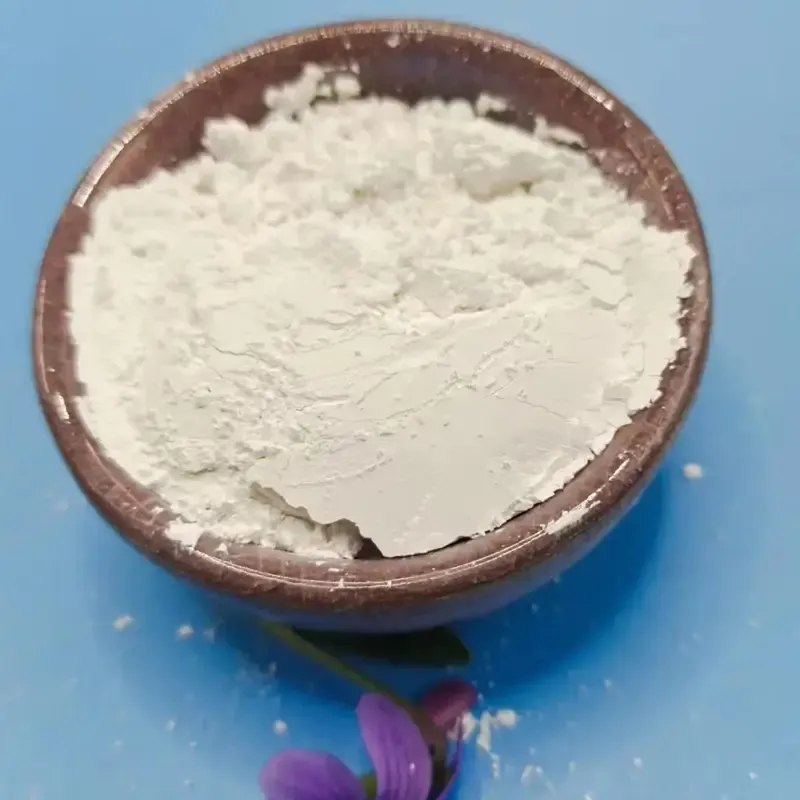
| Appearance | White to light yellow powder | Basic but useful for spotting inconsistencies in drying. |
| Protein | ≤6.0% | Helps manage variability and downstream behavior (Maillard reaction risks). |
| Raw Material | NON‑GMO corn starch | Aligns with clean-label expectations in global markets. |
| Solubility | High (approx 70%+) | Critical for beverages and clear liquids. |
| Storage | Store in a cool place | Practical stability requirement across shipping lanes. |
Microcrystalline Cellulose Quick Screen
| Spec Item | What to Confirm | Why It Matters |
|---|---|---|
| Grade Fit | Correct MCC pharmaceutical excipient grade | Prevents surprises in compression, flow, and disintegration. |
| Consistency | Particle size & moisture control | Directly impacts manufacturability and tablet hardness. |
| Compliance | GMP-aligned manufacturing | Supports audits and reduces qualification time. |
If you are building a dual-ingredient platform (MCC + resistant dextrin), running these screens early prevents the common mistake of sampling “whatever is available” and later discovering the ingredient cannot support your target format.
Application-Driven Innovation
Procurement teams rarely buy ingredients; they buy predictable performance in a finished product. Here is where resistant dextrin and microcrystalline cellulose are showing up most often in 2026 briefs.
High-Protein Bars and Baked Snacks
Resistant dextrin is frequently selected for fiber enrichment while maintaining a neutral taste profile. It helps bind moisture without making the bar gritty. Microcrystalline cellulose may appear where structure or bite needs support, particularly in compressed or shaped formats where density control is vital.
Buyer Takeaway: Run trials that include accelerated shelf stability. A resistant dextrin that behaves well on day one may not behave the same after moisture migration occurs over 3-6 months.
RTD Shakes, Coffees, and Powdered Nutrition Mixes
In these applications, resistant dextrin is evaluated on dispersion, clarity expectations, and mouthfeel. It must dissolve without lumping. In powder systems, buyers often ask suppliers for mixing guidance and typical usage ranges to reduce foaming and clumping risks during the consumer's preparation.
Prebiotic Positioning Using Soluble Corn Fiber
For buyers building gut-health language, prebiotic soluble corn fiber is often evaluated alongside resistant dextrin for tolerance, taste, and formulation compatibility. The ability to claim "prebiotic" effects often depends on the specific grade and clinical backing of the generic molecule.
When first referencing prebiotic soluble corn fiber in sourcing discussions, use a stable product reference page such as prebiotic soluble corn fiber to align on exactly what “soluble corn fiber” means in supplier documentation.
How to Spot an Innovation-Ready China Supplier
For procurement teams seeking a China resistant dextrin manufacturer or a China MCC supplier, “innovation-ready” is not a slogan. It is a set of verifiable behaviors that separates commodity traders from strategic partners.
Evidence Buyers Can Ask For Early
- Quality Systems: GMP workshop claims must be supported by audit readiness. Food lanes often request ISO and HACCP signals. Many suppliers also list additional certifications such as BRC, HALAL, and KOSHER depending on the product line.
- Process Control: Look for clear statements that production is centrally controlled from feeding to filling, not just “semi-automatic.”
- Raw Material Discipline: Verify NON‑GMO corn starch sourcing and supplier controls.
- Technical Support: Test their willingness to provide application guidance and help interpret COAs for resistant dextrin and microcrystalline cellulose before the PO is cut.
A Short “Real-World” Buyer Checklist
| Question to Ask | What a Strong Supplier Can Show | Red Flag |
|---|---|---|
| Can you support pilot trials? | Sample plan + basic formulation guidance | “Only bulk MOQ, no trial support” |
| How do you control batch variability? | Automation narrative tied to QC checkpoints | Vague answers without specific control points |
| What does your COA package include? | Routine specs + microbial limits where applicable | Missing or inconsistent reporting |
| Can you explain your enzyme system? | Clear statement of imported enzyme use | Refuses to disclose even high-level info |
| Are you audit-ready? | Documented quality system and workshop standard | “We can prepare later” |
This checklist works whether you are looking for a recommended Chinese microcrystalline cellulose manufacturer or a recommended Chinese resistant dextrin manufacturer—because it focuses on repeatability and proof.
Turning Trends Into Purchase Specs
Accessible nutrition and GLP‑1 companion foods are raising expectations across both food and pharma-adjacent categories. In that environment, resistant dextrin must do more than “add fiber,” and microcrystalline cellulose must do more than “fill space.” Buyers win when they translate trends into tight specs, then select suppliers who can prove consistency through automation, GMP discipline, and transparent QA.
When you treat microcrystalline cellulose and resistant dextrin as strategic ingredients—rather than interchangeable commodities—you reduce reformulation risk, shorten qualification cycles, and build a supplier base that can keep up with 2026 launch pressure. For buyers seeking to benchmark what "audit-friendly" documentation and clear product segmentation looks like, reviewing established supplier catalogs—such as the functional fiber and excipient pages on Shine Health—can help standardize your internal qualification checklist.