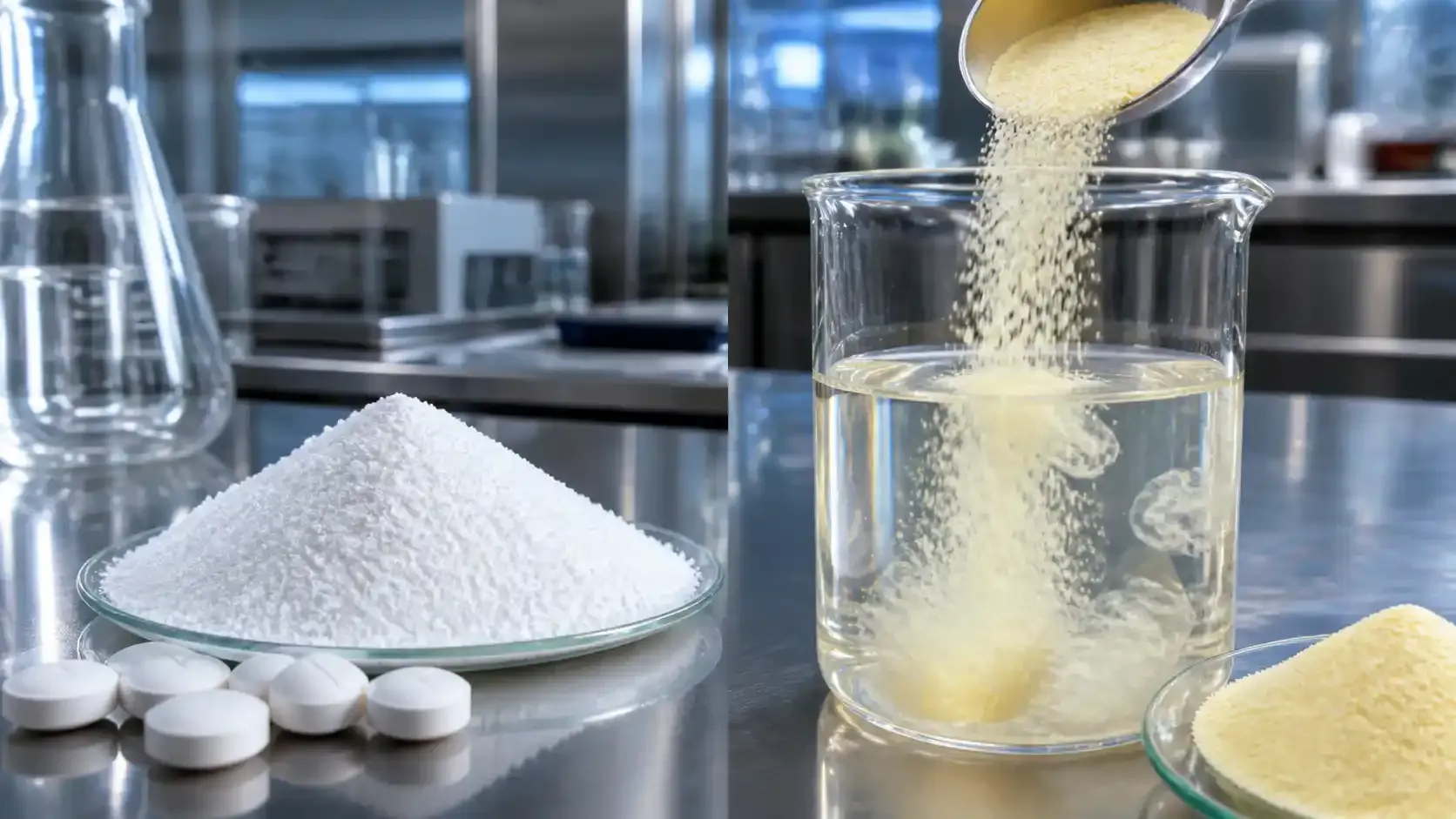
Fibremaxxing has transitioned from a social media buzzword to a rigorous formulation reality. For procurement teams, this shift carries a practical consequence: product launches increasingly succeed—or stall—based on whether the fiber system was sourced and qualified correctly, rather than just the flavor profile.
Across RTD beverages, bakery, and dietary supplements, a specific pattern repeats. Teams select a resistant dextrin supplier based primarily on the initial quote, only to discover during scale-up that viscosity, solubility, or microbial limits necessitate a costly reformulation. Conversely, brands that prioritize the Certificate of Analysis (COA) and technical data sheets move faster—even when sourcing from international markets—because resistant dextrin performance becomes predictable when specific spec lines are treated as non-negotiable gatekeepers.

Why Fibremaxxing Aligns R&D with Procurement
The current fibremaxxing trend is not simply about adding "more fiber." It demands more fiber with fewer sensory compromises: clean taste, low sugar, stable processing, and clean labels that survive regulatory review. In practical buying terms, this amplifies the specific demand for:
- Resistant dextrin for neutral taste and broad application flexibility.
- Non GMO soluble corn fiber where sugar reduction and smooth mouthfeel are critical.
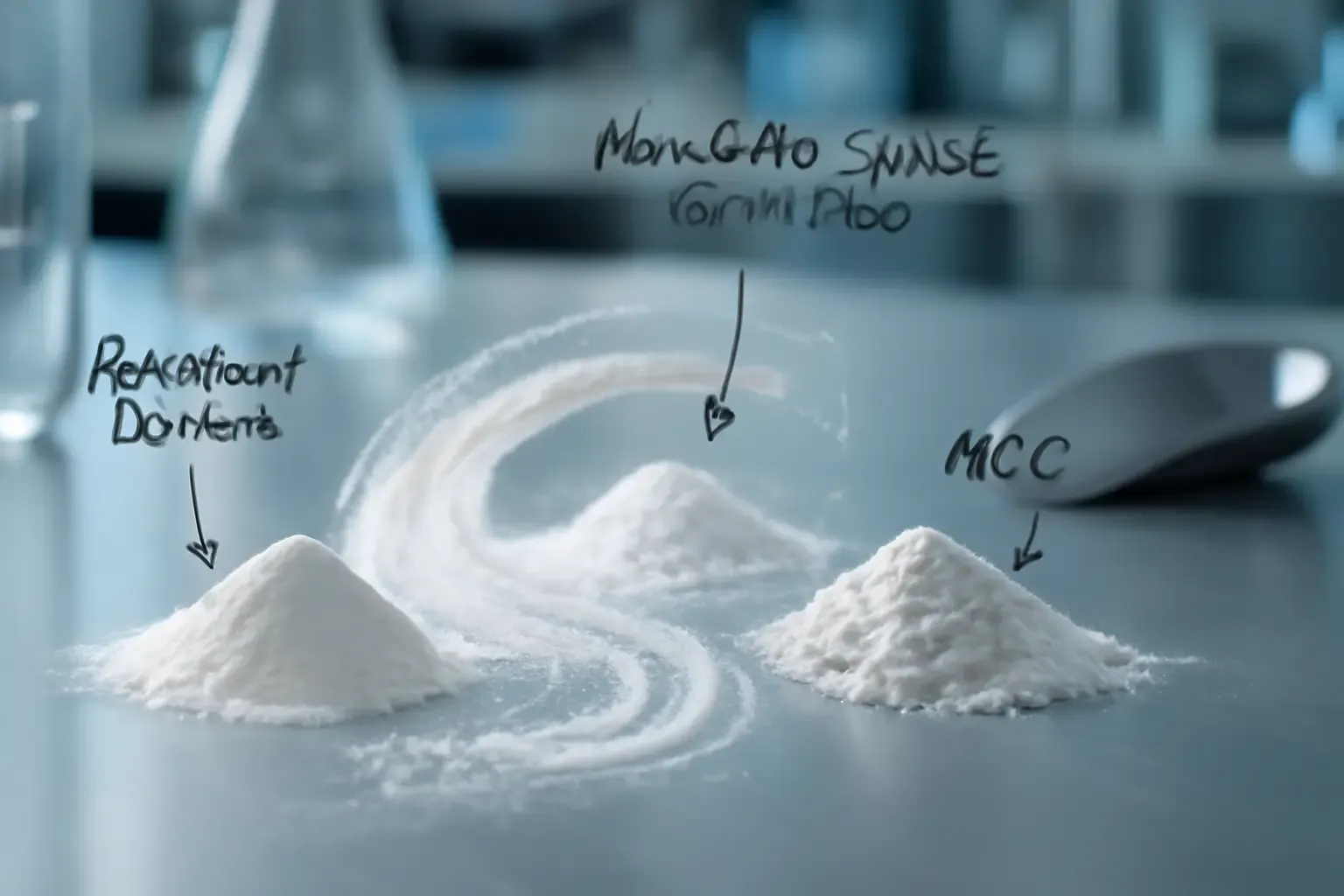
- Microcrystalline cellulose (MCC) to control flow, compression, and texture in solid formats.
For the buyer, the risk profile shifts significantly. A resistant dextrin supplier unable to support the documentation trail—COA consistency, plant quality systems, and lot-to-lot stability—creates a "quiet" cost. This manifests as repeated trials, delayed artwork approvals, and last-minute label edits that erode margins.
Optimizing RTDs: Sugar Reduction Without the Thick Finish
Typical brief: A brand requires a low-sugar RTD (or a yogurt-style drink) that retains a rounded palate feel while carrying a distinct fiber claim.
A frequent misstep is treating resistant dextrin as a simple bulking carbohydrate. In RTD applications, buyers must identify a supplier capable of supporting three non-negotiables:
- High solubility for a clean mix and minimal grit.
- Low to moderate viscosity so the beverage does not "gel" during large-scale production.
- Heat and acid tolerance to withstand hot-fill or UHT processing windows.
Constructing a Workable Fiber System
- Base fiber:Resistant dextrin provides a neutral backbone that preserves flavor clarity.
- Mouthfeel support:Non GMO soluble corn fiber restores body when sugar is reduced, particularly in "light" beverage matrices.
- Label clarity: A supplier that consistently documents fiber content (commonly listed as ≥82% fiber on product parameter tables) reduces claim risk when the formula scales.

When comparing non GMO soluble corn fiber to traditional sugars, the practical advantage extends beyond sweetness replacement—it is the ability to lower sugar while maintaining bulk and texture. In many RTDs, removing sugar creates a thin, hollow finish; fiber-based solids effectively bridge that gap.
For teams benchmarking options, examining the application scope is vital. A reliable starting point is the structure found on technical pages like Non GMO soluble corn fiber. This outlines typical beverage, snack, and bakery use cases alongside the plant-level certification expectations buyers should request (GMP, HACCP, ISO22000, FSSC).
Essential Pre-Pilot Questions
Before the first sample arrives, a resistant dextrin supplier should answer these questions definitively:
- Which test method is used for dietary fiber on the COA?
- What are the typical moisture and microbial limits, and how stable are they across lots?
- Is the raw material confirmed as non-GMO corn starch, and how is that supported in documentation?
Confirming these details early shifts the pilot from "Does it work?" to "Which dosage delivers the best sensory outcome?"—a far more efficient position for product development.
Supplements: Balancing High Fiber with Manufacturability
Typical brief: A high-fiber nutrition powder, tablet, or chewable must deliver a meaningful fiber statement without becoming sticky, dusty, or unstable in packaging.
Here, procurement teams often learn that resistant dextrin and microcrystalline cellulose (MCC) solve distinct problems:
- Resistant dextrin ensures fiber delivery, taste neutrality, and mixability.
- Microcrystalline cellulose supports flow, compression, and structure, particularly in tablets and chewables.
Synergizing Resistant Dextrin and MCC
A practical pairing approach involves using resistant dextrin as the primary soluble fiber to hit the nutrition target, while employing microcrystalline cellulose as a processing tool to prevent weak tablets, capping, or poor die fill.
In active projects, buyers typically compare MCC grades (e.g., PH101 vs PH102) based on particle size and flow behavior. While grade selection is formulation-specific, procurement can accelerate screening by aligning with supplier guidance. Resources like the MCC grades formulation and QC guide provide valuable technical overviews for initial assessment.
Navigating Prebiotic Positioning
Brands increasingly seek fiber that supports gut-health narratives. Resistant dextrin is frequently discussed in this context as a prebiotic dietary fiber, described by suppliers as a soluble fiber that resists digestion in the small intestine and ferments in the large intestine.
If internal stakeholders are building claims around prebiotic positioning, the supplier evaluation must widen beyond price:
- Is resistant dextrin performance stable across the processing conditions of your specific format?
- Can the supplier provide a consistent COA package with clear lot identification?
- Are quality systems documented at the plant level (GMP and relevant food safety systems)?
For concrete examples of how resistant dextrin is positioned for supplement use, reference pages like dextrin dietary fiber supplement and nutritional dietary fiber powder. These illustrate how a supplier should present core parameter lines such as appearance, storage conditions, and minimum fiber content.
Translating COA Lines into Formulation Decisions
Procurement teams sometimes treat COAs merely as compliance checkboxes. In fiber-forward projects, the COA acts as a crucial formulation input. A resistant dextrin supplier with robust documentation makes it easier to predict performance before investing time in physical trials.
Critical COA Metrics for Buyers
| COA / Spec Line | Impact on Applications | Buyer Decision Support |
|---|---|---|
| Fiber content (often ≥82%) | Directly affects claim planning and dosing | Determines if the formula hits target claims without sensory defects |
| Moisture / Water Activity | Impacts caking risk and shelf stability | Influences packaging choice and desiccant requirements |
| Solubility | Controls mix time, grit risk, and haze | Determines feasibility of high-fiber RTDs without extra stabilizers |
| Appearance | Helps QC spot deviations quickly | Sets incoming inspection criteria |
| Microbial Limits | Protects beverage/supplement stability | Decides if a lot can be released without rework |
A Short Pre-Approval Checklist:
- Confirm the resistant dextrin COA is batch-specific, not a generic template.
- Require traceable lot coding that matches packaging.
- Validate the raw material statement (commonly non-GMO corn starch).
- Align storage and handling assumptions with your warehouse reality.
Price-First vs. COA-First Sourcing
A price-first approach often "wins" on day one but fails during scale-up. A COA-first approach may require an extra communication cycle, but it significantly reduces the probability of reformulation, relabeling, or delayed launch windows.
Identifying Reliable Manufacturing Signals
While globally diverse, the sourcing landscape for soluble fibers and excipients varies sharply by supplier capability. The most successful projects tend to share visible quality signals.
Verifiable Manufacturing and QA Indicators
- Automated, centrally controlled production from raw material feeding to filling.
- Use of imported biological enzymes and controlled enzymatic processing steps.
- GMP-standard workshops and dedicated QC laboratories.
- Clear plant-level certifications for relevant food applications (GMP/HACCP/ISO22000/FSSC).
These signals are critical because they reduce lot variation—the enemy of high-fiber claims. If a resistant dextrin supplier cannot maintain stable viscosity and solubility, a formula that passes R&D may fail in commercial production.
Buyers searching for a "Recommended Manufacturer" often want one thing: fewer surprises. The practical approach is to treat "recommended" as a documentation and process standard rather than a marketing badge. Suppliers that publish detailed product pages and technical positioning—such as Shine Health—demonstrate the necessary transparency. The most useful takeaway for buyers is the buying pattern: start with the COA, verify the process story, then run application-specific trials.
A Repeatable Template for Fiber-Forward SKUs
Fibremaxxing will continue to raise the bar for sugar reduction and fiber claims. Buyers can make these projects repeatable by standardizing ingredient qualification.
A Practical Sourcing Template:
- Select a resistant dextrin supplier using COA and technical sheet fit (fiber content, solubility, microbial profile).
- Use non GMO soluble corn fiber to tune mouthfeel and solids in low-sugar beverages and bakery matrices.
- Deploy microcrystalline cellulose to protect manufacturability in tablets, chewables, and powder handling.
- Run pilots that stress the real process window (heat, acid, shear, packaging time).
When procurement and R&D share a single spec language—especially regarding resistant dextrin—projects move efficiently from "trial-and-error" to "trial-and-confirm." For those seeking a supplier that meets these rigorous documentation and production standards, reliable partners are essential for long-term success.
If you are looking for a certified supplier that aligns with these quality frameworks, please visit www.sdshinehealth.com.