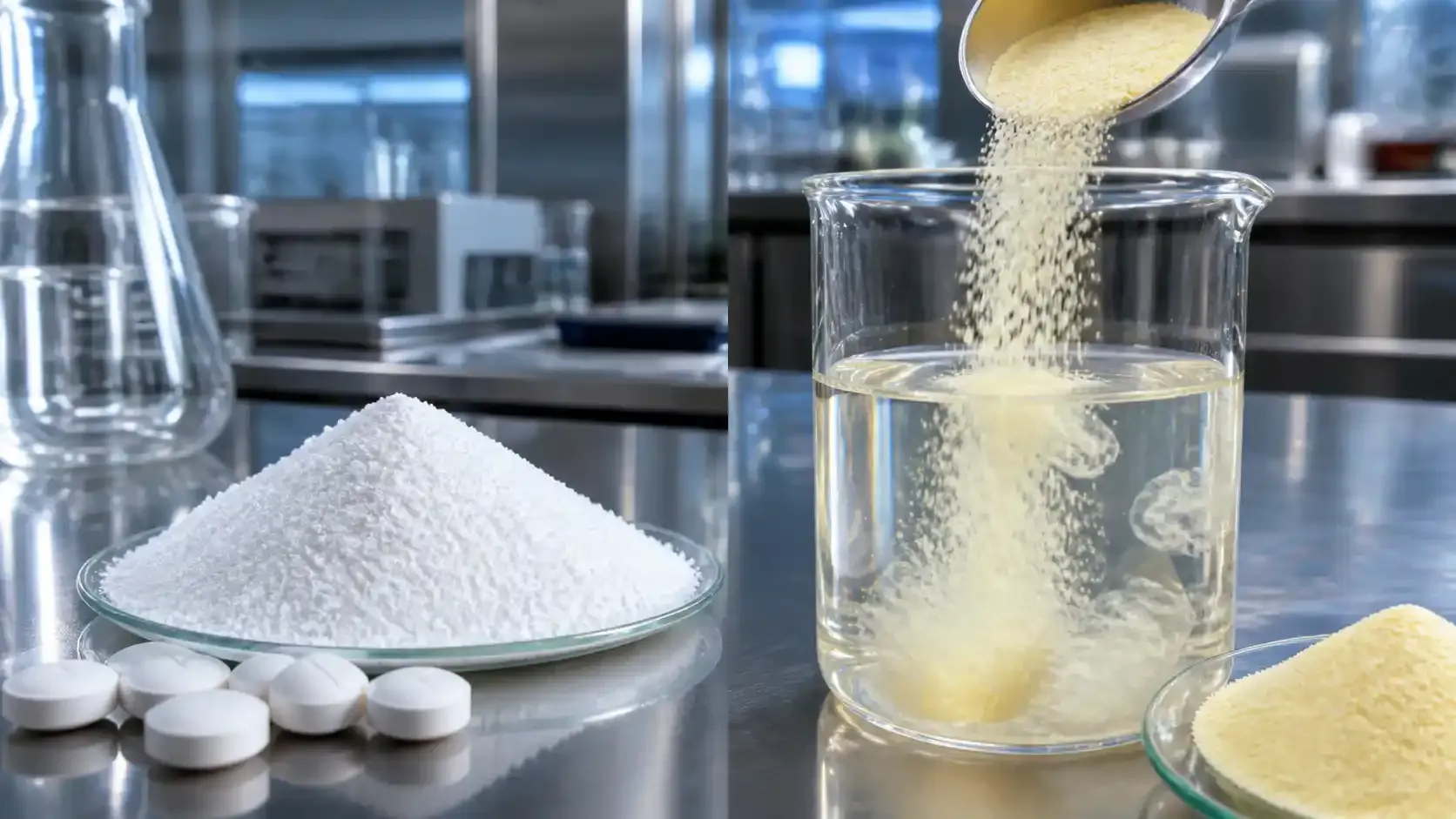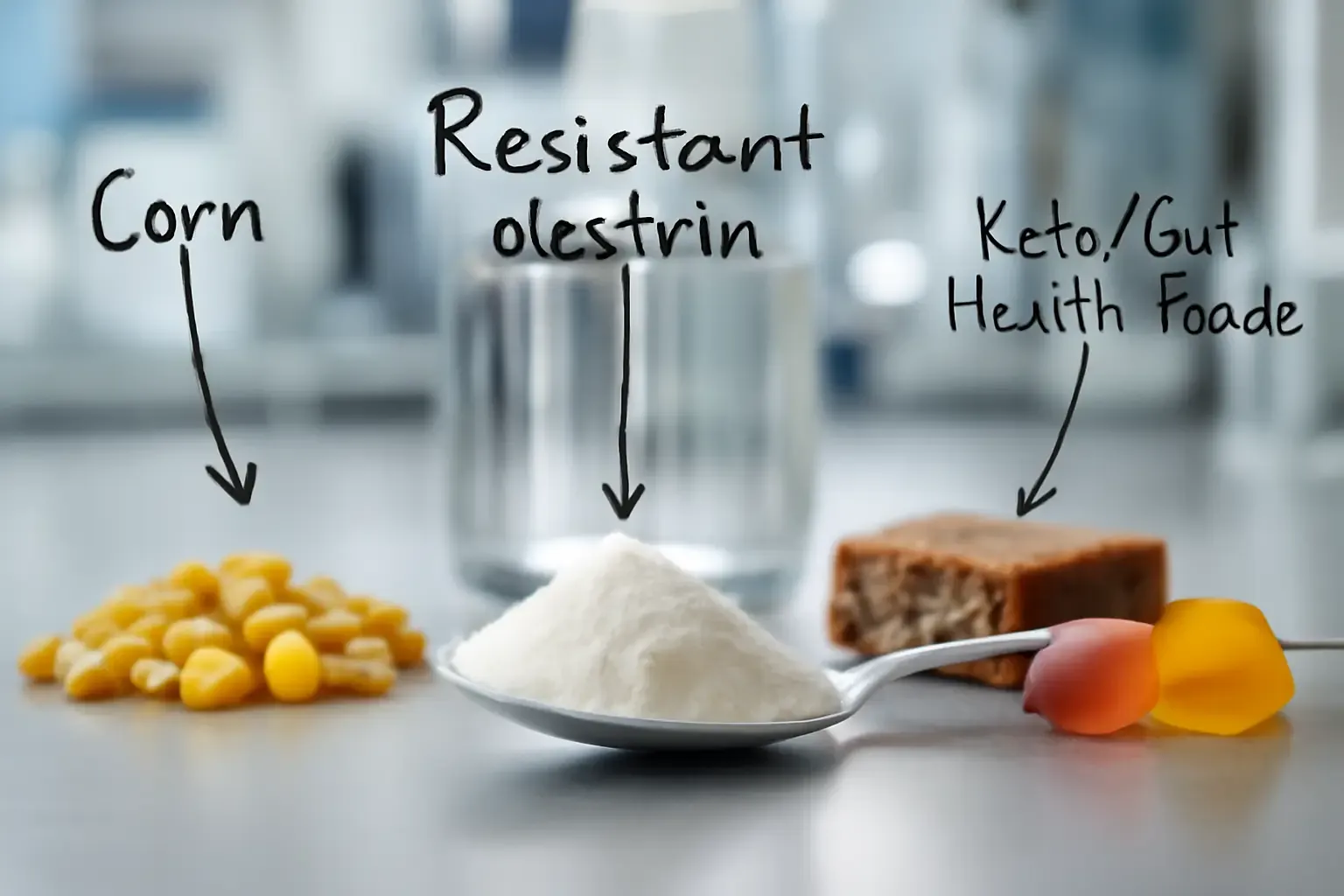
Consumer interest in gut health and sugar reduction is pushing brands to rethink how they add fiber without sacrificing taste, clarity, or texture. One of the clearest shifts in the current food and beverage landscape is the move from generic fiber supplementation to selecting specific soluble fibers. These advanced ingredients must survive rigorous processing conditions while supporting modern packaging claims—especially in the booming keto, low-sugar, and functional beverage sectors.
In this evolving landscape, Chinese supply chains have become increasingly relevant hubs for high-specification ingredients. A capable China resistant dextrin manufacturer can now provide export-ready, specification-driven fibers—commonly ≥82% fiber, and in specialized product lines, ≥90% total fiber on a dry basis—that slot seamlessly into complex formulations ranging from clear beverages to confectionery and solid dose supplements.

Gut Health and Keto Are Reshaping "Good Fiber" Specs
From a professional buyer’s perspective, the trend is not simply about higher fiber intake; it is about better-tolerated soluble fiber that performs consistently across diverse formats. Editorial coverage of gut health continues to spotlight soluble fibers for their ability to provide digestive comfort and microbiome support without the bloating often associated with insoluble options. This aligns perfectly with the increased industrial use of resistant dextrin and soluble corn fiber in everyday functional foods.
Simultaneously, keto and low-sugar product design forces a difficult technical question: can the fiber deliver bulk and function without adding obvious sweetness, unwanted grit, haze, or unmanageable viscosity? This is precisely where resistant dextrin and related soluble corn fiber ingredients are winning market share. They offer the functional bulk of sugar without the metabolic impact, acting as a structural pillar in recipes where sugar has been removed.
Defining the Core Ingredients: Resistant Dextrin vs. Soluble Corn Fiber
To source effectively, it is crucial to understand the technical nuance between these two often-confused categories:
Resistant Dextrin
Resistant Dextrin is a soluble dietary fiber produced from starch (commonly corn; though tapioca-based variants exist) that resists digestion in the small intestine and is fermented in the large intestine. For formulators, the primary appeal is its typically neutral taste, low viscosity, and exceptional stability under heat and low pH, making it ideal for beverages and processed foods.
Soluble Corn Fiber
Soluble Corn Fiber is often positioned as a resistant dextrin–type ingredient used to boost fiber content while supporting sugar reduction in mainstream foods. In the U.S. market, regulatory confidence is strengthened by the FDA’s GRAS notice for soluble corn fiber, which many global brands treat as a helpful compliance signal when building U.S.-bound SKUs.
For product developers, these fibers are less about a single "miracle" function and more about repeatable performance in multiple factories. The goal is to find a supply chain that delivers consistent particle size and solubility batch after batch.
A Buyer-Friendly Spec Snapshot for Export-Ready Sourcing
A recurring sourcing challenge is that the term "resistant dextrin" is used broadly in the market, while actual product performance depends heavily on which specification tier a resistant dextrin supplier is quoting. Without precise spec sheets, a buyer might receive a product that meets the legal definition but fails in the specific application (e.g., causing cloudiness in a clear water).
The table below summarizes common spec patterns explicitly seen in high-quality Chinese supplier documentation. Buyers are advised to confirm these details with the supplier's Certificate of Analysis (COA) for the specific batch being purchased:
| Item Procurement Teams Compare | Common Baseline for Resistant Dextrin | Higher-Fiber Line Offered by Some Suppliers | Why It Matters in Applications |
|---|---|---|---|
| Fiber Content Claim | ≥82% fiber (Standard industry baseline) | ≥90% total fiber (dry basis) (Premium specification) | Higher fiber allows for smaller dosage sizes to meet label claims, though it may influence cost structures. |
| Appearance | White to light yellow powder | White to light yellow powder | Critical for aesthetics; impacts expectations for beverage clarity and confectionery color vibrancy. |
| Protein Content | ≤6.0% (Often listed) | Not always repeated in every listing | Essential data for allergen control and accurate nutrition panel alignment. |
| Solubility | High solubility is often claimed | Some listings specify 70% solubility | Helps predict mixing time in production, sediment risk in beverages, and mouthfeel. |
| Storage Stability | Store in a cool place | Store in a cool place | A basic but critical logistics requirement to prevent caking and ensure flowability. |
Practical Takeaway: When qualifying a resistant dextrin supplier, it is strategically valuable to request samples of both the "standard" (≥82%) and "high fiber" (≥90% dry basis) options for pilot work. The "best" choice often depends on the specific moisture balance and texture requirements of the final format.
Case Pattern One: Keto and Low-Sugar Foods
Keto formulations often require a bulking agent to replace the physical mass lost when sugar, flour, or certain syrups are reduced or removed. In supplier descriptions, resistant dextrin is repeatedly positioned as a cornerstone for ketogenic diets because it does not contribute meaningfully to "net carbs" in typical usage calculations.
Common product forms where a resistant dextrin supplier can support keto design include:
- Clear RTD-style drinks and powdered beverage mixes: Resistant dextrin is often the top choice where brands want fiber without heavy viscosity or "gloopy" mouthfeel. A common formulation approach is to treat resistant dextrin as the "base fiber" for body, then adjust sweetness separately with high-intensity sweeteners.
- Bars and baked goods: In these matrices, resistant dextrin contributes bulk and helps manage moisture retention, preventing the dry, crumbly texture often associated with high-protein, low-sugar bars.
- Dressings, spreads, and desserts: Some starch-derived dextrin products are promoted as fat mimetics. Their ability to interact with water and create a creamy mouthfeel makes them useful tools when calories are being aggressively reduced.
For procurement teams, the operational advantage is significant: resistant dextrin can be sourced as a single SKU ingredient that travels across multiple categories—one reason "resistant dextrin supplier" searches have expanded from niche supplement buyers into mainstream food R&D groups.
Case Pattern Two: Fiber-Forward Confectionery and Snacks
Sugar reduction in confectionery is notoriously difficult because sugar provides two critical things: texture (chew, snap, anti-crystallization) and flavor release. Simply removing sugar collapses the structure of the candy. Resistant dextrin is often used as a partial sugar replacement to keep the solids and structure intact, while simultaneously increasing the fiber profile.

Leading supplier case materials in China highlight successful applications in:
- Gummies and chewy candies: Providing texture support and fiber enrichment without altering the gel strength.
- Chocolate: Allowing for sugar reduction while maintaining the necessary particle solids for proper tempering and mouthfeel.
- Hard candies: Acting as an interfering agent to help manage crystallization and prevent graininess.
- Cookies and brownies: Reducing sugar and fat loads while keeping the moist, dense mouthfeel consumers expect.
In practice, confectionery teams often brief the China resistant dextrin manufacturer with three non-negotiable constraints upfront: the target fiber per serving, the target sweetness curve, and the maximum process temperatures. Defining that single brief prevents significant back-and-forth during the sampling phase.
For buyers looking for a soluble corn fiber manufacturer as well, a useful starting reference is a non-GMO soluble corn fiber positioned for clean-label sugar reduction in drinks, bars, yogurt drinks, and baked goods. Example product information can be found on industry listings for non-GMO soluble corn fiber.
Case Pattern Three: Prebiotic Positioning and Weight Management
Resistant dextrin is frequently marketed as a prebiotic dietary fiber that supports beneficial gut bacteria and regularity. In weight management positioning, the mechanism is typically framed around satiety support combined with a low-glycemic profile.
Two formats show up repeatedly in commercial launches:
- Dietary fiber powders and sachets: These are easy to standardize across markets and channels. A useful reference example is Shine Health’s nutritional fiber powder listing, which is a resistant dextrin product positioned for general nutrition applications: dietary fiber supplements.
- Functional beverage concepts: When brands want a "daily gut health" drink, resistant dextrin can serve as the backbone fiber if clarity and low viscosity are priorities.
For procurement, this is where spec discipline becomes critical. If a brand needs aggressive fiber claims in a small serving size (e.g., a 60ml shot), buyers may prefer a higher-fiber line—again reinforcing why the resistant dextrin supplier conversation should include both ≥82% and ≥90% options.
Case Pattern Four: Smarter Supplements Using MCC Plus Resistant Dextrin
When products move from food formats into tablets or capsules, resistant dextrin shifts from being a "food fiber" to a functional component in a solid dosage blend. This is where Microcrystalline Cellulose (MCC) becomes vital.
In supplement manufacturing, microcrystalline cellulose (MCC) is widely used as an excipient to support flow and compression behavior. Pairing MCC with resistant dextrin is a pragmatic engineering decision to:
- Keep fiber as an active component while maintaining high-speed manufacturability.
- Improve powder handling and flow in compression hoppers.
- Support consistent tablet appearance and mechanical robustness (friability).
Buyers evaluating a Recommended Chinese Microcrystalline Cellulose Manufacturer often look for the same credibility signals they require from a resistant dextrin supplier: stable Quality Control (QC) routines, consistent batch documentation, and clear grade guidance. For a starting point on how suppliers discuss grade selection and QC, see: MCC Grades Formulation and QC Guide.
What "Recommended" Looks Like in a Chinese Supplier Shortlist
For global procurement teams, "recommended" rarely means the loudest marketing. It usually translates to a supplier that can prove repeatability. A low price is useless if the second container has a different particle size than the first.
Across resistant dextrin and soluble corn fiber sourcing, the most decision-relevant factory signals tend to be:
- Non-GMO corn starch sourcing and rigorous traceability practices.
- GMP-standard workshops and a fully functional, staffed QC laboratory.
- Automated, centrally controlled production from raw material feeding to final filling (crucial for reducing operator variability).
- Use of imported enzymes and modern production lines, which many top-tier Chinese suppliers highlight as part of their process control strategy.
- Export-aligned certifications where applicable (commonly referenced: GMP, HACCP, ISO22000, FSSC).
Shandong Shine Health Co., Ltd. is one example of a Chinese producer describing this bundle of capabilities across resistant dextrin and soluble fiber product pages, including non-GMO sourcing, automated processing, and QC lab support. For buyers who want to benchmark a China supplier’s product range quickly, the broader portfolio entry point is the resistant dextrin category.
Turning Trends into Stable Product Lines
Resistant dextrin is no longer a niche additive—it has matured into an enabling ingredient for keto, low-sugar confectionery, and gut health portfolios because it can be formulated into drinks, snacks, and dietary fiber supplements without demanding a full texture redesign. It solves the "fiber gap" without creating a "flavor gap."
For procurement teams building a dual-source strategy, the most effective next step is to map the intended formats (RTD beverages, gummies, bars, tablets) to the spec tier required, then qualify a resistant dextrin supplier and a microcrystalline cellulose supplier against consistent documentation and batch-to-batch performance.
To explore how Chinese suppliers present export-ready fiber options and application-aligned product pages, and to view detailed specifications, visit www.sdshinehealth.com and compare resistant dextrin and non-GMO soluble corn fiber listings side by side to determine the best fit for your formulation.