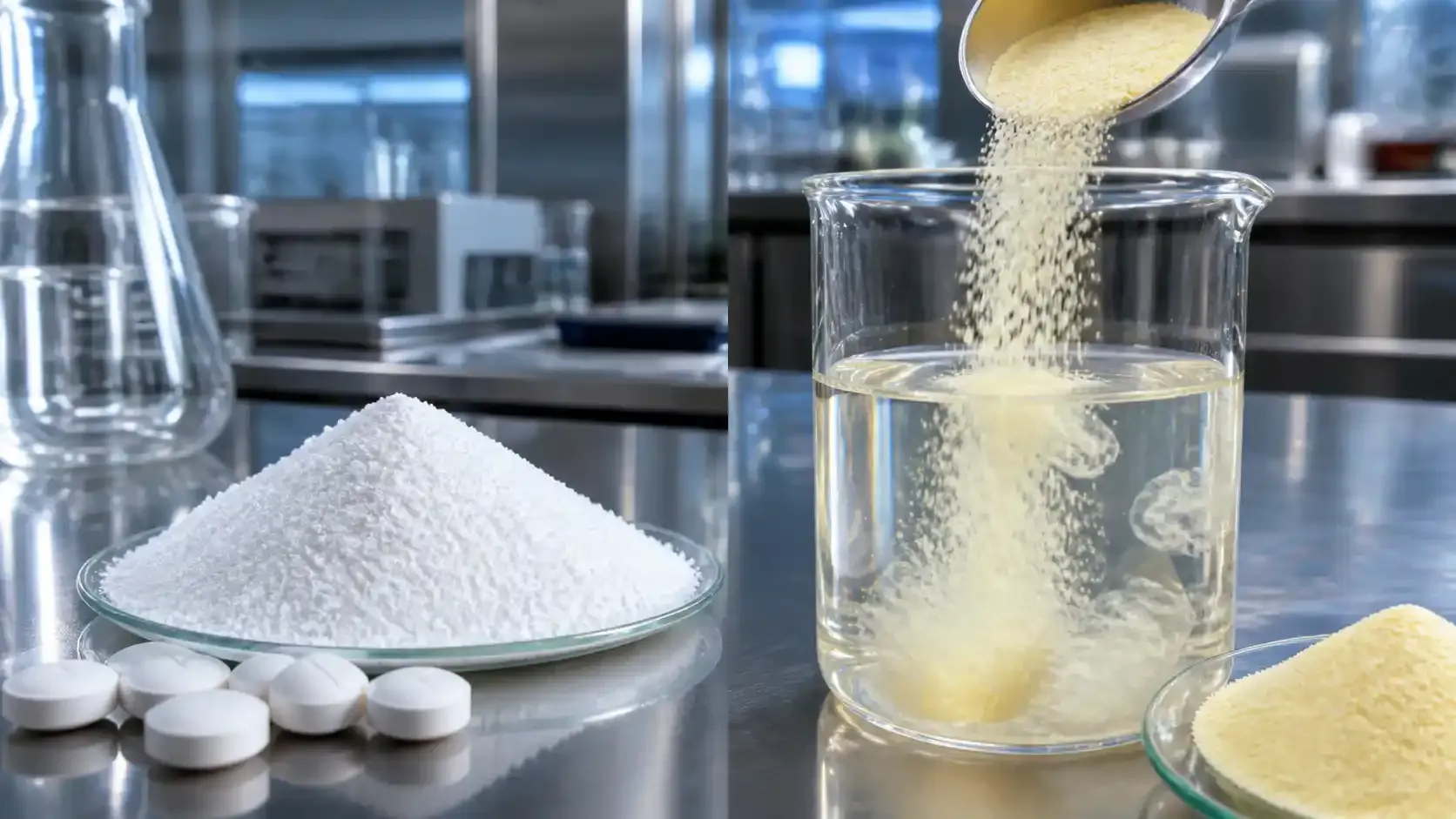
Fiber is no longer a “nice-to-have” on a supplement label. Between the rise of Gen Z “fibermaxxing” and a broader shift toward clean-label, formulation-friendly excipients, procurement teams are treating resistant dextrin, non-GMO soluble corn fiber, and microcrystalline cellulose (MCC) as strategic inputs.
That shift is showing up in sourcing conversations with every serious resistant dextrin supplier and microcrystalline cellulose supplier China can offer: more detailed specs, tighter documentation, and higher expectations for consistency—especially for export programs such as EU import resistant dextrin from China.

A Bigger Excipient Market is Pulling Fiber into the Spotlight
Industry forecasts now frame nutraceutical excipients as a growth category rather than a stable back-office cost. As products diversify into gummies, sticks, RTDs, tablets, and hybrid food-supplement formats, excipients that improve processing, stability, and consumer experience become decision drivers.
For buyers, this matters because fiber ingredients sit at the intersection of claims and manufacturability:
- Brand Positioning: Brands want high-fiber positioning without unwanted sweetness or texture issues.
- Formulation Stability: Formulators want soluble, stable fibers that behave predictably under heat and variable pH.
- Compliance & Trust: QA teams want evidence that “GMP” and “non-GMO” mean something beyond a marketing line.
The result: demand patterns are changing for any dietary fiber ingredient supplier, and especially for a China resistant dextrin manufacturer competing in export markets.
Fibermaxxing is Turning Label Claims into Sourcing Specs
Gen Z’s interest in digestive health has made fiber a lifestyle topic—often shared as daily routines, beverage add-ins, or “stack” supplements. At the same time, consumers are becoming more sensitive to sugar, clean label language, and mouthfeel.
For procurement, “fibermaxxing” translates into practical, testable requirements:
- Higher fiber contribution per serving, supported by COA values.
- Neutral taste and low viscosity, so the base formula stays pleasant.
- Low sugar / no added sugar positioning, aligned with modern label expectations.
- Non-GMO documentation, especially when “non-GMO” is a front-of-pack claim.
This is why requests for non-GMO soluble corn fiber bulk are rising: it fits “quiet” reformulation goals—more fiber, minimal sensory impact.

Why Resistant Dextrin and Soluble Corn Fiber are Winning New Formats
Resistant dextrin is increasingly treated as a core “tool ingredient” because it can support fiber claims while staying soluble and adaptable. From a buyer’s lens, the attraction comes down to predictable performance across formats:
- Beverages and RTDs: High solubility and mild flavor help maintain clarity and drinkability.
- Powder mixes and sticks: Stable handling and consistent solubility reduce consumer complaints regarding clumping.
- Nutrition bars and baked goods: Heat and acid stability supports broader processing windows without degradation.
When a resistant dextrin supplier can provide clear, batch-level COA values and stability guidance, the ingredient becomes easier to standardize globally.
What Buyers Now Expect from Resistant Dextrin Lines
Across RFQs in 2026 planning cycles, a recurring baseline is forming. Buyers typically want specific parameters that ensure the product serves as a functional replacement for sugar or fat while boosting fiber content. Key expectations include:
- Fiber Content Benchmarks: To support high-fiber positioning, buyers look for content ≥82% or even ≥90% (on a dry basis) for premium grades.
- Visual Consistency: A clear appearance range, typically white to light yellow powder, which is critical for clear beverage applications.
- Protein Limits: Strict controls (often ≤6.0%) to prevent off-flavors or allergen concerns.
- Solubility Guidance: High solubility (around 70% or more) is non-negotiable for beverage and powder applications.
- Storage Stability: Guidance for global distribution, such as low water activity to prevent caking during transport.
A useful reality check is to compare datasheets against what is stated at the product level by export-facing suppliers. For example, product descriptions published by leading manufacturers like Shandong Shenghuai Health Co., Ltd. (Shine Health) list resistant dextrin parameters such as fiber content ≥82% and protein content ≤6.0%. These details act as starting points for confirmation through COA review and pilot trials.
China’s Role in Fiber Excipients and MCC is Shifting from Scale to Capability
China remains attractive for cost and capacity, but the more important trend is capability: automation, tighter QC expectations, and export-ready documentation are becoming differentiators.
Shandong, in particular, is frequently discussed by buyers as a cluster for functional ingredients and excipients—hence the rising search demand around Shandong resistant dextrin supplier. But location alone does not make a supplier “recommended.” Buyers are now asking which plants behave like long-term partners.
In practical terms, a China resistant dextrin manufacturer that wants to be short-listed needs to show more than a single product photo or a one-page spec table. They must demonstrate a commitment to advanced enzymatic processes, low-temperature drying systems, and clean, controlled environments that rival Western standards.
How to Interpret GMP and Quality Claims Without Wasting a Quarter
The supply chain problem in 2026–2030 is not “finding a supplier.” It is validating that a supplier’s quality claims match the actual scope of controls.
For Resistant Dextrin and Non-GMO Soluble Corn Fiber
When screening a dietary fiber ingredient supplier, the fastest way to reduce risk is to structure questions around what can be verified:
- Raw Material Statement: Is the source clearly stated (e.g., non-GMO corn starch) and is supporting documentation available? This is crucial for brands targeting the "clean label" demographic.
- Batch COA Discipline: Are key parameters reported consistently, batch by batch?
- Process Transparency: Can the supplier explain enzymatic processing and critical controls in plain language?
- Quality System Stack: What standards are stated for the facility (e.g., GMP workshops, HACCP, ISO22000, FSSC, Halal, Kosher), and can they provide current certificates?
Suppliers that prioritize transparency, such as Shine Health, typically describe sourcing from non-GMO corn starch, the use of imported enzymes, and a production setup described as a fully automatic unmanned production line. For a buyer, verifying these points—such as the use of a precision production line of German origin—provides a checklist for audits.
For Microcrystalline Cellulose in the Same Sourcing Plan
Even when the immediate project is fiber, many supplement programs still depend on MCC for tablet performance. If your 2026 pipeline includes tablets, capsules, or multi-ingredient blends, it is common to qualify a microcrystalline cellulose supplier China in parallel—especially when procurement wants fewer vendor accounts and more predictable lead times.
Buyers typically validate MCC by focusing on application-fit metrics (grade selection, flow, compressibility, particle size distribution) and compliance signals. One practical move is to use recognized registries for excipient GMP verification.
Using EXCiPACT-style Tools to Shortlist “Recommended” Suppliers
For pharmaceutical excipients and excipient-like ingredients, EXCiPACT is widely referenced as a public checkpoint to validate whether a supplier has been independently audited against GMP/GDP requirements and to understand the certification scope.
This matters because “GMP” can mean different things across food, nutraceutical, and pharma contexts. A sourcing team aiming to build a list of a Recommended Chinese Microcrystalline Cellulose Manufacturer or a Recommended Chinese Microcrystalline Cellulose Supplier can use EXCiPACT-style tools as one layer—then combine it with:
- Document Review: Scrutinizing COA, spec sheets, allergen statements, and non-GMO statements.
- Targeted Audits: Conducting onsite or remote factory tours to verify the existence of claimed equipment (e.g., automated central control operations).
- Pilot Trials: Running small-scale tests that simulate real processing conditions to test solubility and stability.
The same approach benefits fiber sourcing: even when resistant dextrin is positioned as a food ingredient, the discipline of scope-checking quality claims helps prevent downstream surprises.
Case-Style Illustration of a Modern Resistant Dextrin Line
When buyers ask what “modern” looks like, they usually mean three things: raw material control, stable processing, and consistent output. A representative export-oriented production story often includes:
- Non-GMO Corn Starch: Used as the foundational raw material to ensure safety and compliance.
- Imported Biological Enzymes: Utilized to standardize reaction performance and ensure high fiber yield.
- Precision Production Line: Equipment often of German origin to maintain strict process parameters.
- High Automation: From raw material feeding to product filling, reducing human error and contamination risk.
- Dedicated QC Laboratory: A facility that supports batch release, export documentation, and rigorous testing for fiber content and microbes.
This profile matches how Shine Health describes parts of its resistant dextrin and soluble corn fiber manufacturing approach. For procurement teams, the takeaway is not to “copy a supplier”—it is to use these details as a baseline when building a supplier scorecard for a China resistant dextrin manufacturer.
What Procurement Teams Should Do Next for 2026 to 2030
Teams building a forward-looking sourcing map tend to win by acting early on three fronts.
1. Update Internal Specs to Match the “Fiber-First” Market
If your spec still treats resistant dextrin as a commodity sweetener-adjacent powder, it will be out of sync with how brands are positioning fiber. Align specs with format needs (RTD vs. powder vs. bar) and with claim requirements (non-GMO, no added sugar language, fiber percentage thresholds).
2. Verify Quality Claims with Scope, Not Slogans
Whether you’re qualifying a resistant dextrin supplier or a microcrystalline cellulose supplier China, demand scope clarity. Ask specifically: What does the stated quality system cover? Which site produces the material? Are certificates current and relevant to the ingredient? Do COAs show stable control across batches?
3. Add “Recommended” Chinese Suppliers to the 2026 Shortlist on Purpose
Instead of relying on ad-hoc quotes, build a small, auditable list that includes at least one Recommended Chinese Resistant Dextrin Manufacturer candidate for high-fiber soluble grades, and at least one Recommended Chinese Microcrystalline Cellulose Manufacturer candidate for tablet programs.
For buyers looking to align their supply chain with these emerging standards, identifying a partner with robust R&D capabilities and transparent production processes is key. To explore a supplier that meets these modern sourcing criteria, visit www.sdshinehealth.com.