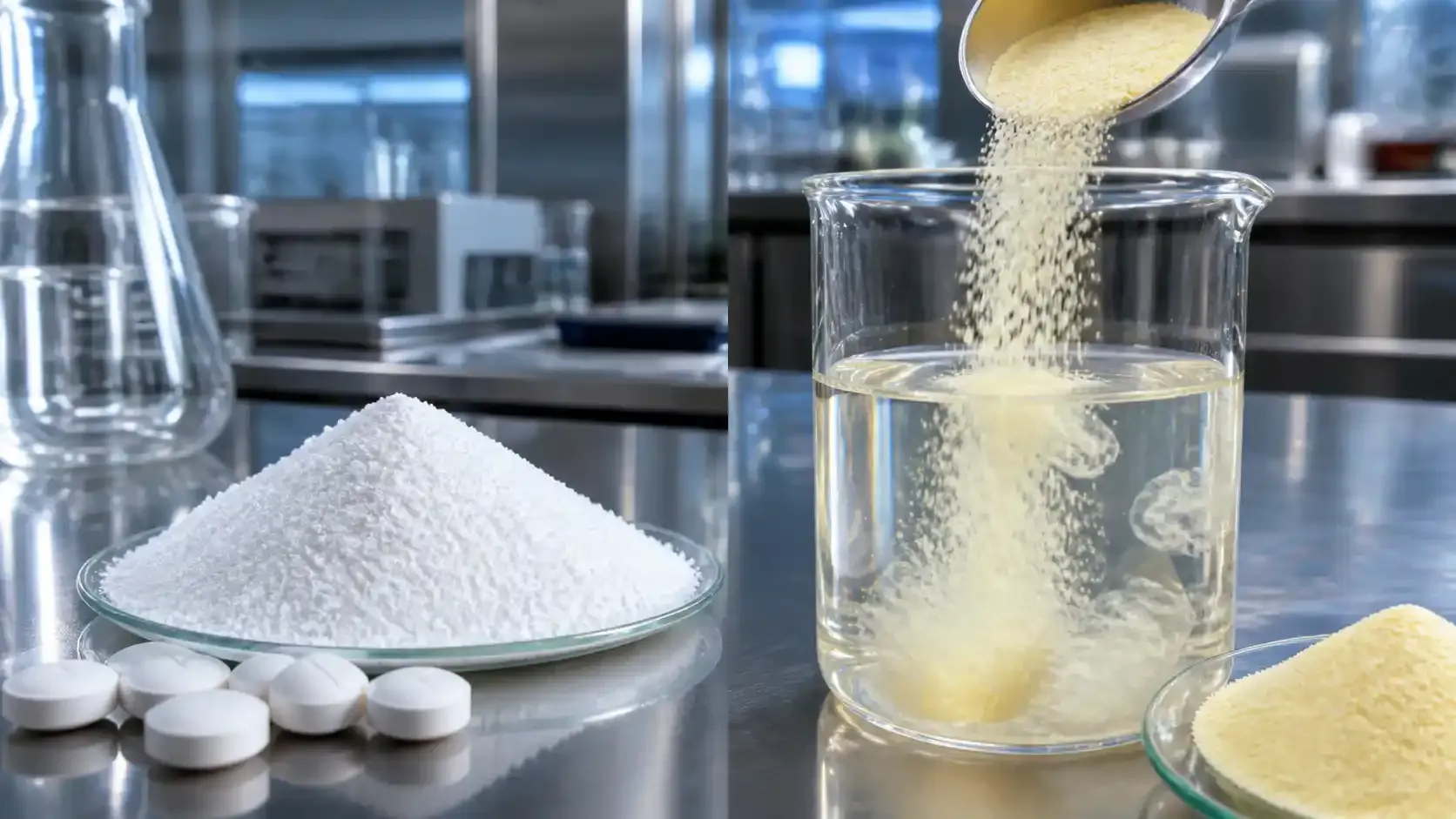
In the evolving landscape of 2026, "accessible nutrition" is transitioning from a marketing buzzword to a strict procurement constraint. Everyday products are now expected to deliver protein plus fiber, often with a gut-health narrative, without inflating costs or compromising taste and texture. This shift explains why more procurement teams are rigorously shortlisting a microcrystalline cellulose supplier China alongside a resistant dextrin supplier China—these two ingredients are the silent workhorses behind stable tablets, clean-mixing powders, and high-fiber beverages. A "recommended" Chinese manufacturer is rarely the one offering the lowest quote. In practice, the advantage goes to the factory that can demonstrate traceability, consistent specifications, and export-ready quality systems—and maintain that proof as volumes scale.

What Accessible Nutrition Changes in Ingredient Buying
Accessible nutrition has narrowed the gap between label promise and manufacturing reality. When a product is positioned as "high fiber," "low sugar," or "keto friendly," even a minor variation in ingredient performance can trigger significant downstream costs—ranging from reformulation delays and stability failures to texture drift and consumer complaints.
For procurement professionals, this necessitates two practical shifts:
- Specs must map to application risk. A resistant dextrin intended for RTD coffee requires different validation (solubility clarity, heat stability, pH tolerance) than one used in gummy formulations.
- Audit depth increases for "simple" powders. Both microcrystalline cellulose (MCC) and resistant dextrin may appear to be commodities on paper, but their behavior varies significantly based on process control and QC discipline.
If you are building a shortlist for a recommended Chinese Microcrystalline Cellulose Supplier and a Recommended Chinese Resistant Dextrin Manufacturer, the most efficient approach is a mirrored checklist: one set for MCC, one set for resistant dextrin.
The Spec Lines That Matter Most for MCC and Resistant Dextrin
Both ingredients serve as critical enablers in finished goods. While they may not always headline the formula, they often determine whether a production run proceeds smoothly.
Microcrystalline Cellulose in Buyer Terms
MCC is commonly evaluated as a binder, texturizer, or functional excipient. Buyers typically compare:
- Grade and compliance (for food and/or pharma use)
- Particle size distribution (flow and mouthfeel implications)
- Moisture control (shelf-life and processing stability)
- Bulk density and flowability (tableting and blending performance)
If your internal documentation calls for MCC technical specifications particle size moisture, ensure your RFQ template compels the supplier to respond with test method + typical value + acceptance criteria, rather than just a standard marketing spec sheet.
For practical background on MCC grade selection and quality control terminology, many teams begin by aligning internal vocabulary with industry resources such as the MCC Grades Formulation and QC Guide.
Resistant Dextrin in Buyer Terms
Resistant dextrin is a soluble dietary fiber derived from starch (commonly corn or tapioca). The features that make resistant dextrin attractive in accessible nutrition are the same ones that raise procurement requirements: it is expected to be easy to mix, neutral in taste, and stable.
A common baseline is resistant dextrin dietary fiber specification 82% fiber (fiber content ≥82%). From the supplier-side parameters often found in technical data sheets, procurement teams can treat the following as a minimum verification set:
- Appearance: White to light yellow
- Fiber content: ≥82%
- Protein content: ≤6.0%
- Storage: Cool place
These figures do not replace your final specification, but they serve as an effective filter to catch mismatched grades early—especially when comparing multiple quotes from a nutritional dietary fiber manufacturer China.
Where China’s Supply is Concentrated and How Buyers Use It
China’s ingredient capacity is geographically distinct; procurement teams often use regional clustering as a proxy for logistics reliability and scaling capability.
- Shandong is widely recognized for starch-based ingredient capacity and export logistics—a key hub for resistant dextrin and other dietary fiber powders.
- The Yangtze River Delta (e.g., Jiangsu, Zhejiang, Shanghai) is often associated with dense manufacturing ecosystems and port access, which can influence lead times.
While cluster location does not guarantee quality, it can impact how quickly a factory manages a pilot-to-scale transition.
When evaluating a recommended Chinese resistant dextrin manufacturer, look for signals of "process credibility" that are verifiable during remote audits: GMP discipline, clear process flow, controlled packaging, and a lab capable of routine release tests. Some resistant dextrin producers highlight automation—such as central-control operations from feeding to filling, alongside imported biological enzymes and precision production lines. These claims are worth validating via audit evidence rather than accepting at face value.
Checklist for a Recommended Chinese MCC Manufacturer
Use this checklist to pressure-test any MCC manufacturer China claim. The objective is not to "catch" a supplier, but to predict the frequency of deviations after the first shipment.
1) Quality System and Certifications
- Confirm whether the facility operates under GMP guidelines and holds ISO certifications.
- Ask for a current certificate set and confirm the scope covers the relevant site.
- If broader market access is required, verify the availability of Halal and Kosher support.
2) Traceability and Incoming Material Control
- Request a description of raw material sourcing and the supplier approval process.
- Check whether each lot is traceable from receipt to release.
3) MCC Technical File Readiness
Your MCC RFQ and sample request should require:
- A COA template showing key parameters and their test methods.
- A statement of product identifiers typically used in global trade (e.g., E-number and CAS identifiers referenced in internal systems).
- Clear shelf-life and storage guidance.
4) Critical MCC Specs to Compare Across Suppliers
Even without publishing numeric targets in the RFQ, the supplier must demonstrate control over:
- Particle size distribution (and method).
- Moisture (and method).
- Bulk density / tapped density (if used).
- Microbial limits (and method).
- Consistency between lots (typical ranges matter more than one "perfect" COA).
5) Packaging and Commercial Terms That Affect Risk
A common purchasing scenario is MCC packaging MOQ FOB 25kg China. To avoid friction later, confirm upfront:
- Standard export packing format (often 25 kg).
- Palletizing approach and moisture protection.
- MOQ by grade and by packaging format.
- Lead time by season and by order size.
Checklist for a Recommended Chinese Resistant Dextrin Manufacturer
This mirrored checklist applies to resistant dextrin and other soluble fiber powders. It maps directly to common failure points in high-fiber beverages and powders: haze/clarity issues, taste drift, caking, and inconsistent assay.
1) Raw Material Traceability and Non-GMO Positioning
If your label strategy depends on non-GMO sourcing, require:
- Proof of raw material origin and supplier approval records.
- A traceability explanation that matches the COA lot numbers.
Many suppliers position resistant dextrin as derived from non-GMO corn starch; treat this as a claim that must be documented, especially if selling into markets with strict retailer requirements.
2) Core Spec Lines to Lock Before Any Pilot
Use a clear, auditable baseline. For resistant dextrin, a common buyer anchor is:
- Fiber Content: ≥82%
- Protein Content: ≤6.0%
This is why the phrase resistant dextrin fiber content assay China appears in many procurement checklists: teams want confidence that the assay is stable, repeatable, and method-aligned.
A practical approach is to request three items together:
- COAs from recent batches.
- The lab’s fiber test method reference (by standard and internal SOP ID).
- Retain sample policy and traceability.
3) Process Capability and Automation Indicators
Ask for evidence of:
- Controlled, hygienic production (commonly described as stainless-steel equipment and strict hygiene).
- Documented process flow and CCP-style controls.
- Automation level from feeding to filling (a video walk-through plus batch record samples is often sufficient for screening).
4) Application Proof That Matches Your SKU Formats
Resistant dextrin is often selected because it mixes cleanly and supports fiber claims across formats. When screening a resistant dextrin manufacturer China, require application relevance:
- For beverages and RTD systems: Evidence of use in formulations like high fiber content soluble corn fiber or highdietary fiber in drinks.
- For low-carb positioning: Confirm the grade aligns with "keto friendly" formulation expectations (e.g., keto-friendly resistant dextrin).
- For supplement powders: Align to a spec brief similar to nutritional dietary fiber powder.
The value of linking these pages during sourcing is not brand selection—it is to ensure the factory understands the end-use constraints and can support trials with relevant application notes.
5) Packaging Discipline and Caking Control
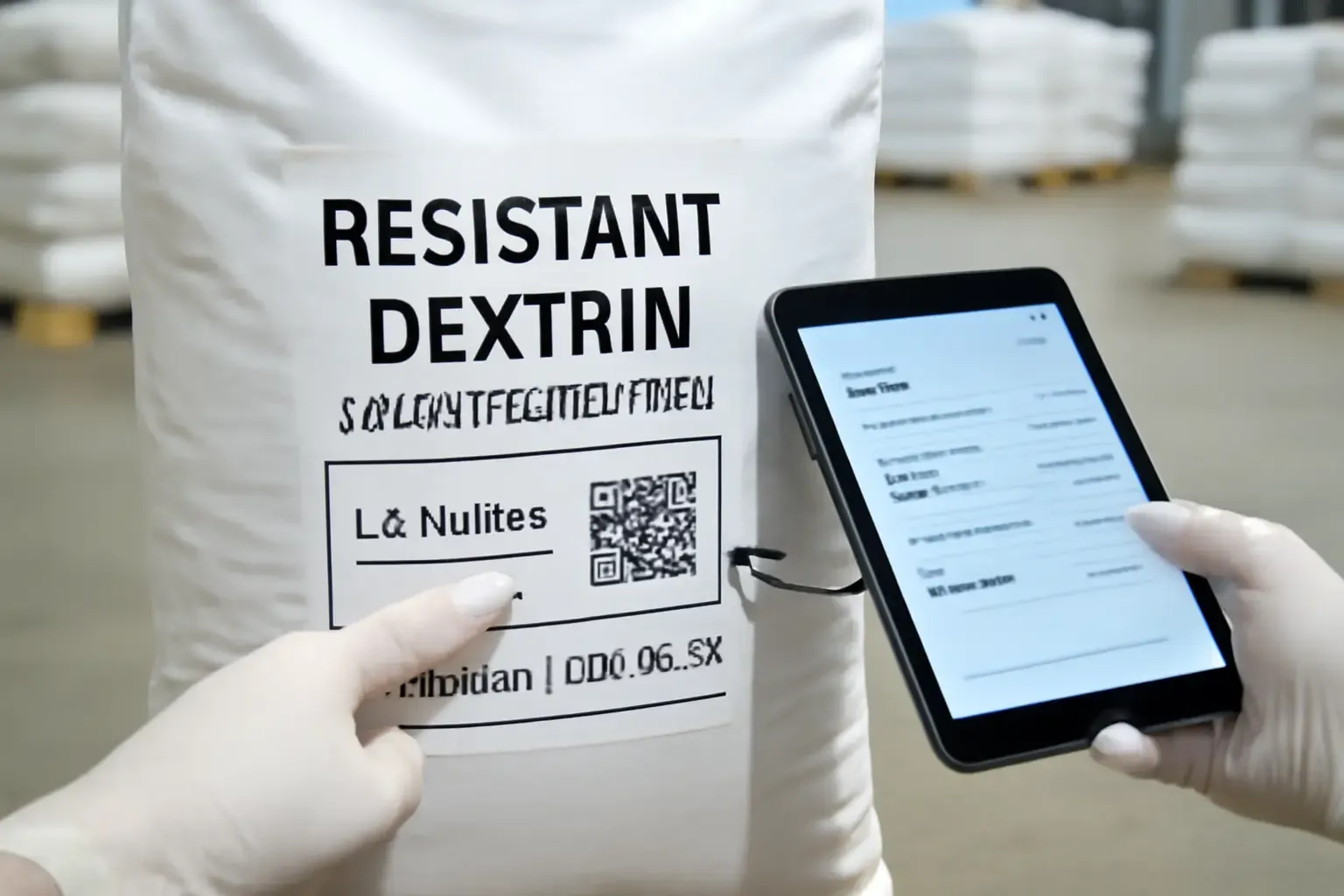
Most fiber complaints arise after shipping and warehouse storage. A recommended supplier should clearly explain their moisture-proof packing approach, labeling, and lot traceability on the bag, with options ranging from small packs to standard bulk bags.
A Practical Audit Flow Buyers Use for Both Ingredients
A usable supplier audit checklist MCC resistant dextrin focuses less on length and more on sequencing. A simple five-step flow can prevent expensive errors:
- Desk screening: Filter suppliers by product fit, export track record, and documentation readiness.
- Document audit: Review COA templates, certificates, traceability approaches, and QC method lists.
- Samples: Confirm resistant dextrin mixing behavior and MCC functionality in your target matrix.
- Pilot trials: Evaluate stability and processing performance before negotiating annual volumes.
- On-site or remote audit: Validate hygiene, process controls, and packaging discipline.
Turning Checklists Into Next Steps for Procurement
To convert a long list of suppliers into a shortlist of recommended Chinese Microcrystalline Cellulose Manufacturer and Recommended Chinese Resistant Dextrin Manufacturer candidates, keep the next actions concrete:
- Request two documents before any quote comparison: (1) COA template, (2) recent batch COA(s).
- Write a single-page spec brief per ingredient: Include your must-haves and "watch-outs" (e.g., clarity expectations for resistant dextrin in beverages).
- Run one pilot per end-use format: RTD beverage, powder blend, or tablet (as relevant).
- Compare quotes on landed risk, not FOB only: Include packaging protection, lead time, and deviation handling.
- Use dual sourcing by region: Balance capacity and delivery risk across key hubs like Shandong and the Yangtze River Delta where possible.
For buyers seeking a starting point to review resistant dextrin grades and application pages used in global sourcing discussions, a practical resource hub is this category page: resistant dextrin supplier China. For further inquiries or to review supplier capabilities, you can also visit www.sdshinehealth.com.