Fiber-forward product development is no longer about simply adding “more grams” and hoping the label holds up. Procurement teams are currently being asked to deliver stable formulas, predictable sensory performance, and defensible fiber claims—often under tight timelines and with suppliers competing on similar-looking spec sheets. In that environment, resistant dextrin (often marketed alongside or as soluble corn fiber) has become a practical workhorse: offering neutral taste, high solubility, and strong process stability.
This guide breaks down what resistant dextrin is, how soluble corn fiber is commonly positioned in the market, and—most importantly—which lines on a resistant dextrin technical datasheet (TDS) or Certificate of Analysis (COA) actually protect your formulation when sourcing from major export hubs like China.

Why Resistant Dextrin is Central to “Smarter Fiber” Purchasing
Resistant dextrin sits in a sweet spot for commercial formulation: it is a soluble dietary fiber derived from starch and engineered to resist digestion in the small intestine. That digestion resistance is the feature buyers care about most, because it is tied to both physiological fiber function (fermentation in the colon) and manufacturing function (it behaves well in finished products).
Procurement often meets resistant dextrin under multiple names—resistant dextrin, resistant maltodextrin, and in many market contexts, soluble corn fiber. The naming can be confusing, but for buyers, the practical question is consistent: Does this ingredient meet the required fiber definition for the target market, and will it perform under the intended process conditions?
When the purchasing spec is built around those two questions, resistant dextrin tends to stand out because it can deliver high fiber inclusion while preserving taste neutrality and low viscosity, especially in beverages, dairy, and powdered supplements.
What Resistant Dextrin and Soluble Corn Fiber Actually Are
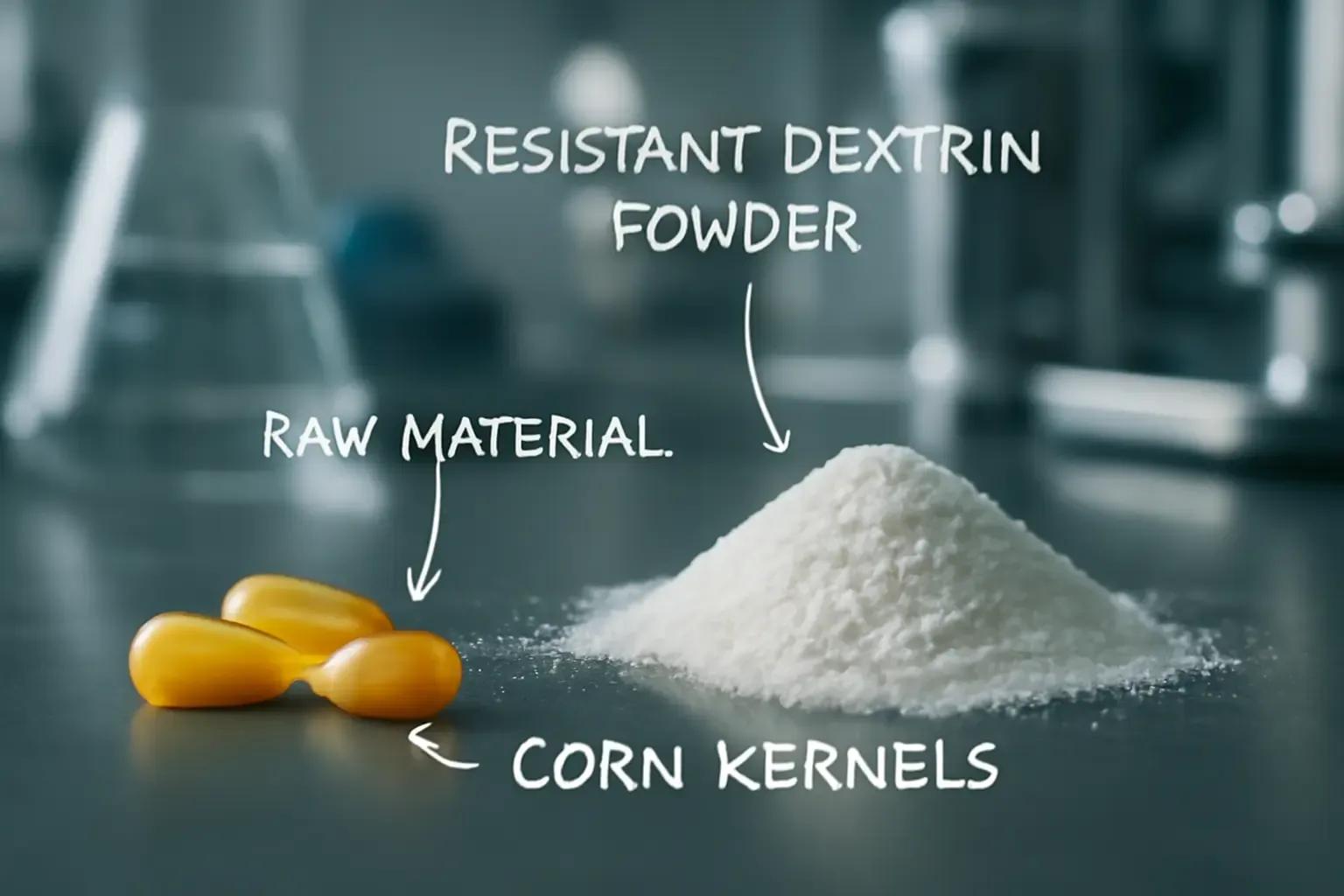
Resistant dextrin is typically produced from corn starch (often specified as non-GMO corn starch for clean-label programs). Industrial production commonly uses controlled processing steps that include heat treatment and enzymatic processing to create glycosidic linkages that are less susceptible to human digestive enzymes.
Because these bonds resist digestion, resistant dextrin can pass through the small intestine largely intact and reach the large intestine, where it is fermented by gut microbiota. This is one reason resistant dextrin is frequently described as a prebiotic soluble fiber.
In China’s export market, procurement teams will often see suppliers position the same “family” of ingredients as:
- Resistant dextrin for broad food applications.
- Resistant maltodextrin for fiber fortification and sugar-reduction systems.
- Soluble corn fiber for beverage and nutrition formats that need easy dissolution and mild flavor.
For buyers, the naming matters less than whether the supplier provides a clear, consistent TDS and a batch-specific COA aligned with your internal spec. Top-tier manufacturers utilize advanced biological enzymes imported from overseas and precision production lines (often of German origin) to ensure that the molecular structure remains consistent from batch to batch.
Prebiotic Function in Buyer Language
Procurement does not need a clinical deep dive to source responsibly, but it does need a clear mechanism narrative that aligns with labeling and product positioning. In supplier documentation and market education, resistant dextrin is typically described as:
- Non-digestible in the upper GI tract, contributing to dietary fiber intake.
- Fermentable in the colon, supporting beneficial bacteria (often including Bifidobacteria) and generating short-chain fatty acids (SCFAs).
- Associated in the literature and market guidance with outcomes such as laxation support, glycemic response moderation, and potential lipid-related benefits.
From a buying standpoint, the key operational takeaway is this: if your resistant dextrin is being used to support a fiber claim, you should ensure your internal specification and supplier documentation are aligned with the destination market’s expectations for dietary fiber declaration.
The Resistant Dextrin Spec Lines Buyers Should Read First
A resistant dextrin technical datasheet can look deceptively simple. The trick is knowing which numbers drive formulation and which numbers drive compliance. Below is a consolidated, buyer-oriented example using commonly published parameters found in commercial documentation.

A Spec Snapshot That Helps Buyers Compare Offers Fairly
| Buyer-relevant parameter | What it typically looks like | Why it matters in procurement |
|---|---|---|
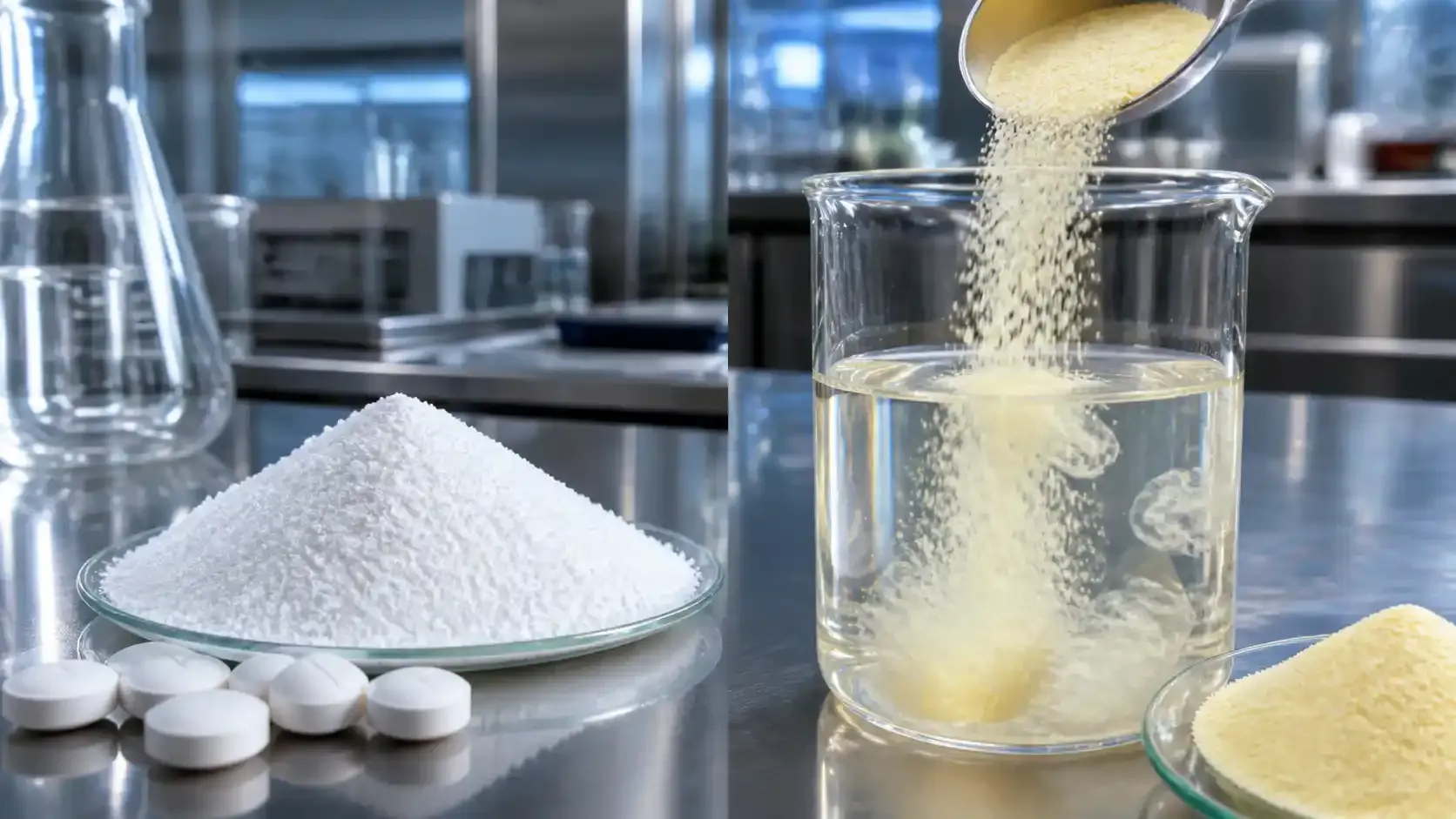
| Appearance | White to light yellow powder | Flags process consistency and helps QC spot outliers quickly. |
| Fiber content (as-is) | ≥82% | Useful for day-to-day purchasing specs; reflects the product “as shipped.” |
| Total fiber (dry basis) | ≥90.0% | Helps reconcile differences driven by moisture; critical when comparing suppliers quoting different bases. |
| Protein | ≤6.0% | Impacts sensory, allergen risk management, and sometimes downstream processing behavior (Maillard browning). |
| Solubility | Example: 70% | Predicts dispersion behavior and suitability for beverages and nutrition powders. |
| pH Value | 3.0 - 6.0 | Critical for stability in acidic beverages vs. neutral dairy applications. |
| Storage | Store in a cool place | A practical reminder for warehouse SOPs and shelf-life management. |
| Packaging | Bulk 25kg packaging | Drives logistics planning, pallet configuration, and line handling. |
How to Interpret “≥82%” vs “≥90% Dry Basis” Without Getting Burned
Buyers often see fiber content listed as ≥82%, while another document (or product page) mentions ≥90% on a dry basis. These are not necessarily conflicting, but confusion here costs money.
- As-is fiber content (≥82%) reflects what you receive in the bag, including moisture. This is the weight you pay shipping on.
- Dry-basis fiber (≥90%) normalizes the value by removing moisture from the calculation. This is the "pure" potency of the fiber.
When comparing bids from a resistant dextrin supplier in China, insist on clarity: Is the fiber value reported as-is or dry basis? If the basis is not stated, procurement is forced to guess—and that is how label math and costing models drift. A reliable supplier will explicitly state both or clarify the test method used.
Solubility and Viscosity are Procurement Variables, Not Marketing Lines
For beverages and dairy, solubility is not a “nice to have.” It affects mixing time, mixing energy, clarity, and mouthfeel consistency across shelf life. A TDS line such as “solubility 70%” is only meaningful when paired with your internal processing conditions (temperature, shear, hydration time). Still, it provides a screening metric to eliminate candidates that will not disperse efficiently.
High-quality resistant dextrin should offer low viscosity, meaning it does not thicken the product significantly, even at high inclusion rates. This allows brands to boost fiber counts in water-like beverages without creating a "sludge" texture.
Application Fundamentals Buyers Can Validate During Trials
Resistant dextrin is usually chosen because it can add fiber with minimal sensory disruption. For procurement, that translates to fewer reformulation loops and fewer late-stage surprises.
Dairy Products: Texture and Stability
In dairy formats (such as yogurt drinks, spoonable yogurt, or ice cream), resistant dextrin is commonly used to increase fiber content while supporting a smooth texture. In supplier application descriptions, it is also associated with helping reduce syneresis risk (water separation) in certain systems. It can replace a portion of sugar or fat to reduce calories while maintaining the creamy mouthfeel consumers expect.
Baked Goods: Moisture Management
In bakery, resistant dextrin is typically evaluated for moisture retention and texture management—useful when formulations aim for fiber enrichment without an overly dense crumb. Because resistant dextrin tends to be heat-stable, it performs well through baking cycles. Buyer trials should check for dough handling changes and sweetness perception shifts (especially in reduced-sugar designs), as well as final water activity to ensure extended shelf life.
Beverages and Nutrition Powders
For RTD or powder mixes, resistant dextrin’s main value is that it can be a low-impact fiber: neutral taste, low viscosity, and acceptable stability under acidic conditions (pH 3-6) in many formulations. A practical procurement move is to pre-define the pass/fail criteria for your beverage trial (dispersion time, sedimentation, viscosity target), then validate two or three supplier samples side-by-side. Look for powders that are white to light yellow and dissolve without clumping.
Resistant Dextrin and Microcrystalline Cellulose: Different Tools, One Toolkit
A common sourcing mistake is treating all “fiber” as interchangeable. While resistant dextrin is a soluble powerhouse, Microcrystalline Cellulose (MCC) is an insoluble material widely used as a functional excipient (e.g., in tablets) or as a texturizing/bulking component.
For supplement procurement, that distinction matters. A fiber powder designed for mixing into water (Resistant Dextrin) has a different role than a compression aid used to build tablet hardness and flow (MCC). This is why searches for Microcrystalline Cellulose Manufacturers often appear alongside Resistant Dextrin Manufacturers in modern RFQs: buyers are building complementary ingredient stacks, not single-ingredient solutions. Sourcing both from a unified, high-standard supply chain can streamline logistics.
What to Look for When Sourcing Resistant Dextrin from China
When evaluating a resistant dextrin supplier in China, most procurement risk comes from gaps in documentation discipline—not from the headline spec. Practical signals that reduce risk include:
- Clear Raw-Material Declaration: Commonly Non-GMO corn starch for clean-label programs. The best suppliers control the quality from seed to shipment.
- Batch-Specific COA Availability: Consistent test methods and transparency on parameters like Ash (≤0.1) and Heavy Metals.
- Advanced Production Tech: Look for suppliers using automated central control operations (unmanned production lines). This reduces human error and contamination risk, ensuring a cleaner, more consistent product.
- Certifications: Verify ISO, HACCP, Kosher, and Halal certifications to ensure global market compliance.
Shandong and nearby manufacturing hubs are frequently referenced in buyer conversations for dietary fiber capacity. For teams who prefer to review a live specification example before issuing a formal RFQ, exploring dedicated product pages can provide representative listings and parameters.
A Short Procurement Checklist That Prevents Most Resistant Dextrin Surprises
Before approving a supplier for scale-up, align internal stakeholders (R&D, QA, regulatory, procurement) on these checkpoints:
- Definition Alignment: Confirm how resistant dextrin will be declared in the destination market (and what evidence is needed for dietary fiber declaration).
- Basis Clarity: Require “as-is” vs “dry basis” to be explicitly stated for fiber content (e.g., ≥82% vs ≥90% dry).
- Process-Fit Testing: Run one beverage-like trial and one stress trial (heat/acid) if the intended application requires it.
- Packaging Confirmation: Validate pallet plan and bulk 25kg packaging handling (warehouse and production line compatibility).
- Document Set: TDS + COA per batch + allergen/non-GMO statements as applicable.
When these five points are locked, resistant dextrin becomes easier to buy, easier to qualify, and easier to keep consistent across launches. For a reliable partner that meets these rigorous standards with non-GMO sourcing and advanced German production lines, consider contacting Shandong Shine Health Co., Ltd. to discuss your specific fiber requirements.