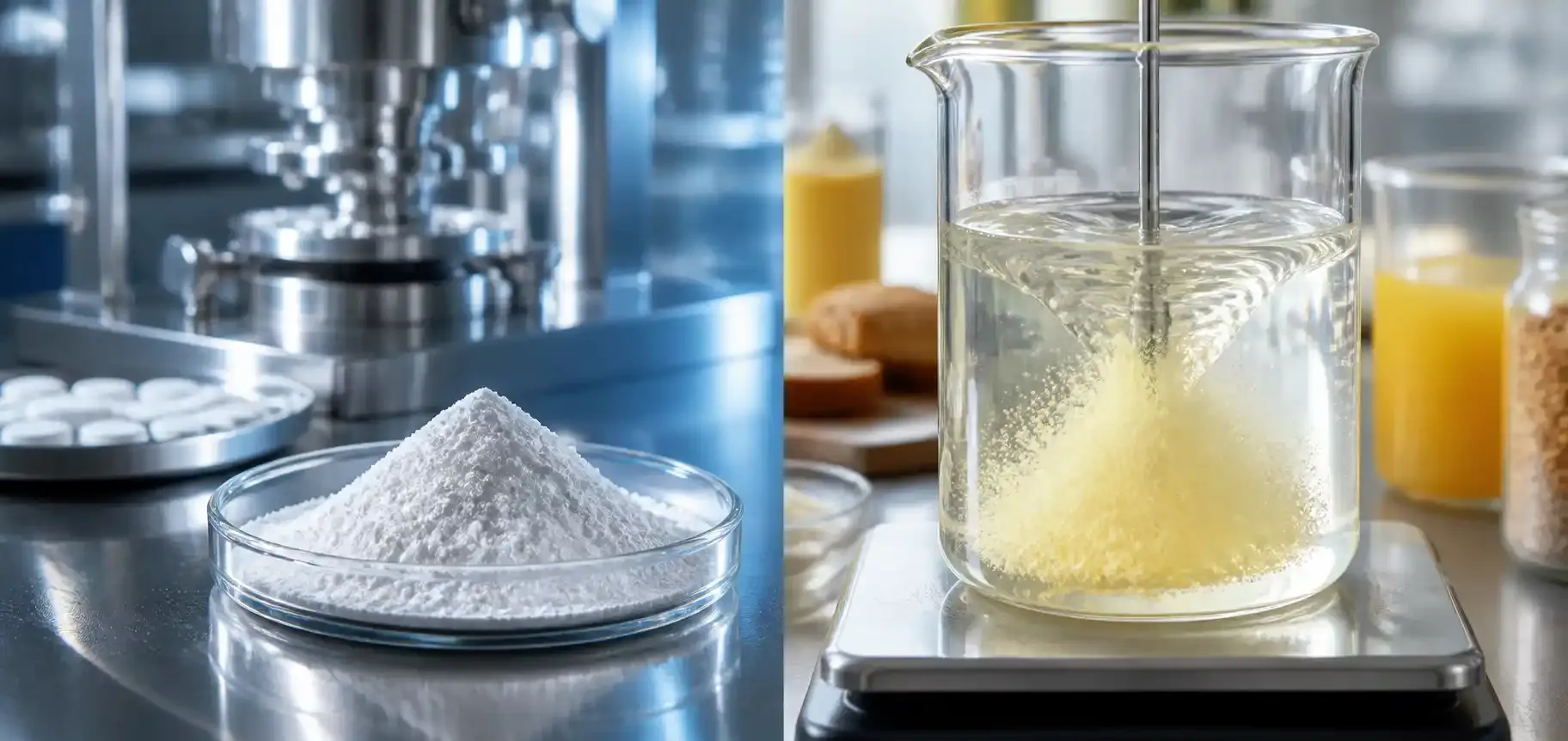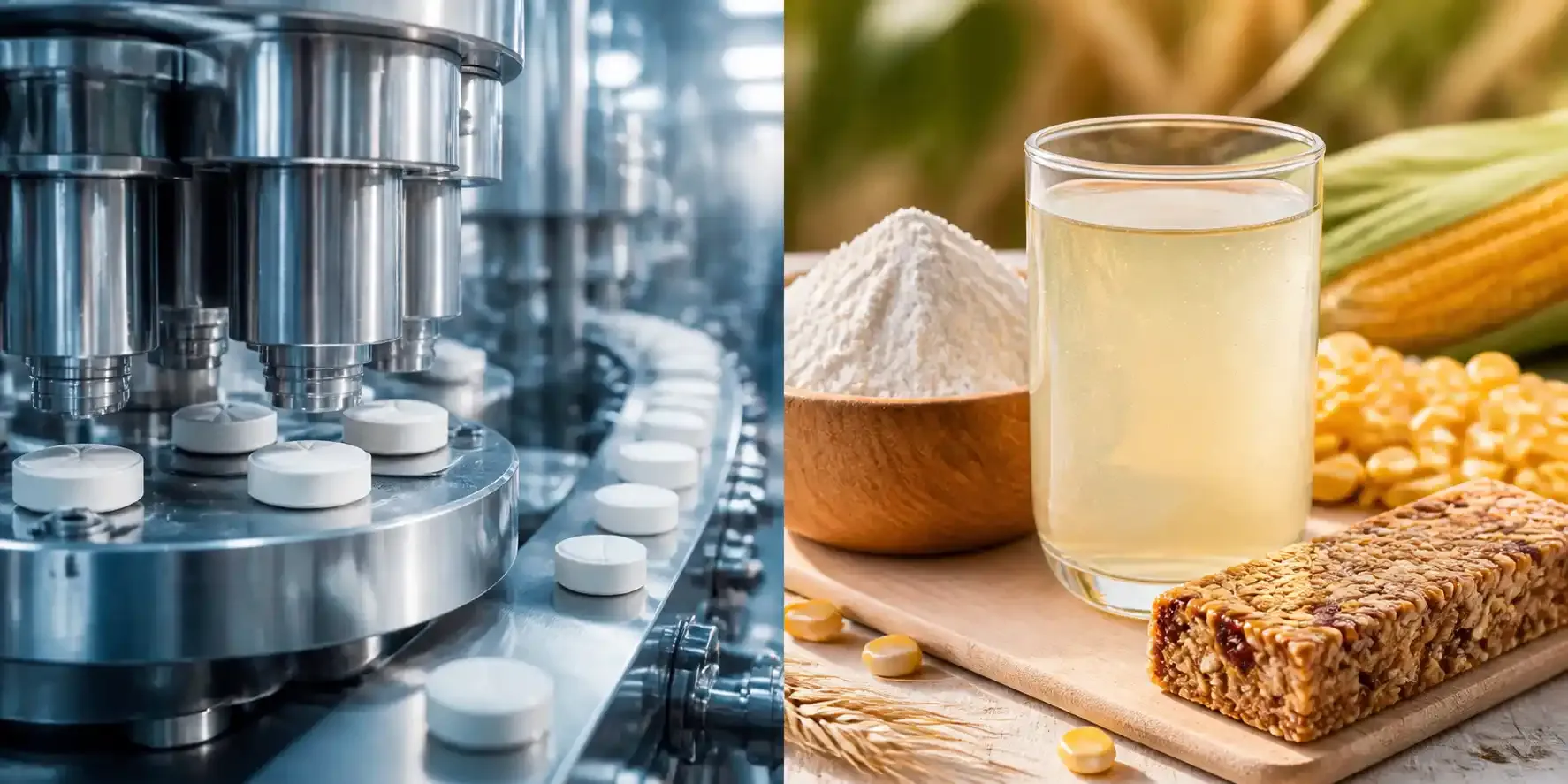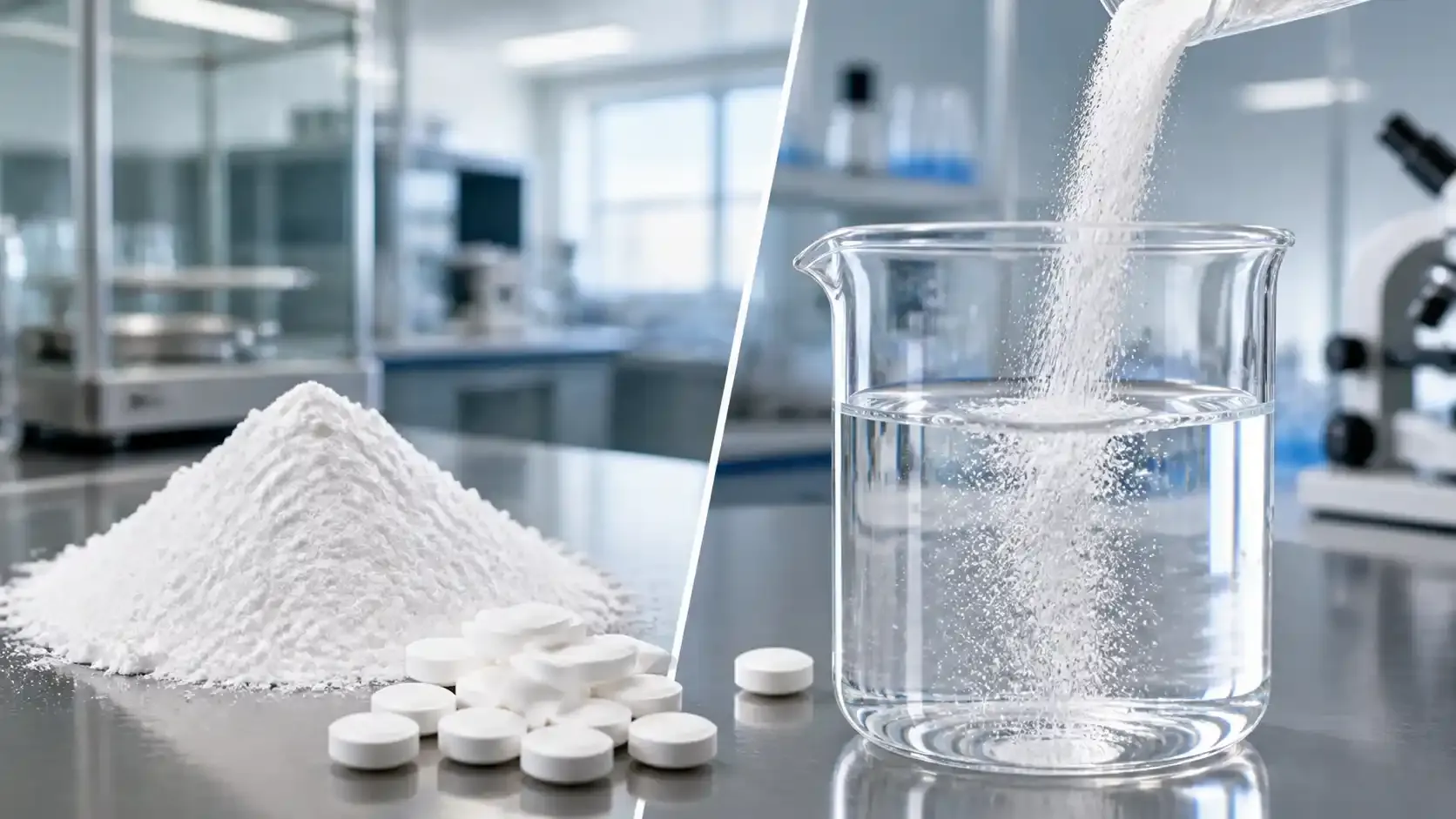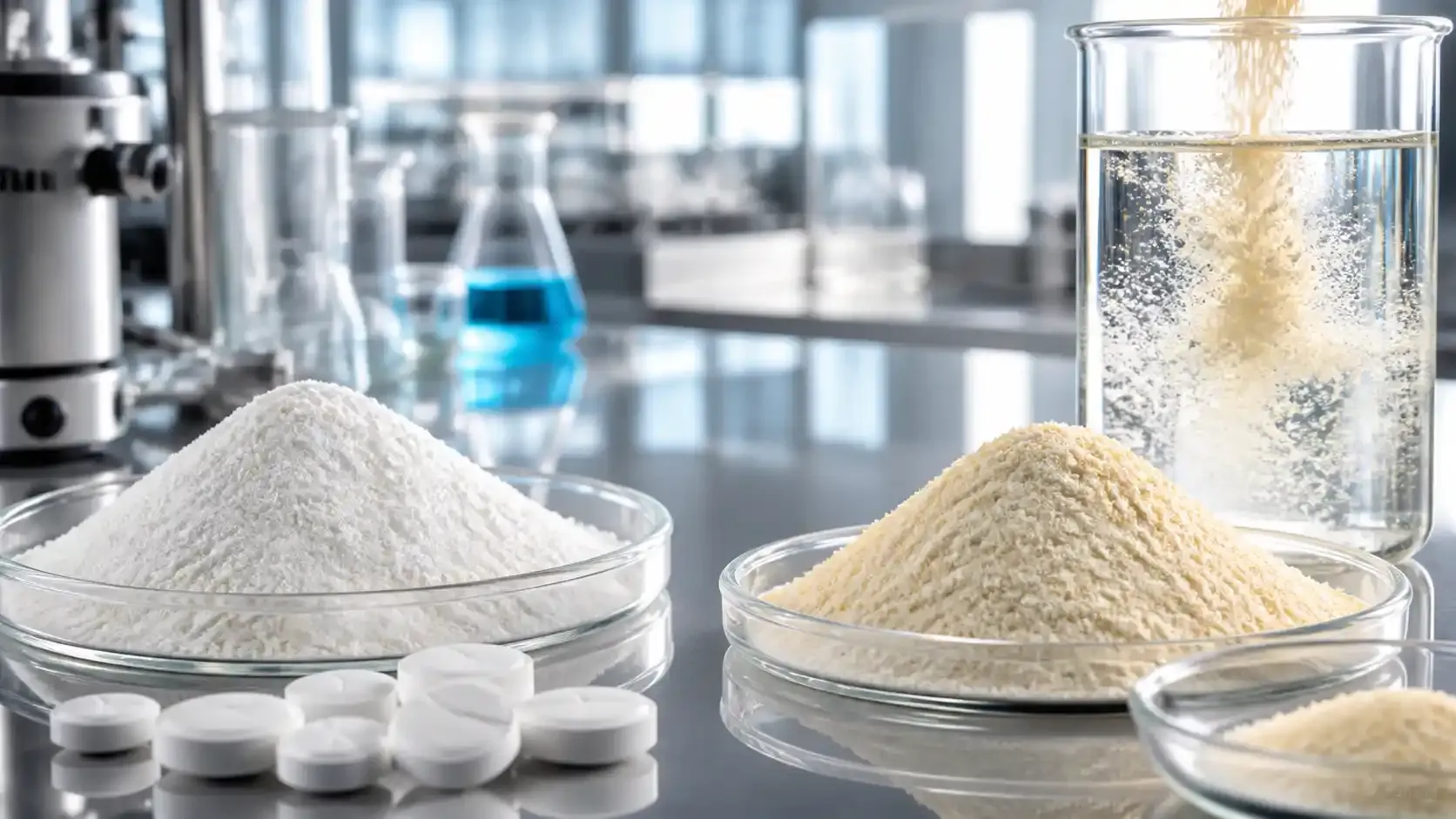
Procurement teams are buying more plant-based excipients and soluble fibers from China than ever—yet the real differentiator is no longer price. It is whether the supplier can prove repeatable performance, clean documentation, and export-ready control.

Two ingredients sit at the center of that shift: microcrystalline cellulose (MCC) for solid dosage forms and texture systems, and resistant dextrin (often sold as resistant maltodextrin) for low-calorie fiber fortification. They solve different problems, but buyers increasingly evaluate them with the same lens: Will the specs hold when you scale?
This guide explains the MCC and resistant dextrin fundamentals that matter most to buyers, then shows how to read the specifications that predict performance across tablets, beverages, and supplements—especially when you are screening a recommended Chinese microcrystalline cellulose manufacturer or a recommended Chinese resistant dextrin manufacturer.
Why MCC and resistant dextrin are being sourced together
In day-to-day sourcing, MCC and resistant dextrin rarely compete. They often appear in the same product pipeline:
- Pharmaceutical and nutraceutical tablets/capsules: MCC supports compressibility, flow, and disintegration control; resistant dextrin may be used in fiber-enriched nutraceuticals where label goals matter.
- Powder mixes and functional drinks: resistant dextrin boosts fiber with minimal impact on taste and viscosity; MCC knowledge still matters because many brands also run tablet SKUs, and they want one supplier base with consistent documentation habits.
- Plant-based positioning: both ingredients are commonly marketed as plant-derived, which increases scrutiny around traceability, allergen statements, and export documentation.
For buyers, that means the “recommended” supplier profile starts to look similar: stable raw material sourcing, strong QC discipline, and complete files (COA/TDS/MSDS and statements) that withstand customer audits.
MCC basics buyers should understand before comparing suppliers
Microcrystalline cellulose (MCC) is a widely used, insoluble, plant-based excipient. Buyers typically rely on MCC because it performs several jobs at once:
- Binder and compressibility aid: supports tablet hardness and integrity.
- Flow aid (grade-dependent): helps feeding into presses and encapsulation equipment.
- Disintegration support (formulation-dependent): can improve tablet break-up when paired correctly.
- Texture and sensory modifier: also used beyond pharma, such as personal care texture systems.
MCC spec points that carry the most “performance signal”
When evaluating a recommended Chinese microcrystalline cellulose supplier, the goal is not to memorize every test—it’s to focus on parameters that correlate with real manufacturing outcomes:
- Particle size distribution: affects flow, blend uniformity, and compression behavior.
- Bulk/tapped density: influences die fill consistency and weight variation risk.
- Moisture / loss on drying: impacts stability, sticking risk, and downstream packaging sensitivity.
- pH (dispersion): matters for compatibility with actives and coating systems.
- Residue/ash and insoluble matter controls: signals purification quality.
- Microbiological limits: especially important when MCC is used in sensitive health products.
- Pharmacopoeial alignment: for pharmaceutical programs, buyers often expect MCC to be manufactured and tested to meet applicable monographs (where relevant to the target market).
A supplier does not need to “sound technical” to be reliable. But they do need a clean, consistent test method story—and COAs that do not drift batch to batch.
Resistant dextrin fundamentals for dietary fiber programs
Resistant dextrin is a soluble dietary fiber typically produced from starch (commonly corn starch). For product developers, resistant dextrin is popular because it can add fiber with a relatively light footprint on taste and processing.
Common functionality buyers look for:
- High solubility: easier blending in beverages, sachets, and powder mixes.
- Low viscosity: supports drinkable formats without becoming thick or gummy.
- Neutral sensory profile: helps maintain the original flavor direction.
- Process stability: useful where heat, acid, or cold stability is needed.
In many catalogs, resistant dextrin is presented alongside resistant maltodextrin. When reviewing product pages, keep the commercial naming in mind and confirm that the supplier’s COA and TDS consistently define the same material.
For a practical product example, see how the term Resistant Maltodextrin is described here: Resistant Maltodextrin.
Reading specifications that actually predict performance
Specs only reduce risk when they are tied to an application. The fastest way to evaluate a “recommended” supplier is to connect a small set of spec lines to your real processing constraints.
MCC: how specs map to tablet outcomes
- Particle size + density → predicts flow, die fill, and hardness variability.
- Moisture control → reduces sticking/picking risk and helps long-term stability.
- Micro limits → protects downstream QA release and reduces re-test cycles.
- Documentation discipline → determines whether your regulatory or customer audit will stall.
If you routinely run high-speed presses, ask for historical COA trends (not just one batch). Consistency is often more valuable than an overly tight spec that cannot be held.
Resistant dextrin: the spec lines buyers should not ignore
For resistant dextrin, “works in formulation” typically depends on four areas: fiber content, solubility/viscosity behavior, hygiene controls, and storage stability.
Key parameters that repeatedly show up in practical buyer evaluations include:
- Fiber content: drives label math and serving size targets.
- Moisture and water activity: strongly linked to shelf stability and caking risk.
- pH range: impacts beverage compatibility.
- Microbiological limits: important for powder drink mixes and supplements.
Supplier pages for resistant dextrin commonly list ranges by grade. For example, resistant dextrin grades may be presented with content targets from ≥70% up to ≥95%, alongside limits such as moisture ≤5.0 g/100g, ash ≤0.1 g/100g, pH 3–6, and water activity ≤0.2, plus microbiological limits (APC, coliforms, mould, yeast).

A compact comparison table buyers can use in RFQs
The table below is designed to help procurement teams compare MCC vs. resistant dextrin vs. soluble corn fiber during early-stage screening. It intentionally focuses on what tends to show up in COAs and what usually drives acceptance testing.
Note: MCC targets vary by grade and market; for pharmaceutical programs, buyers typically confirm the relevant monograph and application-fit with the supplier.
| Item | Microcrystalline Cellulose (MCC) | Resistant Dextrin / Resistant Maltodextrin | Soluble Corn Fiber |
|---|---|---|---|
| Typical appearance | White powder (grade-dependent) | White to light yellow powder | White to light yellow |
| Solubility | Insoluble | Highly soluble | Highly soluble |
| What it is used for | Tablet binder/flow/compression support; texture | Fiber fortification; sugar/fat reduction strategies; neutral fiber systems | Fiber fortification with low sweetness and good processing tolerance |
| Assay / core content | Confirm per intended standard/monograph | Content grades often listed ≥70% / ≥85% / ≥90% / ≥95% | Fiber content often listed ≥82% |
| Moisture / stability indicators | Moisture control affects flow and stability | Moisture often listed ≤5.0 g/100g; water activity ≤0.2 | Storage guidance typically “cool place” |
| pH (as provided) | Application-dependent | Commonly listed pH 3–6 | Application-dependent |
| Micro limits (examples shown in supplier specs) | Buyer should define per program | APC ≤1000 CFU/g, coliforms ≤3 MPN/g, mould/yeast ≤25 CFU/g | Buyer should confirm per product file |
If your purchase decision depends on beverage clarity, low viscosity, or powder flowability, ask the supplier to connect the spec to your dosage form rather than providing generic marketing claims.
Manufacturing evidence that separates a trader from a true manufacturer
Buyers often search for a recommended Chinese microcrystalline cellulose manufacturer or a recommended Chinese resistant dextrin manufacturer, but “recommended” usually means the same thing in practice: the factory can demonstrate control.
Raw material traceability and non-GMO positioning
Resistant dextrin supply is often tied to corn starch sourcing. When “non-GMO” is part of your label promise, the supplier should be able to provide a coherent traceability narrative and the expected supporting statements.
Process capability and automation clues
Supplier documentation frequently mentions signals buyers associate with better repeatability, such as imported enzymes, precision lines, and automated production. For resistant dextrin programs, some manufacturers describe using imported biological enzymes and automated production lines supported by full QC labs—details that matter because they imply tighter batch control and fewer hygiene variables.
Certifications and export readiness
For many procurement teams, certifications are not a box-ticking exercise; they are a proxy for whether the plant can ship reliably into different channels.
Export-oriented Chinese ingredient manufacturers may highlight systems and certifications such as ISO9001, BRC, HACCP, HALAL, and KOSHER, and describe controlled environments and in-house testing capacity. During supplier evaluation, it is worth verifying not just the certificate, but whether batch documents, change control, and complaint handling match the same level of maturity.
Documentation and packaging expectations for buyer-side risk control
Whether you are sourcing MCC for tablets or resistant dextrin for high-fiber foods, documentation quality decides how fast you can launch.
Minimum file set to request
A practical baseline for buyers includes:
- COA showing the full test list and actual values for the lot shipped
- TDS with method references and typical ranges
- MSDS for handling and logistics workflows
- Allergen statement and GMO statement when relevant
- Storage conditions and shelf-life guidance
Packaging and traceability
For resistant dextrin and soluble fibers, moisture control is not abstract. Packaging should protect against humidity swings during ocean freight and warehouse storage. Buyers typically look for clear lot coding, consistent labeling, and palletizing practices that minimize damage.
When your project requires stable factory-to-door supply, it can be useful to review pages that emphasize factory shipment capability. One example phrasing buyers often search is “factory supply resistant dextrin,” and a relevant resource can be found here: factory supply resistant dextrin.
How to evaluate a recommended Chinese MCC manufacturer and a resistant dextrin partner
When procurement teams ask “how to evaluate a recommended Chinese microcrystalline cellulose manufacturer,” the most effective approach is a short, repeatable checklist tied to evidence.
A buyer checklist that works for both MCC and resistant dextrin
- Application fit is written down: the grade and intended use are clearly defined.
- COA matches the TDS: test items and ranges align, and results look plausible.
- Batch consistency is demonstrable: the supplier can share multi-lot trends upon request.
- Microbiology controls are clear: sampling plans and limits are not vague.
- Traceability is credible: raw material story, lot coding, and change control are consistent.
- Export documentation is ready: COA/TDS/MSDS and statements are available without delays.
- Certifications are verifiable: current scope and site coverage match your channel needs.
- Packaging protects the spec: especially moisture-sensitive fibers in long-distance shipping.
- Technical support is accessible: questions about dispersion, blending, or compression get direct answers.
If your shortlist includes a recommended Chinese microcrystalline cellulose supplier and a recommended Chinese resistant dextrin manufacturer, running the same evidence-based checklist against both will quickly expose who is operating as a controlled manufacturer versus a document-forward reseller.
Where soluble corn fiber fits in high-fiber product plans
Many fiber portfolios now include both resistant dextrin and soluble corn fiber, because developers want flexibility across formats. Buyers typically compare them on clarity, sweetness perception, labeling goals, and process tolerance.
For product context and typical positioning, you can review the Soluble Corn Fiber resource here: Soluble Corn Fiber.
Conclusion
China remains a strategic sourcing base for MCC and resistant dextrin, but the safest purchases come from reading specifications like a manufacturing engineer, not like a catalog shopper. For MCC, focus on particle size, density, moisture control, micro limits, and monograph alignment. For resistant dextrin, anchor decisions on fiber content, moisture and water activity, pH window, microbiology, and packaging discipline.
When those data points are consistent—and the supplier can show traceability, export-ready documentation, and credible quality systems—you are much closer to identifying a truly recommended Chinese microcrystalline cellulose manufacturer and a reliable recommended Chinese resistant dextrin manufacturer.
For buyers who want to benchmark how Chinese suppliers present resistant dextrin grades, applications, and supporting documentation, additional product examples and technical descriptions are available on www.sdshinehealth.com.
Data sources
- Industry context on plant-based excipients entering China’s pharmaceutical market (third-party news): The Manila Times coverage on NMPA clearance for plant-based CMC excipient