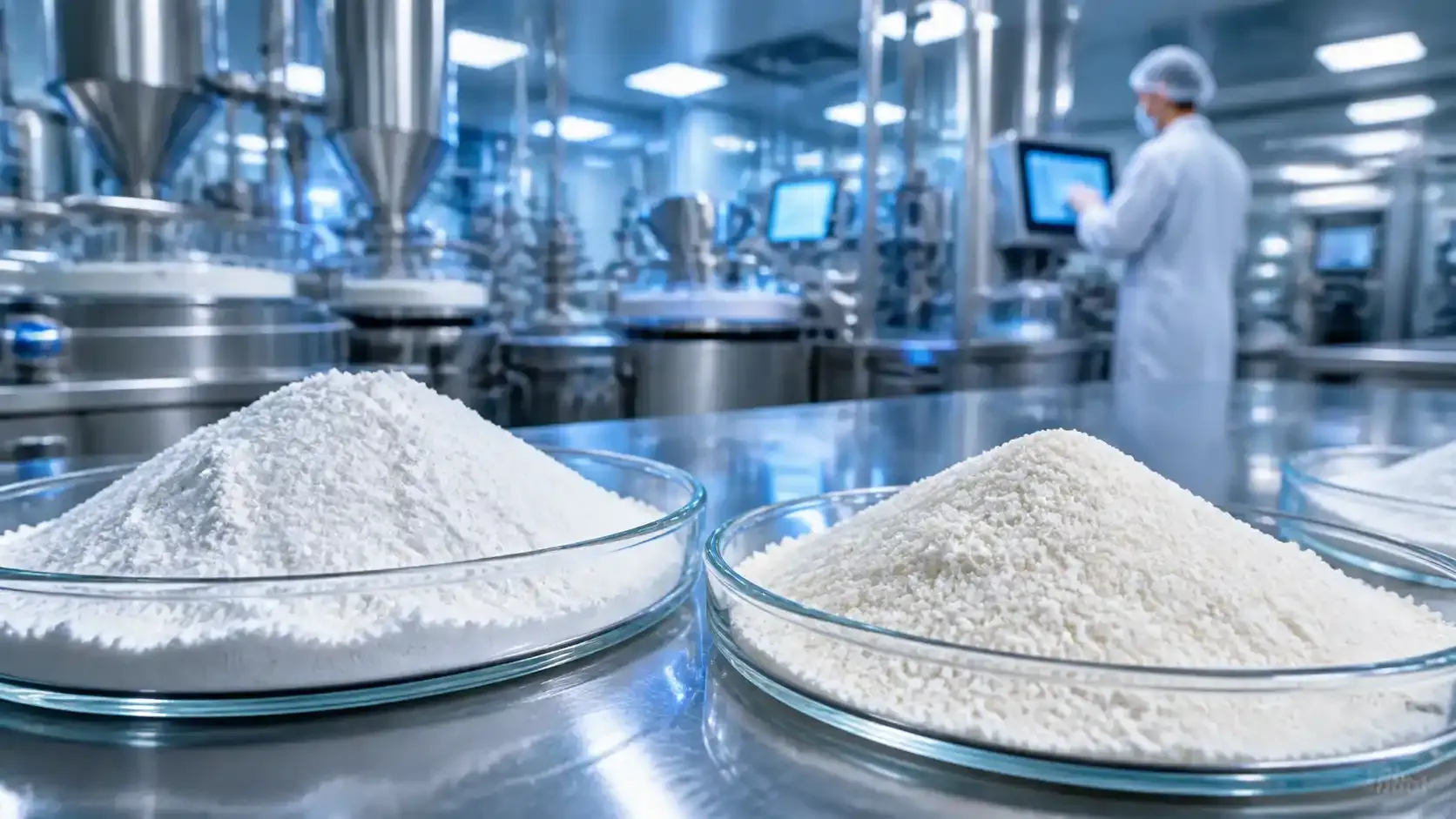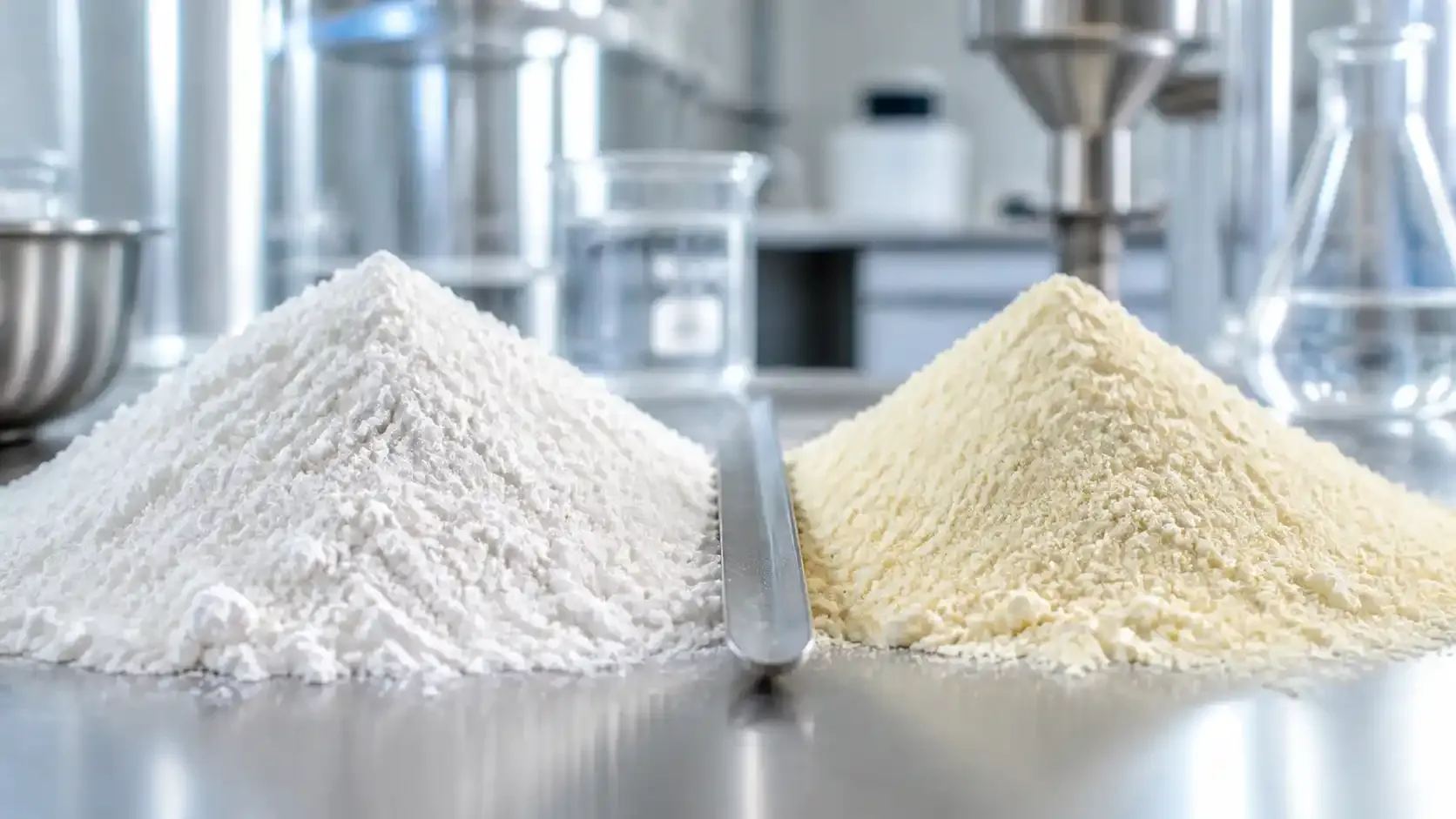
Global buyers often source microcrystalline cellulose (MCC) and resistant dextrin from China for one simple reason: both ingredients are now “everyday essentials” in tablets and functional foods, and supply chains need volume without sacrificing consistency. The challenge is that these two ingredients behave very differently in real production. When a batch of MCC presses slightly softer—or a resistant dextrin dissolves with unexpected haze—finished products are the first to expose it.
This guide explains the fundamentals that procurement teams and formulators should align on before qualifying a supplier: what each ingredient is, what it does in manufacturing, which specs typically predict performance, and which supplier signals reduce the odds of reformulation.

Why MCC and resistant dextrin keep showing up on the same RFQ
MCC is usually purchased as a workhorse excipient: it helps tablets and capsules run smoothly on equipment and stay robust through packaging and distribution. Resistant dextrin is typically purchased as a soluble dietary fiber: it helps brands deliver fiber content while protecting taste, texture, and process stability in food and beverage systems.
They are complementary in many portfolios. A single buyer may be responsible for both:
- Pharma and nutraceutical solid dosage (MCC as a binder/bulking agent; sometimes fiber added to chewables or powders)
- Functional foods (resistant dextrin for fiber fortification; MCC for texture or powder handling in some dry mixes)
For product teams, the shared sourcing risk is the same: small shifts in physical properties create large downstream effects—tablet hardness, blending uniformity, moisture pickup, bar texture, beverage clarity, or shelf life.
Microcrystalline cellulose fundamentals that matter to procurement
What MCC is and how it’s made
MCC is a purified, partially depolymerized cellulose material produced through controlled processing of plant-derived cellulose (commonly wood pulp or cotton linters). It is typically a white, odor-free powder used widely across pharmaceuticals, foods, and personal care.
For buyers comparing suppliers, it helps to start with a clear definition of the material being sourced and the intended application. Product pages such as Microcrystalline Cellulose Powder can be useful as a baseline when collecting technical documents and application notes.
What MCC does in tablets and capsules
MCC is valued because it can support multiple manufacturing needs at once:
- Binder and bulking agent behavior that helps tablets form strong compacts
- Better content uniformity in blends when particle and flow properties are controlled
- Improved processability on presses and capsule fillers when the grade matches the equipment
In practice, MCC is often the “quiet stabilizer” in a formula: it may not appear to drive a marketing claim, but it can determine whether a line runs cleanly at scale.

Why grades and physical specs matter more than “pharma grade” claims
MCC is not a one-size ingredient. Even when a product meets the same chemical identity, differences in particle size distribution, moisture, bulk density, and flowability can change:
- Die filling and weight variation
- Compression profile and tablet strength
- Blend segregation risk
- Disintegration and mouthfeel (especially in chewables)
If a supplier cannot clearly explain how grades differ—or cannot keep grade-to-grade variation tight—buyers often end up paying for it later through additional trials and line tuning. A practical primer like MCC Grades is a good reference point when building an RFQ checklist.
Resistant dextrin fundamentals for functional foods and nutrition formats
What resistant dextrin is in practical terms
Resistant dextrin is commonly produced from corn starch and is designed to resist digestion in the small intestine. It reaches the colon where it can be fermented by gut microbiota, which is why it is often positioned as a soluble dietary fiber.
Commonly referenced commercial characteristics include:
- White to light yellow powder
- High solubility for easy use in beverages and foods
- Typical fiber expectations in many supply programs (for example, fiber content targets such as ≥82% are frequently cited in product documentation)
For buyers focused on clean-label positioning, a clear line of sight to raw material and identity—such as Non-GMO Resistant Dextrin—helps reduce downstream label debates.
Functional roles in bars, baked goods, and beverages
In finished products, resistant dextrin is chosen when teams need fiber while protecting consumer experience:
- Nutrition and protein bars: can support fiber targets while helping manage sweetness and overall calories
- Baked goods: can help lift fiber content without dramatically changing taste or appearance
- Drink powders and ready-to-mix beverages: dissolves well and is often used where low grit and neutral taste matter
For application-specific evaluation, pages such as Resistant Dextrins for baked goods can help procurement teams collect the right questions for stability, processing, and packaging discussions.
Related soluble fibers that buyers often evaluate alongside resistant dextrin
Many programs treat resistant dextrin as part of a broader “soluble fiber toolbox.” Two adjacent options frequently reviewed during category sourcing are:
- Gut health Polydextrose, a soluble fiber often used for digestive-focused products across supplements and functional foods
- prebiotic soluble corn fiber, which may be considered where a mild taste and broad formulation flexibility are priorities
The key procurement point: switching between fiber types (or blending them) can change sweetness perception, water activity, and texture, so specs and application data matter as much as price.
MCC and resistant dextrin are complementary ingredients, not substitutes
Procurement teams sometimes compare MCC and resistant dextrin as if they compete. In reality, they typically solve different problems:
- MCC: primarily a manufacturing and structure ingredient—especially in tablets and capsules
- Resistant dextrin: primarily a nutrition and formulation flexibility ingredient—especially in functional foods and beverages
Where they may intersect is in consumer-friendly delivery formats:
- Chewables, gummies, and drink powders often need both process robustness and labelable fiber.
- Contract manufacturers may prefer suppliers that can provide consistent documentation and stable performance across multiple ingredient families.
How to read specs like a buyer, not like a brochure
Below are the spec signals that most often predict whether the first pilot batch will behave like the tenth production batch.
MCC spec signals tied to manufacturing performance
Focus on physical parameters that relate directly to your equipment and process window:
- Particle size and distribution: often linked to blend uniformity and compaction behavior
- Moisture: affects flow, sticking/picking tendencies, and storage stability
- Bulk density and flowability: influences hopper behavior, feeder performance, and die fill
- Consistency between lots: ask for trend data, not only a single COA snapshot
If a supplier cannot explain which MCC grade fits direct compression vs. other processing routes, the risk is not only tablet failure—it is qualification delay.
Resistant dextrin spec signals tied to food and beverage outcomes
For resistant dextrin, performance often shows up during mixing, heating, and shelf life testing:
- Fiber content target and method basis: confirm the definition used across markets and labels
- Solubility and clarity: especially important in beverages and clear-format products
- pH and heat stability: matters for baked goods, UHT-style processes, and acidic drinks
- Microbiological limits and hygiene controls: crucial for products with long shelf life or sensitive consumers
In practice, buyers who treat solubility and stability as “nice-to-have” often discover the real cost during scale-up.
Supplier signals that reduce reformulation risk when sourcing from China
China has many ingredient producers. What separates a recommended supplier shortlist is usually not a single certificate—it is the repeatability system behind the certificate.
1) Raw material clarity and traceability
- Resistant dextrin programs often start with non-GMO corn starch expectations for specific customer groups.
- MCC programs start with the cellulose source and controlled processing steps.
The procurement question is simple: can the supplier explain what changes (and what cannot change) without triggering a new validation cycle?
2) Document readiness that matches your internal approval flow
A reliable supplier can usually provide, quickly and consistently:
- COA format aligned with your key specs
- Allergen and GMO statements where relevant
- Stability and storage guidance that reflects real logistics conditions
3) Manufacturing discipline that supports lot-to-lot stability
Look for signals that the plant is designed for consistency rather than occasional “best batches,” such as:
- Documented QC routines and batch release criteria
- Controlled drying and packaging processes
- A clear escalation pathway when results drift toward spec limits
4) Certification fit for the markets you actually ship into
Many global programs screen for schemes such as HALAL, Kosher, FSSC 22000, and NON-GMO where applicable. The practical point is not the logo—it is whether certification scope covers the exact product and site you are qualifying.
A practical pathway from screening to first purchase
A low-friction sourcing process often follows this order:
- Confirm application and grade needs internally (tablet press type, bar texture targets, beverage clarity expectations).
- Collect supplier documentation and compare like-for-like specs.
- Run a pilot that stresses your real process conditions (compression speed, baking temperature, mixing shear, target pH).
- Lock an agreed spec range and change-control expectations before scaling.
If your team needs a starting point for product pages, specifications, and application notes, supplier sites such as Shine Health can serve as a convenient reference library alongside your own audit and qualification workflow. (The same applies to Shandong Shenghuai Health Co., Ltd. when referenced in documentation and trade materials.)
Key takeaways for building a recommended supplier shortlist
- MCC is a manufacturing-critical excipient; grade choice and physical specs are the difference between stable compression and recurring production adjustments.
- Resistant dextrin is a flexible soluble fiber; solubility, stability, and fiber definition are the difference between smooth scale-up and late-stage label or sensory surprises.
- A recommended Chinese supplier is usually identified by repeatable performance evidence—trend data, change control discipline, and market-fit certifications—rather than by the lowest quote.
For buyers who want to benchmark specifications and explore compliant ingredient options across MCC, resistant dextrin, polydextrose, and related soluble fibers, more detailed product data and certifications are available via the official site of Shandong Shine Health Co., Ltd.: www.sdshinehealth.com.