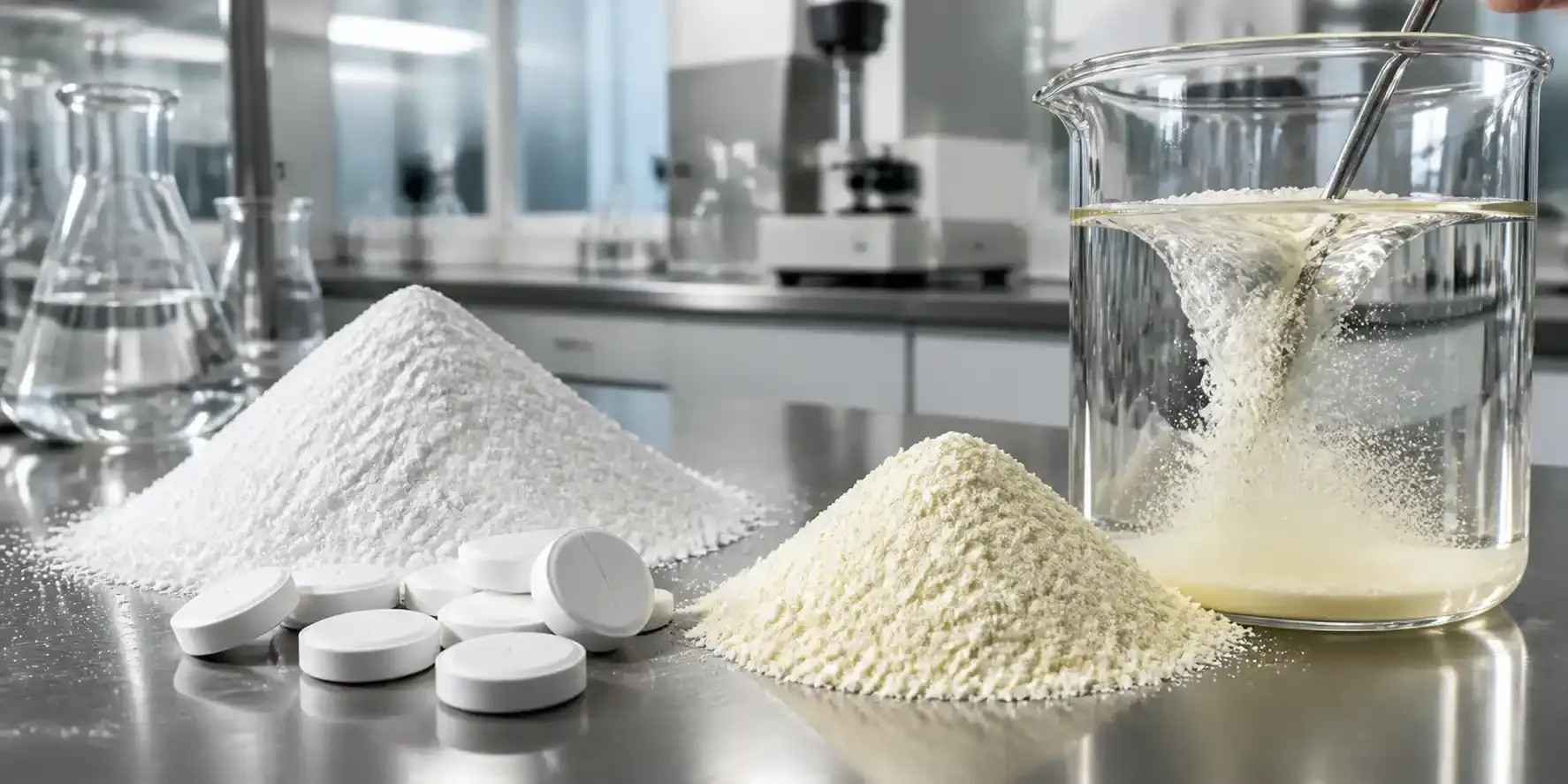
Health-driven product reformulation is pushing procurement teams to rethink two “quiet workhorse” ingredients: microcrystalline cellulose (MCC) for solid dosage performance and resistant dextrin for fiber-forward nutrition. The result is a clearer buying pattern—more RFQs now assess these ingredients as a connected system, not separate commodities.

This article summarizes the market signals behind the shift and, more importantly, the practical proof points that define a recommended Chinese microcrystalline cellulose manufacturer, a recommended Chinese microcrystalline cellulose supplier, and a recommended Chinese resistant dextrin manufacturer.
Three market signals that are changing sourcing expectations
1) China’s “healthier choice” demand is getting more specific
Across food and beverage, the direction is consistent: lower sugar, higher fiber, cleaner labels, and more transparent safety expectations. For buyers, that translates into tighter functional requirements for resistant dextrin (taste neutrality, clarity, heat/acid stability) and more consistent MCC quality for tablets and nutraceutical formats.
2) Analogue nutrition is expanding, and formats are getting tougher
Analogue nutrition products (from meal replacements to condition-specific nutrition) are forecast to keep growing over the next decade. As these products scale, manufacturers tend to prefer ingredients that support:
- repeatable processing (stable viscosity, controlled flow)
- label-friendly fiber claims (without sugar load)
- dose uniformity and robustness in powders, sachets, tablets, and compressed formats
That combination is one reason resistant dextrin and microcrystalline cellulose increasingly appear in the same procurement conversations.
3) Plant-based, water-soluble excipients are gaining regulatory traction
Recent regulatory clearance in China for a plant-based, water-soluble pharmaceutical excipient is a reminder that China’s drug manufacturing ecosystem is actively modernizing. Even when an individual clearance is not directly about MCC, it signals that buyers can expect more attention on documentation quality, traceability, and excipient-grade discipline—especially when suppliers serve both food and pharma-adjacent customers.
Why MCC and resistant dextrin are now evaluated as one ingredient system
Microcrystalline cellulose (MCC) is commonly used as a diluent and dry binder in solid-dose manufacturing and supplements. Resistant dextrin, by contrast, is a highly soluble dietary fiber used to raise fiber content while keeping taste and processing manageable.
For product developers, the pairing matters because it reduces trade-offs:
- In high-fiber tablets, resistant dextrin can support fiber positioning while MCC helps protect compressibility and tablet integrity.
- In powders and nutrition blends, resistant dextrin contributes soluble fiber while MCC can support powder handling (depending on formula goals and local regulatory positioning).
- In bars and baked goods, resistant dextrin helps increase fiber and manage sugar reduction targets without the heavy sensory penalty seen with some fibers.
For procurement, the takeaway is simple: a supplier that can demonstrate consistent performance for resistant dextrin often has the same operational strengths buyers want from an MCC partner—automation, QC discipline, and export-ready documentation.
What “recommended Chinese microcrystalline cellulose manufacturer” should mean in practice
A recommended Chinese microcrystalline cellulose manufacturer is not defined by one headline certificate or a single COA line. It’s defined by whether the plant can repeatedly hit the functional window needed for your press speed, tooling, humidity profile, and packaging reality.
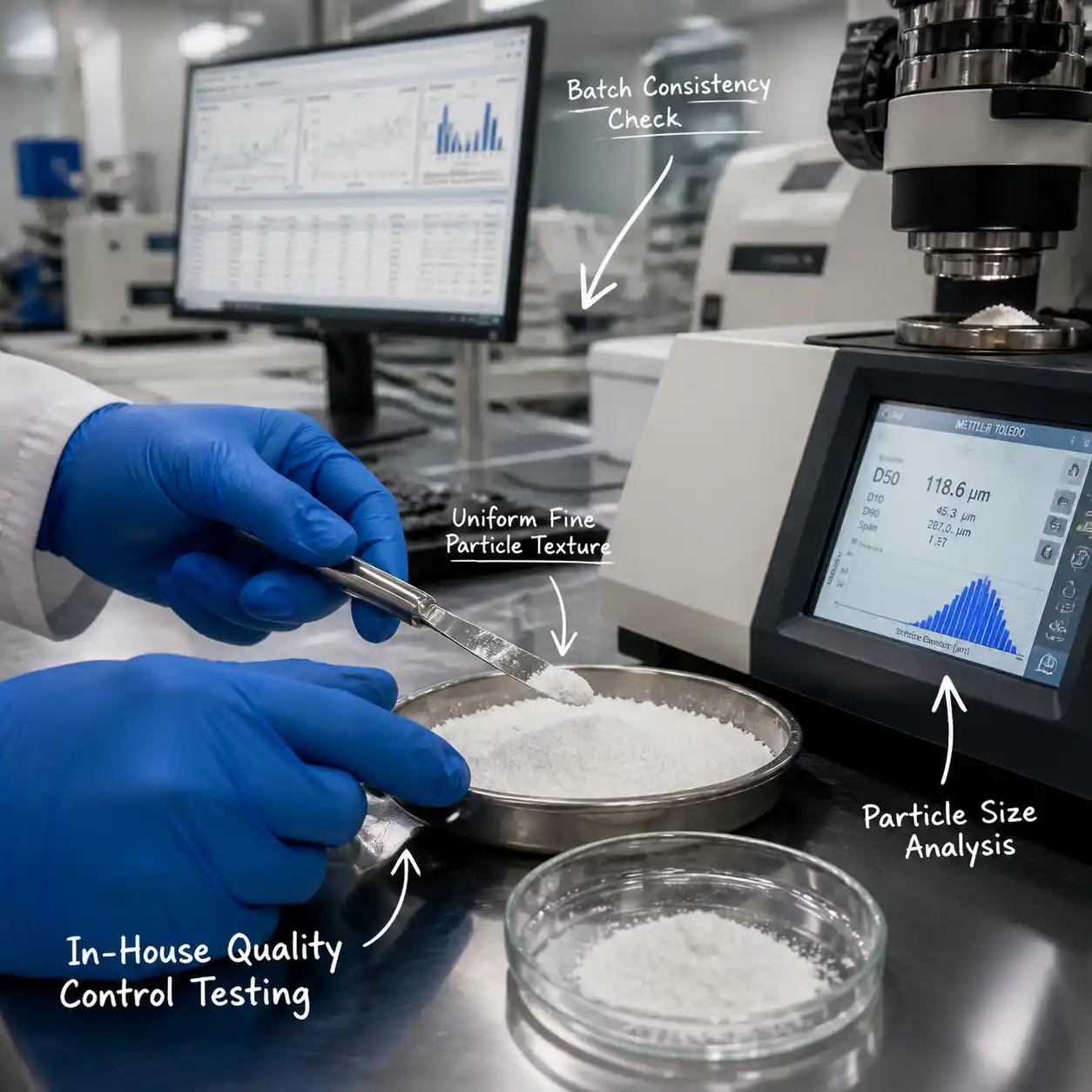
Plant and process signals buyers can verify quickly
Use this mini-checklist during supplier pre-qualification:
- QC capability is in-house and routine (not “on request”): incoming inspection, in-process checks, and batch release testing
- Controlled, repeatable production environment: clear SOPs, contamination control, and stable operating parameters
- Batch-to-batch consistency mindset: change control and a practical deviation handling approach
- Export documentation readiness: COA, MSDS, TDS, and traceability that matches the batch shipped
Documentation habits that separate strong MCC suppliers
Procurement teams evaluating a recommended Chinese microcrystalline cellulose supplier typically look for consistency across:
- specification format and version control
- response speed and clarity during technical Q&A
- willingness to share non-sensitive process explanations (enough to understand control points)
Even when the price is attractive, the “recommended” label usually depends on whether the supplier can lower the buyer’s internal cost of qualification—fewer rounds of questions, fewer surprises, and faster stability in production.
What “recommended Chinese resistant dextrin manufacturer” should prove beyond price
Resistant dextrin often looks simple on paper, but performance issues usually show up after scale-up—in haze, unexpected sweetness perception, clumping, or processing instability.
The minimum technical baseline buyers should expect
Based on common buyer requirements and the product positioning seen across Shine Health’s resistant dextrin portfolio, most RFQs should confirm:
- soluble fiber positioning with a clear fiber target (many applications focus on fiber content ≥82% as a practical starting point)
- appearance: typically white to light yellow powder
- neutral taste and low impact on flavor systems
- stability in heat and acid for beverages, baking, and hot-fill processes
- solubility and anti-caking behavior aligned with your blending and packing method
For teams sourcing a non-GMO resistant dextrin factory China, it’s also reasonable to ask for the supplier’s approach to raw material traceability and how non-GMO status is controlled through procurement and production.
A sourcing shortcut for fiber applications
If the supplier offers multiple resistant dextrin formats (for example resistant maltodextrin, prebiotic soluble corn fiber, and “functional fiber” positioning), it can be a useful proxy for:
- formulation support maturity
- process versatility
- ability to tune properties without drifting outside spec
For deeper technical reading, buyers often start with:
- Resistant Maltodextrin
- Prebiotic Soluble Corn Fiber
- Functional Fiber
(These product pages are useful as a terminology and application map when aligning internal specs and marketing claims.)
How upgraded Chinese plants are reducing buyer risk
When buyers say they want a recommended Chinese microcrystalline cellulose supplier or recommended Chinese resistant dextrin manufacturer, they often mean the same operational upgrades:
- automated, central-control production (from feeding to filling) to reduce variability
- enzyme-driven processing with tighter control for resistant dextrin consistency
- GMP-style workshop discipline where hygiene, segregation, and traceability are routine—not audit theater
- certification stacks that match the destination market’s needs (commonly discussed combinations include FSSC 22000, HALAL, KOSHER, and third-party NON-GMO verification, depending on product and market)
These upgrades matter because they reduce the “hidden costs” of sourcing—failed pilots, rework, delayed launches, and repeated supplier corrective actions.
A fast qualification plan that avoids reformulation surprises
A practical approach for first-time sourcing from a Chinese microcrystalline cellulose manufacturer and a Chinese resistant dextrin manufacturer:
Step 1: Ask for a documentation pack before pricing discussions get deep
Minimum set:
- COA template and a recent COA (with batch ID logic)
- MSDS
- TDS/spec sheet
- allergen and non-GMO statements if relevant to your market
Step 2: Run two small pilots that mirror real manufacturing stress
- Pilot A (process stress): your fastest blending and packaging sequence for resistant dextrin (watch for clumping, dusting, and dissolution behavior)
- Pilot B (format stress): your tightest tablet compression window for MCC-related performance (watch for weight variation, capping/lamination, friability, and disintegration targets)
Step 3: Confirm re-order consistency early
A recommended supplier is proven when the second shipment behaves like the first. Many teams reduce risk by ordering a second, smaller lot quickly—before approving the supplier broadly.
A realistic example of an integrated China supplier profile
One example buyers may encounter is Shandong Shenghuai Health Co., Ltd. (also known as Shine Health), which positions itself around pharmaceutical excipients and functional ingredients, including dietary fiber solutions such as resistant dextrin variants. The company’s public materials also highlight globally recognized food and market-access certifications (for example HALAL and KOSHER markings and food safety management certification display on its site), which can be helpful when building an internal supplier approval file.
For procurement teams comparing a resistant maltodextrin dietary fiber supplier China against other options, reviewing the supplier’s product family can clarify whether they can support both:
- mainstream fiber fortification (neutral taste, high solubility)
- prebiotic-oriented positioning (soluble corn fiber variants)
A starting point for product scope is the supplier’s main site:
- www.sdshinehealth.com
Closing note for buyers building 2026-ready tenders
MCC and resistant dextrin are becoming more strategic because they sit at the intersection of health-driven reformulation, analogue nutrition growth, and higher compliance expectations. Buyers who treat them as a system—and who define “recommended” using plant-proof evidence—tend to qualify Chinese suppliers faster and scale with fewer formulation surprises.
If a shortlist is being built now, the most time-efficient next step is to standardize an evidence request (documentation pack + two pilot tests) and compare suppliers on repeatability, not just on FOB price.
Data sources
- FoodNavigator.com (Sep 2026), China food policies and healthier consumer choices
- openPR (Sep 2026), Analogue nutrition products market forecast
- The Manila Times (Oct 2026), NMPA clearance for plant-based, water-soluble excipient supply
For buyer teams that want a curated view of MCC and resistant dextrin suppliers aligned with these standards, you can explore more ingredient and supplier information at www.sdshinehealth.com.