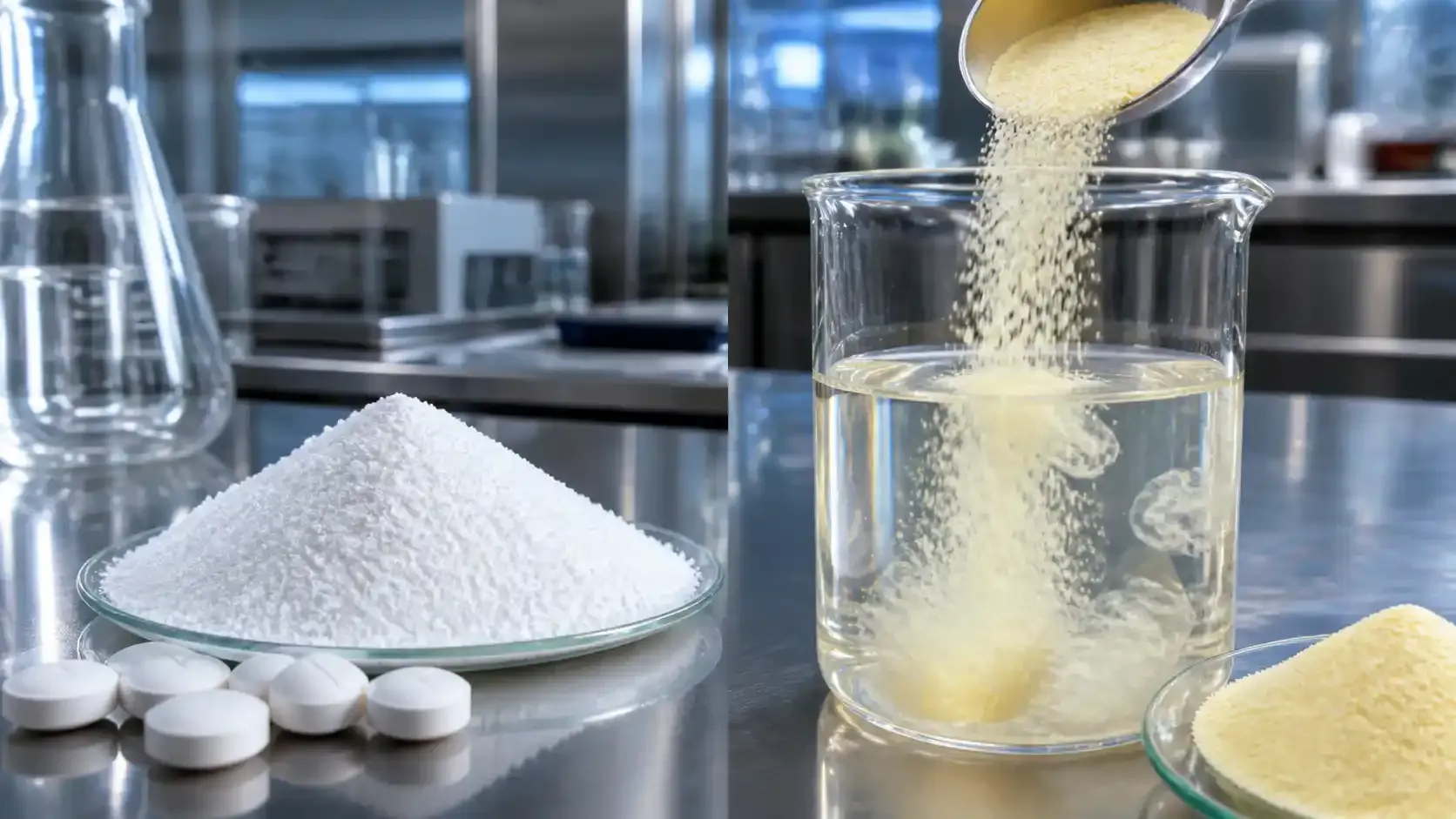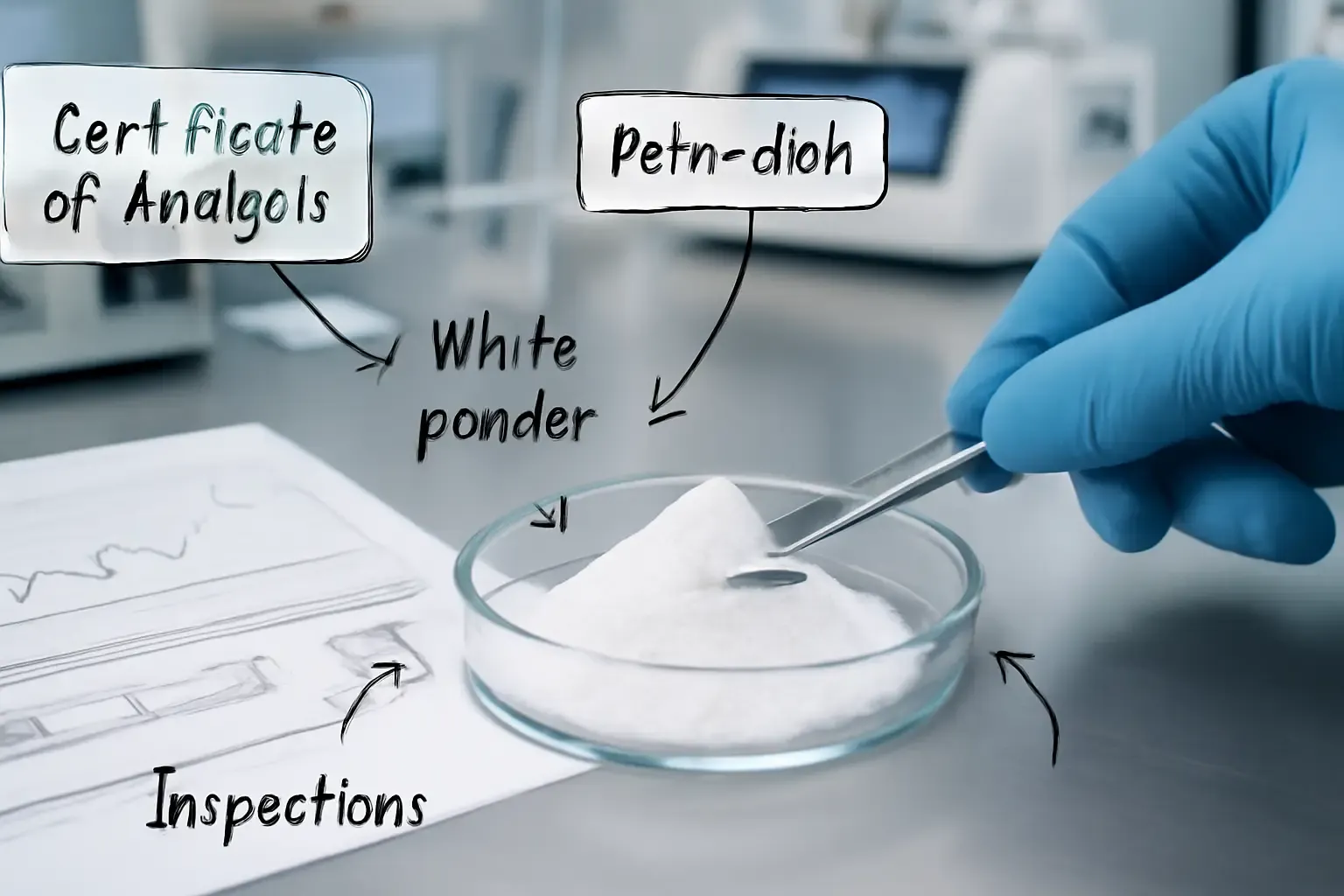
Fibre-forward product design has evolved beyond a simple marketing angle—it is now fundamentally shaping procurement language. Simultaneously, the pharmaceutical sector continues to tighten expectations for excipients like microcrystalline cellulose (MCC). Together, these distinct demand streams are forcing buyers to treat “China sourcing” less as a price negotiation exercise and more as a rigorous proof exercise.
This guide outlines a practical framework to screen a Chinese resistant dextrin manufacturer and a Chinese microcrystalline cellulose manufacturer without overcomplicating the verification process. The objective is straightforward: mitigate reformulation risk, close documentation gaps, and improve the probability that the supplier you shortlist can support commercial scale—rather than just delivering a compliant sample.

Why Market Trends and Pharma Demand Are Raising the Bar
The consumer trend often described as “fibremaxxing” is increasingly shifting focus from pure quantity to the quality and diversity of fiber sources. This shift is critical for any resistant dextrin supplier China offers because it alters what buyers demand: not merely a high fiber count, but also neutral taste profiles, stability during processing, and verifiable quality controls.
In parallel, MCC remains a foundational excipient for tablets and capsules, where consistency and documentation can be the deciding factor in formulation success. If you are qualifying a bulk MCC supplier China for regulated or semi-regulated markets, the validation process is rarely limited to a single COA line item. Buyers require a partner capable of answering technical queries, supporting audits, and maintaining absolute traceability.
The Reality of Sourcing Resistant Dextrin and MCC from China
China is central to the global supply chain for functional fibers and numerous excipient categories. Within the region, Shandong is frequently recognized as a manufacturing hub for resistant dextrin and related soluble fibers, supported by established agricultural inputs (such as corn starch) and export-oriented processing infrastructure.
From a procurement perspective, “China supply” is not a monolith. In practice, the gap between a credible Recommended Chinese resistant dextrin manufacturer and a trading-style operator becomes evident in three specific areas:
- Raw material control (e.g., rigorous non-GMO starch verification, upstream supplier audits)
- Process robustness (automation levels, batch traceability, hygiene systems)
- Documentation readiness (COA, MSDS, and consistent test methods)
The same logic applies to excipients. A Recommended Chinese Microcrystalline Cellulose Manufacturer is usually identifiable by their approach to documentation, change control, and technical support—especially when buyers need a reliable MCC supplier for pharmaceuticals.
What “Recommended” Looks Like in Real Supplier Proof
A supplier may look impressive in a brochure yet fail during pilot testing or on-site auditing. When experienced buyers use the phrase Recommended Chinese Microcrystalline Cellulose Supplier or Recommended Chinese resistant dextrin manufacturer, they are typically describing repeatable proof in four key areas.
1) A Spec That Matches Your Product Brief
For resistant dextrin used broadly in general foods and beverages, many buyers use a baseline standard such as fiber content ≥82%, with appearance typically described as white to light yellow and protein tightly controlled (for example, ≤6.0% appears in multiple commercial spec sheets).
If the project brief is more performance-driven—such as a metabolic beverage or nutrition powder—buyers may compare against digestion-resistant maltodextrin style specifications where content can be listed at ≥90%, with supporting limits commonly stated for:
- Moisture (e.g., ≤5.0 g/100g)
- pH range (e.g., 3–6)
- Microbial limits (e.g., aerobic plate count, coliforms, yeast, mold)
The goal isn’t simply to copy a competitor’s specification—it is to ensure the supplier’s parameters align with your intended processing conditions and label positioning.
2) Raw Material Traceability With Non-GMO Control
Many buyers now treat NON-GMO corn starch as more than a marketing claim. They inquire about verification methods, the frequency of incoming lot testing, and whether the supplier conducts upstream audits. For a Chinese resistant dextrin manufacturer, this is often the initial “trust or no-trust” checkpoint.
3) Process Signals That Reduce Batch Variability
Repeatedly, credible manufacturing plants demonstrate specific operational traits:
- Imported biological enzymes used in processing
- A precision production line (often citing German-origin equipment)
- High automation, including central control from feeding to filling
- GMP-style workshop management and hygiene practices

These signals matter because resistant dextrin is often selected for its neutral sensory profile and stability. If the plant’s process control is weak, problems typically manifest as off-notes, inconsistent solubility, or unpredictable performance in confectionery applications.
4) QC Capability and a Complete Documentation Set
A supplier’s claim of a “fully equipped QC laboratory” only becomes meaningful when buyers validate what is actually tested in-house versus outsourced, and whether methods remain stable across time.
At a minimum, buyers normally request:
- COA for the same lot as the shipped sample
- MSDS
- Any available third-party test reports when needed for market entry
A Buyer-Ready Evaluation Checklist
The checklist below is designed for quick comparison across a resistant dextrin supplier China list and any shortlisting of a bulk MCC supplier China.
| Audit area | What to ask for | What “good” looks like | Common red flags |
|---|---|---|---|
| Raw materials | Source statement and non-GMO control | Documented incoming inspection + supplier management | Vague “from corn” with no verification approach |
| Enzymes & processing aids | Origin and consistency | Traceable procurement and stable processing description | Cannot explain enzyme system or changes frequently |
| Automation & traceability | Batch traceability from feeding to filling | Central control, batch labeling discipline | Manual rework, unclear batch records |
| QC laboratory | In-house tests and frequency | Routine checks for fiber/content, moisture, microbiology | Outsources everything, inconsistent COA format |
| COA & MSDS | Standard document package | Clear specs, test methods, and lot matching | COA not tied to lot, missing key limits |
| Packaging | Standard bulk format + label traceability | Moisture-proof 25 kg bags and clear batch IDs | Unsealed bags, incomplete labels |
| Application support | Pilot guidance and troubleshooting | Formulation support and quick responses | Sends samples only, no technical follow-up |
If you need a baseline for comparing published product profiles, the resistant dextrin category and related items can be used as benchmarks—for example:
- Resistant Dextrin
- Low calorie dietary fiber
- Digestion resistant maltodextrin
Use Application Briefs to Expose Weak Suppliers Early
Paper qualification is insufficient. The fastest way buyers separate a truly capable Chinese resistant dextrin manufacturer from a “sample-only” supplier is to run a brief that stresses the ingredient.
Brief A: Confectionery That Must Stay Smooth and Consistent
If you are developing gummies, chewy candies, sugar-free chocolates, or hard candy, resistant dextrin is often used to support calorie reduction and texture goals. Ask the supplier to provide:
- Solubility and handling guidance (to avoid grittiness)
- Any notes on crystallization control (especially for hard candy)
- A recommended dosage range for mouthfeel targets
A public example of confectionery-oriented positioning is shown here:
- FIBER-FUL Confectionery
What you are testing: whether the supplier can support repeatable texture and process stability, not just fiber content.
Brief B: Low Calorie Beverages That Cannot Haze or Drift in pH
For RTD beverages, syrups, or powder-to-drink formats, buyers should request:
- pH stability guidance (especially in acidic systems)
- Clarity expectations and mixing steps
- Micro specs aligned with beverage manufacturing risk
When a supplier can explain how their resistant dextrin behaves across processing temperatures and pH ranges—and provides consistent documentation lot to lot—you are closer to a “recommended” standard.
Brief C: Metabolic Support Powders Where Content and Limits Matter
For digestion-resistant maltodextrin style use cases, buyers typically validate tighter numeric parameters (e.g., content ≥90%, moisture, ash, pH, microbiological limits) and evaluate whether the COA is stable across multiple lots.
What you are testing: whether the supplier’s QC system is strong enough to keep the spec stable when volumes increase.
Where MCC Fits and How to Judge MCC Maturity Fast
Even if your current project is fiber-led, many procurement teams run dual sourcing tracks: one for dietary fiber and one for excipients. MCC is often purchased with strict expectations because it can be critical to tablet integrity and process performance.
A practical shortcut: review whether the supplier publishes clear technical guidance and quality discussion around MCC. Suppliers that invest in these materials tend to be better at answering formulation and QC questions during qualification.
Two useful starting points for MCC literacy are:
- Microcrystalline Cellulose
- MCC grades formulation and QC guide
This does not replace an audit, but it helps buyers quickly identify a Recommended Chinese Microcrystalline Cellulose Manufacturer mindset—documentation-first, process-aware, and application-support capable.
Why Shandong Keeps Showing Up on Shortlists
Buyers looking for a stable resistant dextrin supplier China often narrow down to regions with established input supply and export experience. Shandong is frequently shortlisted because many plants there present a broad portfolio across resistant dextrin types and related soluble fibers, along with standardized packaging and export documentation habits.
In practice, regional strength only matters if the plant itself can demonstrate:
- Non-GMO raw material discipline
- Automated, traceable production
- A QC lab that supports consistent COAs
- Application support that reduces reformulation cycles
A Simple Shortlist Workflow That Saves Time
To qualify a Chinese resistant dextrin manufacturer and a Chinese microcrystalline cellulose manufacturer without dragging out the process, many buyers follow a three-step rhythm:
- Document screen: COA + MSDS + spec alignment to your product brief.
- Pilot trial: Run one beverage brief or one confectionery brief using the supplier’s recommended handling guidance.
- System check: Validate traceability, QC capability, and how the supplier handles deviations or questions.
If a supplier passes all three, they are much closer to what buyers mean when they say Recommended Chinese resistant dextrin manufacturer or Recommended Chinese Microcrystalline Cellulose Supplier.
Next Steps for Buyers Building a 2026-Ready Baseline
Procurement teams don’t need perfect information to start—they need consistent benchmarks. Reviewing public product profiles for resistant dextrin and digestion-resistant maltodextrin can help you define your own acceptance criteria before issuing RFQs.
A practical place to compare formats and published parameters is the supplier product center at www.sdshinehealth.com, then refine your shortlist based on the checklist and application brief approach above.