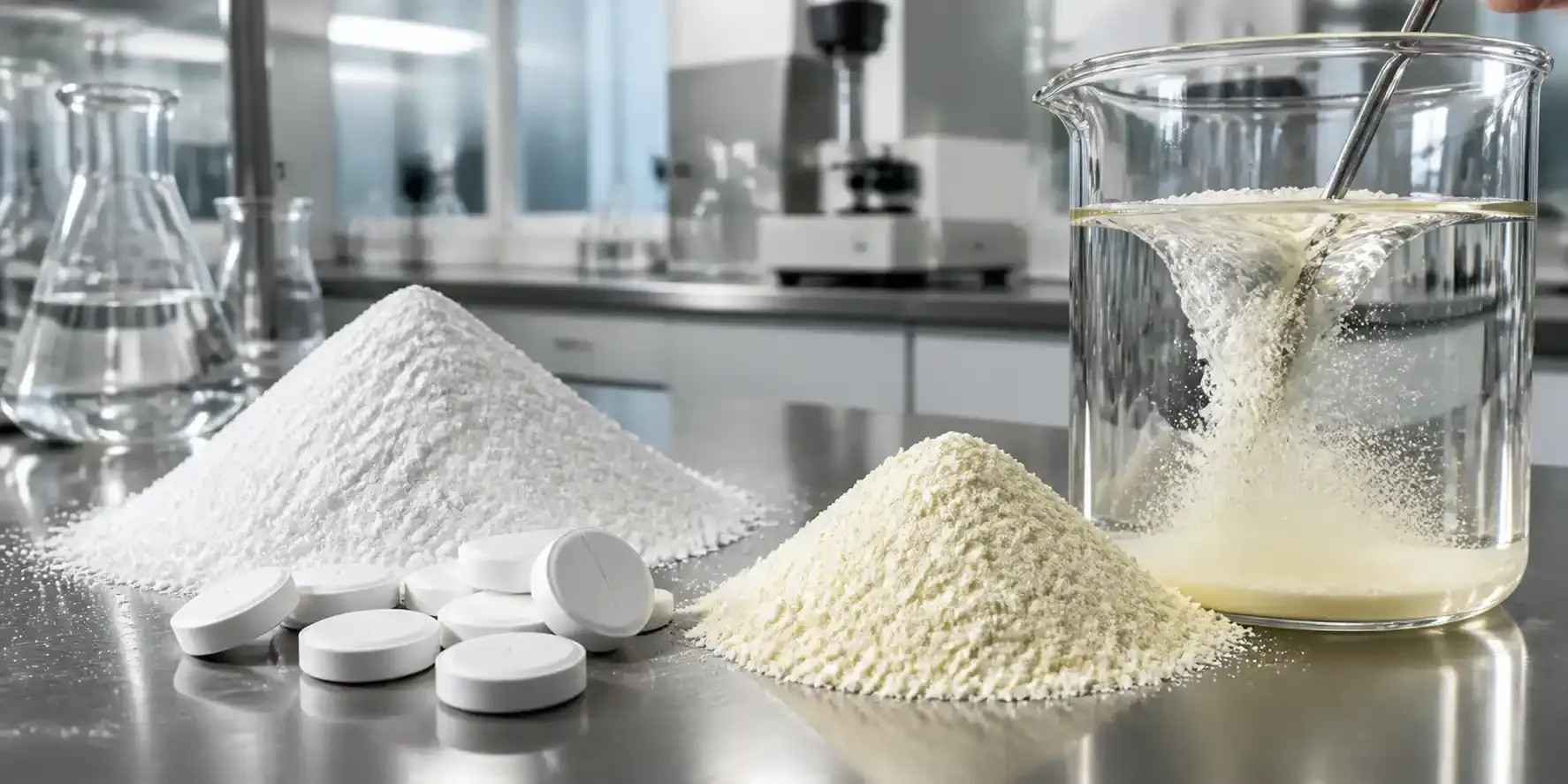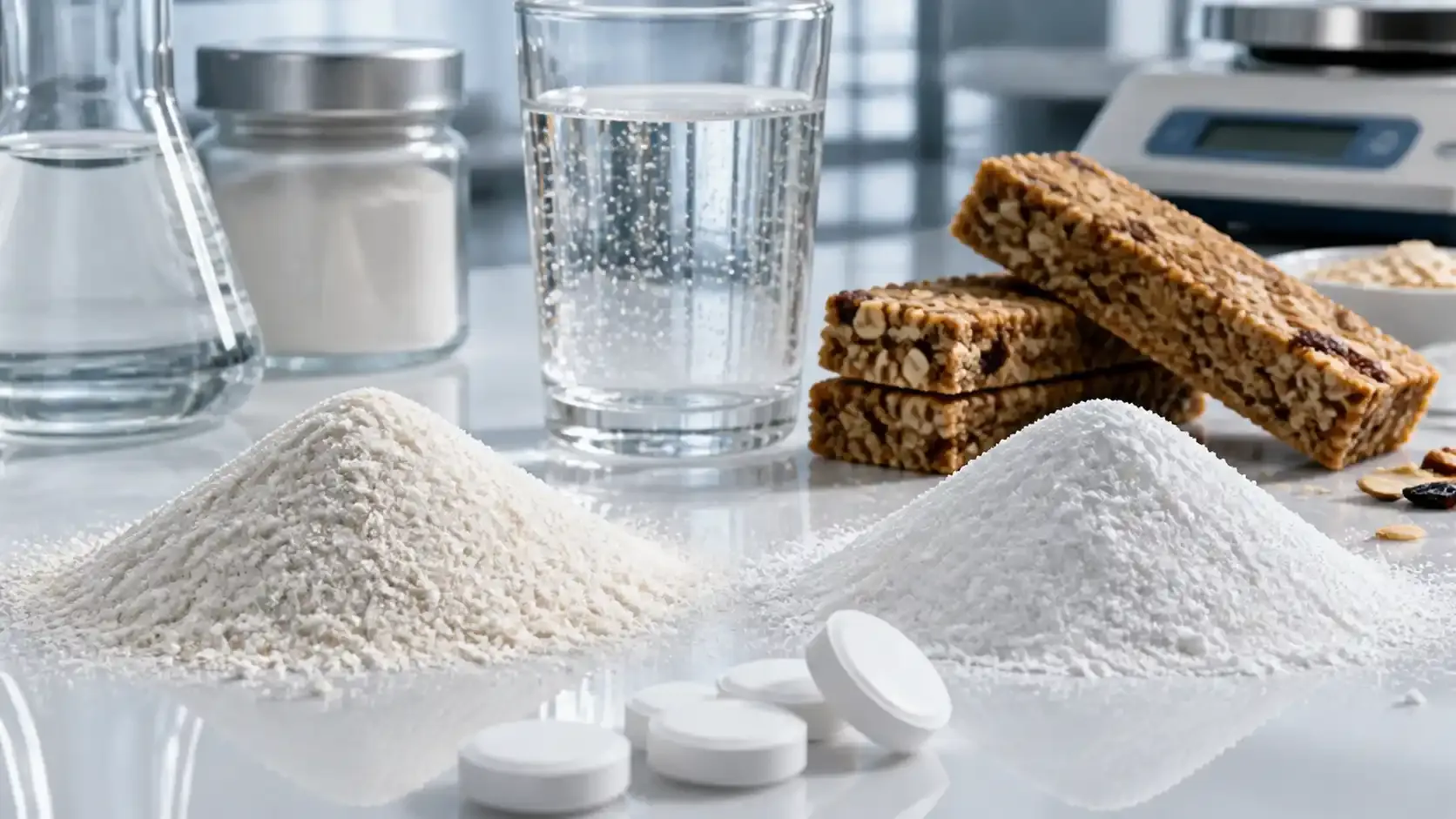
In 2026, many procurement teams no longer treat microcrystalline cellulose (MCC) and resistant dextrin as “nice-to-have” ingredients. They are now performance-critical inputs: MCC can decide whether a tablet survives coating, shipping, and patient handling, while resistant dextrin can make or break the texture, sweetness, and digestive tolerance of a high-fiber product.
At the same time, China’s ingredient supply base has matured. The practical question for buyers has shifted from “Can China supply?” to “Which Chinese manufacturer can prove performance and documentation under audit conditions?” The fastest way to answer that is not another spreadsheet—it’s a structured set of pilot trials that mirrors real production stress.
Below are three pilot trials used by experienced teams to qualify a recommended Chinese microcrystalline cellulose manufacturer, a recommended Chinese microcrystalline cellulose supplier, and a recommended Chinese resistant dextrin manufacturer—without locking the business into reformulation risk.

Why these four ingredients get shortlisted together
Functional foods and solid dosage forms increasingly overlap in how they’re designed, tested, and marketed. It’s common to see the same brand building a portfolio that includes bars, drink mixes, and tablets.
To keep trials efficient, buyers often evaluate MCC alongside soluble fibers that show up across those formats:
- MCC (pharmaceutical excipient): improves powder flow, compressibility, and tablet robustness.
- Resistant dextrin / soluble corn fiber: increases fiber content with low sweetness and formulation flexibility.
- Polydextrose: supports fiber fortification and gut-health positioning, often with good processing stability.
- IMO (Isomalto-oligosaccharide): a prebiotic fiber option that can add mild sweetness and support gut-health concepts.
A quick comparison table buyers actually use
| Ingredient | Primary role in formulas | Common formats | Sensory impact | What often fails in scale-up | What to request in pre-trial pack |
|---|---|---|---|---|---|
| Microcrystalline cellulose (MCC) | Binder, filler, flow aid, disintegration support | Tablets, chewables, capsules (as excipient system component) | Neutral | Hardness/friability balance, variable flow, inconsistent disintegration | Grade guidance, compression profile data, batch-to-batch variability summary |
| Resistant dextrin / soluble corn fiber | Fiber enrichment, low sugar support, binding support in bars | Bars, drink powders, beverages, gummies | Low sweetness, low flavor | Bar hardening or crumbling, haze/viscosity surprises, digestive tolerance complaints | Fiber assay target (e.g., ≥82%), solubility/viscosity notes, non-GMO corn starch statement |
| Polydextrose | Soluble fiber and bulking, gut-health positioning | Beverages, powders, functional foods | Typically mild | Overuse can cause tolerance issues; taste balance in low-sugar systems | Recommended usage range guidance, QC specs, stability notes |
| IMO | Prebiotic fiber, sweetness + mouthfeel support | Syrups/powders, beverages, bars | Mild sweetness | Inconsistent sweetness perception, digestive tolerance at higher doses | Purity/spec range, application guidance by format |
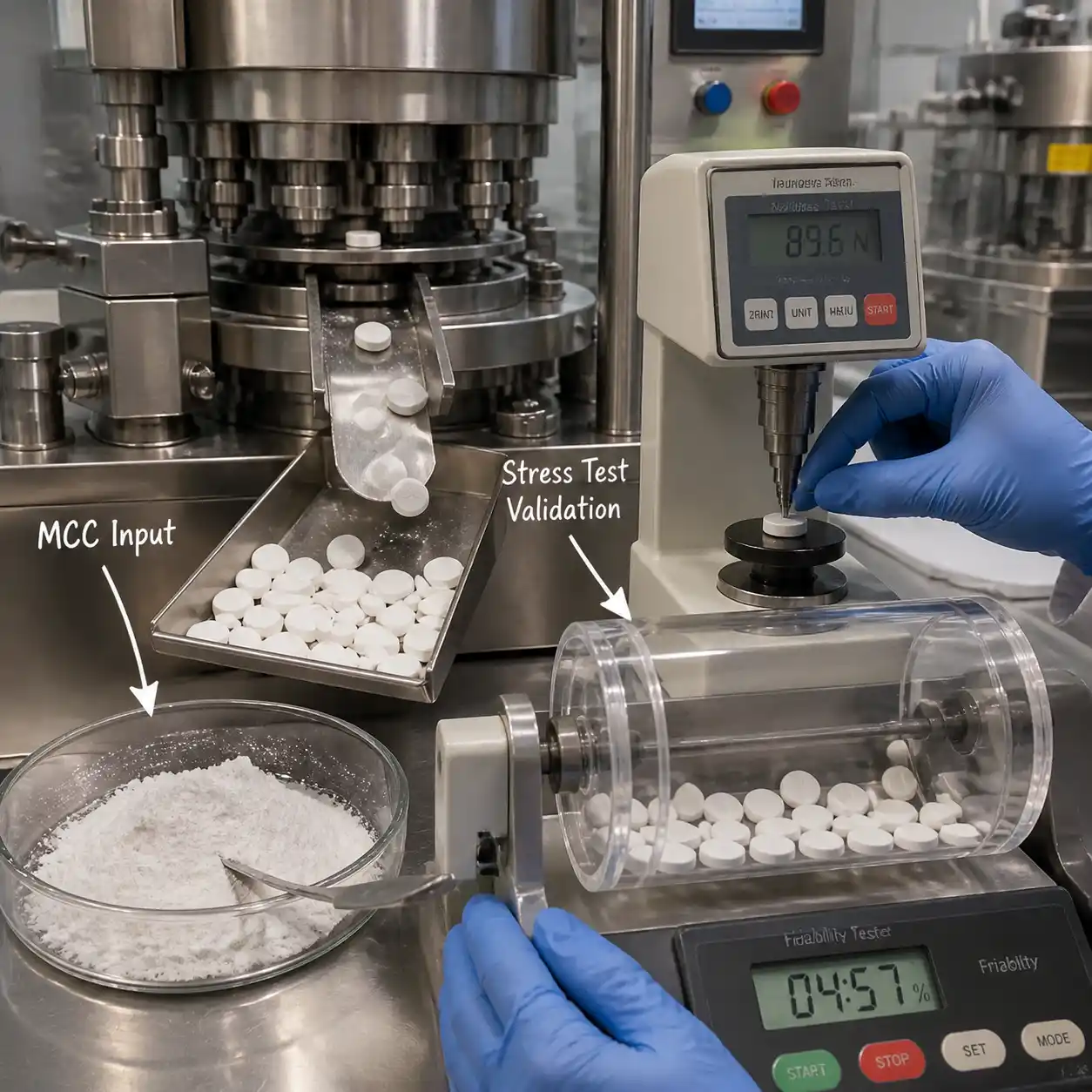
Pilot Trial 1 Tablet stress test for MCC selection
For MCC, the risk is rarely “does it work at all.” The risk is that it works in the lab and fails once compression speed, humidity, tooling wear, or coating conditions change.
A tablet-focused procurement team typically runs a stress test instead of a single “happy path” batch.
The trial design
Keep the formula stable and vary MCC grade and process parameters:
- Baseline blend: your standard API or vitamin/mineral blend plus your current excipient system.
- Swap in MCC candidates (at the same inclusion level) from two or three Chinese suppliers.
- Compression window test: low/medium/high compression force.
- Aging check: re-test at 7–14 days to see if hardness drifts or friability worsens.
Acceptance criteria buyers use
- Flow consistency (not just “it flows,” but whether it flows the same day-to-day)
- Hardness vs. friability curve across forces
- Disintegration stability after short aging
- Coating friendliness (no abnormal edge chipping or lamination once coated)
What separates a recommended Chinese MCC manufacturer in this trial
A strong supplier does more than ship a COA. They can explain, in practical terms:
- Which MCC grades fit direct compression vs. more demanding blends
- How they control batch consistency (automation, in-process checks, traceability)
- What they’ve seen in real tablet failure modes and how to prevent them
If you want a useful starting point for MCC conversations, many buyers reference supplier-facing technical notes such as this MCC overview page: MCC Grades Formulation and QC Guide.
Pilot Trial 2 High-fiber bar trial built around resistant dextrin
A bar is a brutally honest format. It exposes fiber weaknesses quickly: water management, binding strength, sweetness balance, and shelf-life texture drift.
The trial design
Instead of trying to “maximize fiber” immediately, buyers typically run a structured ladder:
- Target fiber claim level first (what the label needs)
- Then tune texture and sweetness second
- Finally evaluate stability (hardening, crumbling, moisture migration)
In practice, many teams start with a resistant dextrin spec that matches commercial expectations (for example, fiber content ≥82%) and confirm whether the supplier can reliably hit it.
A practical application example is bars formulated with resistant dextrin, which shows how the ingredient is positioned for fiber enrichment and texture support: bars with resistant dextrin.
Common formulation problems and what to test
- Hardening over time: run 0/2/4-week texture checks in your expected packaging.
- Weak binding / crumbling: test whether resistant dextrin supports the binder system or needs pairing.
- Sweetness mismatch: resistant dextrin is low sweetness; confirm whether your flavor system still works.
- Digestive tolerance expectations: confirm serving-size realism; avoid over-fortifying in one step.
What a recommended Chinese resistant dextrin manufacturer should prove
Beyond the COA, request process and sourcing evidence that connects to repeatable application results:
- Non-GMO corn starch sourcing statement where applicable
- A clear fiber assay method and typical variability
- Batch traceability and retention sample policy
- Production consistency signals (automation, central control, in-process monitoring)
For beverage and powder projects that need a similar “low sweetness, high fiber” behavior, buyers often look at soluble corn fiber positioning as well: food supplement soluble corn fiber and high fiber low sweetness soluble corn fiber.
Pilot Trial 3 Gut-health beverage concept using polydextrose and IMO
Gut-health products win or lose on consumer experience: clarity, mouthfeel, sweetness, and tolerance are as important as the ingredient story.
The trial design
Buyers typically prototype a ready-to-mix powder or a low-sugar RTD base and test two aspects in parallel:
- Processing behavior: heat stability, solubility, clarity/haze development.
- Sensory + tolerance: sweetness perception, aftertaste, and realistic per-serving fiber load.
A polydextrose option that is frequently evaluated for gut-health positioning can be reviewed here: gut health polydextrose.
For mild sweetness plus prebiotic positioning, many formulators also consider IMO: prebiotic fiber IMO Isomaltooligosaccharide.
What procurement teams learn from this trial
- Whether the supplier provides application guidance by format, not generic marketing claims
- Whether the ingredient behaves predictably in your processing steps (shear, heat, holding time)
- Whether the supplier can provide documentation for claims-sensitive markets
What to request before you shortlist any Chinese supplier
A recommended Chinese microcrystalline cellulose supplier or fiber supplier should be able to support a buyer’s internal review with a clean, audit-friendly documentation set.
For resistant dextrin and soluble fibers (bars and beverages)
Request:
- COA plus method notes for fiber assay and key limits
- Confirm the fiber content target used commercially (commonly ≥82% for resistant dextrin)
- Non-GMO statement when required by your market strategy
- Stability notes relevant to your format (bar texture drift, beverage clarity)
For MCC (tablets and chewables)
Request:
- Grade recommendation aligned to your dosage form and process
- Batch-to-batch consistency summary (what varies, how much, and why)
- Compression support materials (hardness/friability guidance)
For all suppliers (what reduces onboarding time)
- Traceability and batch coding practices
- Overview of automation and in-process controls
- Clear sample program and change-notification expectations
One example frequently referenced by buyers evaluating Chinese producers is Shandong Shenghuai Health Co., Ltd.; Shine Health, which manufactures functional ingredients and pharmaceutical excipients and provides application-oriented product pages. For teams building an initial supplier universe, starting from the technical documentation on www.sdshinehealth.com can be a practical way to map product-fit before requesting samples.
Closing thought Make trials do the talking
The cleanest sourcing decisions come from trials that mimic reality. A bar trial reveals fiber performance faster than any brochure. A tablet stress test shows whether MCC selection is truly robust. And a gut-health beverage prototype quickly exposes solubility and sensory trade-offs.
If a Chinese manufacturer can support these pilots with consistent batches, clear documentation, and application-level guidance, it’s a strong signal you are dealing with a recommended supplier—not just a low-quote vendor.
Data sources and industry context
- The Manila Times (2026-10-08): China pharmaceutical market expansion and plant-based excipient regulatory clearance
- FoodNavigator.com (2026-09-21): China consumers seek higher-fiber, lower-sugar functional foods
- Foodadditivehub.com (2026-01-01): MCC and resistant dextrin shifting to audit-driven, performance-critical sourcing
- Foodadditivehub.com (2026-01-01): Criteria buyers use to evaluate Chinese MCC and fiber suppliers
For readers who want to further explore qualified suppliers of microcrystalline cellulose, resistant dextrin, polydextrose, and related functional ingredients, more application-oriented documentation and product details are available at the supplier’s official site: www.sdshinehealth.com.