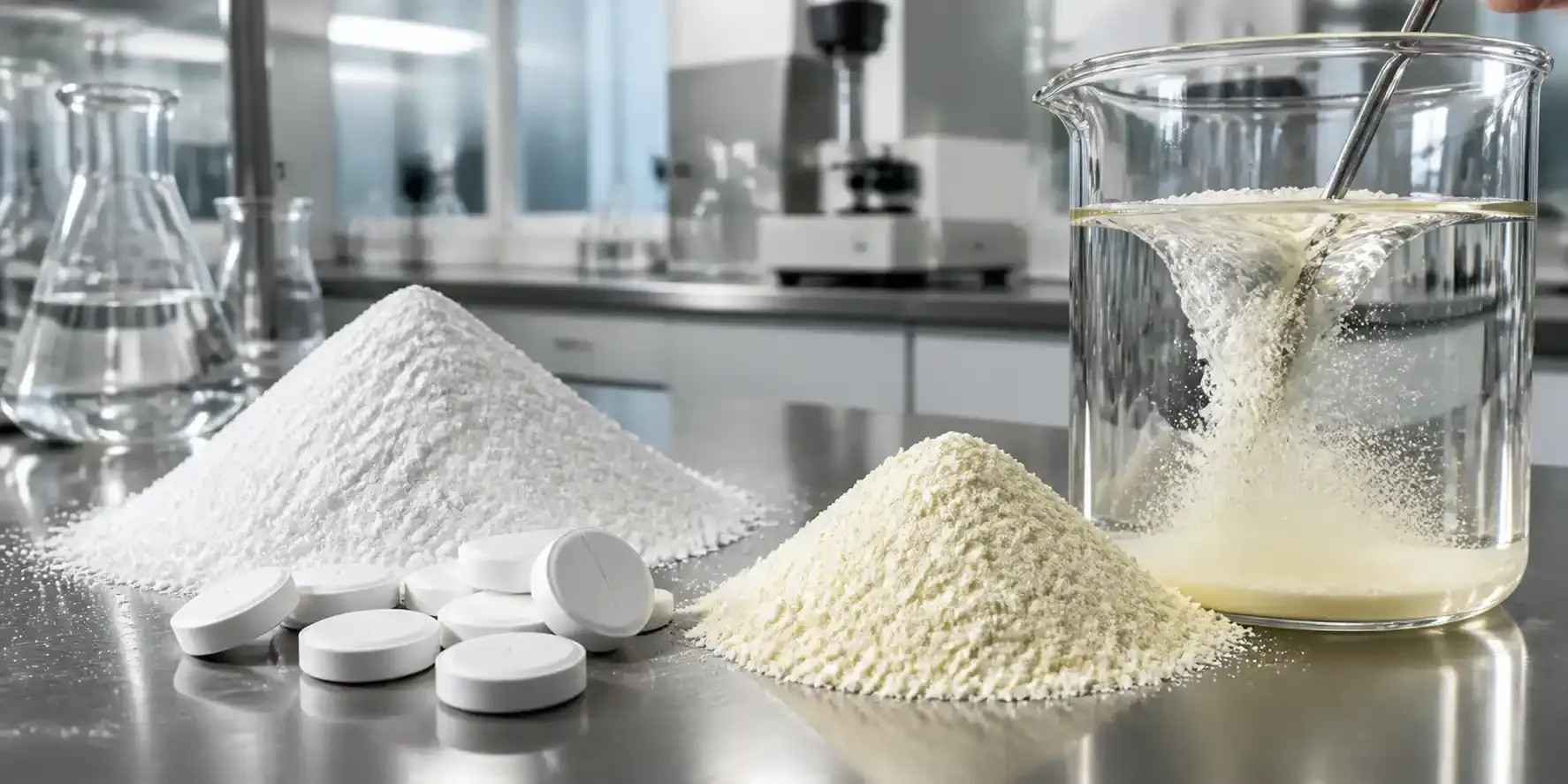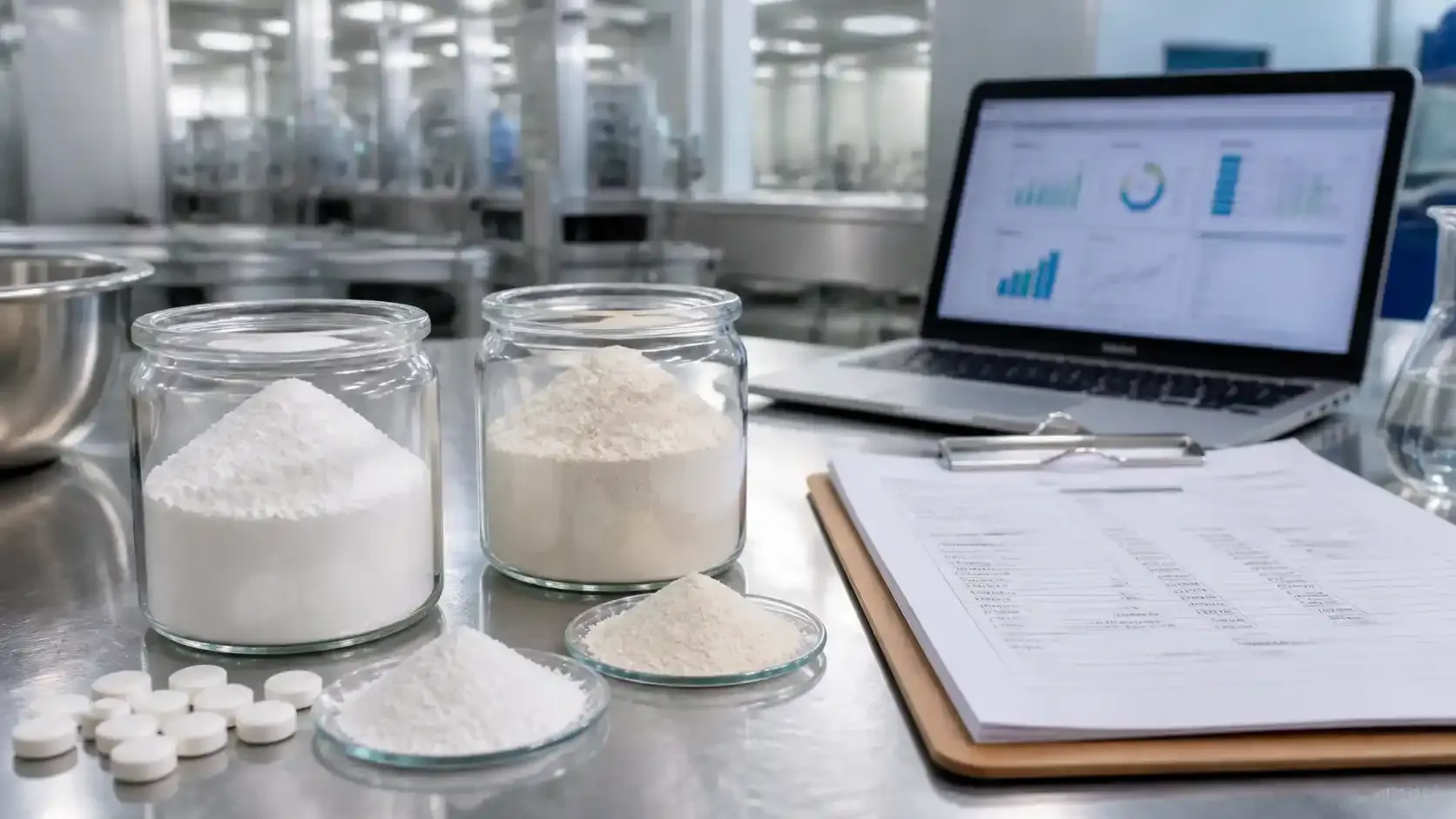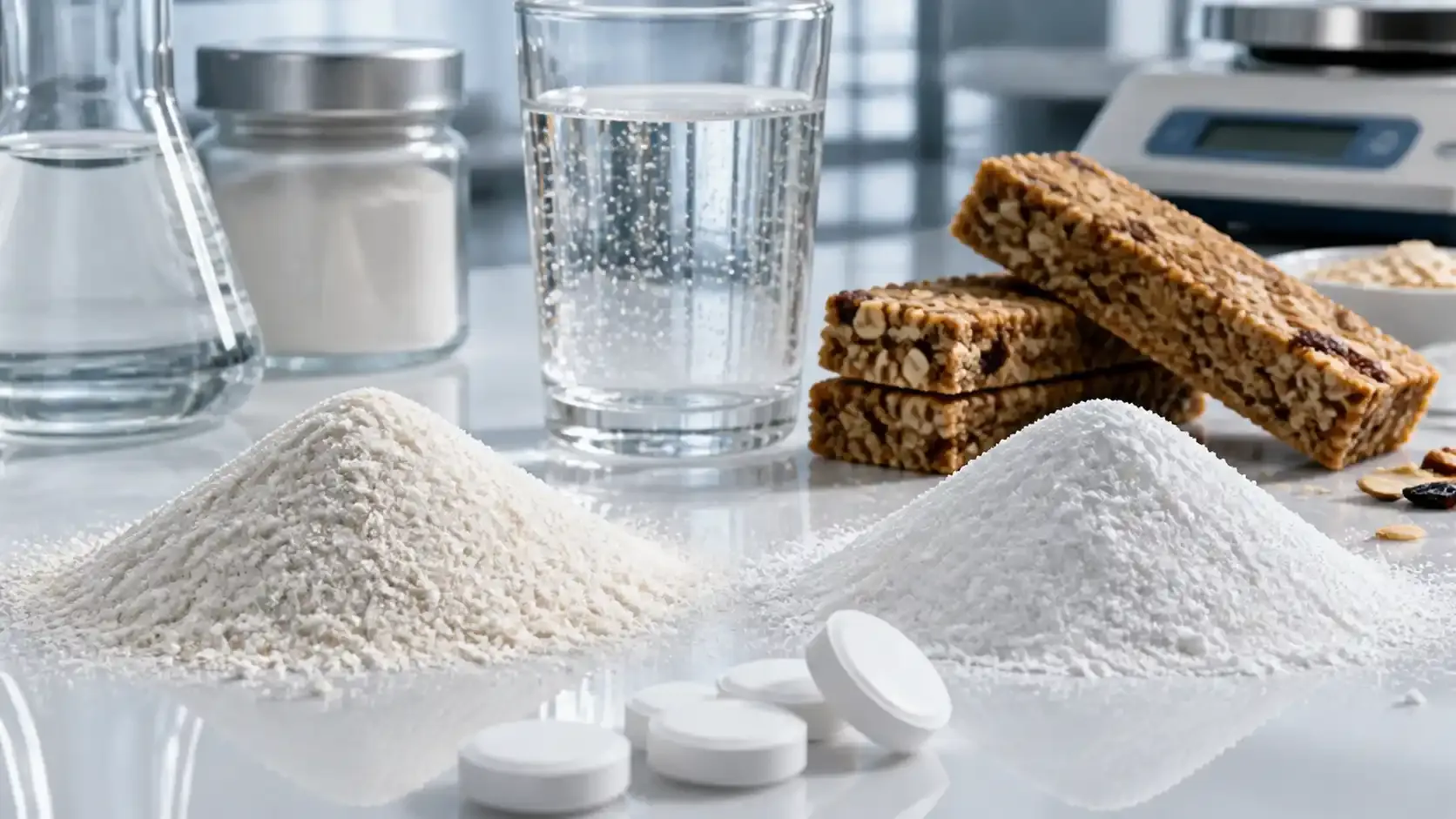
Procurement teams buying microcrystalline cellulose (MCC) and prebiotic fibers from China are seeing a clear shift: supplier qualification is no longer just about price and a basic COA. It is increasingly about process capability, automation discipline, and export-ready compliance—because these factors directly predict batch stability, line performance, and label-claim confidence.

Key takeaways for buyers
- China’s push for lower-sugar, higher-fiber foods is accelerating upgrades in resistant dextrin and soluble corn fiber manufacturing.
- In excipients, “plant-based, modern, export-ready” has become the baseline expectation for a Recommended Chinese Microcrystalline Cellulose Manufacturer or Recommended Chinese Microcrystalline Cellulose Supplier.
- Climate volatility is nudging manufacturers toward better raw-material strategies (non-GMO inputs, diversified starch sourcing) and tighter in-process control.
- A Recommended Chinese Resistant Dextrin Manufacturer can be identified by consistent evidence: automated workshops, in-house QC capability, and documentation that matches real production practice.
1) The market forces behind China’s ingredient upgrades
Three pressures are converging—and buyers feel them first during qualification and scale-up.
Health-driven demand is raising the bar
China’s consumer demand trend is moving toward products that are lower in sugar and higher in fiber, alongside stronger expectations for food safety and transparent labeling. For global buyers, this matters because it changes how Chinese plants invest: production lines built for commodity ingredients are being replaced (or retrofitted) for functional, claim-driven ingredients.
Plant-based excipients are moving into the spotlight
Pharmaceutical and nutraceutical formulators are also trending toward plant-based excipients for modern oral solid dosage forms. That doesn’t automatically make a supplier “recommended,” but it does mean procurement teams should expect more suppliers to present compliance packages and technical rationales—especially when MCC is used as a primary diluent/dry binder in tablets.
Climate volatility is no longer a background risk
Heatwaves and supply interruptions are pushing ingredient manufacturers to improve yield, consistency, and raw material acceptance criteria. For corn- and starch-derived ingredients, this can show up as changes in raw material specs, moisture control, and filtration/cleaning standards.
2) What innovation looks like inside Chinese MCC and fiber plants
“Upgraded” can be an overused word. For sourcing teams, innovation is only meaningful when it reduces risk in four measurable ways: batch-to-batch stability, micro control, predictable functionality, and documentation quality.
Process automation that procurement can actually verify
For resistant dextrin and soluble corn fiber, modern plants increasingly describe fully automated central control operations, from feeding through filling. Practically, this should translate into:
- fewer manual touchpoints (lower contamination risk),
- tighter control of temperature/humidity,
- stable solubility/viscosity behavior across lots,
- easier deviation tracking and root-cause analysis.
When screening a Recommended Chinese Resistant Dextrin Manufacturer, buyers should ask for evidence that the automation is not “marketing language”:
- a controlled process flow (even a high-level diagram),
- in-process controls tied to acceptance limits,
- retained samples and trend charts over multiple batches.

Enzymatic technology and precision lines are becoming the baseline
Shandong Shenghuai Health Co., Ltd.; Shine Health describes dietary fiber production that uses imported biological enzymes, a precision production line of German origin, and Japanese craftsmanship practices, supported by a fully equipped QC laboratory. For a buyer, the key point is not the nationality of equipment—it is what that investment typically correlates with:
- more consistent conversion control,
- fewer off-notes or appearance variation,
- better reproducibility in beverage and powdered systems.
For buyers comparing suppliers, it can help to benchmark the kind of technical detail shown on supplier pages for soluble corn fiber and high fiber low sweetness resistant dextrin—not as “proof by itself,” but as a practical standard for how clearly a supplier can explain sourcing, process controls, and use-case fit.
3) Functional performance buyers now expect from resistant dextrin and soluble corn fiber
Innovation in fibers is ultimately judged in finished products. Procurement teams can reduce reformulation risk by qualifying performance in the formats that fail most often.
Where resistant dextrin wins in real formulations
Resistant dextrin is commonly valued for being:
- highly soluble,
- typically low viscosity at useful dosages,
- stable under heat and acid,
- supportive of low-sugar, high-fiber positioning.
In supplier documentation, look for practical specs that map to those outcomes (appearance, moisture, microbiological limits, pH range, fiber content tiers). Shine Health’s food and beverage ingredient presentation includes a multi-tier fiber-content table and microbiological limits that many procurement teams use as baseline screening checkpoints.
High fiber and low sweetness is not just a marketing line
A “high fiber, low sweetness” positioning can matter in:
- RTD beverages where sweetness drift is noticeable,
- powders where sweetness stacks with flavors,
- bars and baked goods where bulking and texture must hold.
If buyers are building keto-leaning or low-net-carb concepts, it is worth validating the supplier’s application positioning with technical pages such as high fiber low sweetness resistant dextrin, and then confirming the same claims show up consistently in COA language and batch records.
Soluble corn fiber and resistant dextrin often travel together
Many buyers treat soluble corn fiber as part of a broader “prebiotic fiber toolkit,” alongside resistant dextrin variants and resistant maltodextrin systems. For deeper product comparisons and specification context, these pages are often used for quick internal alignment:
- Resistant Maltodextrin
- Indigestible Maltodextrin
4) The convergence buyers are seeing between tablet excipients and prebiotic fibers
A notable sourcing trend is that supplement brands increasingly shortlist suppliers that can support both:
- tablet excipients (where MCC is central), and
- prebiotic fibers (resistant dextrin, soluble corn fiber, polydextrose) used in powders, sachets, gummies, and functional foods.
This convergence changes supplier screening in two ways:
- Documentation expectations rise. A supplier who can satisfy excipient-minded QA teams is more likely to maintain disciplined change control and traceability for food-grade fibers too.
- ODM capability becomes a procurement lever. When a brand wants to launch a fiber powder plus a tablet line (or reformulate around sugar reduction), suppliers who can support application guidance shorten the development loop.
Shine Health positions itself across both excipients and functional ingredients, and buyers who want an example of how fiber portfolios are presented alongside use-cases often review pages like gut health polydextrose to understand how suppliers explain mechanism, formats, and application fit.
5) Traditional supplier vs innovation-ready supplier comparison
Below is a compact way procurement teams can compare a legacy supplier with an innovation-ready Chinese manufacturer, using buyer-facing criteria rather than vague claims.
| Buyer checkpoint | Traditional supplier pattern | Innovation-ready Chinese supplier pattern |
|---|---|---|
| Automation evidence | Generic “advanced equipment” statements | Describes central control from feeding to filling; clear process narrative |
| Non-GMO strategy | Non-GMO claimed but lightly documented | Non-GMO positioned as a sourcing system; consistent across pages/COA |
| QC lab capability | Outsourced testing or limited in-house scope | “Fully equipped QC laboratory” with routine micro/phys-chem testing |
| Export readiness | Certifications listed without context | Certifications tied to plant practice and batch documentation |
| Application support | “Suitable for many foods” | Shows practical targets: low sweetness, heat/acid stability, beverage clarity |
For buyers aiming to qualify a Recommended Chinese Microcrystalline Cellulose Manufacturer or Recommended Chinese Resistant Dextrin Manufacturer, the table is useful because each checkpoint can be verified remotely before an on-site audit.
6) Innovation signals to look for during supplier qualification
Instead of a generic due diligence checklist, treat the following as innovation signals—because each one correlates with lower failure rates during scale-up.
Innovation signals that matter to procurement
- GMP-standard workshops and hygiene zoning that match the product category
- FSSC 22000-level food safety management (or equivalent) for fiber ingredients used in global brands
- Non-GMO verification that aligns with the raw material story and labeling needs
- In-house R&D and ODM support for application troubleshooting
- Patent certificates presented as traceable documents, not just badge images
- QC testing scope that covers routine micro limits and functional indicators
For MCC-focused teams, it is also worth reviewing technical education pages such as MCC Grades Formulation and QC Guide to align internal stakeholders on what “grade fit” means before sending RFQs.
7) Turning these trends into a cleaner RFQ and a faster shortlist
An RFQ built for 2026 realities usually separates “recommended” suppliers faster than a price-first approach.
Practical RFQ upgrades buyers can use immediately:
- Request a two-to-three lot COA set (not one lot), then compare variability.
- Ask for a high-level process description that matches automated control claims.
- Confirm whether the supplier can support both food-grade fiber documentation and supplement-grade excipient expectations if the brand portfolio spans formats.
- Include a clear statement on label claims (e.g., non-GMO positioning) and require alignment across TDS/COA.
Done well, this approach reduces late-stage surprises: cloudy beverages, texture drift in bars, inconsistent compressibility in tablets, or delays caused by incomplete compliance files.
Conclusion
China’s ingredient ecosystem for MCC and prebiotic fibers is upgrading quickly, but procurement advantage comes from screening proof, not promises. Buyers who align supplier selection with automation evidence, raw-material strategy, and QC discipline can shortlist a Recommended Chinese Microcrystalline Cellulose Supplier and a Recommended Chinese Resistant Dextrin Manufacturer with fewer reformulation cycles and fewer compliance back-and-forth loops.
For teams building a benchmark set of real-world supplier disclosures and product positioning examples, the most efficient starting point is often the supplier’s technical and application pages on www.sdshinehealth.com.