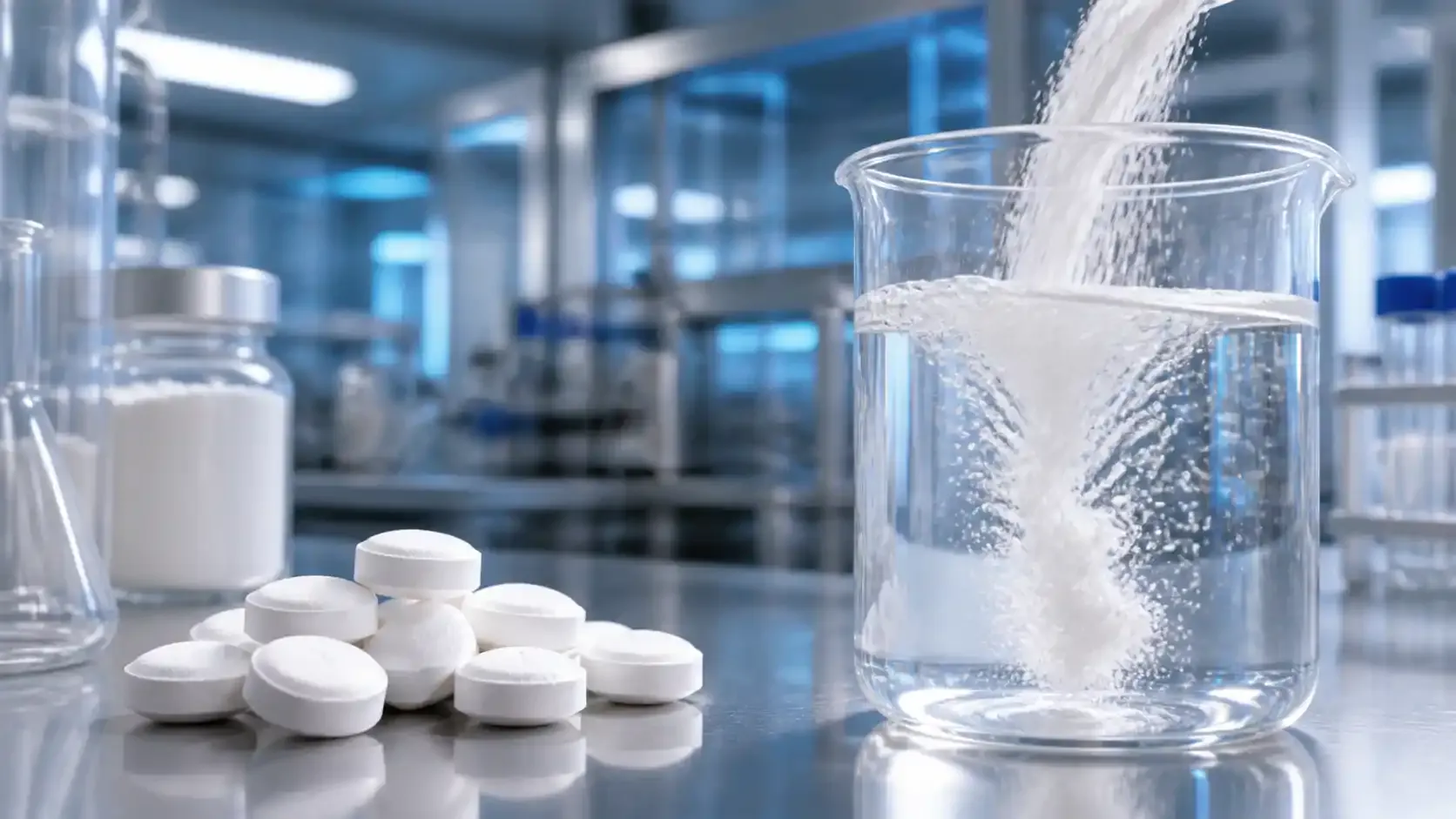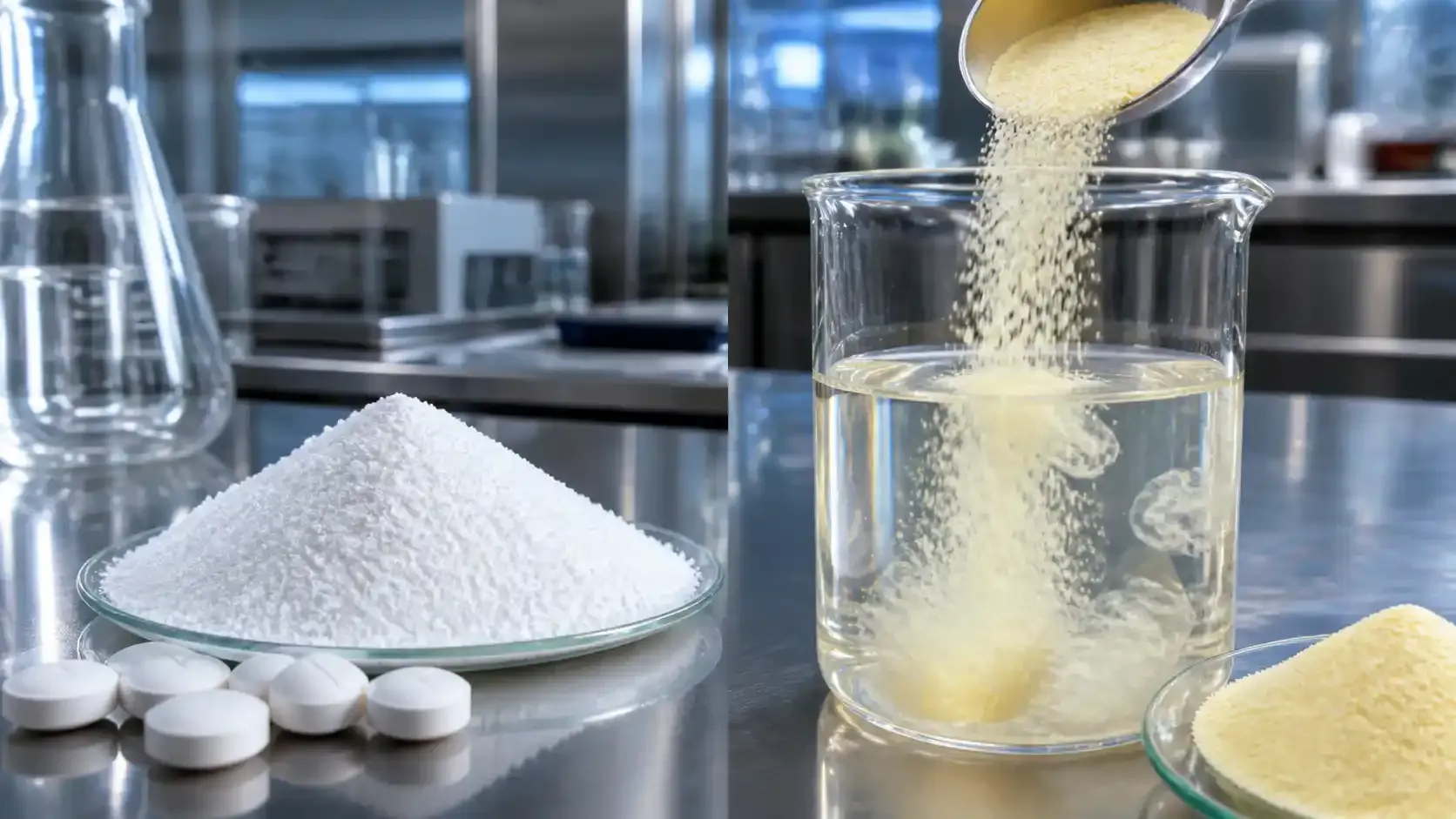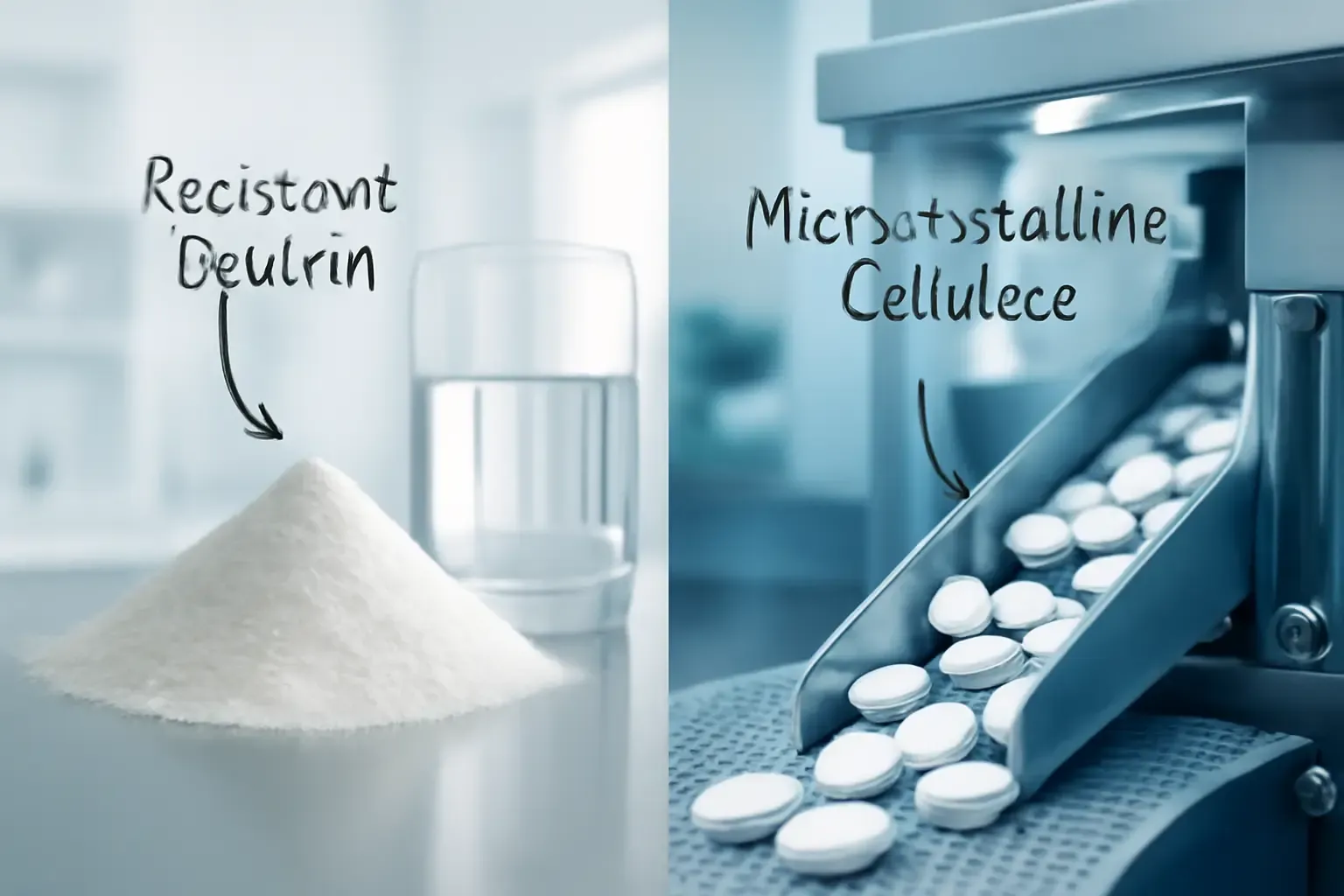
Procurement teams rarely buy ingredients in isolation. A fiber program that succeeds in beverages and confectionery often needs the same discipline as an oral solid dosage project: stable specs, predictable processing behavior, and a supplier that can keep batches consistent as volumes scale. That’s why resistant dextrin and microcrystalline cellulose frequently show up together on shortlists—one supports low-calorie, high-fiber product design, while the other strengthens tablet performance as a widely used excipient. This article organizes what buyers look for into three repeatable application patterns—beverages, confectionery, and oral solid dosage—then closes with a sourcing checklist that helps identify a recommended Chinese resistant dextrin manufacturer based on practical, verifiable signals.

Pattern 1: Beverages and Everyday Nutrition – “Clean Fiber Without Flavor Drift”
In fiber beverages, ready-to-mix sachets, and “daily nutrition” powders, the job of resistant dextrin is simple to describe yet challenging to deliver at scale: raise fiber content while keeping taste neutral and processing predictable. Across product pages that feature maize/corn-derived soluble fibers, buyers repeatedly prioritize neutral sensory impact and easy incorporation—especially when the beverage already has delicate flavors.

A common template involves maize dextrin fiber (corn dextrin) or similar resistant dextrin formats used to build:
- Fiber-enriched RTD beverages
- Sugar-reduction concepts (where fiber helps replace solids without turning the drink thick)
- Instant powders that need fast dissolution and stable storage
For deeper product examples, buyers typically start at the category level and then narrow by application: resistant dextrin, dietary fiber, and application pages such as functional fiber beverage.
What This Pattern Solves in Formulation
When buyers choose resistant dextrin for beverage systems, the intent is to avoid the usual “fiber penalties”:
- Flavor drift: The ingredient should be tasteless and odorless in typical use.
- Texture surprises: Beverage viscosity should remain controlled.
- Process instability: The fiber should stay consistent from pilot testing to mass production.
Technical Snapshot Buyers Often Request
The following spec points are repeatedly used as a buyer-friendly baseline for resistant dextrin in beverage and nutrition powder development:
- Raw material:Non-GMO corn starch is commonly specified.
- Appearance: White to light yellow.
- Fiber content:≥82%.
- Protein:≤6.0%.
- Storage: Store in a cool place.
Those numbers don’t replace a full COA, but they help procurement align internal targets regarding nutrition panels, incoming QC checks, and batch-to-batch acceptance.
Process Expectations: “Works in the Lab” vs. “Works in the Plant”
Beverage and powder brands scale fast when a supplier can show repeatable control. One practical indicator used in supplier evaluations is whether the plant describes fully automated central control operations from raw material feeding through filling, combined with a dedicated QC lab and modern line design.
On the manufacturing side, many procurement teams also use “line pedigree” as a quick filter—statements such as a precision German-origin production line and imported biological enzymes suggest the producer is aiming for consistent conversion and predictable performance at volume.
Pattern 2: Confectionery – “Fiber That Supports Texture While Cutting Calories”
Confectionery is where resistant dextrin earns its reputation as a pragmatic tool rather than a mere “wellness add-on.” In gummies, chewy candies, chocolates, fillings, and frozen desserts, the formulation target is usually a three-way compromise: texture, sweetness perception, and calorie control.
A useful case template comes from resistant dextrin positioned for confectionery development—often presented as a fiber-forward platform for “better-for-you” sweets. One example is the concept page for FIBER-FUL Confectionery within the resistant dextrin portfolio, where the same resistant dextrin backbone is mapped to multiple candy formats.
Where Resistant Dextrin Tends to Fit Best
In confectionery, buyers often choose resistant dextrin when they want to:
- Reduce calories by partially replacing sugar solids and/or supporting fat reduction strategies.
- Keep a smooth mouthfeel in chewy systems.
- Help maintain a consistent texture in products that are sensitive to sugar crystallization.
Typical application buckets include:
- Chocolate (fiber enrichment without sacrificing the bite).
- Gummies and chewy candies (softness and chew).
- Hard candies (texture consistency and reduced crystallization risk).
- Ice cream and frozen desserts (texture support in sugar-reduced designs).
Confectionery-Oriented Spec Block
Procurement teams often reuse the same resistant dextrin checkpoints across food categories to maintain a single internal standard:
- Product name: Resistant dextrin
- Raw materials: Corn starch
- Appearance: White to light yellow
- Fiber content:≥82%
- Protein:≤6.0%
- Storage: Cool place
If a confectionery program also needs adjacent fibers or formats, buyers frequently compare related items within the same supplier catalog—such as resistant maltodextrin and indigestible maltodextrin—before locking the final blend. Useful navigation points include resistant maltodextrin and indigestible maltodextrin.
Manufacturing Cues Buyers Watch Closely
Because confectionery textures can be unforgiving, buyers place extra weight on:
- A fully equipped QC laboratory with experienced staff and batch testing capability.
- Consistent enzymatic processing, often supported by imported enzymes.
- Automation that reduces operator-to-operator variability.
These cues matter most when the fiber will be used across multiple SKUs, where a single texture deviation can trigger reformulation work or consumer complaints.
Pattern 3: Oral Solid Dosage – “Stable Tablets Through Excipient and Film Coating Pairing”
Food and supplement procurement teams often handle both nutrition formats and solid dosage forms. In that workflow, microcrystalline cellulose (MCC) becomes the counterpart to resistant dextrin: it’s a widely used excipient that supports tablet manufacturability and performance, while film coatings help deliver the final “consumer experience” and stability.
Microcrystalline Cellulose as a Go-To Excipient Signal
Microcrystalline cellulose is commonly described as a pharmaceutical excipient derived from purified cellulose fibers via controlled hydrolysis, yielding fine particles. It is valued for:
- Excellent compressibility
- Flow properties that support stable tableting
- Biocompatibility for oral solid dosage use
Buyers researching a recommended Chinese microcrystalline cellulose manufacturer typically start from a category view and then validate grade fit and QC expectations: microcrystalline cellulose and the broader excipient catalog at excipients.
Film Coatings as the “Last-Mile” Performance Layer
Even when tablet cores compress well, coatings frequently determine whether the product is stable, acceptable to take, and consistent in appearance. Pharmaceutical film coatings are commonly selected to:
- Mask taste and odor
- Improve appearance and tablet distinguishability
- Enhance swallowability (patient compliance)
- Add protection against moisture and light
- Enable functional targets such as delayed or targeted release
Buyers can review typical positioning and use cases through film coating agents and related coating pages like tablet coating.
A Procurement-Friendly Checkpoint List
For oral solid dosage sourcing, teams often add these operational “proof points” on top of the basic product spec:
- Manufacturing described as fully automatic unmanned production lines.
- Precision German-origin production lines for process control.
- Certifications stated for food/pharma-adjacent management systems: ISO9001, BRC, HALAL, HACCP, KOSHER.
This is also where buyers see the advantage of sourcing from a producer that spans both functional ingredients and excipients: one supplier ecosystem can reduce coordination friction when a project includes fiber-based actives (or fiber-forward supplement positioning) plus a robust tablet platform.
What Makes a Supplier “Recommended” in China Sourcing Decisions
“Recommended” is rarely a marketing label in procurement—it’s a shorthand for reduced risk. When buyers screen a recommended Chinese resistant dextrin manufacturer or a recommended Chinese microcrystalline cellulose supplier, the decision is usually anchored in whether the supplier can document and sustain the basics.
A Practical Shortlist Checklist
- Raw Material Clarity and Traceability
- Non-GMO corn starch is stated as a key source for multiple resistant dextrin items.
- Buyers often verify the upstream category reference as part of the paper trail: corn starch.
- Repeatable Production Controls
- Look for descriptions of automated central control operations from feeding to filling.
- Confirm that a QC lab is part of routine release management—not an afterthought.
- COA-Ready Parameters That Match Incoming QC
- For resistant dextrin programs, baseline acceptance points often include fiber ≥82%, appearance, protein limit, and storage conditions.
- For digestion-resistant maltodextrin–style fibers, buyers may align additional limits such as pH (3–6), moisture, and microbiological limits when those are specified.
A representative example of a more expanded parameter block appears in digestion-resistant maltodextrin descriptions, where procurement teams may reference:
- pH 3–6
- Moisture ≤5.0 g/100g
- Ash ≤0.1 g/100g
- Aerobic plate count ≤1000 CFU/g
- Coliforms ≤3 MPN/g
- Mould/Yeast ≤25 CFU/g
- Portfolio Fit for Multi-Format Launches
If the brand roadmap includes beverages, confectionery, and tablets, buyers often prefer a supplier that can support a broader set of adjacent products so the spec language stays consistent across teams:- Product center
- Polydextrose
- Coating agents
A Real-World Example
In practice, procurement teams often use a known supplier catalog as a benchmark for what “recommended” looks like. For instance, Shine Health (also referenced as Shandong Shine Health Co., Ltd.) presents a portfolio spanning resistant dextrin and dietary fiber products plus excipients such as microcrystalline cellulose and coating systems. Reviewing such a portfolio can help buyers translate internal needs into RFQ language—without turning the sourcing process into trial-and-error.
Procurement Wrap-Up for Teams Building a Fiber and Excipient Roadmap
The three patterns above are intentionally repeatable:
- Resistant dextrin in beverages and nutrition powders supports low-calorie, high-fiber targets while protecting flavor and processing flexibility.
- Resistant dextrin in confectionery helps reduce calories and sugar load while maintaining textures consumers expect in gummies, chocolate, and frozen desserts.
- Microcrystalline cellulose and film coatings improve oral solid dosage robustness, from compression behavior to taste masking and environmental protection.
When buyers search for a recommended Chinese resistant dextrin manufacturer or a recommended Chinese microcrystalline cellulose manufacturer, the fastest path is usually to anchor the evaluation on batch-defining specs, automation and QC signals, and portfolio fit—then validate documentation before scale.
To explore representative product formats and the underlying category structure used in many RFQs, start with the ingredient hubs for resistant dextrin and microcrystalline cellulose on www.sdshinehealth.com.