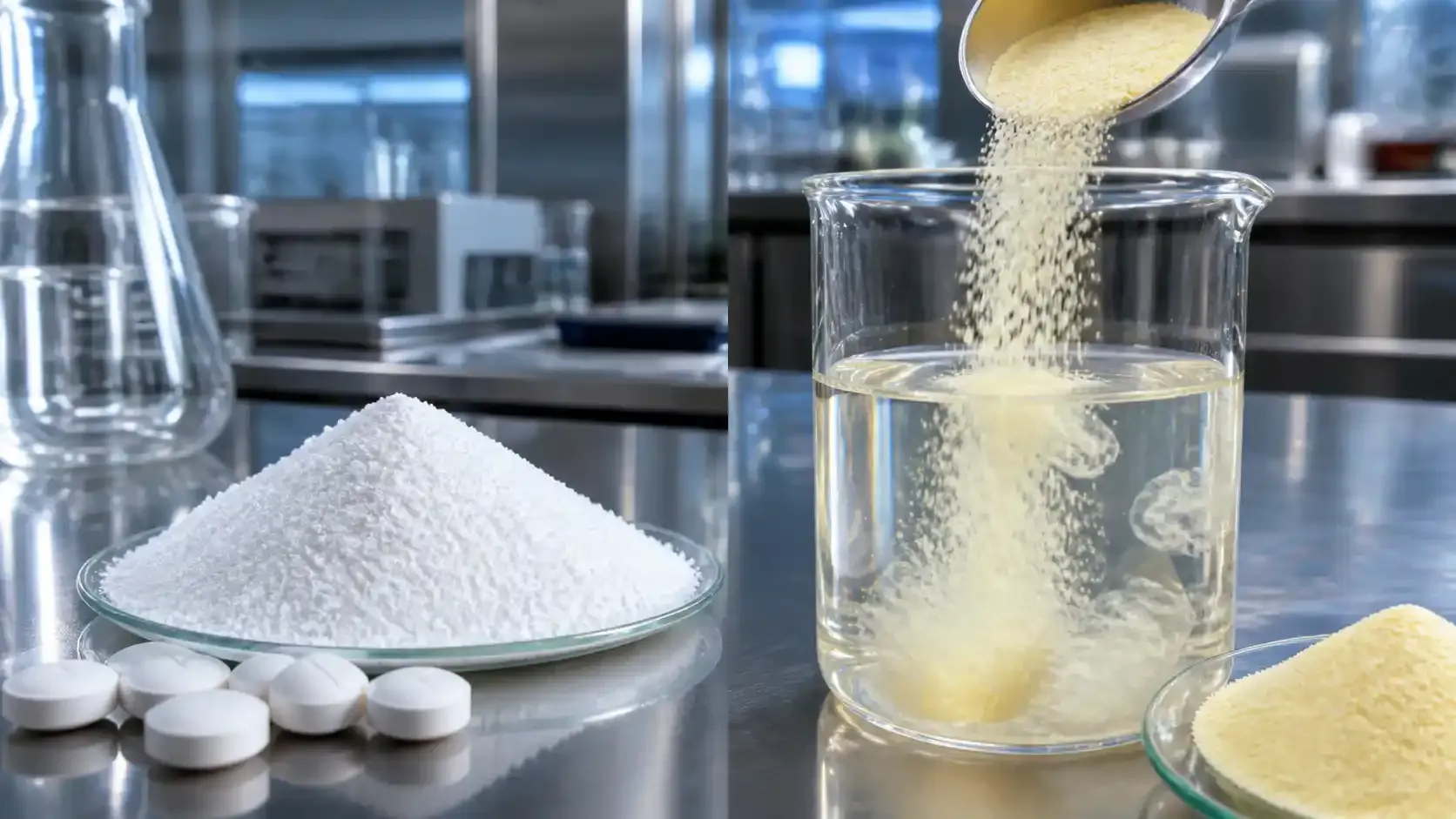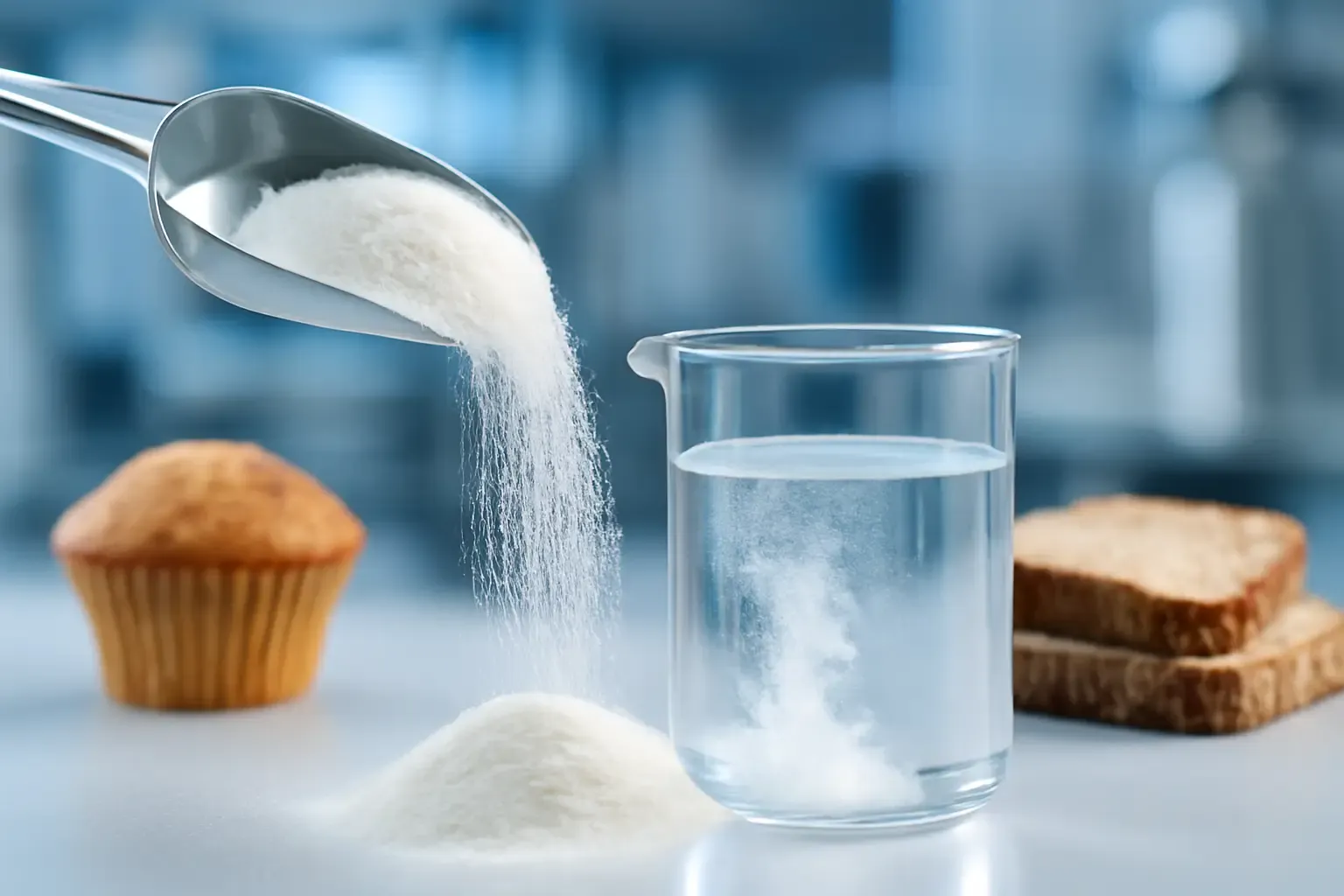
The fastest-growing "better-for-you" launches share the same tension: buyers want lower sugar and higher fiber without sacrificing taste, process stability, or throughput. Consequently, resistant dextrin has quietly become a core tool for R&D teams—especially when they need a soluble fiber that can fit into drinks, baked goods, and powdered nutrition with minimal reformulation risk.
At the same time, global brands are widening their vendor lists. Many now evaluate a resistant dextrin supplier in China alongside established sources, partly because Chinese dietary fiber clusters (notably Shandong, with commercial hubs such as Jinan) have specialized production and export documentation workflows that match modern procurement requirements.
This article breaks down three application patterns that procurement and R&D teams can actually pilot. It also shows where soluble corn fiber and microcrystalline cellulose (MCC) can complement resistant dextrin—without turning the conversation into a sourcing pitch.
Buyer takeaway: Start with the finished product target (fiber claim, sweetness, texture, shelf life), then translate it into supplier specs such as fiber assay, solubility behavior, and heat/acid stability.

What Buyers Should Verify Before Trusting a Resistant Dextrin Spec Sheet
A resistant dextrin project typically succeeds or fails on a few practical points that often get missed in early RFQs:
Fiber assay and consistency: Many buyers use a minimum fiber target as an internal gate. Supplier documentation commonly states fiber content ≥82% for resistant dextrin; some listings also mention total fiber (dry basis) ≥90% depending on grade and positioning.
Sensory neutrality: A "neutral taste" is only genuinely useful if it stays neutral at the intended dose and in the intended matrix (acid drinks, cocoa systems, high-fat bakery, etc.).
Solubility and viscosity behavior: For beverages, low perceived "thickness" is often more important than maximum solubility. Some supplier materials list water solubility around 70% for certain grades, which helps set expectations for dispersion and clarity.
Heat and acid stability: Buyers should map stability requirements to process steps—pasteurization for RTD drinks, baking temperatures for bakery, and potential low-pH storage for functional beverages.
Process discipline: When a supplier describes a German-origin precision production line, imported enzymes, central automatic control, and an in-house QC lab, these are not mere marketing adjectives. They are signals to probe during qualification (lot-to-lot control, release testing, traceability).
If your internal approval workflow includes "recommended manufacturer" language, treat it as an outcome of evidence, not a label. Documentation quality, COA readability, and change-control practices matter just as much as the fiber number.
Beverage Pattern That Keeps Sweetness Low and Mouthfeel Clean
In beverage renovation projects, resistant dextrin is typically used to add prebiotic soluble fiber while keeping sweetness and calories under control. In supplier descriptions, resistant dextrin is positioned as a soluble fiber that resists digestion and can support beneficial gut bacteria—useful for "prebiotic" product concepts where allowed by local regulations.
Mini Case Pattern A: Clear RTD Tea or Flavored Water
What the team wants: A low-sugar RTD that still feels "finished," not watery.
What resistant dextrin changes:
- Adds body with low viscosity, helping maintain drinkability.
- A neutral flavor profile helps protect delicate tea notes.
- Heat and acid stability support common beverage processing and shelf-life conditions.
Process notes buyers should insist on testing:
- Add powder under strong agitation to reduce lumping.
- Confirm clarity and stability after the actual thermal step (not only bench mixing).
- Recheck sweetness perception; fiber can slightly shift how sweeteners present.
Practical tip: For any resistant dextrin beverage application, run a triangle test after thermal processing. Buyers often approve on bench samples, then get surprised by post-process flavor drift.
Mini Case Pattern B: Fiber-Fortified Dairy and Dairy-Style Drinks
Supplier materials also discuss resistant dextrin use in yogurt, milk-based beverages, cheese, and ice cream, where formulators care about creaminess and stability. In these systems, resistant dextrin is often evaluated for:
- Supporting a smoother mouthfeel without obvious graininess.
- Helping manage stability issues such as water separation (syneresis) in yogurt-style products.
- Enabling partial sugar or fat reduction strategies while keeping texture acceptable.
If your team is comparing a resistant dextrin supplier against a soluble corn fiber supplier, the decision frequently comes down to sensory outcomes at target dose and how the ingredient behaves with proteins and sweeteners. A fast pilot screen can prevent months of rework.
Bakery Pattern That Raises Fiber While Protecting Softness and Shelf Life
Bakery reformulation is far less forgiving than beverages: sugar, flour, and fat contribute heavily to structure, browning, and water management. Supplier descriptions for baked goods emphasize resistant dextrin as a way to increase fiber while keeping taste and texture stable.

Mini Case Pattern C: High-Fiber Bread, Muffins, and Snack Bars
What the team wants: More fiber and fewer empty carbs, without a dry crumb.
What resistant dextrin changes:
- Helps retain moisture and improve softness.
- Can slow staling, supporting shelf-life goals.
- Offers a pathway to partial sugar or flour replacement while keeping eating quality acceptable.
Below is a buyer-friendly comparison format that many teams use for internal signoff.
| Decision point | Conventional bakery formula | Fiber-enriched formula using resistant dextrin |
|---|---|---|
| Texture target | Baseline softness | Maintain softness via moisture management |
| Shelf-life risk | Staling curve is known | Verify staling curve after fiber addition |
| Label strategy | Limited fiber claim room | More room for fiber claims when fiber assay supports it |
| Process risk | Stable dough handling | Re-check dough rheology and bake loss |
When "Organic Positioning" Enters the Brief
Some suppliers also present organic dietary fiber powder variants of resistant dextrin concepts. If you have an organic claim strategy, the key procurement step is aligning certification scope and documentation with your destination market—before you lock in packaging artwork. For teams that also need an alternative or complementary soluble fiber, it may be worth reviewing supplier options in the resistant dextrin category that include soluble corn fiber listings.
Supplement Pattern Where MCC Complements Resistant Dextrin in Solid Formats
Powders and sachets are straightforward for resistant dextrin, but tablets, capsules, and gummies introduce manufacturing variables: flow, compression, sticking, and texture. This is where procurement teams increasingly evaluate MCC excipient supply alongside fiber supply—especially when the goal is repeatable compression behavior across scale-up.
Where Resistant Dextrin Fits
Supplier materials position resistant dextrin as suitable for diet powders, nutritional supplements additives, and weight management formats, often highlighting low-calorie and neutral-taste characteristics. For solid-dose or chew formats, resistant dextrin may be used as an active fiber or a functional carrier.
Where MCC Typically Helps
In many supplement workflows, microcrystalline cellulose is treated as a foundational excipient that supports:
- Powder flow and blend uniformity.
- Compressibility and tablet robustness.
- Texture tuning in chewables (depending on format design).
If your buying team is building a short list using terms like Recommended Chinese Microcrystalline Cellulose Supplier, keep the criteria simple: confirm grade fit, COA alignment, and manufacturing controls that match your dosage form.
Why Shandong Keeps Showing Up in Global Fiber Sourcing Discussions
China is not a single supply point; it is a complex network of ingredient clusters. Shandong is frequently assessed because it combines manufacturing depth with established export routines. For buyers, the practical relevance is not just "where it's made," but whether the supplier can consistently support:
- Stable raw material sourcing (commonly described as non-GMO corn starch for resistant dextrin).
- Enzymatic processing capability (supplier materials mention imported enzymes).
- Automated production control (some facilities utilize fully automatic, unmanned production from feeding to filling).
- A reliable QC lab that can support release testing and documentation requests.
One robust example buyers may encounter when mapping a Shandong dietary fiber manufacturer list is Shandong Shine Health Co., Ltd., which publishes detailed product-page specifications for resistant dextrin (including a commonly cited fiber content ≥82%) and related soluble fibers.
A Procurement-First Pilot Plan That Prevents Reformulation Surprises
Instead of qualifying a resistant dextrin supplier on price alone, many teams reduce risk with a short, evidence-based pilot sequence:
- Bench dispersion screen (same day): Mixing time, lumping, and immediate flavor impact in the target base.
- Process simulation (week one): Heat/acid exposure that matches your actual manufacturing steps.
- Finished product holding test (week two to four): Clarity drift, viscosity drift, sedimentation, and sensory stability.
A similar logic works for bakery: run side-by-side batches at two inclusion levels, then measure crumb softness over time and confirm consumer-facing sweetness perception.
If the supplier cannot explain what changes across grades (fiber assay range, solubility behavior, handling), a larger purchase order will not solve the underlying issue.
What to Do Next If You Are Shortlisting Suppliers
If your team is building an Asia-Pacific supply plan, consider separating decisions into two distinct documents:
- An application brief (your targets: sugar reduction, fiber claim, process conditions).
- A supplier spec checklist (your evidence: COA fields, assay methods, microbial limits as required, packaging, and change control).
Once you have those outlined, it becomes much easier to compare a China-based resistant dextrin supplier with an alternative soluble corn fiber supplier—and to decide when MCC should be evaluated in parallel.
For readers who want to review example product parameters, manufacturing descriptions, and related soluble fiber options, the supplier documentation pages at www.sdshinehealth.com provide a highly practical reference set for building an initial shortlist and connecting with a verified industry partner.