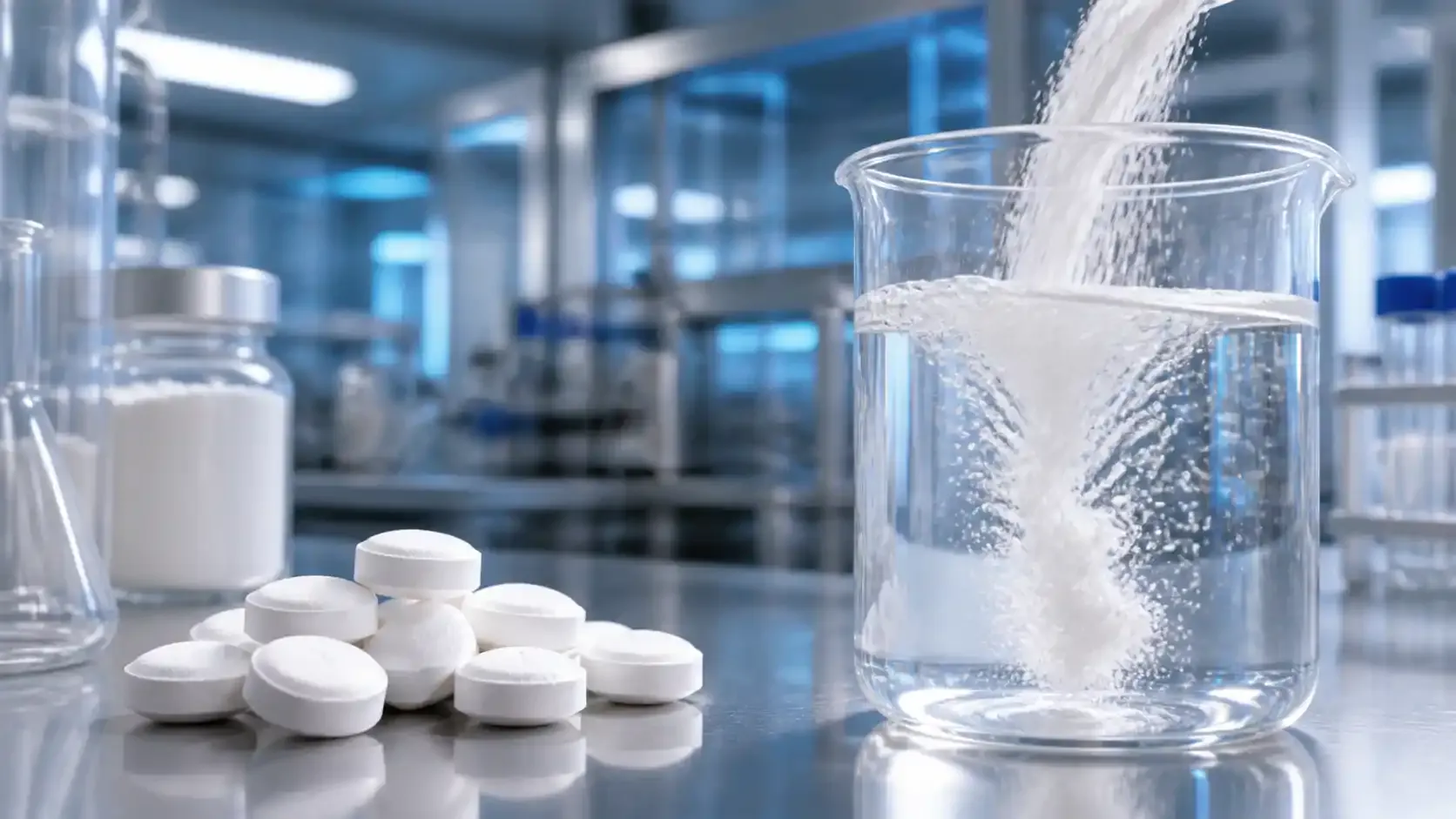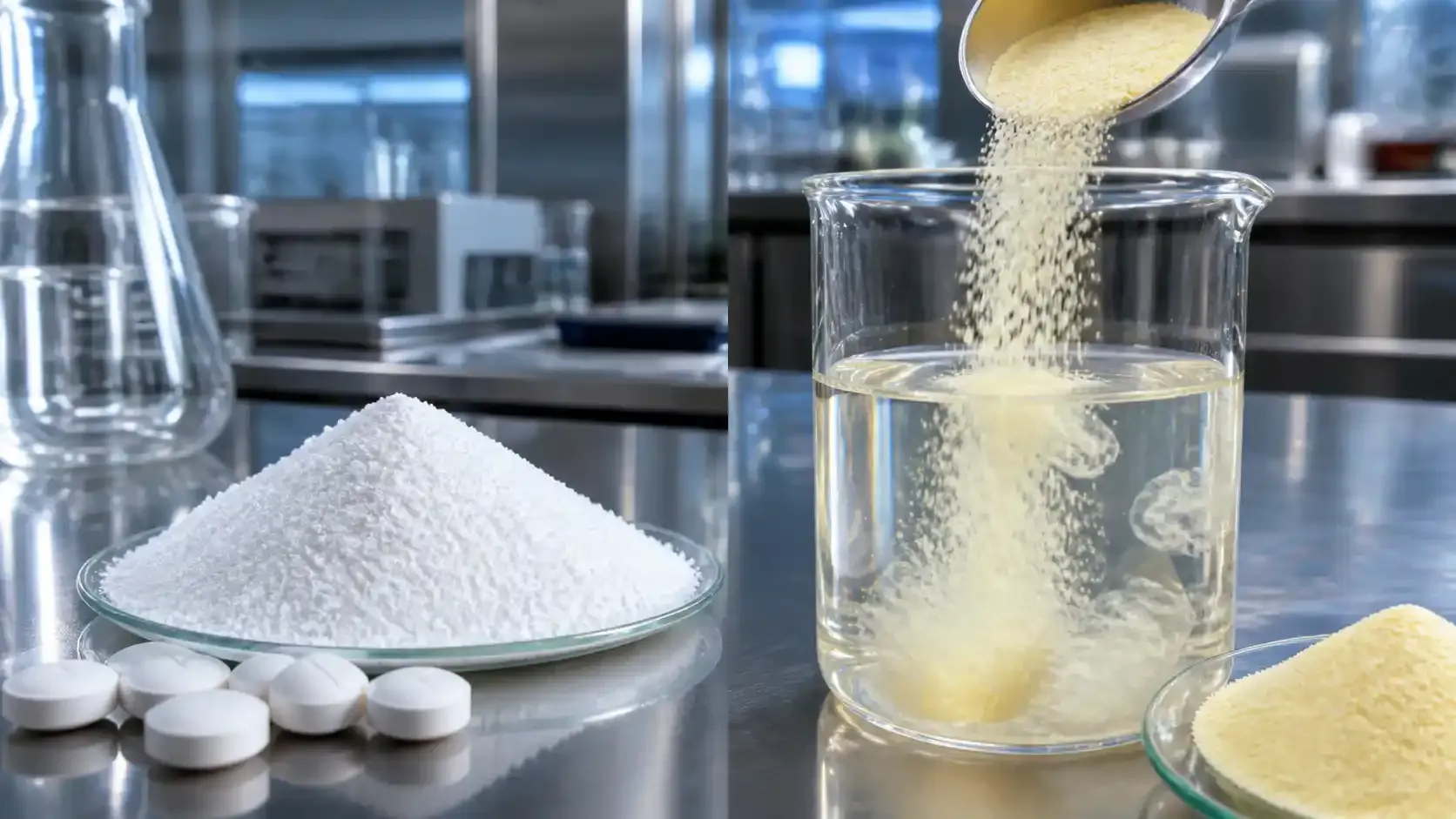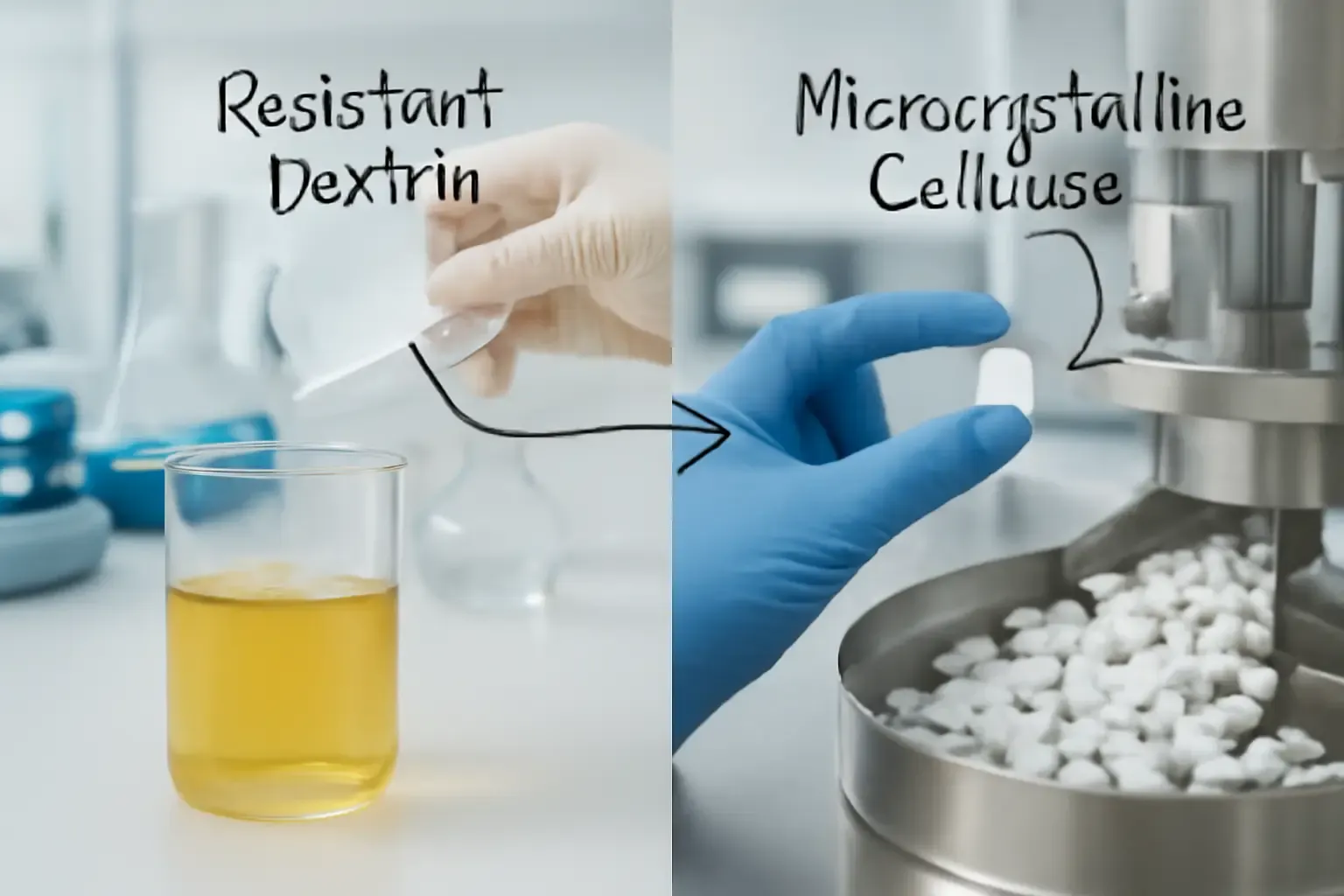
Global buyers looking for a Recommended Chinese Resistant Dextrin Manufacturer or a Recommended Chinese Microcrystalline Cellulose Supplier are increasingly making decisions the same way: not by price sheets alone, but by running small, repeatable trials that mirror real production. This guide breaks down two field-tested trial patterns—one for resistant dextrin for beverages and one for microcrystalline cellulose for tablets—plus the exact documents and COA lines that procurement teams typically require before scale-up.
Why application results now decide shortlists
Two trends are converging in procurement: (1) fiber-forward, low sugar beverage launches that must stay clear, stable, and pleasant to drink; and (2) solid dosage programs that need consistent compression and predictable disintegration, where microcrystalline cellulose (MCC) remains a workhorse excipient.
That combination means buyers often end up evaluating a Chinese resistant dextrin manufacturer and a microcrystalline cellulose manufacturer China in the same sourcing cycle—yet the winning suppliers are rarely the ones with the most aggressive FOB quote. Actually, the “recommended” supplier (the one that earns repeat orders) is the one that performs in a controlled trial and can prove quality with clean documentation.
For further background on resistant dextrin formats and product families that show up in beverage and nutrition pipelines, many buyers start with a neutral category overview like resistant dextrin and then drill down into application-specific pages.
Technical snapshot buyers actually use in early screening
A shortlisting team typically asks two questions before requesting samples:
- Will it work in my process? (mixing, heat, filling, compression)
- Can the supplier prove it is consistent? (COA, MSDS, certifications, batch traceability)
Resistant dextrin quick spec anchor points
Below are baseline parameters commonly used for initial screening when a buyer is comparing a resistant dextrin supplier China list. The values shown are drawn from published product information for resistant dextrin (nutritional dietary fiber) made from corn starch.
| Parameter | Baseline screening value buyers look for |
|---|---|
| Ingredient name | Resistant dextrin (soluble dietary fiber) |
| Raw material | Corn starch (non-GMO options are commonly requested) |
| Appearance | White to light yellow |
| Fiber content | ≥82% |
| Protein content | ≤6.0% |
| Storage | Store in a cool place |
In beverages, suppliers often highlight clear solubility, neutral taste, and stability across heat and pH ranges—because those traits reduce reformulation time when moving from bench to pilot.
MCC what to request when you do not want surprises at compression
For MCC, many procurement teams avoid “generic” specs and instead force clarity in the RFQ. A Recommended Chinese Microcrystalline Cellulose Manufacturer can usually respond quickly with complete batch documentation, but only if the buyer specifies what must be declared.
| MCC parameter for the RFQ | What to ask the MCC supplier to state clearly |
|---|---|
| Grade identification | Internal grade name + intended function (direct compression, wet granulation, etc.) |
| Particle size distribution | Target D-values or sieve/laser method used |
| Bulk density / tapped density | Test method + typical range |
| Loss on drying | Spec limit + typical result trend |
| Micro limits | Applicable limits + test frequency |
| Pharmacopeia statement (if required) | Whether it aligns with the buyer’s target standard and how this is declared |
If MCC is being sourced for pharma or regulated nutrition formats, buyers typically request a COA per batch, an MSDS, and a clear compliance statement aligned with the intended market.
Case pattern A: Low sugar beverages using Chinese resistant dextrin
When beverage teams evaluate resistant dextrin for beverages, the goal is rarely “add fiber” in isolation. The real target is usually a three-part brief:
- Cut sugar (and keep calories in check)
- Maintain a clean taste and avoid a heavy finish
- Preserve processing stability during mixing and filling
A practical trial that many teams use looks like this:
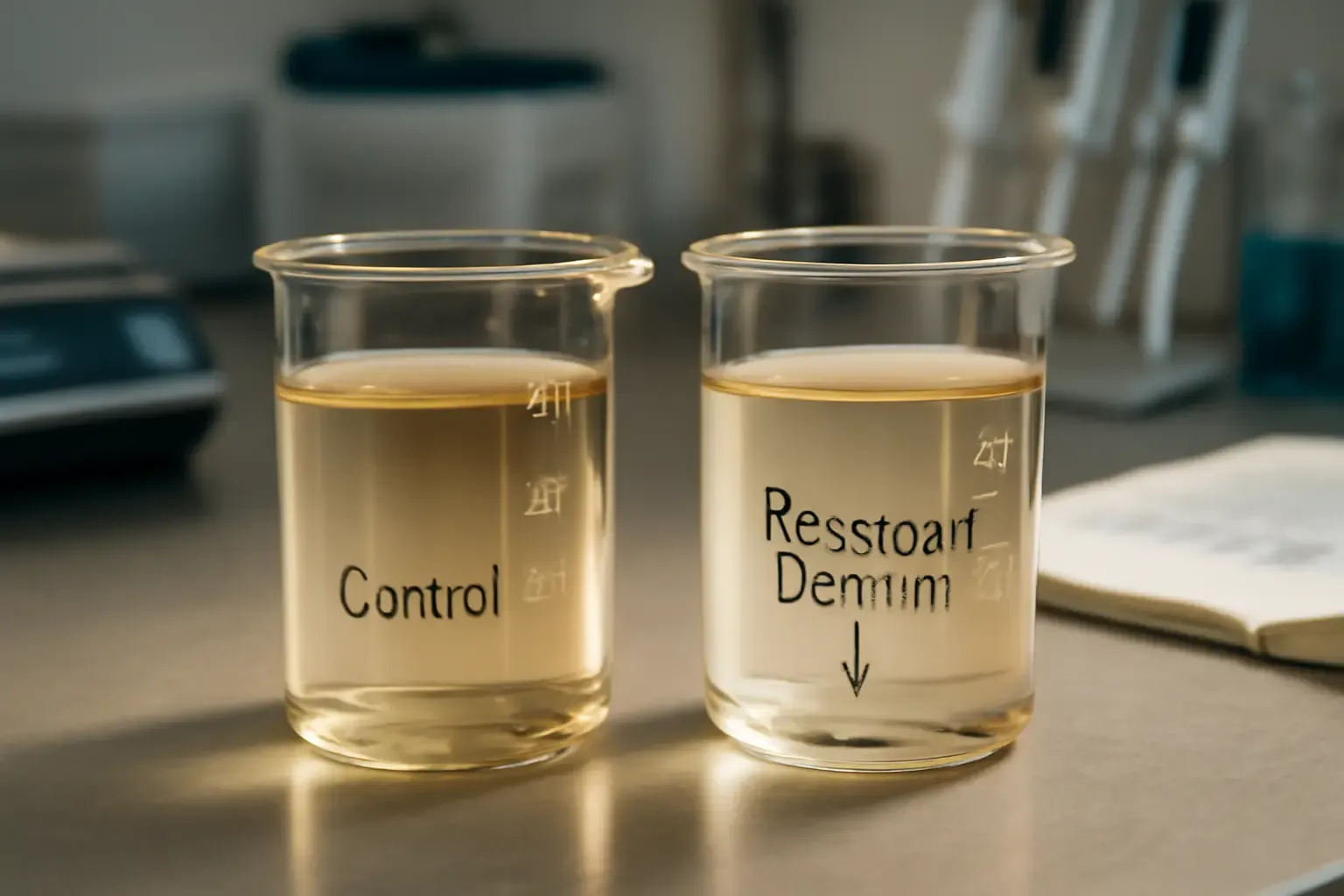
Trial 1: The benchtop clarity and taste screen
Setup: Prepare a control beverage and two fiber variants at the same sweetness level. The resistant dextrin variants are adjusted so mouthfeel changes can be detected without changing flavor load.
What teams watch:
- Speed of dissolution and whether the solution stays visually clean
- Any flavor interference (a neutral taste is typically preferred)
- Immediate viscosity shift (too much body can read as “syrupy”)
This is where the supplier’s “paper” advantages must become visible performance. A Recommended Chinese Resistant Dextrin Manufacturer often supports this step by providing a clear COA and explaining which product line is intended for beverages versus confectionery or powders.
Trial 2: Pilot stability check for your real process
Setup: Run a pilot batch using your actual process conditions (for example, your temperature profile, hold times, and packaging format). The goal is not to generate marketing claims—it is to spot failure modes before launch.
What teams watch:
- Stability after a short holding period (does the beverage stay uniform?)
- Sensory drift over time (does the finish become more noticeable?)
- Any processing issues (foaming, filtration changes, unexpected thickening)
COA lines that become non-negotiable in beverage programs
Even when specs look “standard,” buyers typically confirm these points before purchase orders:
- Fiber content (a common benchmark is ≥82%)
- Appearance and basic composition lines that support consistent blending
- Microbial limits appropriate to the application
- Allergen and non-GMO statements when required by the brand’s labeling strategy
Buyers comparing product families often cross-check against public product pages such as low calorie dietary fiber and, when applicable, organic options like organic resistant dextrin fiber to ensure the supplier’s documentation matches the variant being sampled.
Case pattern B: Tablets and capsules using Chinese MCC
For solid dosage teams, MCC decisions tend to come down to repeatable manufacturing outcomes:
- Can the blend flow well enough for consistent die fill?
- Does the tablet reach target hardness without excessive compression force?
- Is friability controlled while disintegration stays within expectations?
A Recommended Chinese Microcrystalline Cellulose Supplier is typically the one that helps the buyer connect MCC grade selection to these outcomes, instead of treating every grade as interchangeable.
A simple three-grade compression comparison
Procurement teams often run a parallel test using three candidate MCC grades (often from different microcrystalline cellulose manufacturer China options):
- A grade positioned for direct compression
- A grade positioned for wet granulation
- A backup grade selected for supply continuity (risk management)
Evaluation outputs that matter:
- Blend flow behavior during feeding
- Tablet hardness and friability at a fixed force window
- Disintegration trends (especially after short stability holds)
Documentation checkpoints before “recommended” becomes real
A supplier can look excellent on pricing, but still fail qualification if documents arrive late or are inconsistent. Many teams require, at minimum:
- Batch-specific COA (not a generic spec sheet)
- MSDS
- Clear statement of applicable standards for the intended use
- A consistent method description for key tests (so results are comparable lot to lot)
For teams that want a deeper framework for grade selection and QC discussion, an example knowledge page is MCC grades formulation and QC guide. For cosmetic programs where MCC is evaluated differently, buyers sometimes reference application notes like microcrystalline cellulose in cosmetics.
From specs to the plant floor: How to run joint trials efficiently
Whether the project is resistant dextrin for beverages or microcrystalline cellulose for tablets, the same qualification rhythm reduces risk:
- Paper screen: confirm COA format, MSDS availability, and batch traceability
- Lab trial: test performance using a defined protocol and acceptance criteria
- Pilot confirmation: replicate process conditions and confirm stability
- First commercial run: lock specs, set incoming QC checks, and define change control expectations
This sequence is also how buyers handle regional sourcing in China without guessing. Instead of treating “province” as a proxy for quality, they treat the region as a logistics and redundancy factor and let application trials decide the shortlist.
A copy-paste RFQ checklist for resistant dextrin and MCC
To identify a Recommended Chinese Resistant Dextrin Manufacturer and a Recommended Chinese Microcrystalline Cellulose Manufacturer without adding weeks to the timeline, buyers often standardize RFQs.
Resistant dextrin RFQ essentials
- Confirm the intended application: resistant dextrin for beverages vs confectionery vs powder blends
- Require a COA with clear fiber content reporting (commonly benchmarked at ≥82%)
- Request non-GMO and allergen statements when label strategy requires it
- Ask for certificates used in food safety systems (commonly requested: ISO, HACCP, Halal, Kosher)
- Require a sample that matches the exact commercial SKU (avoid “close enough” substitutions)
MCC RFQ essentials
- Require a COA and MSDS for each grade under consideration
- Specify the pharmacopeia or standard statement needed for your market (if applicable)
- Define test methods for particle size, bulk density, and loss on drying
- Ask how often batches are tested and how out-of-trend results are handled
One practical decision rule that saves rework
If two suppliers look similar on paper, choose the one that helps you run cleaner trials. In real sourcing cycles, the “recommended” label usually follows the supplier that:
- Ships matched samples with complete documentation
- Responds quickly to QC questions
- Provides consistent COAs across lots
For buyers building an internal knowledge base, it can help to keep product category pages bookmarked—such as resistant dextrin—so spec and format names stay consistent across procurement, R&D, and QA.
Turning China supply strength into safer launches
China’s role in both specialty excipients and functional fibers is expanding, but procurement outcomes still hinge on disciplined qualification. For resistant dextrin for beverages, performance is proven in clarity, taste neutrality, and process stability. For microcrystalline cellulose for tablets, performance is proven at the press: flow, hardness, friability, and disintegration.
A Recommended Chinese Microcrystalline Cellulose Supplier or Recommended Chinese Resistant Dextrin Manufacturer is ultimately the supplier that survives two things: your trial protocol and your document checklist. Buyers who standardize these two trials—and force COA and MSDS discipline early—tend to scale faster and suffer fewer reformulations.
If you need a short list of suppliers whose published product information aligns with the checkpoints above, start with established resource hubs and product category pages such as www.sdshinehealth.com and then validate fit through samples and batch documents.