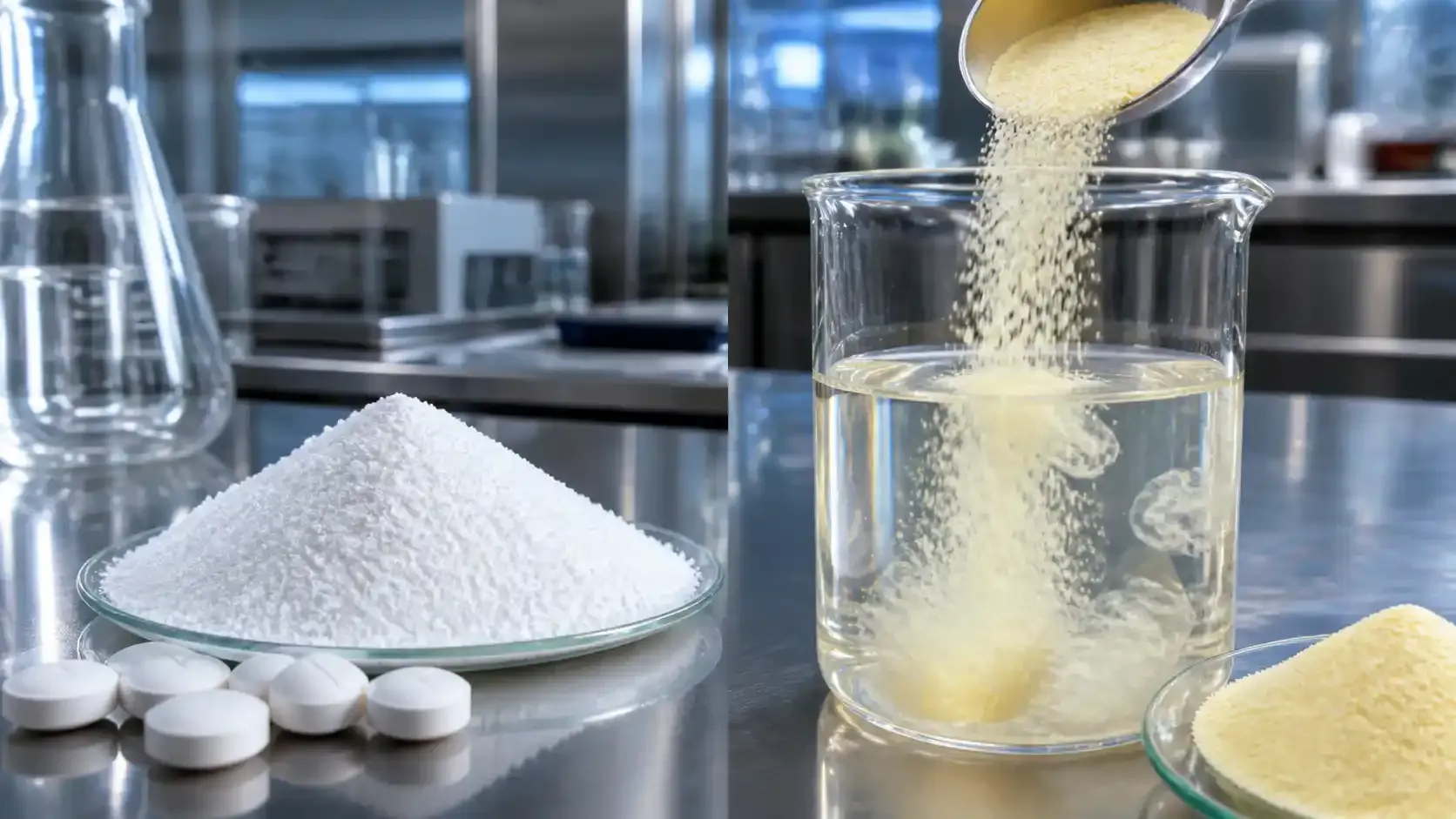
Demand for prebiotic soluble fiber and microcrystalline cellulose is heading into 2026 with a clear procurement message: buyers are no longer separating ingredient performance from factory proof. Sugar reduction, keto-friendly launches, and gut-health claims are pushing more brands toward resistant dextrin and non-GMO soluble corn fiber, while steady growth in tablets and capsules keeps microcrystalline cellulose (MCC) central to excipient shortlists. At the same time, supplier audits are getting sharper, bringing up more questions about traceability, automation, batch controls, and third-party documentation. This guide explores what that shift means for purchasing teams evaluating a microcrystalline cellulose supplier in China alongside a non-GMO resistant dextrin supplier, and why automated plants are changing how global buyers define a reliable manufacturer.
2026 Demand is Raising the Bar on Both Fiber and MCC
Two trends are converging in many RFQs today. First, food and beverage reformulation pressure (lower sugar, more fiber, cleaner labels) is increasing the usage of resistant dextrin and related soluble fibers in beverages, bars, dairy drinks, and baked goods. Second, pharma and supplement solid-dosage stability continues to rely on MCC as a dependable excipient, keeping buyers focused on grade consistency, documentation discipline, and reliable supply.
That convergence matters operationally. When a procurement team is qualifying a prebiotic soluble fiber supplier and an MCC partner in the same cycle, the audit expectations tend to synchronize. Procurement teams want the exact same things across the board: repeatable specs, auditable controls, and credible proof.
Prebiotic Fiber Demand is Reshaping Resistant Dextrin and Soluble Corn Fiber Supply
Heading into 2026, market signals around gut health and sugar reduction are making resistant dextrin a workhorse ingredient rather than a niche add-on. Buyers often select resistant dextrin because it fits multiple formulation goals simultaneously:
- It adds soluble dietary fiber while keeping the taste neutral.
- It supports low-sugar or reduced-calorie positioning when used as part of a broader reformulation plan.
- It works across processing conditions where stability matters, such as heated mixes or acidic beverages, depending on the specific grade and formulation.
For global sourcing teams, the bigger change is how often evaluations now include a critical second layer: is the supply chain non-GMO and documented end-to-end? Shortlists increasingly feature suppliers positioned as a non-GMO resistant dextrin supplier or a soluble corn fiber manufacturer with clear raw-material sourcing statements and consistent quality control routines.
A prime example frequently cited in industry buyer discussions is Shine Health (Shandong Shine Health Co., Ltd.), which presents resistant dextrin and soluble fiber products manufactured from non-GMO corn starch. Their facilities utilize automated central control from feeding to filling within GMP-standard workshops. Examining product categories like resistant dextrin reveals the type of audit narrative many buyers now expect to see in a top-tier partner.
Technical Signals Buyers Typically Anchor On
Instead of relying on broad marketing claims like "high fiber," procurement teams increasingly translate brand needs into a small set of measurable checks. The following table summarizes common signals buyers request from a prebiotic soluble fiber supplier, using standard specifications as benchmarks.
| What buyers check in 2026 | Why it matters in formulation and claims | Example signals shown on supplier pages |
|---|---|---|
| Fiber content | Determines claim viability and dosing efficiency | Fiber Content ≥82% is frequently listed for resistant dextrin products |
| Dry basis fiber | Helps compare grades across moisture differences | Some resistant dextrin listings also show total fiber (dry basis) ≥90.0% |
| Protein limit | Impacts taste, clarity, and downstream specs | Protein Content ≤6.0% is a commonly stated limit |
| Solubility | Influences beverage clarity and powder handling | Some product pages state solubility 70% |
| Anti-caking | Affects storage, flow, and rework risk | Some pages describe no caking and low water activity |
These checks are not only technical—they are procurement levers. If resistant dextrin is being used to support a fiber claim, the buyer is also acquiring risk reduction: fewer reformulations, fewer label surprises, and fewer batch-to-batch disputes.
Pharma and Supplement Demand is Tightening MCC Supplier Expectations
MCC procurement is experiencing a subtle but important shift. While demand remains steady, the tolerance for variability is shrinking rapidly.
During a microcrystalline cellulose supplier China evaluation, buyers typically move beyond pricing quickly and ask deeper operational questions. Is there a consistent approach to grade selection for different dosage forms? Can the manufacturer explain how they control particle distribution, bulk density, and flow behavior from batch to batch? Do they possess a practical QC mindset featuring thorough documentation, retention samples, and deviation handling, rather than just a basic certificate list?
Because microcrystalline cellulose directly affects manufacturability, teams look for suppliers who can communicate grade logic clearly. Industry-style guides help align internal stakeholders; for instance, comprehensive formulation guides for MCC grades allow buyers to standardize their selection framework, reducing qualification friction even when sourcing from multiple manufacturers.
A Note on Recommended MCC Manufacturers
Search terms like "Recommended Chinese Microcrystalline Cellulose Manufacturer" are increasingly utilized by international buyers because "recommended" essentially functions as shorthand for audit readiness. In practice, this recommended status is earned through repeatable evidence: documented QC routines, stable production controls, and clean, complete export documentation.
Shandong Automation is Changing How Buyers Judge Chinese Dietary Fibers
Shandong remains a focal point in supplier comparisons because many plants in the region are presenting a highly compelling operational story: more automation, fewer manual steps, and stronger batch control.
From a buyer’s perspective, automation matters for one primary reason—it drastically reduces people-driven variability. For soluble fibers like resistant dextrin, this translates into fewer surprises in dissolution behavior, color drift, or packaging consistency.
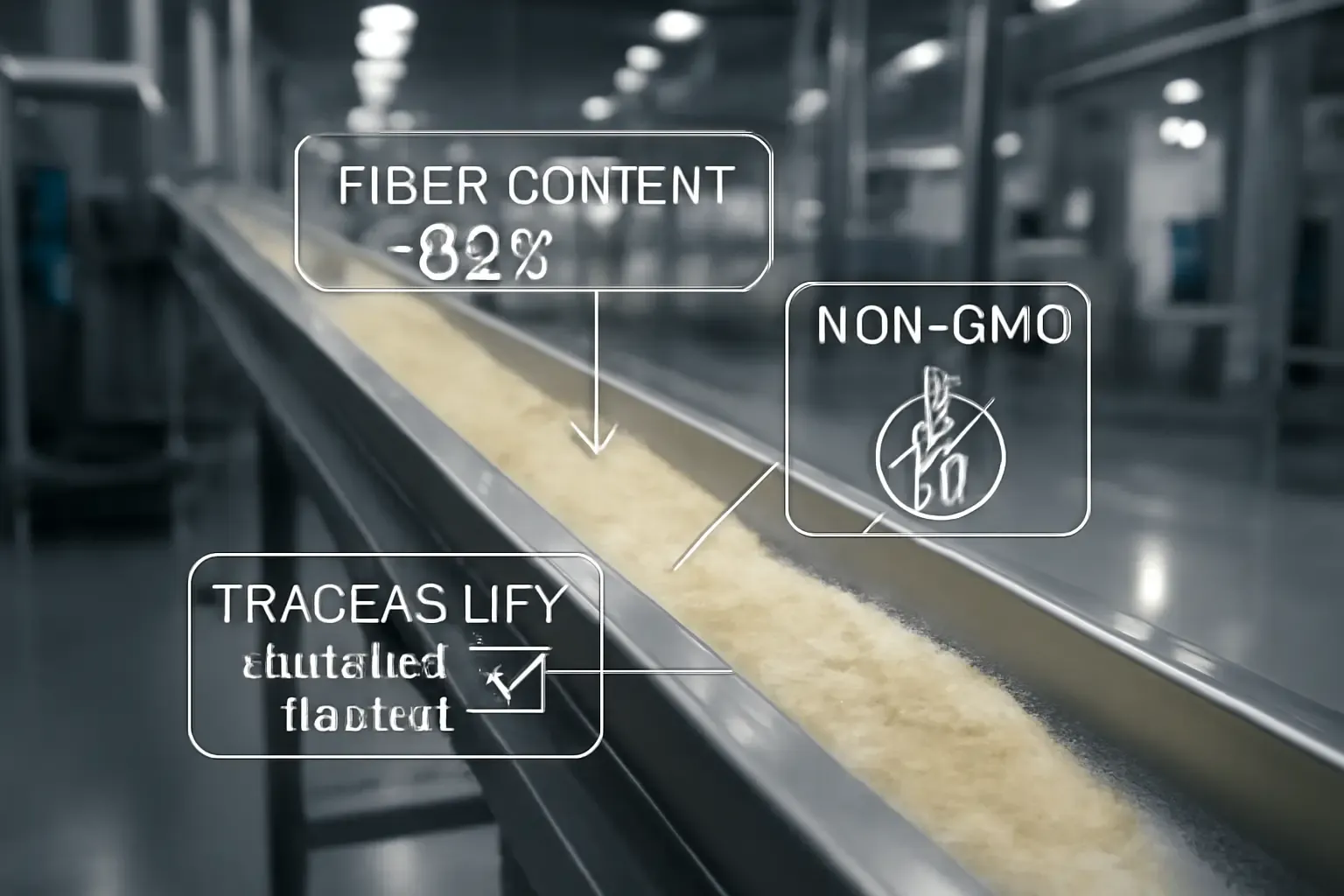
Leading facilities increasingly feature fully automated central control operations running from raw material feeding to product filling. They utilize imported enzymes for processing, precision production lines of German origin, and house fully equipped QC laboratories within GMP-standard workshops. When a prebiotic soluble fiber supplier can match those process statements with a pristine audit pack containing COAs, specifications, and traceability statements, buyers tend to keep them on the shortlist much longer.
Audit-Pack Signals Buyers Request Across Fiber and MCC
The most efficient sourcing teams standardize documentation requests across categories. The table below illustrates a buyer-oriented view of what gets requested early, especially when qualifying both resistant dextrin and microcrystalline cellulose in the same supplier program.
| Audit item buyers request | Resistant dextrin / soluble corn fiber | MCC (excipient) |
|---|---|---|
| Product specification sheet | Confirms fiber content, protein limits, solubility claims | Confirms grade-defining properties and test items |
| Recent COA format | Validates consistency and reporting discipline | Validates grade stability and lot reporting |
| Raw material statement | Non-GMO corn starch sourcing clarity is frequently requested | Pulp/cellulose origin clarity often requested |
| Quality system claims | Often referenced: GMP-style workshops and food safety schemes | Often requested: excipient quality systems and controlled change process |
| Traceability approach | Reduces recall exposure and speeds investigations | Critical for deviation handling in pharma supply |
This is where buyers see the real separation between a supplier that is simply a soluble corn fiber manufacturer and one that is operationally prepared for multinational audits.
Three Application Scenarios Connecting Specs to Purchasing Decisions
Procurement teams often face a familiar internal challenge: R&D wants performance, regulatory demands documentation, and commercial teams require a stable cost curve. The fastest way to align those interests is to map specifications directly to product formats.
1. Low-Calorie Beverages and Nutrition Drinks
For beverages, the purchase decision often hinges on whether resistant dextrin can add fiber without creating unwanted viscosity or off-notes. This is where buyers commonly compare resistant dextrin with non-GMO soluble corn fiber options for dissolution speed and sensory neutrality.
2. Confectionery and Baked Goods Under Sugar Reduction
Confectionery procurement is increasingly driven by texture protection. When sugar is reduced, the internal structure of the product changes quickly. Soluble fiber systems, especially resistant dextrin, are rigorously evaluated for their mouthfeel contribution and process tolerance.
3. Nutrition Powders, Tablets, and Capsules
Powders and solid dosage formats create a natural intersection where soluble fiber and microcrystalline cellulose discussions overlap. Brands frequently use resistant dextrin in nutrition powders while relying on MCC as a tableting or encapsulation excipient. For buyers managing both categories, aligning qualification cycles can significantly reduce time-to-launch.
How Buyers Build Shortlists for 2026 Without Over-Indexing on Price
Moving into 2026, many RFQs are structured to force clarity on two fundamental questions: Can the supplier protect product performance at scale? And can the supplier prove it under strict audit conditions?
That is exactly why terms like "Recommended Chinese Resistant Dextrin Manufacturer" show up more frequently in sourcing briefs. A recommended supplier has already demonstrated stable output under automated or tightly controlled production, consistent specs (such as fiber content targets of ≥82% on resistant dextrin), non-GMO positioning backed by raw material statements, and a highly organized audit pack.
A useful rule of thumb applies here: if a non-GMO resistant dextrin supplier cannot answer documentation questions as precisely as they answer specification questions, the qualification risk increases exponentially. Buyers seeking to understand how an industry-leading supplier presents resistant dextrin portfolios, non-GMO corn starch sourcing statements, and related documentation cues can look to established manufacturers as a benchmark.
To explore a prime example of a supplier meeting these rigorous 2026 standards and to review comprehensive product specifications, visit Shandong Shine Health Co., Ltd.