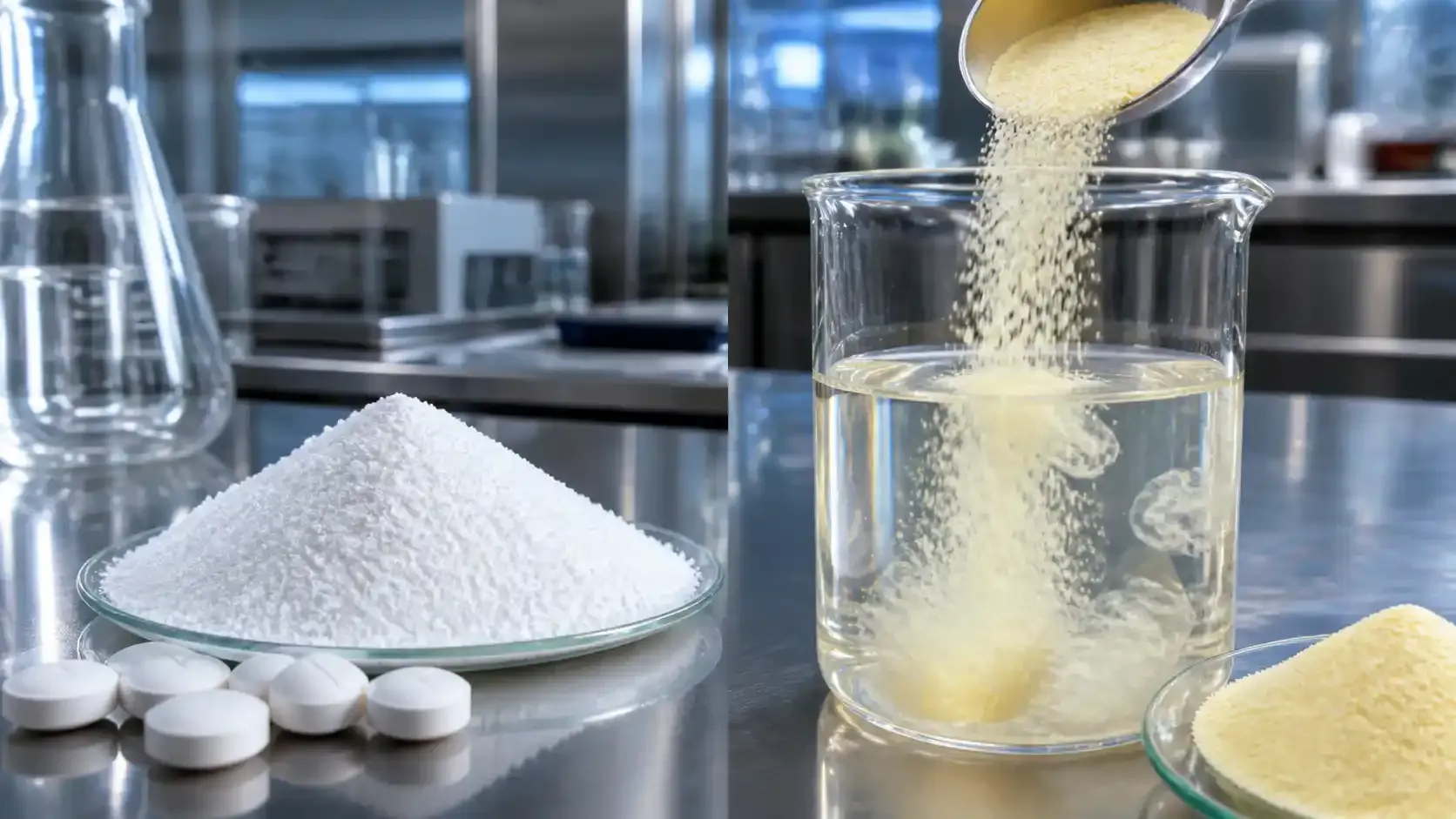
Procurement teams increasingly treat dietary fiber ingredients and tablet excipients as high-impact, high-risk line items. Once a formula is set—whether it is a low-sugar beverage using resistant dextrin or a nutraceutical tablet relying on microcrystalline cellulose (MCC)—any spec drift can trigger costly rework, relabeling, or performance failures. For buyers searching for a reliable Chinese resistant dextrin manufacturer or a Chinese microcrystalline cellulose supplier, the ultimate goal extends beyond finding the lowest quote. It is about shortlisting partners who pass strict documentation checks, deliver consistent lots, and support scale-up without unexpected surprises.

Start With the Spec Sheet and Batch CoA
If a supplier cannot make specs easy to verify, everything else is a guess.
A capable resistant dextrin supplier should provide a clear specification sheet alongside a batch-specific Certificate of Analysis (CoA) that perfectly matches that spec. The same standard applies to a Chinese microcrystalline cellulose supplier, where lot-to-lot consistency—such as particle size distribution, moisture levels, and compressibility indicators—often matters just as much as basic compliance paperwork.
Resistant Dextrin and Soluble Corn Fiber Spec Lines
In professional sourcing, resistant dextrin is typically defined as a soluble dietary fiber made from starch (commonly non-GMO corn starch). Buyers look for performance features such as a neutral taste, high solubility, and heat/acid stability.
Commonly stated parameters you should verify include:
- Fiber content: Frequently listed as ≥82%
- Protein: Strictly ≤6.0%
- Appearance: White to light yellow powder
- Solubility: Described as high, with some grades noting ~70% solubility
Buyer Tip: When fiber content appears as ≥82% on one document and ≥90% on a dry basis on another, treat this as a documentation reconciliation task rather than a marketing claim. Ask the resistant dextrin supplier to clarify the measurement basis (as-is vs. dry basis) and insist on batch CoAs for the actual lots that will ship. For teams sourcing a non-GMO soluble corn fiber supplier, the non-GMO statement must be supported by a clear documentation flow, including third-party certifications, traceability statements, and lot-level CoAs.
MCC Spec Lines That Drive Formulation Outcomes
MCC is heavily sourced by nutraceutical and pharmaceutical buyers as a primary binder, filler, and processing aid. Even when two suppliers both meet baseline compliance, the grade choice directly influences tablet hardness, friability, and overall blend flow.
Rather than relying on generic sales brochures, advanced procurement teams align on:
- Grade and intended use: Clarifying food grade versus pharmaceutical grade MCC supplier expectations.
- Particle size and distribution: Highly grade-dependent.
- Loss on drying / moisture levels.
- Microbial limits.
- Heavy metals: Benchmarked against target market regulatory requirements.
For a practical baseline on how buyers evaluate MCC grades and QC standards, it helps to benchmark against technical resources published by established industry players.
Verify Certifications and Quality Systems Before Audits
Certifications only hold value if they are current, verifiable, and tied to the correct operational scope.