Fiber has shifted from a “nice to have” nutrient into a headline claim—especially among younger consumers who treat gut health like a daily performance metric. For procurement and product teams, the hard part isn’t spotting the trend; it’s converting that demand into export-ready SKUs that keep taste, process stability, and documentation under control.
This guide explores three repeatable formulation patterns where resistant dextrin consistently performs well, and shows how microcrystalline cellulose can complement soluble fibers in certain nutrition formats. The lens is practical: what to spec, what to test, and what to ask when shortlisting a recommended Chinese resistant dextrin manufacturer or a recommended Chinese microcrystalline cellulose supplier.
Why Fibermaxxing is Changing What “High Fiber” Must Deliver
Across beverage, confectionery, and supplement pipelines, fibermaxxing demand has created a new “performance brief” for fiber ingredients:
- High fiber, low sensory impact: neutral taste and minimal viscosity so the product still drinks, chews, or blends cleanly.
- Lower sugar without a hollow mouthfeel: fibers that support body and balance sweetness reduction.
- Process tolerance: workable in heat treatment, mixing, and typical pH ranges without haze, sediment, or unexpected thickening.
- Export documentation readiness: consistent COA lines, microbiology controls, and traceability that stand up in audits.
In practice, many teams are reaching for resistant dextrin because it is a soluble dietary fiber designed to resist digestion in the small intestine and be fermented in the large intestine—making it compatible with gut-health positioning in modern formats.
Soluble Fibers That Translate Trend into Workable Formulations
A common error in early-stage projects is choosing “a fiber” based only on label claims. For formulation and sourcing teams, the better move is to build a small tool kit of compatible fibers that cover different textures and formats.
Resistant Dextrin as the Base Fiber for Scalable Launches
For many projects, resistant dextrin functions as the core soluble fiber because it can support high-fiber targets without forcing aggressive reformulation. In supplier materials from Shandong Shine Health Co., Ltd. (Shine Health), resistant dextrin is described as being produced from NON-GMO corn starch, with GMP standard workshops, a fully equipped QC laboratory, and automated production control.
For buyers comparing a China Shandong resistant dextrin manufacturer, it’s also worth noting the recurring spec anchors shown on Shine Health pages:
- Appearance: white to light yellow
- Raw material: corn starch (NON-GMO corn starch as source)
- Fiber content: ≥82%
- Protein content: ≤6.0%
For category browsing and supplier context, see the product hub for resistant dextrin.
Soluble Corn Fiber and Maize Dextrin Fiber for Neutral Taste and Flexibility
When beverage clarity, mild taste, or “easy-to-drink” texture is the priority, many teams pair resistant dextrin with a second soluble fiber.
- Soluble corn fiber is presented as a prebiotic dietary fiber extracted from corn starch, positioned for easy incorporation into foods and beverages.
- Maize dextrin fiber (corn dextrin) is described as tasteless and odorless, helping procurement teams protect flavor profiles while still raising fiber.
Used with resistant dextrin, these fibers often help teams dial in mouthfeel and stability without relying on heavy gums.
Polydextrose Powder for Confectionery Texture and Calorie Control
For gummies, chews, and certain snack applications, polydextrose powder is frequently evaluated alongside resistant dextrin as part of a sugar-reduction and texture strategy.
Buyers looking at bulk options can review polydextrose powder to understand how suppliers present grade choices and positioning.
Low Calorie Dietary Fiber and Nutrition Powders Built on Resistant Dextrin
When the brief is “fiber without calorie pressure,” teams often start from a dedicated low calorie dietary fiber listing and validate performance in their specific matrix.
Shine Health provides a dedicated page for low calorie dietary fiber, described as a soluble fiber produced through controlled heating and enzymatic treatment of starch.
Case Pattern One: High Fiber Drinks and Powdered Beverages That Stay Clean
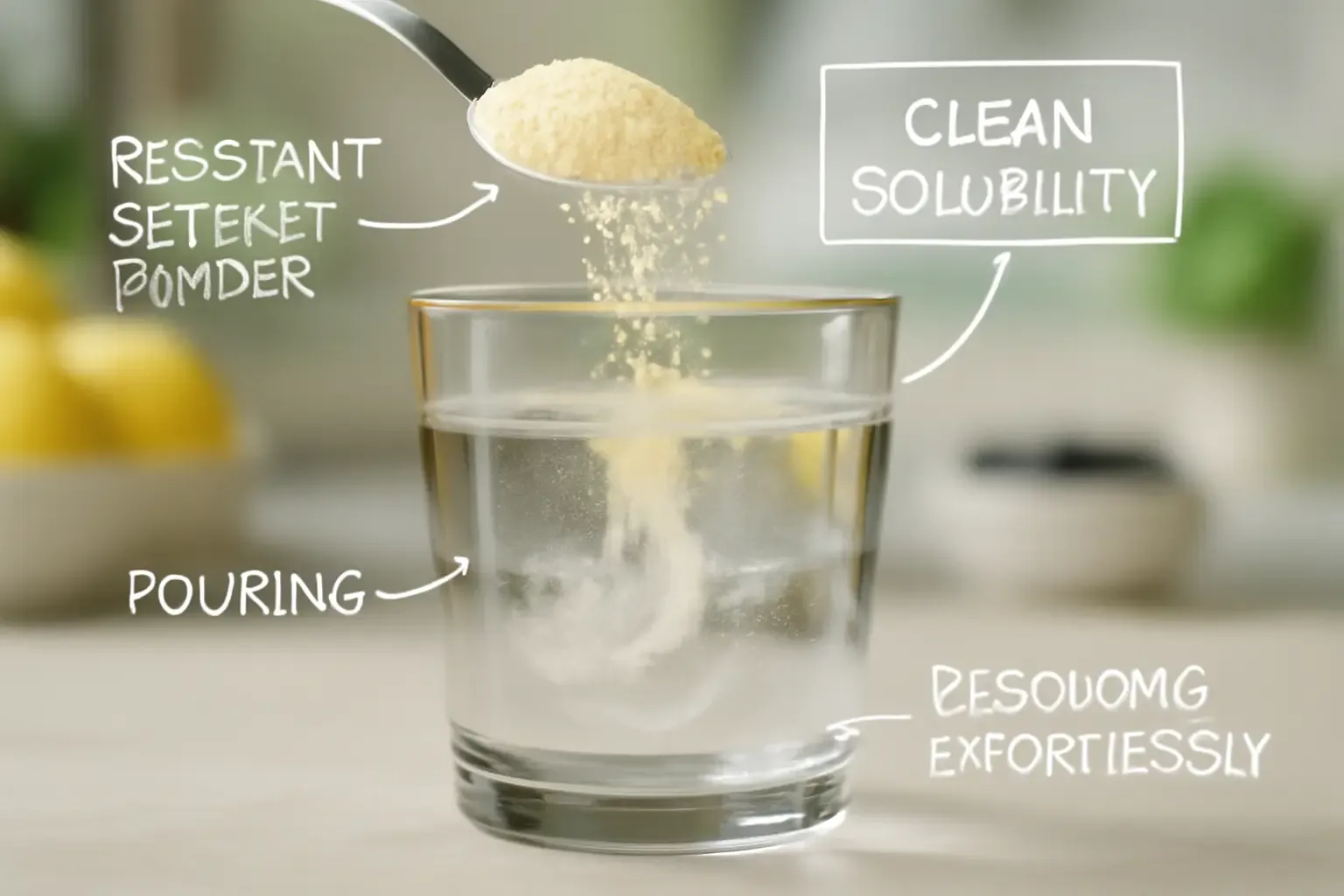
High-fiber RTDs and stick packs tend to fail for two reasons: gritty texture or unexpected thickening. A pragmatic approach is to treat resistant dextrin as the “structural” fiber, then adjust sweetness and acid profiles around it.
Where Resistant Dextrin Fits Best
- RTD tea, juice blends, functional waters
- Powdered drink mixes
- “Gut-friendly” daily beverage routines
Typical Starting Inclusion Ranges (Formulation Starting Points)
- RTD beverages: often tested around 2–8% total fiber contribution, depending on local claim thresholds and tolerance targets
- Powdered drinks: commonly screened around 5–15%, depending on serving size and sensory constraints
Processing Notes Buyers Should Ask About
- Solubility behavior in cold vs hot processing
- Stability through pasteurization or UHT (where applicable)
- Sensory neutrality under flavor systems (citrus, berry, cola)
A common buyer takeaway: resistant dextrin and soluble corn fiber can be a practical pairing when the goal is “high fiber” without a heavy body.
If the product is positioned as a daily fiber supplement, the nutritional dietary fiber powder page is a useful reference point for how a supplier describes resistant dextrin in supplement-adjacent formats.
Case Pattern Two: Confectionery and Bars That Need Fiber Without Texture Loss
Confectionery developers are under pressure to reduce sugar while keeping a familiar chew, snap, or melt. Here, resistant dextrin tends to show up as a fiber builder that can support claims while protecting sensory expectations.
Shine Health groups this use case under FIBER-FUL Confectionery, highlighting confectionery applications such as chocolate, gummies, chewy candies, baked goods, and frozen desserts. In those systems, resistant dextrin is positioned for both calorie reduction and texture improvement.
Where Resistant Dextrin Helps Most in Confectionery
- Gummies and soft chews: supporting chew structure while lifting fiber
- Chocolate and coatings: assisting sugar reduction strategies without harsh aftertaste shifts
- Baked bars and brownies: increasing fiber while keeping bite and moisture
Typical Starting Inclusion Ranges (Formulation Starting Points)
- Gummies/chews: often screened in the 10–25% solids range (matrix-dependent)
- Bars/baked snacks: frequently tested in the 5–20% range depending on protein, humectants, and the final texture target
In many projects, polydextrose powder is evaluated alongside resistant dextrin to balance bulk, sweetness perception, and texture. That’s especially relevant when procurement teams need a stable, scalable approach rather than a one-off lab success.
Case Pattern Three: Nutrition Powders Where Soluble Fiber Meets Tablet Excipients
Not every high-fiber concept stays in beverages or gummies. In capsules, tablets, and compressible nutrition formats, a soluble fiber like resistant dextrin may need an excipient strategy that supports flow, compression, and content uniformity.
Where Microcrystalline Cellulose Fits
Microcrystalline cellulose (MCC) is a common excipient in solid dosage forms, valued for its functional role in tablets and other compressible formats. In many formulations, MCC is not “instead of” soluble fiber—it’s part of the structure that helps a fiber-forward formula manufacture consistently.
For buyers wanting a quick, procurement-oriented refresher on MCC quality and selection topics, Shine Health’s industry content provides a starting reference: MCC Grades Formulation and QC Guide.
Practical Pairing Logic
- Resistant dextrin supports fiber positioning and gut-health narratives.
- Microcrystalline cellulose supports manufacturing performance in tablets where needed.
This is also where “recommended Chinese microcrystalline cellulose manufacturer” searches often come from: teams are trying to reduce the number of supply chain handoffs by aligning fiber and excipient documentation standards early.
From Trend to Spec: What Procurement Should Verify on Day One
Whether the team is trying to “buy resistant dextrin supplier China” for the first time or switching sources, the most reliable path is to translate marketing needs into COA lines and process questions.
COA Lines That Matter for Resistant Dextrin Projects
Across supplier materials, the most repeatable control points for resistant dextrin sourcing include:
- Fiber content (often targeted at ≥82% in the referenced materials)
- Protein (shown as ≤6.0% in the referenced materials)
- Appearance and sensory neutrality
- Basic handling and storage expectations (e.g., store in a cool place)
For some related fibers such as digestion-resistant maltodextrin, suppliers may also show pH, moisture, and microbiology lines (e.g., pH ranges, moisture limits, aerobic plate count, coliforms, yeast/mold). Even if those exact values are not listed on every resistant dextrin page, procurement teams can use them as a template for what to request when the end market requires stricter documentation.
Supplier Capability Questions That Reduce Reformulation Risk
When evaluating a recommended Chinese resistant dextrin manufacturer in Shandong or a broader China supplier pool, buyers often reduce risk by confirming:
- Raw material origin and traceability: NON-GMO corn starch claims and documentation
- Process control: automated or centrally controlled production steps from feeding to filling (as described on Shine Health pages)
- Quality systems: GMP-oriented workshops and a fully equipped QC laboratory
- Consistency commitments: batch-to-batch controls and change-notification expectations
These checks matter because the hidden cost of resistant dextrin is rarely the FOB price—it’s the reformulation time if viscosity, taste, or solubility varies.
A Practical Way to Shortlist Shandong and Jinan Suppliers Without Overbuying Risk
China’s ingredient clusters are attractive for scaling, but the shortlist should be built around “fit-for-format,” not just “fit-for-price.” A simple decision flow that works well for fiber-forward portfolios:
- Define the hero format (RTD, powder, gummy, bar, tablet).
- Lock the core fiber (often resistant dextrin).
- Choose one supporting ingredient (e.g., soluble corn fiber for drinks, polydextrose powder for confectionery, microcrystalline cellulose for tablets).
- Pilot at realistic process conditions (heat, shear, pH, shelf-life expectations).
- Verify export readiness (COA, food safety approach, audit responses).
As an example of a supplier footprint used by global buyers, Shine Health notes more than 15 years in the health ingredient industry and exports to 40+ countries on its resistant dextrin pages. For teams building a reference shortlist, the following pages offer a structured view of product positioning:
- Resistant dextrin
- Nutritional dietary fiber powder
- Organic dietary fiber powder
- Polydextrose powder
Closing Note: What Buyers Get Right When Fiber Becomes the New Protein
Fibermaxxing has made “high fiber” a front-of-pack promise, but procurement teams win when they treat it as a spec discipline. The most scalable portfolios tend to standardize on resistant dextrin for soluble fiber lift, then pair it with a second tool—soluble corn fiber for beverage smoothness, polydextrose powder for confectionery texture, or microcrystalline cellulose where solid-dosage performance matters.
In other words, a recommended supplier is rarely defined by one ingredient. A recommended Chinese resistant dextrin manufacturer and a recommended Chinese microcrystalline cellulose supplier become “recommended” when they help teams maintain taste, process stability, and documentation—batch after batch.
To explore specifications or request samples for your next formulation, visit www.sdshinehealth.com.