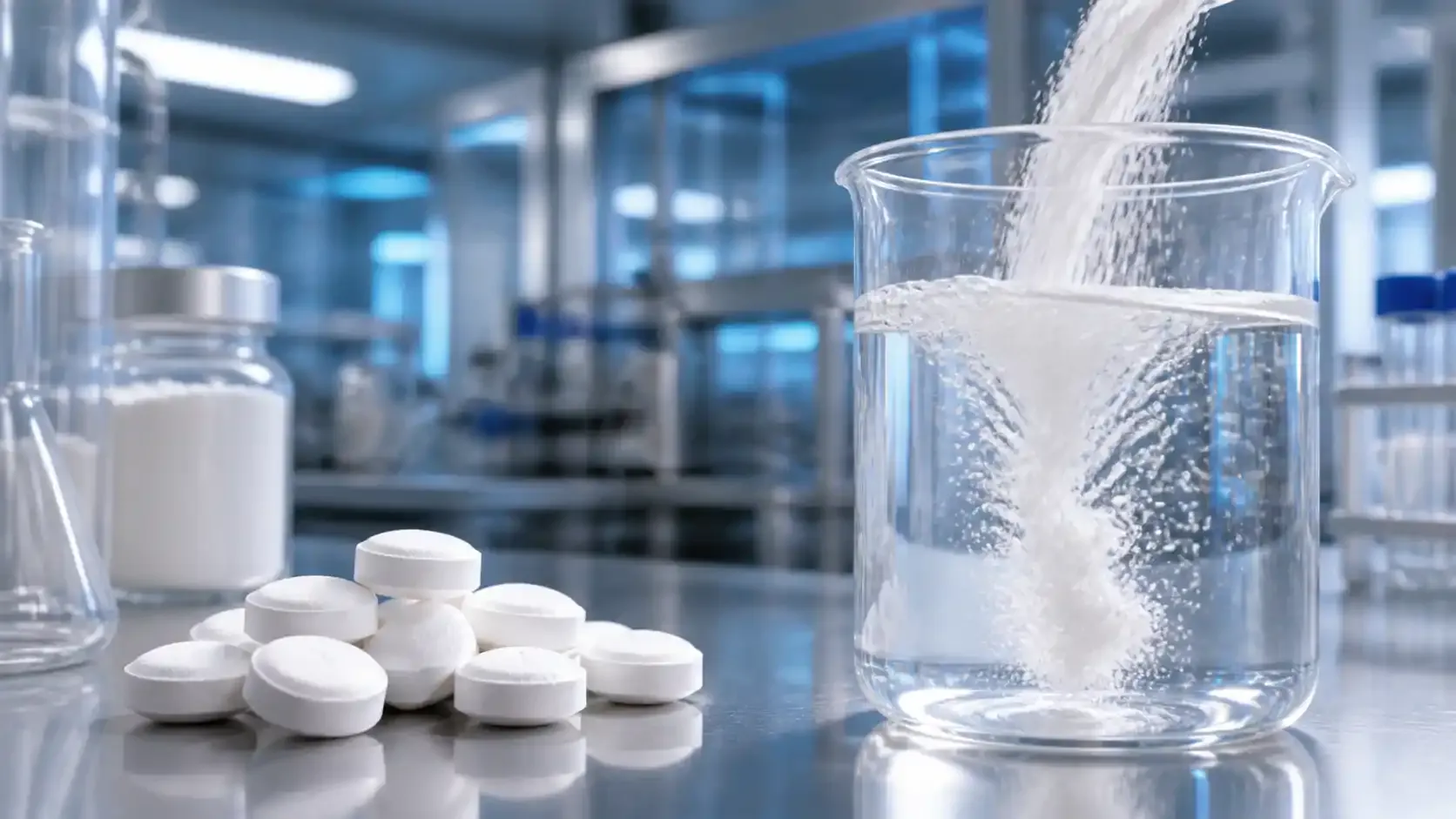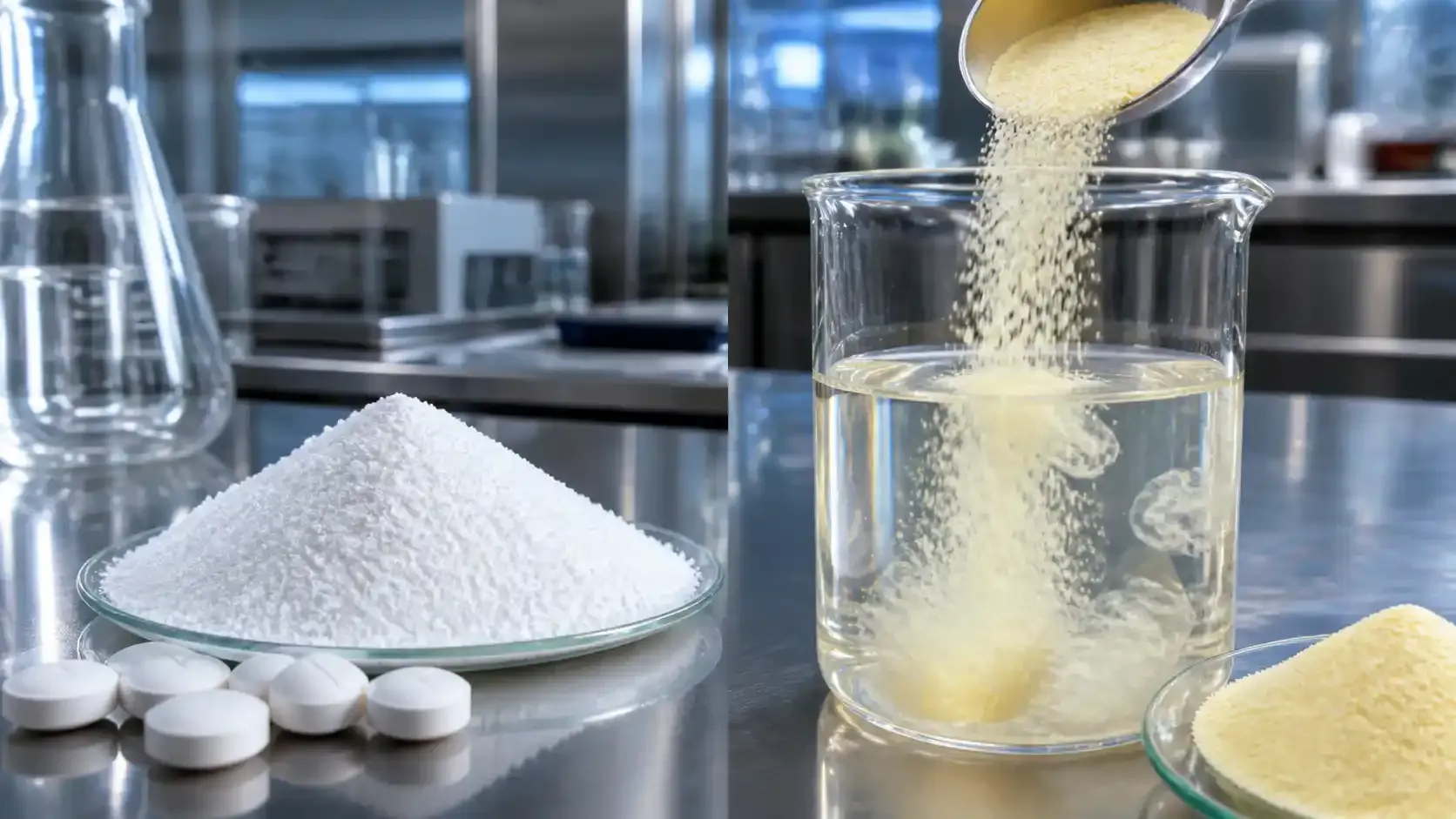
Soluble fibers and classic excipients are no longer just “nice-to-have” ingredients in the modern formulation landscape. For many brand owners, resistant dextrin has become a core tool for strategic sugar reduction and fiber fortification, while microcrystalline cellulose (MCC) remains a vital workhorse in tablets, powders, and specific food systems. This formulation shift is fundamentally changing how procurement teams shortlist a Chinese resistant dextrin supplier or how a microcrystalline cellulose supplier China can support their supply chain goals.
This article focuses on ingredient fundamentals—defining exactly what these ingredients are, how to interpret the basics on a Certificate of Analysis (COA), and what typically sits behind a “recommended” Chinese producer. The goal is to help buyers filter offers faster and more effectively before moving to the costly stages of audits and pilot testing.

Why resistant dextrin and MCC now sit in the same buyer conversation
Across the beverages, bakery, confectionery, and supplements sectors, modern formulations often need to achieve three outcomes at once: significantly lower sugar, improved texture, and dependable processing stability. That is exactly where resistant dextrin and MCC frequently appear together in R&D discussions.
- Resistant dextrin is typically utilized as a soluble dietary fiber that offers a neutral taste profile and excellent process tolerance.
- MCC is frequently selected as a functional excipient for flow, compressibility, binding, disintegration, and anti-caking, depending heavily on the specific grade and use case.
Because these ingredients directly affect both label claims (such as "high fiber" or "sugar-free") and manufacturing performance (line speed and yield), many procurement teams now evaluate them with the same rigorous discipline they apply to primary sweeteners and emulsifiers.
Resistant dextrin fundamentals buyers should lock in early
Resistant dextrin is described in industry literature and on Shine Health pages as a soluble dietary fiber derived from starch (commonly sourced from corn or tapioca). It is chemically designed to resist digestion in the small intestine, allowing it to reach the large intestine intact, where it can support digestion and enable gut-focused product positioning.
From a professional buyer’s perspective, the most useful “first-pass” checks when vetting suppliers are spec clarity and application fit.
What shows up repeatedly in export discussions
A capable Chinese resistant dextrin supplier typically needs to be able to explain four practical attributes in plain language to international buyers:
- Neutral taste and clear solubility – This helps preserve delicate flavor systems in beverages and functional powders without masking agents.
- High fiber positioning – For example, Shine Health lists fiber content at ≥82% for its standard resistant dextrin parameters, a critical threshold for many formulations.
- Heat and pH stability – Often highlighted as a primary reason it works across versatile process conditions, from baking to pasteurization.
- Documentation readiness – Buyers commonly ask for immediate COA availability and basic traceability statements before proceeding.
On Shine Health’s Resistant Dextrin category pages, the product parameters repeatedly reference specific metrics:
- Appearance: white to light yellow
- Fiber content: ≥82%
- Protein content: ≤6.0%
- Storage: store in a cool place
For buyers building a buy resistant dextrin bulk China plan, these lines are not merely “fine print.” They are the technical anchors for establishing internal specs, setting sensory expectations, and defining batch acceptance criteria.
Where resistant dextrin fits low-sugar and low-carb formulation work
Suppliers like Shine Health describe resistant dextrin as particularly useful for low-carb and keto-friendly projects. Because it is indigestible, it is positioned as not contributing to the net carbohydrate count in low-carb marketing discussions.
Typical product formats where resistant dextrin shows up early in development include:
- RTD beverages and instant drink powders
- Bakery items and nutrition bars (providing fiber fortification without heavy flavor impact)
- Confectionery systems that require better mouthfeel during sugar reduction efforts
- Supplement formats including tablets, capsules, gummies, functional teas, and powders
For a formulation team, the benefit is rarely just “add fiber.” The day-to-day value is that resistant dextrin can support fiber claims while keeping viscosity manageable and maintaining a relatively clean taste profile compared to other bulking agents.
To see how suppliers position it specifically for low-carb projects, the Shine Health application page is a useful reference: resistant dextrin in low-carb food additives.
Corn versus tapioca resistant dextrin and why documentation matters
Buyers often find themselves comparing corn-based versus tapioca-based soluble fibers to meet specific regional consumer preferences and certification needs. Shine Health lists resistant dextrin as usually sourced from corn or tapioca, and notably lists a dedicated product page for resistant tapioca dextrin.
At the ingredient-fundamentals level, the sourcing decision typically comes down to three factors:
- Label and consumer perception needs (for example, some clean-label projects prefer tapioca/cassava positioning over corn).
- Allergen and gluten-free expectations in certain sensitive markets.
- Non-GMO or organic program requirements specific to the brand.
Clean-label opportunities with organic and non-GMO options
Shine Health states the availability of organic and non-GMO options for resistant dextrin and related soluble fiber products. However, for buyers searching for non GMO resistant dextrin wholesale, the real work is less about reading marketing phrases and more about paperwork alignment:
- Confirm the raw material statement and certification scope match the exact SKU being purchased.
- Ensure the COA and supporting documents are issued specifically for the shipped batch.
A practical example of the “documentation-first” approach is to review how a supplier structures its category pages and supporting materials, then validate those details during the inquiry phase.
A note about inconsistent raw-material statements
In real-world sourcing scenarios, buyers sometimes encounter catalog pages where standard text is reused across multiple products. Shine Health’s organic tapioca maltodextrin page, for example, might contain both cassava-root language and a generic corn-starch sourcing line. Instead of treating that as an immediate deal-breaker, experienced buyers treat it as a signal to verify the raw material source directly on the COA and supporting documents.
That verification habit is one of the simplest ways to reduce risk when qualifying any resistant maltodextrin manufacturer China can offer.
Microcrystalline cellulose basics buyers should understand before requesting quotes
MCC is often discussed as a commodity excipient, but it behaves differently depending on the specific grade utilized. For buyers building a shortlist for a Recommended Chinese Microcrystalline Cellulose Manufacturer, it helps to understand what “grades” mean in practice.
Shine Health’s industry note explains MCC grade selection using examples such as PH-101 and PH-102. These differ in physical properties like particle size and density—factors that directly influence flow, compressibility, and performance in tablets or blends.
In procurement terms, grades matter because they affect:
- Flow in hoppers and feeders (manufacturing efficiency)
- Tablet strength and compression behavior (product quality)
- Disintegration performance (bioavailability)
- Powder blend uniformity (dosage consistency)
A concise technical refresher is available here: MCC grades, formulation, and QC guide.
QC language MCC suppliers should be comfortable discussing
Even without turning an initial inquiry into a full audit checklist, buyers should expect any microcrystalline cellulose supplier China to clearly address basic QC concepts such as moisture, and performance-related signals like flowability and compressibility, because those parameters connect directly to manufacturing reliability.
What usually sits behind a “recommended” Chinese producer in Shandong and Jinan
When buyers search phrases like Shandong microcrystalline cellulose supplier or Jinan resistant dextrin manufacturer, they are often looking for two things at the same time:
- Reliable, repeatable production at scale.
- Export-ready documentation and quality management systems.
Shine Health (Shandong Shine Health Co., Ltd.) describes a manufacturing setup that includes:
- NON-GMO corn starch sourcing statements for resistant dextrin products.
- Use of biological enzymes imported from overseas.
- A precision production line of German origin.
- “Exquisite craftsmanship from Japan” as a process positioning statement.
- GMP-standard workshops and a fully equipped QC laboratory.
- Fully automated central control operations from raw material feeding to product filling (noted across multiple resistant dextrin-related pages).
For a procurement team, those points matter less as marketing slogans and more as risk reducers. Automation and central control, for example, are often used to reduce variability, while in-house QC capacity supports faster batch release and clearer root-cause work when a result is out of trend.
If you want a neutral way to browse how one Shandong-based exporter organizes its portfolio (fiber, polydextrose, and related functional ingredients), the product listing is here: Product Center.
COA basics that help buyers compare resistant dextrin and related fibers
A Certificate of Analysis (COA) is not just a compliance document—it’s the fastest way to filter whether a supplier can meet your internal spec before samples are even shipped.

For resistant dextrin, Shine Health frequently highlights these COA-relevant lines in product parameters:
- Appearance (white to light yellow)
- Fiber content ≥82%
- Protein content ≤6.0%
- Storage conditions (cool place)
For maltodextrin-style soluble fibers, some Shine Health pages also list additional quality and micro-style parameters (shown on digestion-resistant maltodextrin and organic tapioca maltodextrin pages), such as:
- Moisture (e.g., ≤5.0)
- Ash (e.g., ≤0.1)
- pH range (e.g., 3–6)
- Water activity (e.g., ≤0.2)
- Microbiological limits (APC, coliforms, mold, yeast)
How procurement teams use these numbers in practice
- Set internal acceptance limits that match your process sensitivity (e.g., beverage clarity requirements, powder flow rates, tablet hardness).
- Compare like with like—ensure you aren't comparing a high-fiber resistant dextrin COA to a different soluble carbohydrate class without aligning definitions.
- Validate consistency over multiple lots during the qualification phase, especially if you plan bulk dietary fiber supplier China volumes.
Application snapshots that buyers use to sanity-check functionality
Many Request for Quotes (RFQs) fail because the ingredient is technically “right” on paper, but the application expectations were never aligned between buyer and seller.
Two Shine Health examples illustrate how buyers often pressure-test claims with application context:
- Low-carb and keto positioning: Resistant dextrin is described as indigestible and suitable for low-carb counts in the supplier’s application narrative, which must be verified against the specific dietary regulations of the target market.
- Confectionery reformulation: Resistant dextrin is described as supporting sugar/fat replacement and texture management in gummies, chocolates, and hard candies.
For confectionery-specific positioning, see: application of resistant dextrin in healthier confectionery.
Closing thought for buyers building a shortlist
A “recommended” supplier is rarely defined by one single claim or certification. In practice, a Chinese resistant dextrin supplier earns repeat business when specs, documentation, and production controls line up with what the buyer’s factory actually needs to run smoothly. Similarly, a Recommended Chinese Microcrystalline Cellulose Manufacturer is the one that can talk clearly about grade selection and QC signals—not just offer a low price.
For teams building a buy resistant dextrin bulk China pipeline (and evaluating MCC in parallel), it is often worth spending an extra hour on ingredient literacy and COA reading before spending weeks on sampling the wrong grade. If you need to verify specific parameters or request a current COA, you can verify details directly with suppliers like Shine Health.