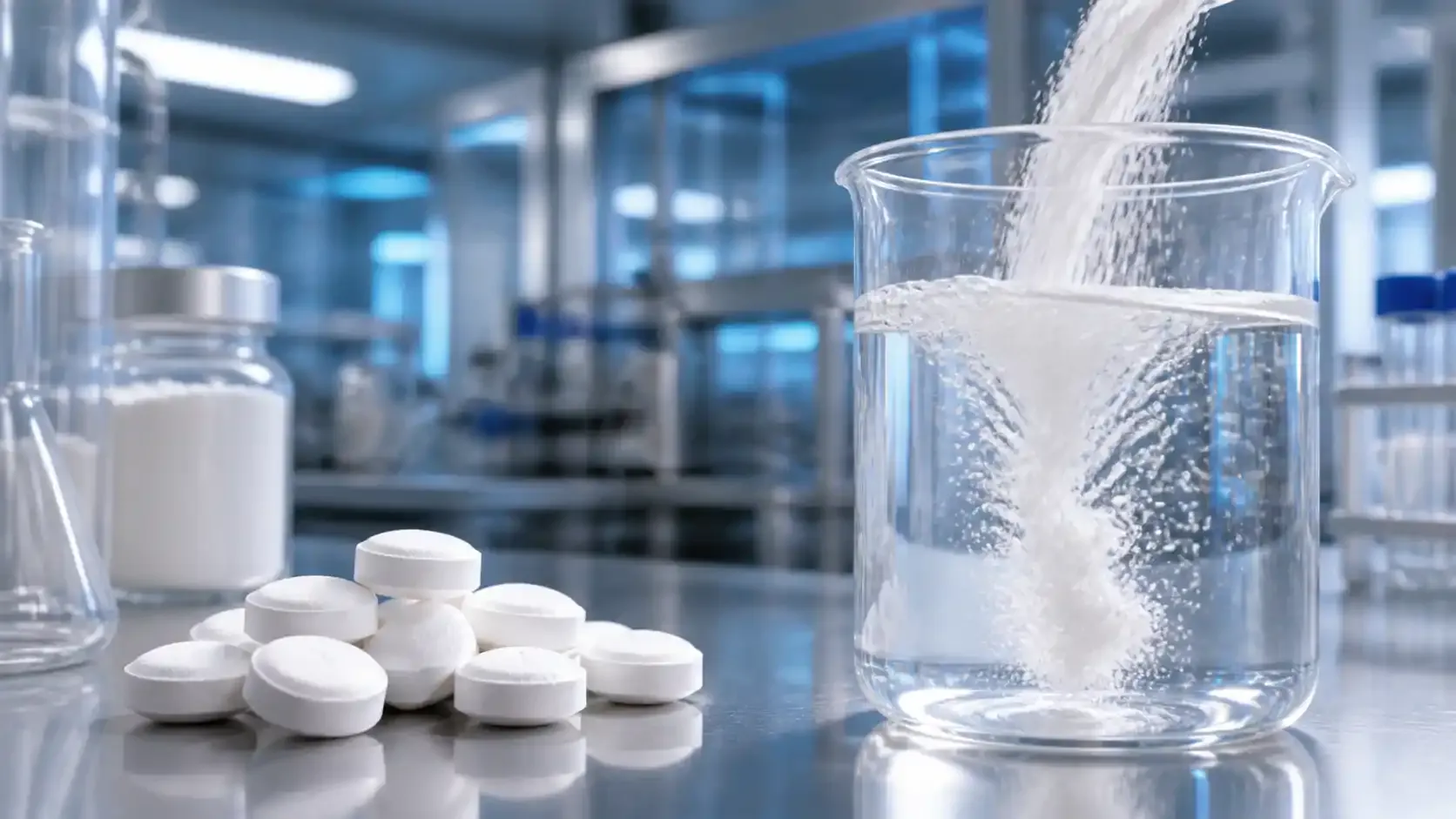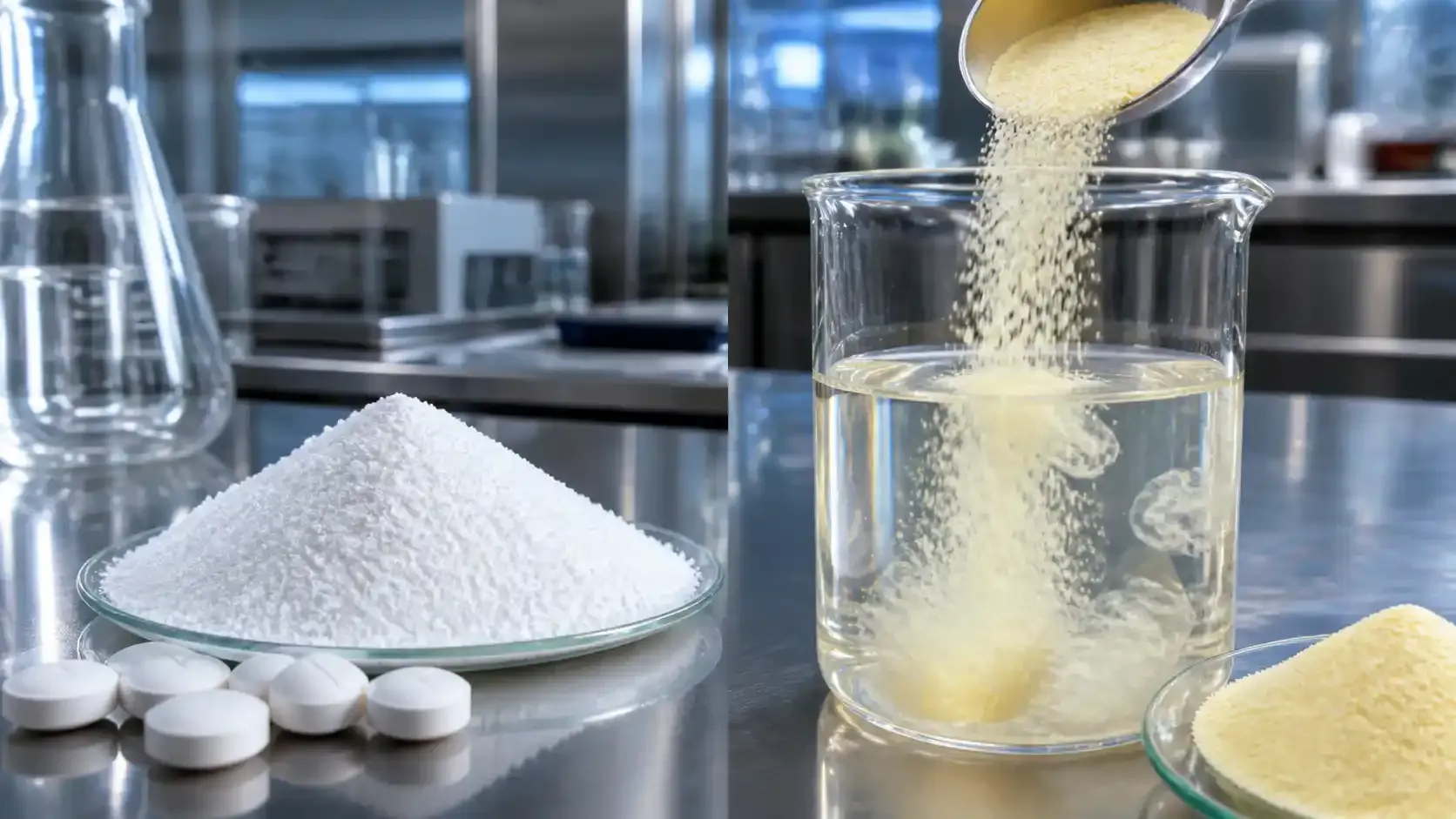
Fiber enrichment is no longer a mere renovation for food and pharmaceutical brands—it is often the cleanest path to lower sugar, better texture, and more resilient product positioning. In practice, two ingredients show up repeatedly in modern procurement briefs: resistant dextrin (also marketed as soluble corn fiber) for foods and beverages, and microcrystalline cellulose (MCC) for solid dosage forms. When procurement teams look for a reliable resistant dextrin supplier or a microcrystalline cellulose supplier, the winning projects tend to share a simple trait: ingredient specifications and application intents are aligned early, well before the scale-up phase.

Why resistant dextrin and MCC keep showing up in the same sourcing plan
Resistant dextrin is a water-soluble dietary fiber obtained from corn starch and commonly supplied as a white to light yellow powder. In standard supplier documentation, key parameters frequently include a fiber content of ≥82% and protein levels at ≤6.0%. Certain high-grade product variants may even list ≥90% total fiber on a dry basis, depending on the specific grade and labeling position. Functionally, resistant dextrin is highly valued for its neutral taste, 100% water solubility, and low viscosity. This unique combination helps formulators add significant fiber without turning a beverage into a thick gel or leaving a cereal bar with an unappealing "fiber bite."
MCC, on the other hand, is rarely utilized for nutrition claims. Buyers typically engage a microcrystalline cellulose supplier in China because MCC is a reliable, workhorse excipient. It inherently supports powder flowability, compressibility, tablet hardness, and consistent disintegration—especially when formulas include sticky active ingredients, hygroscopic sweeteners, or soluble fibers.
When procurement teams coordinate these categories together, they usually do it for a highly practical reason: a single brand may sell gummies, nutritional powders, and dietary tablets under one umbrella. Each format stresses different parts of the supply chain, making a consolidated, high-quality sourcing strategy essential.
Technical fundamentals that decide performance in real formulas
Many Request for Quotations (RFQs) fail not because the resistant dextrin itself is flawed, but because the buyer validates the wrong attributes during the testing phase. The table below translates common Certificate of Analysis (COA) items into what they actually mean at the formulation bench.
Spec signals buyers should map to application risk
| Parameter | Typical Supplier Specification | Why It Matters in Production | Primary Application Formats |
|---|---|---|---|
| Dietary fiber | Often listed as ≥82% (some variants presented as ≥90% dry basis) | Drives fiber claim strategy and impacts bulking behavior. | Keto powders, bars, baked goods, gummies |
| Protein | Controlled at ≤6.0% | Helps manage taste drift, Maillard browning, and batch variability. | Clean-taste beverage and confectionery systems |
| Appearance | White to light yellow | Quick incoming QC check for obvious manufacturing drift. | All formats |
| Solubility | High solubility (up to 70-100%), low viscosity | Determines mouthfeel, clarity, and processing latitude. | RTD beverages, syrups, clear mixes |
| Heat/Acid stability | Stable across pH 4-5 and high heat | Reduces risk of degradation in baking and acidic drinks. | Bakery, gummies, functional beverages |
| MCC grade | Grades such as PH-101 and PH-102 | Particle size/density affects powder flow, compression, and breakdown. | Tablets, chewables, capsules |
From a sourcing perspective, this is where a "recommended" ingredient becomes measurable. A China resistant dextrin supplier can look identical to competitors on price until a pilot run exposes a mismatch in solubility behavior or sweetness perception. Likewise, a microcrystalline cellulose supplier is not truly comparable unless the specific grade is tied to the press speed, target hardness, and disintegration specifications.
Case scenario 1: Keto beverages and powders that stay clean tasting
Keto and low-net-carb products create a unique tension in food science: they require bulk and mouthfeel without adding digestible carbohydrates. This is where keto-friendly resistant dextrin is frequently shortlisted by R&D teams. Because resistant dextrin is positioned as a soluble fiber that resists enzymatic digestion in the human gut, it can help formulators keep the product’s “net carb” story consistent while simultaneously improving the liquid's texture.
For buyers screening a resistant dextrin supplier, the practical questions are processing-oriented rather than philosophical:
- Does the resistant dextrin hydrate smoothly in your specific mixing order, or does it require pre-blending with other dry ingredients to avoid fisheyes and clumping?
- Does the selected grade maintain low viscosity at your target solids concentration, or does it push the facility into shear-sensitive processing?
- Can the supplier provide comprehensive documentation (like non-GMO corn starch sourcing) that consistently supports your label position?
In many beverage and powder systems, formulators trial resistant dextrin as a bulking and fiber component rather than a sweetness driver. If a brief requires significant sugar reduction, resistant dextrin can help soften the sensory gap by adding necessary body—but the sweetening system still needs to be built deliberately alongside it.
Case scenario 2: Confectionery reformulations where texture still wins
Sugar-reduced gummies, chewy candies, and chocolate systems are notoriously unforgiving. Consumers will gladly tolerate a lower-sugar label, but they will immediately reject a waxy chew, a gritty finish, or fast crystallization. In modern confectionery briefs, resistant dextrin often competes with polyols and other fibers as a reliable way to preserve physical structure while supporting robust fiber claims.
A capable soluble corn fiber manufacturer typically highlights resistant dextrin’s ability to:
- Support sugar reduction while maintaining the necessary bulk in gummies and soft chews.
- Improve mouthfeel consistency in chewy formats, preventing them from becoming overly tough over time.
- Help manage crystallization risks in certain hard candy systems, where temperature and process control remain decisive factors.
From a procurement view, the key is to test the resistant dextrin against the specific failure mode your legacy SKU exhibits when sugar is reduced: stickiness, fat bloom, cracking, or flavor carryover. A supplier can be recommended in confectionery only if their batch-to-batch behavior is stable enough that your texture specifications do not drift when moving from the lab to full-scale manufacturing.
Case scenario 3: Fiber enriched baked goods that stay soft on shelf
Bakery applications are where resistant dextrin quietly proves its immense commercial value. When resistant dextrin is utilized to increase fiber in bread, muffins, cakes, cookies, or pastries, the ultimate goal is usually softness retention, moisture management, and lower calorie density—without turning a familiar, comforting SKU into a “health product” that tastes distinctly medicinal.

Resistant dextrin is commonly positioned in baked goods for these specific roles:
- Moisture retention to support a softer bite over an extended period.
- Freshness support by helping reduce the perception of staling over the product's shelf life.
- Partial replacement of flour or sugar in complex reformulation workstreams, depending on the macro-nutritional target.
For a buyer evaluating a resistant dextrin supplier for bakery lines, the best pilot test is rarely the most complex formula. It is the simplest: run a standard control batch, then add resistant dextrin at the lowest percentage that moves the nutrition panel meaningfully, and carefully observe what happens to dough handling, bake color, and post-bake softness. If the supplier’s grade behaves consistently across multiple batches, scaling up becomes a straightforward process exercise rather than a painful reformulation.
Case scenario 4: Tablets and chewables using MCC with soluble fibers
Once the product format transitions to a solid dietary supplement tablet, the physical constraints change dramatically. Soluble fibers like resistant dextrin can be highly attractive in chewables and nutrition tablets for their gut-health benefits, but they can also introduce severe flow and compression challenges depending on the overall powder blend.
This is precisely where MCC becomes the critical stabilizer in the sourcing plan. Buyers typically qualify a microcrystalline cellulose supplier to ensure the excipient consistently supports:
- Flowability into tablet dies (which is absolutely essential in high-speed rotary presses).
- Compactability to hit target hardness metrics without requiring excessive, machine-wearing compression force.
- Disintegration performance (tablets that are too hard but slow to break down can create severe active ingredient release issues in the digestive tract).
MCC grades PH-101 and PH-102 in practical selection terms
While grade selection is heavily application-driven, buyers frequently discuss PH-101 versus PH-102 in relation to particle size and flow behavior. PH-101 generally has a finer particle size, making it suitable for wet granulation, while PH-102 has a larger particle size, offering superior flowability for direct compression. The procurement takeaway here is straightforward: MCC grades are never interchangeable just because they share the same overarching “MCC” label on the spec sheet.
If your tablet concept includes resistant dextrin, it is highly recommended to plan the pilot as a complete system (resistant dextrin + MCC + sweeteners + minerals), rather than as single-ingredient substitutions. That holistic approach significantly reduces surprises during scale-up and makes the initial supplier qualification far more meaningful.
What “recommended” should mean when sourcing from China
Search queries aimed at finding a reliable Chinese Resistant Dextrin Manufacturer are popular because they signal a very real buyer pain point: procurement teams simply do not have the time or budget to discover supplier weaknesses mid-project.
In practice, a genuinely "recommended" China resistant dextrin supplier is not defined by flashy marketing language. It is defined by hard evidence and supply chain resilience:
- Raw material clarity: Transparent sourcing, such as utilizing premium non-GMO corn starch when strict regional regulations require it.
- Automated, controlled production: Utilizing precision production lines (such as German-origin machinery and imported biological enzymes) alongside an internal QC lab culture that strictly supports consistency.
- COA completeness: Providing documentation that is perfectly aligned with your label claims, including exact fiber content (≥82% or ≥90%), low protein levels, and stable pH parameters.
- Global Certifications: Matching your specific market needs with GMP-focused manufacturing statements and global food safety schemes. Reliable facilities will typically hold active certifications for ISO, HACCP, HALAL, and KOSHER.
A practical checklist for pilots and purchase orders
Use this checklist to keep your R&D trial work perfectly aligned with your purchasing documentation—especially when qualifying a non-GMO resistant dextrin option alongside a new MCC grade.
Before the first sample arrives
- Confirm the label intent: Will the ingredient be positioned as "resistant dextrin" or "soluble corn fiber"? Is strict non-GMO documentation mandatory for your target market?
- Define the target format (RTD beverage, powder, gummy, bakery, or tablet) and explicitly name the top two processing risks (e.g., viscosity drift, sweetness perception, or tablet disintegration failure).
During pilot trials
- Record the exact mixing order and hydration time required for the resistant dextrin in your specific process.
- Track sensory outcomes objectively: resistant dextrin is often selected for its neutral taste, but the finished system (sweeteners, acids, flavors) ultimately decides the final outcome.
- For tablets, meticulously document press settings, hardness, friability, and disintegration times while testing different MCC grades (like PH-101 or PH-102).
Before approving a supplier for scale
- Demand a comprehensive batch COA that clearly states at minimum: appearance, precise fiber content (often presented as ≥82%), protein levels (commonly ≤6.0%), solubility percentage, and optimal storage conditions.
- Align packaging and logistics requirements with your facility's receiving conditions. Avoid approving a supplier solely on a low FOB price if their packaging introduces moisture risks or requires expensive repacking.
For procurement teams looking to secure a reliable, high-quality supply chain for these critical functional ingredients, partnering with an established manufacturer is essential. Verified suppliers who control the process from seed to shipment, such as Shandong Shine Health Co., Ltd., offer the robust R&D support, automated production, and global certifications necessary to ensure your formulations succeed at scale.